GLP-1 Benefits Beyond Weight Loss
Learn how semaglutide and tirzepatide affect blood sugar, heart health, inflammation, food noise, and alcohol cravings. Compare the evidence.

GLP-1 medicines can improve blood sugar, help manage weight, and reduce certain health risks in eligible adults. The evidence depends on the medication and the condition. Semaglutide reduced major cardiovascular events in SELECT. Appetite changes and lower inflammation markers have been measured, while alcohol use disorder remains an investigational use.
How do semaglutide and tirzepatide affect blood sugar?
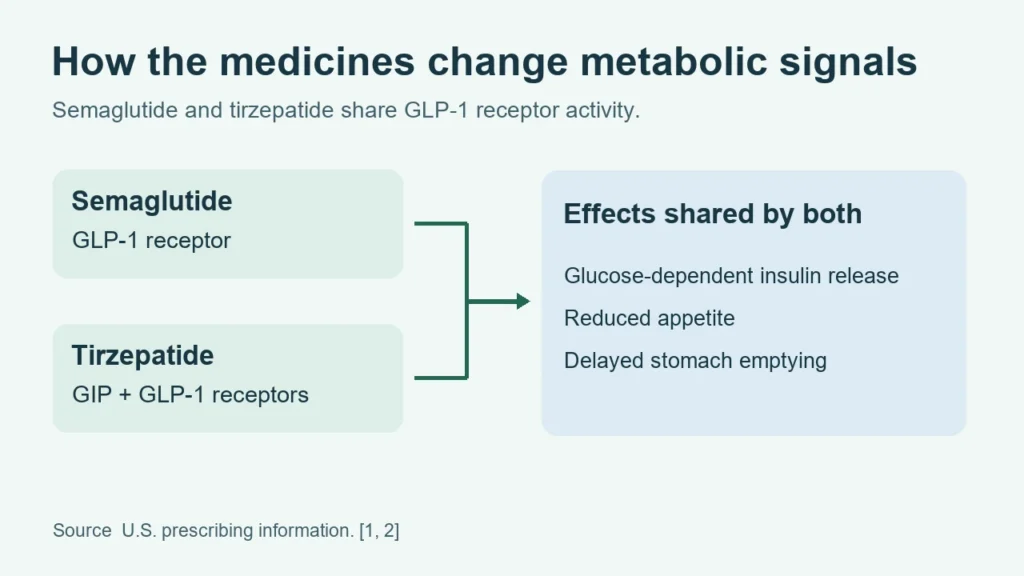
Semaglutide activates the GLP-1 receptor, while tirzepatide activates both GIP and GLP-1 receptors. These medicines support insulin release when glucose is elevated, reduce glucagon under appropriate conditions, and delay stomach emptying. These effects help lower after-meal glucose and A1C. The size of the benefit depends on baseline levels and the treatment studied.
A1C reflects average blood glucose over roughly three months. A SELECT analysis found lower A1C and less progression to biochemical diabetes in a population with overweight or obesity and without diabetes at entry. In SURPASS-3, adults with type 2 diabetes taking the highest tirzepatide dose studied had an average A1C reduction of 2.37 percentage points at 52 weeks. The insulin degludec group declined 1.34 points. [1–4]
Insulin sensitivity can improve alongside weight loss and glucose control. That does not mean every person will feel fewer energy swings or cravings, or that the medication simply switches the body from storing fat to burning it. Weight maintenance benefits were studied with ongoing therapy, and weight regain can follow withdrawal. [1, 4, 5]
Can GLP-1 treatment improve heart health?
Yes, for specific patients and medicines. SELECT found fewer cardiovascular deaths, nonfatal heart attacks, or nonfatal strokes with semaglutide than with placebo in adults with established cardiovascular disease, overweight or obesity, and no diabetes. Lower blood pressure and improved lipid measures also appear in trials, but those measures differ from clinical events.
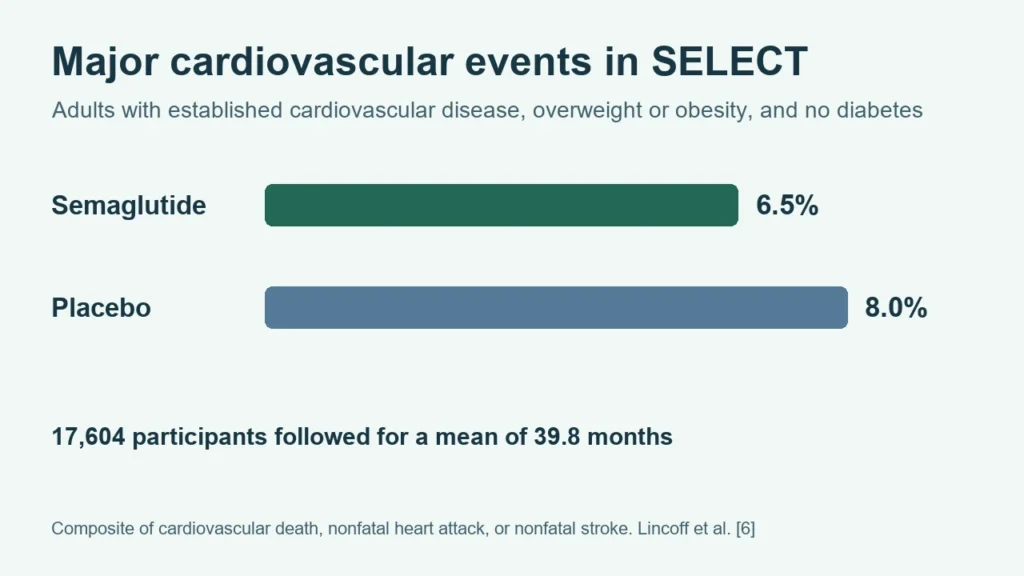
SELECT included 17,604 adults and followed participants for a mean of 39.8 months. A major cardiovascular event occurred in 6.5% with semaglutide and 8.0% with placebo. The hazard ratio was 0.80, and the observed absolute difference was about 1.5 percentage points. The finding applies to the population and regimen studied. Triglycerides, LDL cholesterol, and blood pressure can improve, but individual results vary. [1, 6]
| Outcome | What the evidence supports | What to consider |
|---|---|---|
| Blood glucose | Lower A1C with indicated semaglutide or tirzepatide treatment in type 2 diabetes. [2–4] | Review goals and medicines such as insulin or sulfonylureas. |
| Major heart events | SELECT supports a Wegovy indication in adults with established cardiovascular disease and overweight or obesity. [1, 6] | Check the exact indication and your cardiovascular history. |
| Inflammation and liver fat | Trials found lower CRP or reductions in liver fat in studied populations. [7–9] | These markers address specific outcomes. Wegovy injection has a separate accelerated approval for eligible adults with noncirrhotic MASH and F2–F3 fibrosis. [1] |
| Alcohol use disorder | Controlled semaglutide trials have reported reduced drinking outcomes in selected adults. [11, 12] | This remains investigational and has no FDA-approved GLP-1 indication. |
What do the studies show about inflammation and food noise?
Semaglutide reduced C-reactive protein in exploratory analyses of weight-management trials. MRI studies also found reductions in liver fat with semaglutide or tirzepatide in selected populations. Some people describe fewer intrusive thoughts about food. Controlled appetite studies support changes in cravings and food preference, while responses and enjoyment of meals vary.
- Inflammation and visceral fat. Visceral fat releases inflammatory signals. Reductions in visceral fat and changes in insulin sensitivity may contribute to lower inflammation markers. Exploratory STEP analyses found lower CRP with semaglutide in groups with and without type 2 diabetes. CRP is a marker, and researchers are still working out how much reflects weight loss versus direct effects on immune or vascular signaling and oxidative stress. [7–9]
- Liver findings. Selected studies found less liver fat and improvements in some liver enzymes, including ALT. One semaglutide MRI trial found lower liver fat without a significant improvement in liver stiffness. These results cannot explain an individual’s early fatigue, energy, or mental clarity. [8, 9]
- Appetite and food noise. Food noise is an informal term for recurring thoughts or cue-driven urges to eat, including when you are physically full. In a small randomized oral semaglutide study, participants ate less and reported changes in cravings, food preferences, and control of eating. Whether a person still enjoys familiar foods is individual. [10]
Could GLP-1 medicines reduce alcohol cravings?
Semaglutide reduced some measures of alcohol craving and consumption in controlled trials of adults with alcohol use disorder. The results are promising, and longer-term effects and applicability to other patients remain uncertain. GLP-1 medicines have no FDA-approved indication for alcohol use disorder. If drinking concerns you, discuss established care with a clinician.
A 2025 JAMA Psychiatry trial randomized 48 adults with alcohol use disorder to nine weeks of weekly semaglutide or placebo. Semaglutide reduced alcohol consumed in a lab session, craving, and drinks per drinking day. It did not significantly reduce the number of drinking days or average drinks per calendar day. [11]
In a 2026 Lancet trial of 108 adults with alcohol use disorder and obesity, both groups received cognitive behavioral therapy. At 26 weeks, the semaglutide group had a 13.7 percentage-point greater reduction in the proportion of heavy drinking days than placebo. The result does not establish lasting abstinence or effects for tirzepatide. [12]
Animal studies implicate brain reward regions including the ventral tegmental area and nucleus accumbens, with changes in dopamine signaling, alcohol seeking, and relapse-like behavior. How much these findings explain human effects remains under study. Additional trials have been registered. [13, 14]
Common questions about PEPLIX HEALTH
Peplix Health is a cash-pay telehealth service managed by Monarch Brands LLC. An independent, board-certified physician assesses eligibility, individualizes dosing, and plans follow-up. If an eligible compounded prescription is clinically appropriate, a state-licensed pharmacy can fill it under applicable Section 503A and state requirements. Ask which product and indication fit your goals.
Who should consider a GLP-1 evaluation?
For weight management, common adult label criteria include obesity or overweight with at least one weight-related condition. Bring medication history, recent labs, your goals, and any history of severe gastrointestinal symptoms. Eligibility depends on the product. [1, 2]
What safety issues should I discuss with the physician?
Review a personal or family history of medullary thyroid carcinoma or MEN2, pregnancy plans, diabetes medicines, and any history of pancreatitis or gallbladder problems. Nausea, diarrhea, constipation, and vomiting can occur. Seek urgent evaluation for severe persistent abdominal pain or inability to keep fluids down. [1, 2]
Are compounded GLP-1 medicines FDA approved?
Compounded drugs are not FDA approved and do not undergo FDA premarket review for safety, effectiveness, or quality. Section 503A generally requires a valid patient-specific prescription and limits routine compounding of essentially identical copies of commercially available drugs. Ask why compounding is needed for your case. [15, 16]
For consultation information, see our weight-loss guide or start an online assessment.
Sources
- FDA. Wegovy U.S. prescribing information.
- FDA. Zepbound U.S. prescribing information.
- Kahn et al. Glycemia in the SELECT trial.
- Ludvik et al. SURPASS-3.
- Wilding et al. Weight regain after semaglutide withdrawal.
- Lincoff et al. SELECT cardiovascular outcomes.
- Verma et al. CRP across STEP 1–3.
- Flint et al. Semaglutide, liver fat, and stiffness.
- Gastaldelli et al. SURPASS-3 MRI substudy.
- Gibbons et al. Oral semaglutide and appetite.
- Hendershot et al. Semaglutide and alcohol use disorder.
- Klausen et al. Semaglutide in adults with alcohol use disorder and obesity.
- Review. GLP-1 signaling and alcohol use disorder.
- ClinicalTrials.gov. Registered semaglutide and alcohol use study.
- FDA. Federal provisions for human drug compounding.
- FDA. Concerns with unapproved GLP-1 drugs.
This article is for general education and is not medical advice. Talk with a licensed clinician before starting, stopping or changing any treatment. Compounded medications are not FDA-approved. See our safety information.
Keep reading

Weight Loss
GLP-1 Medications for Weight Loss and Diabetes
Compare semaglutide and tirzepatide for weight loss, learn which GLP-1 pills work, and understand side effects, stopping, and pharmacy fulfillment.

Weight Loss
Compounded semaglutide vs Wegovy and Ozempic
Compare compounded semaglutide with Wegovy and Ozempic on weight loss evidence, cost, dosing safety, and when a 503A pharmacy may fill a prescription.

Weight Loss
Semaglutide vs Tirzepatide for Weight Loss
Compare semaglutide and tirzepatide for weight loss, nausea, and receptor targets. See what SURMOUNT-5 and the GIP mouse study actually found.