GLP-1 Medications for Weight Loss and Diabetes
Compare semaglutide and tirzepatide for weight loss, learn which GLP-1 pills work, and understand side effects, stopping, and pharmacy fulfillment.

GLP-1-based medicines help regulate appetite and blood sugar. Some are approved for chronic weight management, and both injections and tablets are available. Tirzepatide also acts on the GIP receptor. The right option depends on your diagnosis, medical history, side effects, and costs, as well as whether you can continue treatment over time.
How do GLP-1 and GIP medicines work?
GLP-1 stands for glucagon-like peptide-1, a hormone involved in fullness and blood sugar regulation. Medicines that activate its receptor can reduce appetite, slow stomach emptying, and help the pancreas release insulin when glucose is elevated. Tirzepatide also activates the GIP receptor, adding another pathway that influences insulin release and metabolic regulation.
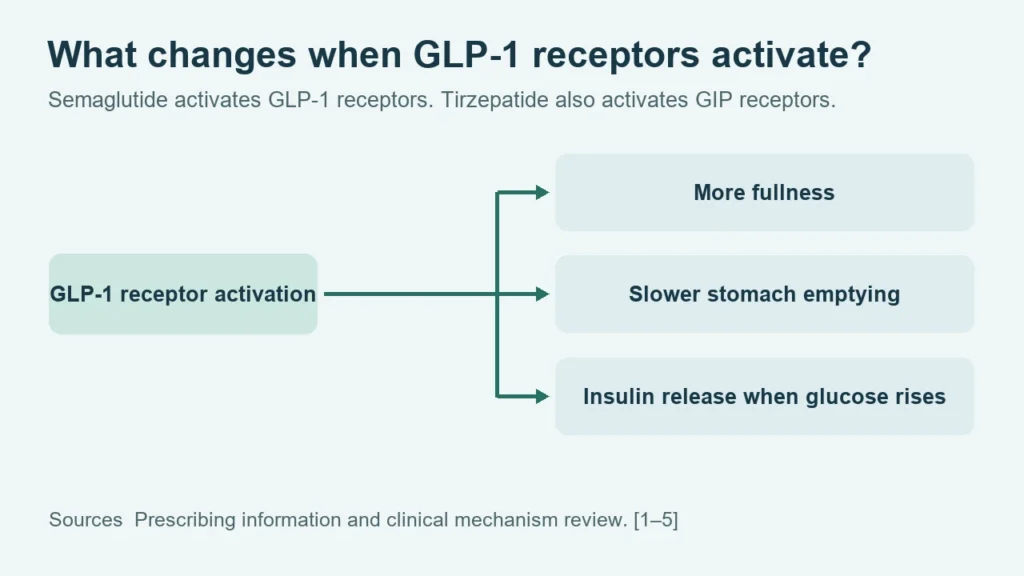
These medicines first became widely used for type 2 diabetes. Today, specific products also treat chronic weight management or reduce selected cardiovascular and kidney risks. Some patients feel full sooner, eat smaller portions, or report fewer cravings. The intensity of those changes varies. GIP, short for glucose-dependent insulinotropic polypeptide, helps regulate insulin release after meals. Improved nutrient absorption is not an established explanation for tirzepatide’s weight-loss effect. [1–5]
What’s the difference between Ozempic, Wegovy, Mounjaro, and Zepbound?
Ozempic and Wegovy contain semaglutide. Mounjaro and Zepbound contain tirzepatide. These brand names reflect different FDA-approved uses, formulations, and dose schedules. For weight management, eligibility commonly includes a body mass index of at least 30, or at least 27 with a weight-related condition such as high blood pressure or high cholesterol.
| Brand | Active ingredient | Key U.S. uses and formulations |
|---|---|---|
| Ozempic | Semaglutide | Type 2 diabetes. The injection also has specific cardiovascular and chronic kidney disease risk-reduction indications. Oral Ozempic and Rybelsus have their own labeled indications. [2, 6] |
| Wegovy | Semaglutide | Chronic weight management and cardiovascular risk reduction in specified populations. The injection also has accelerated approval for certain adults with noncirrhotic MASH and moderate-to-advanced fibrosis. Adult tablet eligibility and dosing differ from injection eligibility and dosing. [3] |
| Mounjaro | Tirzepatide | Blood glucose management in type 2 diabetes. FDA labeling covers adults and eligible children ages 10 and older. [4] |
| Zepbound | Tirzepatide | Chronic weight management and treatment of moderate-to-severe obstructive sleep apnea in adults with obesity. [5] |
Prescribing a diabetes brand solely for weight management is off-label. Coverage varies by plan, product, and indication. Current prescribing information and the plan’s drug list can help you confirm what applies to your situation.
Do oral GLP-1 medications work?
Yes. FDA-approved Wegovy tablets have a labeled 25 mg daily maintenance dose for eligible adults. In OASIS 4, average weight loss at week 64 was 13.6% with oral semaglutide and 2.2% with placebo. The oral and injected forms have different absorption and use different dose scales. Oral semaglutide has specific fasting and water instructions, and gastrointestinal side effects can occur with either route. FDA also approved Foundayo (orforglipron), an oral GLP-1 receptor agonist for adult weight management, in April 2026. These approvals and trials do not establish the effectiveness of compounded oral or sublingual formulations. [3, 7, 8, 22]
How much weight can you lose, and how quickly?
In the 72-week SURMOUNT-5 trial, adults with obesity and without type 2 diabetes lost an average of 20.2% of body weight with tirzepatide and 13.7% with semaglutide. Appetite can change early, but dose escalation and weight loss take time. Your starting weight, tolerability, and response affect what you can expect.
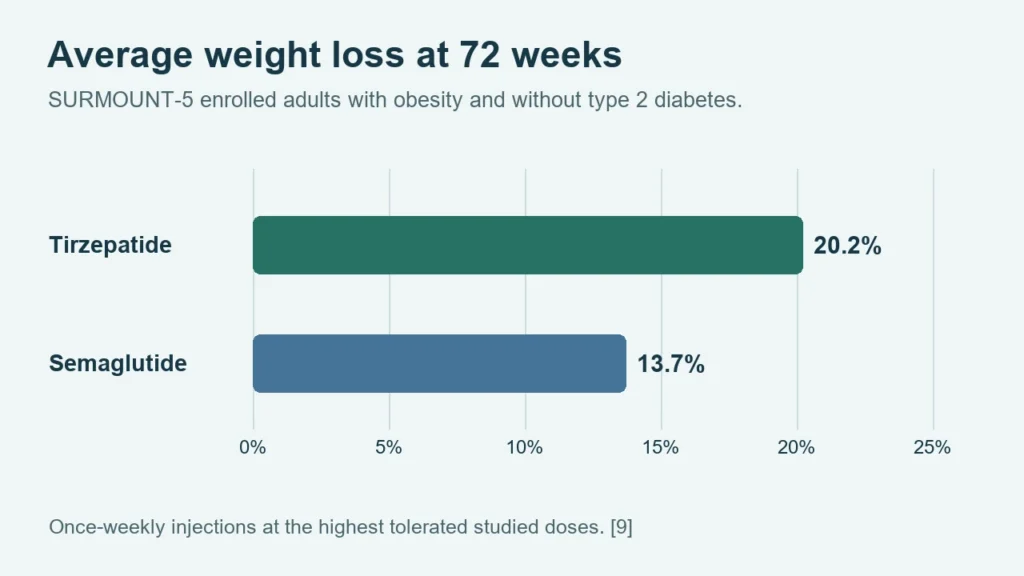
The trial compared weekly injections at the highest tolerated studied doses. It did not test the newer 7.2 mg Wegovy injection, which FDA approved for eligible adults in 2026. Separate placebo-controlled trials found 14.9% average loss at week 68 in STEP 1 with 2.4 mg semaglutide and 20.9% at week 72 in SURMOUNT-1 with 15 mg tirzepatide. The SURMOUNT-1 efficacy analysis estimated 22.5% for 15 mg under an assumption that participants stayed on treatment. These results come from different analyses and cannot substitute for a direct comparison. [9–12]
When will I notice appetite changes?
Some people notice changes early. There is no reliable onset in hours or days. With repeated dosing at the same dose, semaglutide injection takes about four to five weeks to reach steady blood levels and tirzepatide about four weeks. Dose increases change that exposure again. Early scale changes can include water, and weight loss seldom follows a fixed one- to two-pound weekly schedule. The same percentage loss also represents more pounds at a higher starting weight. [2, 3, 5, 13]
Does one medication feel different from the other?
People describe changes in cravings, fullness, and meal tolerance in different ways. The trial establishes an average weight-loss difference, while individual reports cannot predict whether one drug will feel more natural or be easier to tolerate. Consider your side effects, cost, access, and the condition being treated. [9, 13]
How can you manage side effects and protect muscle?
Nausea, constipation, diarrhea, burping, and fatigue can occur, especially while a dose is increasing. Small meals and appropriate fluid intake may help. Resistance training and adequate nutrition support strength as weight comes down. Severe or persistent abdominal pain, repeated vomiting, or difficulty keeping fluids down needs prompt clinical attention.
- Start with tolerability. Discuss persistent symptoms before increasing your dose. Take a gradual approach to dietary fiber if you are constipated, and drink fluids regularly unless you have a prescribed fluid limit. A clinician may suggest electrolytes when fluid losses justify them. Water usually meets routine hydration needs. [3, 5, 13]
- Review alcohol and glucose-lowering medicines. Alcohol adds calories and may worsen nausea or dehydration. If you take insulin or a sulfonylurea, ask your care team about low blood sugar risk, especially if you are eating less or drinking alcohol. [3, 5, 13]
- Track strength as well as weight. Weight lost may include fat and lean tissue. Resistance training and adequate protein help support strength and muscle. Facial or buttock changes can reflect loss of fat and changes in skin after weight loss. They do not establish how much muscle you lost. [13, 14]
- Consider supplements only for a clear need. If portions are smaller, review nutrient intake and consider a multivitamin if there is a gap. Magnesium citrate can loosen stools. Glycinate, threonate, and sucrosomal products differ in formulation and tolerance, and there is no established need for any of them during GLP-1 treatment. Check kidney health and medications before starting magnesium. [13, 15]
Do GLP-1 medicines lower testosterone or other sex hormones?
Hormone changes depend on baseline health, energy intake, and how weight changes. Substantial energy restriction can affect reproductive function, while weight loss in men with obesity may increase testosterone. Weakness, fatigue, or menstrual changes merit a review of nutrition and other causes. Evidence does not support adding hormone therapy routinely to prevent GLP-1-associated lean mass loss. [13, 16]
What should you know before changing or stopping treatment?
Wegovy and Zepbound injections follow once-weekly schedules, with dose increases based on the specific product and tolerability. Splitting a weekly dose, overlapping medicines, or switching by a supposed dose equivalent can cause errors. Weight regain after stopping is common in clinical trials, so agree on a maintenance plan before making a change.
- Changing or switching doses. Evidence has not established that dividing the weekly injection reduces nausea. No universal milligram-for-milligram conversion exists between semaglutide and tirzepatide. A prescriber considers the previous product and dose, last injection date, glucose medicines, and symptoms before choosing a schedule. [3, 5, 8]
- Maintaining weight loss. In the STEP 1 extension, participants regained roughly two-thirds of the weight they had lost within a year after semaglutide and structured lifestyle support ended. In SURMOUNT-4, participants switched to placebo regained an average of 14% of body weight from the point of randomization, while those continuing tirzepatide lost another 5.5% over 52 weeks. Nutrition and activity remain useful. A maintenance microdose has not been established as equivalent to labeled therapy. [13, 17, 18]
- Knowing when to get help. Pancreatitis and gallbladder complications are recognized risks. Seek urgent medical evaluation for severe, persistent abdominal pain, especially if it spreads to your back or comes with vomiting. Report repeated vomiting or signs of dehydration promptly. Substantial or rapid weight loss can raise gallstone risk. Hydration helps replace fluid losses but does not remove these medication risks. [3, 5]
- Taking the thyroid warning seriously. Rodent studies found thyroid C-cell tumors. Whether these medicines cause such tumors in humans remains unknown. Semaglutide and tirzepatide products are contraindicated with a personal or family history of medullary thyroid carcinoma or with multiple endocrine neoplasia syndrome type 2 (MEN2). Other contraindications and precautions also apply. [2–5]
Common questions about PEPLIX HEALTH
Peplix Health offers cash-pay telehealth through a model managed by Monarch Brands LLC. Independent, board-certified physicians review eligibility, prescribing options, dosing, and follow-up. If an eligible patient-specific compounded prescription is medically necessary, a state-licensed pharmacy can dispense it under Section 503A and applicable state requirements. Patients can ask which pharmacy would fill their prescription.
What should I bring to a GLP-1 evaluation?
Bring your medication list, recent blood sugar results if available, and a brief history of weight changes, gastrointestinal symptoms, gallbladder or pancreas problems, and previous treatment. Share pregnancy plans, any personal or family history of medullary thyroid cancer, and whether you use insulin or take a sulfonylurea. [2–5]
Are compounded GLP-1 medications FDA-approved?
FDA does not review compounded drugs for safety, effectiveness, or quality before marketing. FDA advises using a compounded drug when an approved product cannot meet an identified patient’s medical needs. Section 503A limits regular compounding of essentially identical copies of commercially available drugs. FDA has received reports of dosing mistakes. Ask the prescriber and pharmacy to confirm your product, concentration, and directions. [8, 19]
Is retatrutide available as a prescription?
Retatrutide targets the GIP, GLP-1, and glucagon receptors. In a phase 2 trial, the 12 mg group lost an average of 24.2% at 48 weeks versus 2.1% with placebo. Phase 3 results have since been published. Retatrutide remains investigational as of November 20, 2026, and FDA says it cannot be used in compounding under federal law. [8, 20, 21]
For consultation information, see our weight-loss guide or start an online assessment.
This article is for general education. Discuss individual treatment decisions with your licensed clinician.
Sources
- Drucker. Mechanisms and therapeutic application of GLP-1.
- FDA. Ozempic injection prescribing information.
- FDA. Wegovy injection and tablets prescribing information.
- FDA. Mounjaro prescribing information.
- FDA. Zepbound prescribing information.
- FDA. Rybelsus and Ozempic tablets prescribing information.
- FDA. Foundayo approval announcement.
- FDA. Concerns with unapproved GLP-1 drugs.
- SURMOUNT-5. Tirzepatide compared with semaglutide.
- FDA. Higher-dose Wegovy approval.
- STEP 1. Once-weekly semaglutide in adults with overweight or obesity.
- SURMOUNT-1. Tirzepatide once weekly for obesity.
- Joint advisory. Nutritional priorities during GLP-1 therapy.
- SURMOUNT-1 DXA substudy. Changes in body composition.
- NIH Office of Dietary Supplements. Magnesium.
- Meta-analysis. Testosterone changes after weight loss in men with obesity.
- STEP 1 extension. Weight regain after semaglutide withdrawal.
- SURMOUNT-4. Continued tirzepatide for weight maintenance.
- FDA. Current GLP-1 compounding policies.
- Retatrutide for obesity. Phase 2 trial.
- Retatrutide for obesity. Phase 3 TRIUMPH-1 trial.
- OASIS 4. Oral semaglutide 25 mg for weight management.
This article is for general education and is not medical advice. Talk with a licensed clinician before starting, stopping or changing any treatment. Compounded medications are not FDA-approved. See our safety information.
Keep reading
Weight Loss
Compounded semaglutide vs Wegovy and Ozempic
Compare compounded semaglutide with Wegovy and Ozempic on weight loss evidence, cost, dosing safety, and when a 503A pharmacy may fill a prescription.

Weight Loss
GLP-1 Benefits Beyond Weight Loss
Learn how semaglutide and tirzepatide affect blood sugar, heart health, inflammation, food noise, and alcohol cravings. Compare the evidence.

Weight Loss
Semaglutide vs Tirzepatide for Weight Loss
Compare semaglutide and tirzepatide for weight loss, nausea, and receptor targets. See what SURMOUNT-5 and the GIP mouse study actually found.