
Peptides & Longevity
BPC-157 and Growth Hormone in Tendon Recovery
Learn what BPC-157 studies found in rat tendon cells, what IGF-1 can tell you, and why tesamorelin has no proven role in tendon recovery.
Healthy aging
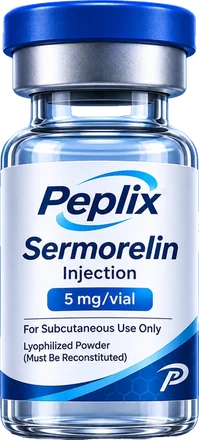
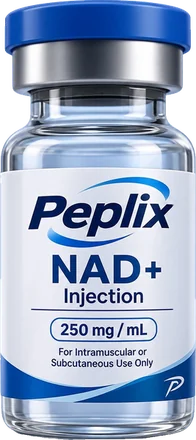
Longevity care focuses on staying strong, energetic and healthy as you age rather than treating one disease. At PEPLIX, clinicians can prescribe sermorelin, a peptide that supports your own growth hormone, and NAD+ injections for cellular energy, alongside guidance on sleep, nutrition and exercise. Evidence for both treatments is still developing.

Peptides are short chains of amino acids, the building blocks of proteins, and many act as signals in the body. Peptide medications copy or adjust those signals: semaglutide and tirzepatide are peptides, and sermorelin copies the hormone that tells your pituitary gland to release growth hormone. Most are injected because digestion breaks them down.
Sermorelin binds to growth hormone–releasing hormone receptors on the pituitary gland, prompting a natural pulse of growth hormone. Taken at bedtime, it works alongside your largest nightly release. Because the body’s feedback controls stay in place, it is considered gentler than injecting growth hormone itself, though its effects are also smaller.
NAD+ is a coenzyme every cell uses to turn food into energy. It also fuels enzymes, including sirtuins and PARPs, that help repair DNA and manage cell stress. Studies show NAD+ levels tend to fall with age, which is why researchers are exploring whether restoring them supports healthy aging. Human evidence is still early.
Sermorelin is mainly considered for sleep quality, recovery and body composition because it raises growth hormone and IGF-1. NAD+ is considered for cellular energy support. They work through different pathways and can be prescribed together. Evidence for both in healthy aging is limited, so your clinician helps you set realistic goals first.
| Sermorelin | NAD+ | |
|---|---|---|
| What it is | Peptide (GHRH analog) | Coenzyme |
| Main target | Growth hormone and IGF-1 | Cellular energy and repair |
| How it’s taken | Bedtime injection, 5–7 nights a week | Injection, 1–3 times a week |
| Lab monitoring | IGF-1 | As your clinician advises |
| PEPLIX price | From $139.99/mo | From $119.99/mo |
Sermorelin can cause injection-site reactions, flushing, headache, dizziness or trouble sleeping. NAD+ injections can cause injection-site discomfort, flushing, nausea, headache or tiredness. Both are compounded and not FDA-approved. A clinician reviews your health history and medications before prescribing, and you can report side effects to your care team at any time.
No. HGH injections supply growth hormone directly, while sermorelin signals your pituitary gland to release its own. Because your body’s normal feedback still limits how much is released, sermorelin produces a smaller, more natural rise. HGH is a different, tightly regulated medication that PEPLIX does not prescribe for anti-aging.
They work through different pathways, so clinicians sometimes prescribe them together. Whether that is right for you depends on your health history, medications, lab results and goals. Your clinician decides whether to start one or both, sets the doses and checks in on how you feel and on any side effects.
Some people notice changes in sleep within a few weeks of starting sermorelin, with recovery and body-composition changes over several months. Responses to NAD+ vary widely, and some people notice no change. Because research in healthy adults is limited, your clinician sets realistic expectations and reviews progress with you.
Sermorelin starts at $139.99 per month and NAD+ at $119.99 per month on a six-month plan, with higher monthly prices for shorter plans. There is no membership fee and insurance is not required. Prices can vary slightly by dose and state, and any lab work may cost extra.
Peptides & Longevity
Learn what BPC-157 studies found in rat tendon cells, what IGF-1 can tell you, and why tesamorelin has no proven role in tendon recovery.

Peptides & Longevity
Compare tesamorelin, sermorelin, CJC-1295, ipamorelin and MK-677. Learn what studies found about GH, IGF-1, safety and FDA status.

Peptides & Longevity
See what the July 2026 FDA advisory votes and HHS draft mean for BPC-157, TB-500, Semax, and other peptides considered for 503A compounding.
This page is general education, not medical advice. A licensed clinician decides whether any treatment is right for you. See our safety information.
Compounded medications are not approved or evaluated for safety, efficacy, or quality by the FDA.