Vitamin B12 Benefits, Deficiency Signs, and Supplement Forms
Learn the signs of low vitamin B12, who should get tested, which foods provide it, and how oral and injectable B12 compare.

Vitamin B12 supports red blood cell formation, nerve function, and DNA synthesis. Low intake and absorption problems can both cause deficiency. Persistent fatigue, tingling, or balance changes deserve evaluation, especially if you eat few B12-containing foods or take certain medications. A clinician can help determine whether you need dietary changes, oral replacement, or injections.
What does vitamin B12 do for your blood and nerves?
Vitamin B12, or cobalamin, is a water-soluble vitamin the body needs from food or supplements. It helps maintain myelin around nerves, supports DNA synthesis, and helps produce healthy red blood cells. Treating a deficiency can improve related symptoms. Extra B12 has no proven stimulant or performance benefit when your status is already adequate.
Two active forms do different jobs. Methylcobalamin helps methionine synthase convert homocysteine to methionine and supports folate-dependent DNA synthesis. Methionine helps produce a methyl donor used in many cellular reactions. Adenosylcobalamin helps an enzyme make succinyl-CoA, a compound that enters pathways involved in cellular energy metabolism. [1]
When deficiency impairs DNA synthesis, bone marrow can produce abnormally large immature blood-cell precursors. The resulting megaloblastic anemia can reduce oxygen delivery and cause fatigue, weakness, pallor, or breathlessness during activity. Nerve symptoms may occur even when a blood count does not show anemia. [1, 2]
B12, folate, and B6 contribute to homocysteine metabolism. Lowering this biomarker with supplements does not establish better cognition, mood, or cardiovascular protection. People training hard or taking testosterone still need adequate B12 as part of their overall diet. Evidence does not establish that large doses improve those treatment or training outcomes. [1, 3]
Which foods provide vitamin B12, and how much do you need?
The recommended intake is 2.4 mcg daily for most adults, 2.6 mcg during pregnancy, and 2.8 mcg while breastfeeding. Fish, meat, eggs, and dairy provide B12. People who eat few animal foods can use reliably fortified foods or supplements. Check the label because plant-based products vary in whether they contain added B12.
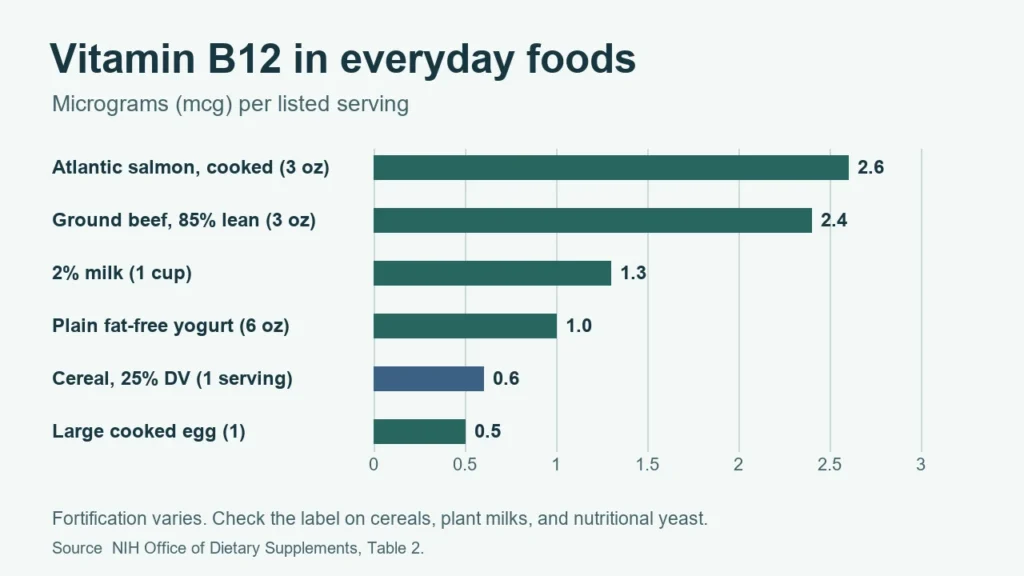
Check the serving size and B12 amount on fortified cereal, plant milk, or nutritional yeast. Ordinary unfortified plant foods are unreliable sources. Adults who eat a varied diet with sufficient B12 may meet their needs without a supplement. [1]
Who is at risk for low B12 even with a varied diet?
Food-bound vitamin B12 needs to be released during digestion, bind a stomach protein called intrinsic factor, and be absorbed in the final part of the small intestine. Problems at any step can reduce absorption. Older adults, people with certain gastrointestinal conditions, and adults taking metformin or acid-suppressing medicines can be at higher risk.
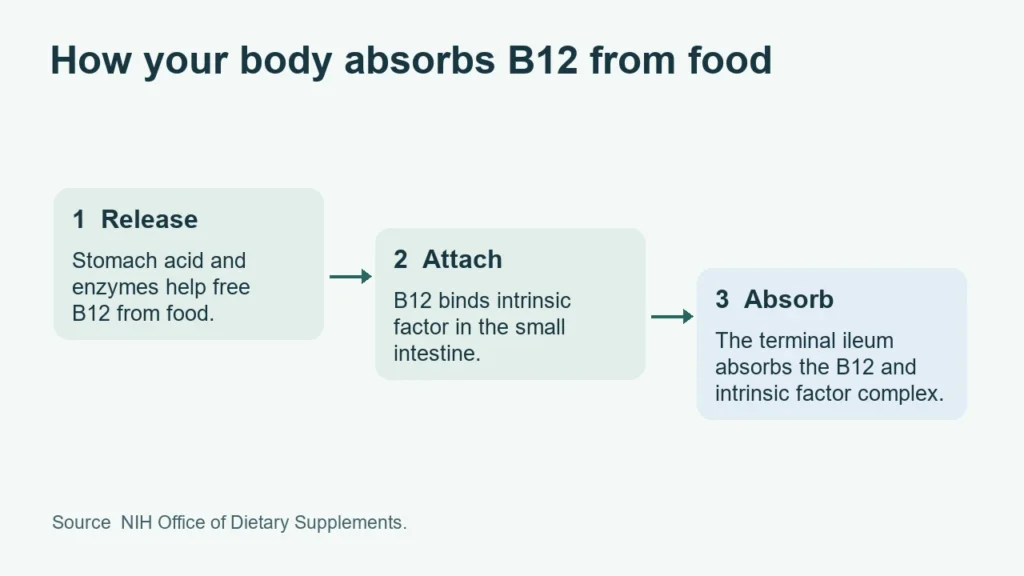
- Absorption conditions. Autoimmune gastritis can reduce intrinsic factor and lead to pernicious anemia. Bariatric or other stomach surgery, celiac disease, and Crohn’s disease involving the terminal ileum can raise concern. Age-related gastric changes can make it harder to release B12 from food. [1, 2]
- Medication exposure. Long-term metformin, proton pump inhibitors, or H2 blockers can affect B12 status. Review medications with your clinician before changing anything. [1, 2, 4]
- Reduced intake. People who eat little or no animal food need a dependable fortified source or supplement. If GLP-1 treatment or a restrictive diet has reduced your food intake for an extended period, review the whole diet. Report heavy alcohol use as part of that assessment because it can affect nutrition and complicate lab interpretation. [1, 2, 5]
What are the signs of B12 deficiency, and which tests help?
Vitamin B12 deficiency can cause fatigue, pallor, a sore tongue, memory or concentration changes, and tingling or numbness. Balance or coordination problems deserve prompt assessment because prolonged nerve damage can be permanent. Clinicians usually start with total or active B12 and may use methylmalonic acid to clarify an uncertain result.
| Test | What it can tell you | What affects interpretation |
|---|---|---|
| Total or active B12 | A common first test for suspected deficiency. | Thresholds and assays vary. Supplements can raise the result. [1, 2] |
| Methylmalonic acid (MMA) | A marker that can help clarify a borderline result. | Kidney impairment can also raise MMA. NIH highlights serum B12 of 150–399 pg/mL as one range where MMA can help. [1] |
| Homocysteine and blood count | Homocysteine is sometimes used as another marker. A blood count can identify anemia. | Folate status and kidney function can influence homocysteine. Nerve symptoms can occur without anemia. [1, 2] |
Symptoms may build gradually because the body stores B12, mostly in the liver. Low mood, fatigue, and difficulty exercising have many causes. If new tingling, unsteadiness, or numbness develops, seek prompt care. Clinicians may begin replacement before results return if serious neurologic deficiency is suspected. [1, 2]
Which B12 form should you choose, and when do injections make sense?
Methylcobalamin and cyanocobalamin are both useful sources of B12. Oral replacement can work for many people, while injections bypass the digestive tract and may be needed for severe symptoms or certain irreversible absorption problems. Choose the dose and route with a clinician based on the cause, symptoms, lab results, and response to treatment.
| Form | What it does | Common use |
|---|---|---|
| Methylcobalamin | Active coenzyme for methionine synthase. | Available as an oral supplement. [1] |
| Adenosylcobalamin | Active coenzyme involved in mitochondrial metabolism. | Available as an oral supplement. [1] |
| Cyanocobalamin | A stable form the body converts to active forms. | Common in fortified foods, oral supplements, and U.S. injections. [1] |
| Hydroxocobalamin | A form the body converts to active forms. | Used in injections and retained longer than injected cyanocobalamin. [1, 6] |
Evidence has not established that methylcobalamin is better absorbed or routinely needed for common MTHFR variants. Swallowed and sublingual B12 have similar evidence overall. Look for the form and amount per serving on a transparent label, and consider independent quality testing. A standalone product may contain 500–1,000 mcg, while some deficiency trials used 1,000–2,000 mcg per day orally. These are product or study amounts. [1, 7]
A small share of a large oral dose is absorbed without intrinsic factor. Trials comparing oral and injectable treatment mainly measured blood levels, with limited evidence on symptom outcomes. NICE recommends lifelong injections for deficiency caused by autoimmune gastritis, total gastrectomy, or complete terminal ileal resection. Maintenance should match the cause. [2, 7]
Common questions about PEPLIX HEALTH
Peplix Health is a cash-pay telehealth service managed by Monarch Brands LLC. Independent, board-certified physicians review dietary intake, symptoms, medications, and relevant labs. They individualize treatment and follow-up when appropriate. A state-licensed pharmacy can fill an eligible patient-specific compounded prescription under applicable Section 503A requirements and state law.
How long might it take to feel better after B12 treatment?
NICE advises that deficiency symptoms may start improving within two weeks and can take up to three months to begin improving. Full recovery can take longer, particularly for nerve symptoms. Timing varies, and persistent or worsening symptoms warrant reassessment. [2]
Can I take too much B12, and is there a best time of day?
U.S. nutrition authorities have not set an upper intake limit because B12 has low toxicity. Rare acne-like eruptions have been reported. Evidence does not establish a morning advantage or a predictable sleep effect. Choose a routine you can follow and discuss long-term high doses with your clinician. [1, 8]
Do B12 supplements or injections require a compounding pharmacy?
Standard oral supplements and prescription injections are available. If a clinician identifies a patient-specific need for a compounded prescription, federal and state requirements apply, including a valid prescription and applicable ingredient and quality standards. Compounded drugs do not undergo FDA premarket approval. [1, 9, 10]
For consultation information, see our vitamins and wellness guide or start an online assessment.
Sources
- NIH Office of Dietary Supplements. Vitamin B12 fact sheet for health professionals.
- NICE. Vitamin B12 deficiency in over 16s, guideline NG239.
- Markun et al. B12 supplementation, cognition, depressive symptoms, and fatigue.
- MHRA. Metformin and reduced vitamin B12 levels.
- Joint advisory on nutrition during GLP-1 therapy.
- NHS. Treatment for vitamin B12 or folate deficiency anemia.
- Cochrane. Oral versus intramuscular vitamin B12 for deficiency.
- Owen et al. Vitamin B12-induced acneiform eruption.
- FDA. Federal provisions for human drug compounding.
- FDA. Human drug compounding laws and policies.
This article is for general education and is not medical advice. Talk with a licensed clinician before starting, stopping or changing any treatment. Compounded medications are not FDA-approved. See our safety information.
Keep reading

Wellness
Krill Oil vs Fish Oil for Omega-3s
Compare krill oil and fish oil for EPA and DHA, absorption, triglycerides, and side effects. Learn what to check on an omega-3 label.

Wellness
Sprinting Benefits and How to Start Sprint Interval Training
Learn how sprint intervals affect fitness and fat oxidation, how to start with controlled efforts, and how to fit sprinting into your week.

Wellness
CoQ10 Benefits, Dosage, and Safety
What does CoQ10 do? Explore the evidence for heart failure, fatigue, and statin symptoms, plus dosage, supplement forms, and interactions.