Krill Oil vs Fish Oil for Omega-3s
Compare krill oil and fish oil for EPA and DHA, absorption, triglycerides, and side effects. Learn what to check on an omega-3 label.

Krill oil and fish oil both supply EPA and DHA, two long-chain omega-3 fats. Krill oil can raise blood levels more than fish oil in some studies, but evidence of better health outcomes is limited. Compare EPA and DHA per serving, consider seafood allergies, and ask a clinician about treatment for high triglycerides.
What should you compare on a fish oil or krill oil label?
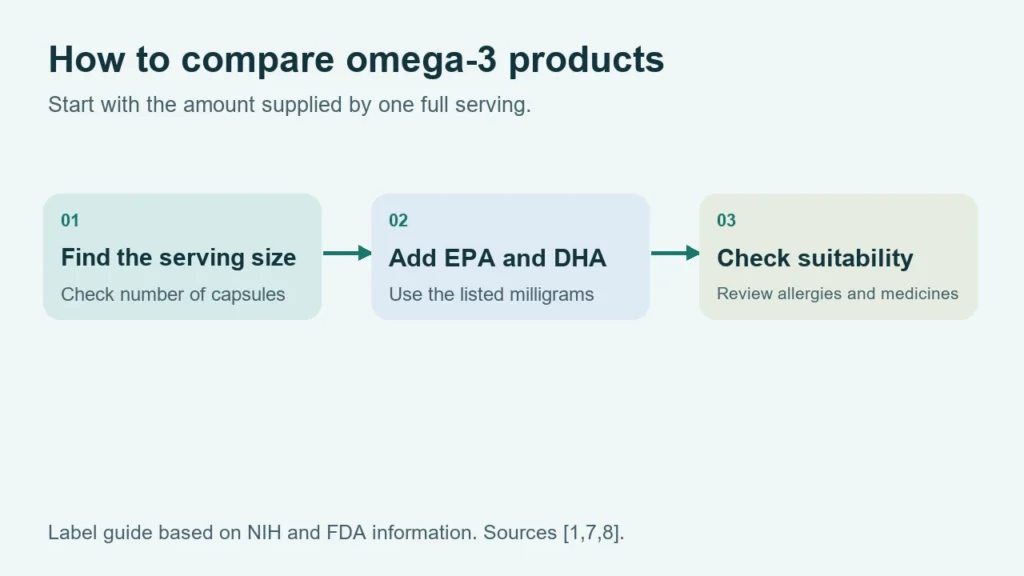
Compare the milligrams of EPA and DHA in a serving and how many capsules make up that serving. Fish oil comes from oily fish, while krill oil comes from small crustaceans. Both can raise blood omega-3 levels, but the dose, chemical form, and price per serving vary across products.
| What to compare | Fish oil | Krill oil |
|---|---|---|
| Source | Oil from fish tissues. Examples include sardines, salmon, and tuna. | Oil from shrimp-like crustaceans that feed on omega-3-rich algae. |
| Form on the shelf | Bottled liquid, capsules or softgels, and some other pill forms. | Usually softgels. |
| Chemical form | Natural fish oil contains EPA and DHA mainly in triglycerides. Some products use ethyl esters or re-esterified triglycerides. | Contains triglycerides and phospholipids. Published reviews report about 30% to 65% phospholipids in the oil, depending on the product. |
| Amount per serving | Check the listed milligrams of EPA and DHA, plus capsules per serving. | Check the same figures. Total milligrams of krill oil include fats other than EPA and DHA. |
Phospholipids are major components of cell membranes and are one reason researchers study how krill oil’s omega-3s enter circulation. The form may affect digestion and uptake. Blood measurements also reflect how the body distributes and processes these fats. [1–4]
Is krill oil absorbed better than fish oil?
Some head-to-head trials find larger increases in plasma EPA and DHA with krill oil. Other comparisons are difficult to interpret because the oils delivered different amounts of EPA and DHA. A rise in blood levels shows a response to a particular product. Clinical benefits require separate evidence.
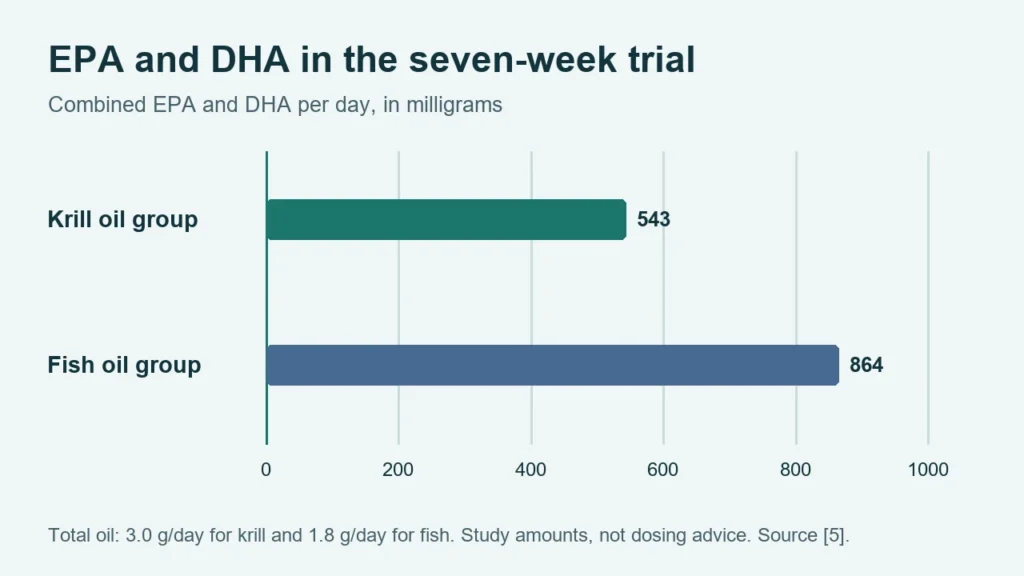
A seven-week randomized trial assigned 113 adults to krill oil, fish oil, or a control group. Participants in the two oil groups took 3.0 g of krill oil or 1.8 g of fish oil per day. The krill group got 543 mg of EPA plus DHA daily, compared with 864 mg in the fish oil group. Both groups had higher plasma omega-3 levels, without a statistically significant difference between the groups in plasma EPA or DHA. The difference in grams of oil reflects the formulations studied. [5]
A 2026 trial assigned 72 healthy adults to krill oil or fish oil supplying 1.1 g of omega-3s daily for 12 weeks. With the formulations tested, krill oil produced roughly 1.5 times the increase from baseline in plasma EPA and DHA. Longer studies that measure health outcomes would help establish what this difference means in practice. [6]
What can omega-3s do for your health?
The strongest established clinical use discussed here is lowering high triglycerides with specific prescription omega-3 products. Eating seafood as part of a balanced diet can support cardiovascular health. Evidence for supplements varies by formulation and outcome, and current studies give limited grounds for expecting benefits for cognition, fertility, or sexual function.
- Heart health and triglycerides. Triglycerides are fats measured in your blood. Elevated levels are associated with cardiovascular risk. Studies report mixed effects of EPA and DHA on heart events. Earlier studies suggested possible reductions in sudden cardiac death and some heart failure events in selected populations. Recent reviews describe modest benefits for some coronary outcomes. Specific prescription products can lower very high triglycerides, and prescription EPA can reduce cardiovascular events in selected high-risk patients. [1,7–9]
- Brain health. DHA is a structural fat in brain cell membranes and helps support brain development and neuronal function. Some observational studies link diets rich in fish or omega-3s to less cognitive decline or a lower incidence of Alzheimer’s disease. Trials of supplements have yet to establish reliable prevention of dementia. [1,7,9,10]
- Reproductive health. A cross-sectional study of 1,679 young Danish men linked fish oil use with higher semen volume and total sperm count, larger testicular size, and a higher ratio of calculated free testosterone to luteinizing hormone (LH). That ratio does not by itself establish an increase in testosterone. Earlier work in men with infertility explored sperm concentration, count, and motility. These findings do not establish a fertility or sexual-function benefit for the general population. [11]
- Rheumatoid arthritis. Some studies suggest modest symptom relief, such as less joint pain or tenderness. Discuss any supplement with the clinician who manages your arthritis. [7]
How do you choose a source of omega-3s safely?
Start with your goal. For general nutrition, oily fish supplies EPA and DHA, while walnuts, chia seeds, and edamame supply alpha-linolenic acid. If you want a supplement, check EPA and DHA per serving and review your medications and allergies. A clinician can help you decide whether a prescription product is appropriate.
Omega-3s are polyunsaturated fats. Alpha-linolenic acid (ALA) is essential because your body must get it from food. Your body converts a limited amount of ALA into EPA and then DHA. Mackerel, anchovies, salmon, sardines, and herring supply EPA and DHA directly. Algal oil can supply DHA and, in some products, EPA. [1]
Fishy aftertaste, heartburn, nausea, and loose stools are possible. Ask a clinician or pharmacist before taking fish or krill oil if you have a fish or shellfish allergy, take a blood thinner or antiplatelet medicine, or have a history of atrial fibrillation. Some trials using high-dose omega-3 products found a higher risk of atrial fibrillation. [1,7,8]
Common questions about PEPLIX HEALTH
Independent, board-certified physicians can review your triglycerides, medical history, and current medicines and discuss whether food choices, a supplement, or prescription treatment fits your goals. Monarch Brands LLC provides management services for Peplix Health. Bring your latest lipid panel and a photo of any supplement label to a cash-pay consultation.
Can I use an over-the-counter oil to treat high triglycerides?
Ask a clinician to interpret your lipid panel. Prescription and supplement products differ in formulation, evidence, and regulatory oversight. If treatment is indicated, the physician can select the formulation and individualize the dose based on your results and medical history. [1,7,8]
When does a Section 503A pharmacy fill a prescription?
When an individual clinical need warrants compounding and applicable requirements are met, a state-licensed pharmacy operating under Section 503A can prepare a medication based on a patient-specific prescription. Compounded drugs lack FDA approval. Ordinary dietary supplements are sold separately from that process. [12]
For consultation information, see our vitamins and wellness guide or start an online assessment.
Sources
- NIH Office of Dietary Supplements – omega-3 fatty acids
- Ulven and Holven – fish and krill oil bioavailability
- Colletti et al. – krill oil composition
- Salem and Kuratko – absorption study limitations
- Ulven et al. – seven-week comparative trial
- Loukil et al. – 2026 randomized trial
- NCCIH – omega-3 benefits and risks
- FDA – prescription EPA label
- Swanson et al. – EPA and DHA health review
- Review – DHA and brain development
- Jensen et al. – fish oil use and testicular function
- FDA – Section 503A compounding requirements
This article is for general education and is not medical advice. Talk with a licensed clinician before starting, stopping or changing any treatment. Compounded medications are not FDA-approved. See our safety information.
Keep reading

Wellness
Sprinting Benefits and How to Start Sprint Interval Training
Learn how sprint intervals affect fitness and fat oxidation, how to start with controlled efforts, and how to fit sprinting into your week.

Wellness
CoQ10 Benefits, Dosage, and Safety
What does CoQ10 do? Explore the evidence for heart failure, fatigue, and statin symptoms, plus dosage, supplement forms, and interactions.

Wellness
How to Build a Four-Minute Habit for Better Follow-Through
Use a four-minute check-in to review progress, adjust your next action, and build a repeatable habit. Includes prompts and a sample schedule.