Sprinting Benefits and How to Start Sprint Interval Training
Learn how sprint intervals affect fitness and fat oxidation, how to start with controlled efforts, and how to fit sprinting into your week.

Sprint interval training can improve aerobic fitness and short-burst power in relatively little training time. If you already jog comfortably, start with controlled accelerations and easy recovery before trying harder efforts. Keep walking and strength training in your week. The evidence for fitness gains is clearer than the evidence for meaningful fat loss.
What does sprinting do for your body?
Sprinting asks your muscles to generate force quickly and challenges both the systems that produce energy for brief efforts and those that sustain exercise. That combination can improve power and aerobic fitness. The load through your legs may also support bone health when your training progresses at a pace you can tolerate.
Which muscles and energy systems does sprinting train?
The hamstrings, quadriceps and calves help drive each stride. Fast-twitch (type II) muscle fibers contribute to rapid, forceful actions such as accelerating, jumping or lifting a heavy object. Keeping your muscles active helps preserve strength and function as you age. During an all-out effort, anaerobic energy production supplies much of the initial demand. Aerobic metabolism contributes more as hard efforts repeat and helps fuel recovery between them. [1] [10]
In a small 2014 study of young men, seven weeks of sprint intervals or continuous endurance training improved aerobic capacity and anaerobic performance. Other cycling research found improved endurance after six sprint sessions and improved aerobic fitness after six weeks of brief sprints grouped in one workout or spread through the day. [1] [2] [3]
Fast running places repeated loads on bones through foot strike and muscle contraction. Studies of masters athletes link sprint training and other high-load sports with favorable bone measures. The findings support the role of mechanical loading. How much bone density a beginner could gain from sprinting remains uncertain. [9] [10]
Does sprint interval training help you lose body fat?
Sprint intervals can change how much fat your body uses during exercise, and some training studies report modest changes in body composition. Fat oxidation measures fuel use during a test. Losing body fat is a separate outcome measured over time, and comparable improvements in fuel use can occur with steady endurance training.
What did the four-week and six-week studies find?
In a four-week cycling study of 34 adults aged 19–60, fat oxidation during moderate cycling increased among participants who lost weight. All participants did sprint interval training. Researchers grouped them by weight change after the study, so the analysis could not establish whether the increase in fat use caused the weight loss. [4]
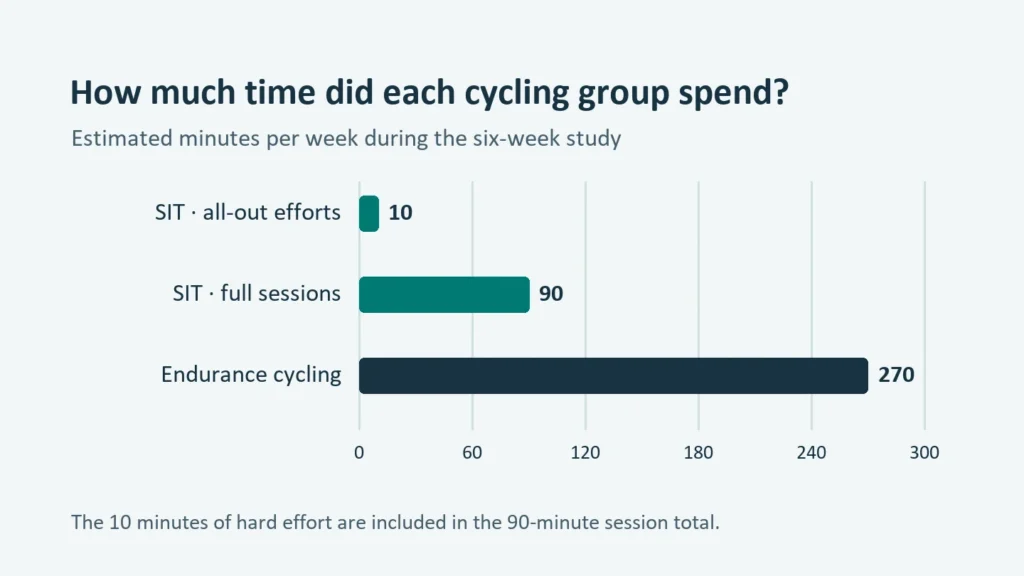
In a separate six-week cycling trial, both groups used more fat during a standardized exercise test after training. The sprint group averaged about 10 minutes of all-out work per week within roughly 90 total minutes of training. The endurance group averaged about 4.5 hours per week. [5]
Can a single sprint workout change body fat or disease risk?
A hard workout can temporarily shift fuel use during recovery. The 2014 study measured body-fat and waist changes after seven weeks, when both groups improved. Broader research suggests interval and moderate continuous training produce similar, generally small changes in body fat. Excess body fat, especially around the abdomen, is associated with cardiovascular disease and type 2 diabetes. These sprint trials measured fitness and metabolism. They did not test whether sprinting prevents either disease. [1] [6] [7] [8]
How can beginners start sprinting safely?
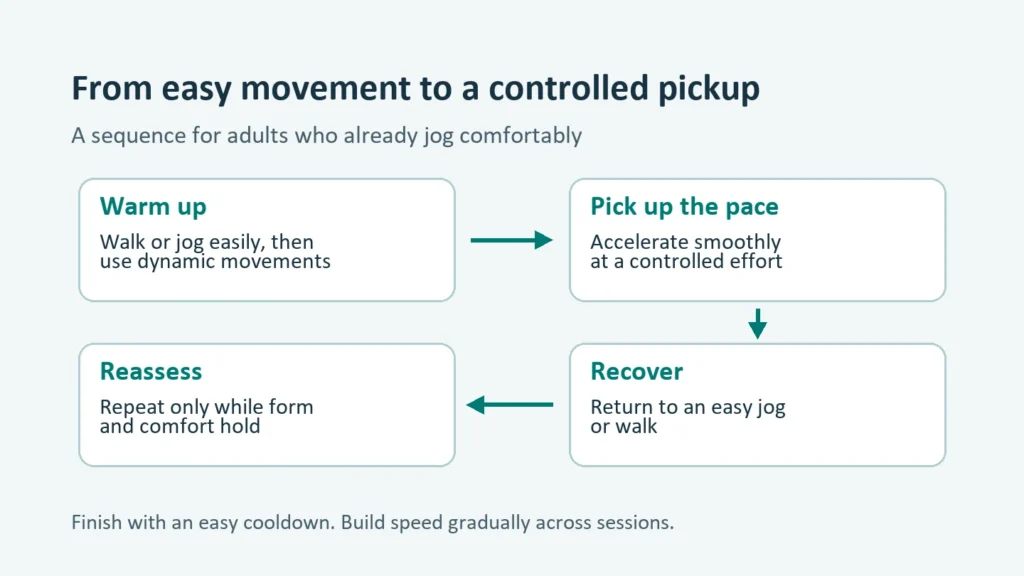
If you already jog comfortably, warm up with easy movement and dynamic stretches, then try a short acceleration you can control. Walk or jog until you feel ready for another effort. If you’re new to running or returning after a long break, build a walking and jogging base before adding speed.
How should you warm up and pace the first intervals?
- Start with an easy walk or jog. Add dynamic movements such as leg swings or walking lunges. These take muscles through a moving range of motion as your body warms up. [11]
- On a flat, predictable surface, briefly increase your pace and ease back down. A controlled pickup of up to 30 seconds can suit someone accustomed to jogging. Start shorter if needed and keep the effort below your top speed.
- Walk or jog easily between efforts. End the fast portion if your stride deteriorates or pain develops. Add speed or volume gradually. If you already tolerate hills, a gentle incline can be an optional progression that adds demand on the legs.
When should you check with a clinician first?
Seek medical guidance before vigorous intervals if you have exertional chest discomfort, unexplained breathlessness, dizziness or fainting. If you have a known cardiovascular, metabolic or kidney condition, ask your clinician how to progress to vigorous exercise. If an injury changes how you run, resolve it before adding speed. [12]
How can sprinting fit into a balanced exercise week?
Build your routine around aerobic activity you can repeat and strength work for your major muscle groups. If faster running suits your fitness and recovery, add one short speed session to start. Walking between meetings can make activity easier to fit in, and the weekly mix can change as your fitness improves.
| Activity | A practical starting point | Example from the source routine |
|---|---|---|
| Walking | Use breaks between meetings to get up and move. | Eight breaks of 1,000 steps each, for 8,000 steps in the example. |
| Strength work | Strengthen major muscle groups at least 2 days per week. | 3–5 workouts and 12–20 or more near-failure sets per muscle group per week. This is a high-volume example. |
| Faster running or sport | Try a brief weekly session if you already tolerate running. | One weekly session at about 80% of top speed. This is a pacing example. |
The example routine comes from physician Cameron Sepah’s social post. Its strength volume is optional, and training to failure is unnecessary for most adults. No set percentage of top running speed guarantees injury prevention. [14] [15]
For general health, the CDC recommends at least 150 weekly minutes of moderate aerobic activity, 75 minutes of vigorous activity, or an equivalent mix, plus strength work on at least two days. A brisk walk can count toward the aerobic target. [13]
Common questions about PEPLIX HEALTH
Peplix Health offers cash-pay telehealth for adults seeking help with hormone or metabolic concerns alongside lifestyle changes. Independent, licensed, board-certified physicians evaluate patients and make treatment decisions. If a compounded medication is appropriate, the physician can tailor the dose and send a patient-specific prescription to a licensed pharmacy that compounds under Section 503A.
Do I need a Peplix Health visit to start sprinting?
Sprinting is optional. If low energy, poor exercise tolerance or a known health condition affects your activity, a licensed clinician can help you decide whether further evaluation is appropriate. [12]
What does Monarch Brands LLC do, and who fills prescriptions?
Monarch Brands LLC provides management and administrative support for Peplix Health. The independent physician determines whether treatment is appropriate and selects the dose. When clinically appropriate, a licensed pharmacy operating under Section 503A can fill a patient-specific prescription. Compounded drugs do not undergo FDA premarket review for safety, quality or effectiveness. [16] [17]
This article provides general education. Seek individualized advice from a licensed healthcare professional when symptoms or a medical condition affect your exercise choices.
Sources
- Rudarli Nalcakan (2014). Sprint interval versus continuous endurance training.
- Little et al. (2019). Sprint exercise snacks and aerobic fitness.
- Burgomaster et al. (2005). Six sprint sessions and cycling endurance.
- Nancekievill et al. (2023). Four weeks of sprint training and fat oxidation.
- Burgomaster et al. (2008). Sprint cycling versus endurance cycling.
- Atakan et al. (2022). Interval training and fat oxidation during exercise.
- Steele et al. (2021). Interval versus continuous exercise and body composition.
- American Heart Association (2021). Obesity and cardiovascular disease.
- Erickson et al. (2020). Bone mineral density in masters weightlifters and runners.
- Suominen et al. (2012). Bone characteristics in aging sprint athletes.
- Yale Medicine. Dynamic stretching before running.
- American College of Sports Medicine. Exercise preparticipation screening.
- CDC. Physical activity guidelines for adults.
- Currier et al. (2026). ACSM position stand on resistance training.
- Cameron Sepah. Example weekly activity routine shared on X.
- FDA. Drug compounding questions and answers.
- FDA. Section 503A conditions and patient-specific prescriptions.
This article is for general education and is not medical advice. Talk with a licensed clinician before starting, stopping or changing any treatment. Compounded medications are not FDA-approved. See our safety information.
Keep reading

Wellness
Krill Oil vs Fish Oil for Omega-3s
Compare krill oil and fish oil for EPA and DHA, absorption, triglycerides, and side effects. Learn what to check on an omega-3 label.

Wellness
CoQ10 Benefits, Dosage, and Safety
What does CoQ10 do? Explore the evidence for heart failure, fatigue, and statin symptoms, plus dosage, supplement forms, and interactions.

Wellness
How to Build a Four-Minute Habit for Better Follow-Through
Use a four-minute check-in to review progress, adjust your next action, and build a repeatable habit. Includes prompts and a sample schedule.