Types of Magnesium: How to Choose the Right Form
Compare magnesium glycinate, malate, citrate, oxide and other forms for sleep, training and constipation. Learn how to read your dose.

Choose a magnesium form based on your goal, the elemental amount per serving, and how your stomach tolerates it. Glycinate has limited sleep research, malate can help fill a dietary gap, and certain citrate products are laxatives. If you take a GLP-1 medication, account for any nausea, diarrhea, or constipation before adding magnesium.
Why do different forms of magnesium matter?
Magnesium supports hundreds of enzyme systems involved in energy production, nerve signaling, muscle function, and blood sugar regulation. Supplements pair the mineral with another compound, which can affect how much you absorb and how your gut responds. A form’s name alone cannot predict how it will affect your sleep, energy, or workout recovery.
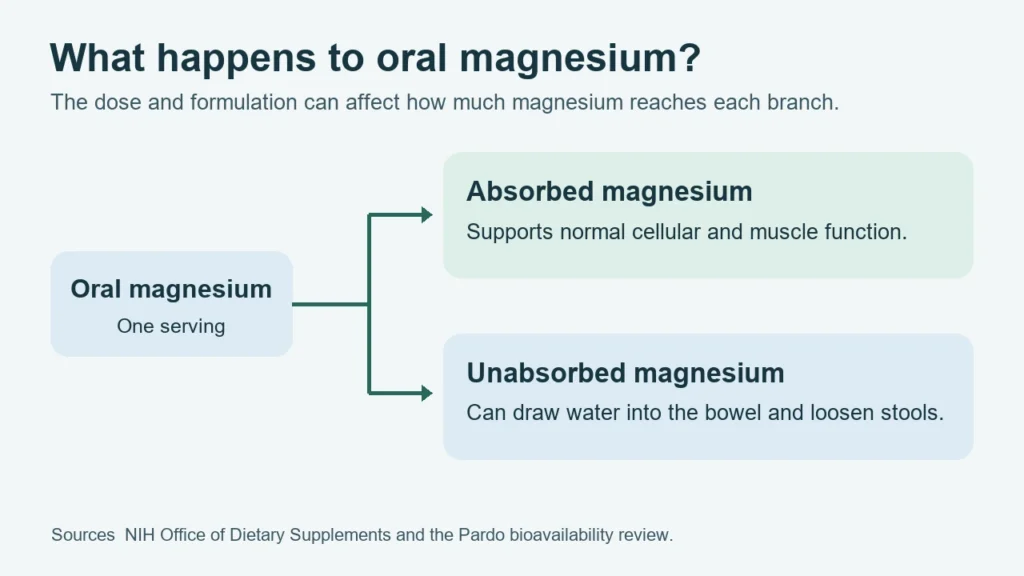
Magnesium helps enzymes use ATP, the molecule that supplies energy for cellular work. The compound paired with magnesium affects how readily a product dissolves, and unabsorbed magnesium can draw water into the bowel. Absorption also varies with the dose and formulation. Pay attention to what the product delivers per serving and how you respond to it. [1, 2]
Start by deciding whether you want to fill an intake gap, address occasional constipation, or discuss a symptom such as poor sleep. Those goals call for different decisions. [1, 3, 6]
Which magnesium form fits your goal?
Glycinate is a common choice for sleep, although evidence shows a small possible benefit and cannot establish it as the best form. Malate and chloride can supply dietary magnesium. Citrate and oxide have uses in bowel care, while evidence for L-threonate in cognition and for topical magnesium in repletion remains limited.
| Form | Why people choose it | What to check |
|---|---|---|
| Glycinate or bisglycinate | Magnesium bound to glycine. Often chosen for nighttime use. | One four-week trial found a small improvement in self-reported insomnia symptoms. A clear advantage for anxiety, muscle tension, or digestive tolerance remains unproven. [1–3] |
| Malate | Magnesium paired with malic acid. Malate participates in the citric acid cycle. | A daily oral option for filling an intake gap. Specific advantages for daytime alertness, exercise, or recovery remain unproven. Compare elemental dose and tolerance. [1, 2, 4] |
| Citrate | Magnesium paired with citrate. Some liquid formulations relieve occasional constipation. | Generally better absorbed than oxide. Laxative products can act within 30 minutes to six hours and may cause loose stools. Check whether the label describes a supplement or a laxative. [1, 2, 6] |
| Oxide | An inexpensive inorganic form with a high elemental percentage by weight. Also has laxative uses. | Generally less well absorbed than citrate and chloride. It still supplies some magnesium, and higher amounts may cause diarrhea. [1, 2] |
| L-threonate | Studied for sleep and cognition. Often sold as a premium product. | Small, short human trials are preliminary. Check price and elemental magnesium per serving. Superior brain delivery or repletion in humans remains unestablished. [5, 7] |
| Chloride | An oral option for routine intake. | Generally better absorbed than oxide. It can still cause diarrhea, especially at higher doses. [1] |
| Sulfate and topical products | Epsom salt baths and sprays are often used in a wind-down or soreness routine. | Evidence for meaningful skin absorption is inadequate. Use an oral approach for low dietary intake and get guidance for suspected deficiency. [1, 8] |
| Orotate or taurate | Specialty forms sometimes promoted for heart health. | Comparative evidence is too limited to justify choosing them over simpler options for routine intake. [1, 2] |
How much elemental magnesium can you take in a day?
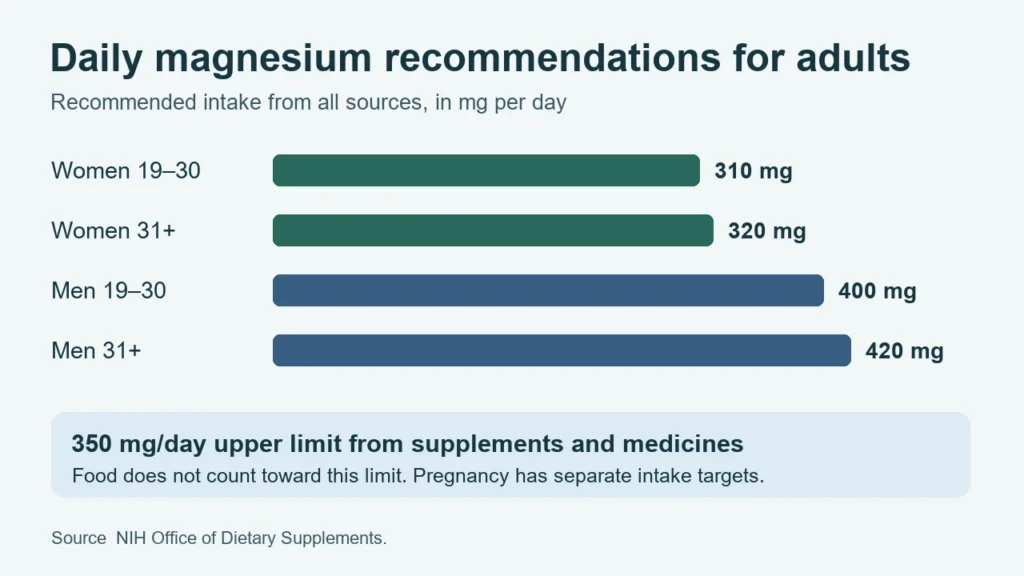
Most adults need 310 to 420 mg of magnesium per day, depending on age and sex. The adult upper limit of 350 mg applies to supplements and medicines combined. Food magnesium counts toward recommended intake and falls outside that upper limit. Check serving sizes before you combine products.
On a U.S. Supplement Facts panel, the amount beside “Magnesium” is the elemental amount per serving. The form may appear in parentheses or in the ingredient list. If the serving is two capsules and you take one, you take half the listed amount. Check multivitamins, single-form supplements, and magnesium-containing antacids or laxatives. [1]
A morning malate product plus evening glycinate is one possible routine. One well-tolerated product can also meet the same intake need. When you switch, compare elemental amounts and change one product at a time so you can identify what causes digestive symptoms. If you develop loose stools or cramping, check your combined amount. [1, 2]
Ask a clinician or pharmacist before adding magnesium if you have kidney disease or take interacting medicines. Magnesium can interfere with absorption of oral bisphosphonates and certain antibiotics, including tetracyclines and fluoroquinolones. Kidney impairment raises the risk of magnesium accumulation. [1]
What should you consider if you take a GLP-1 medication?
If you take a GLP-1 medication, first consider how much magnesium you get from food and whether you already have nausea, diarrhea, or constipation. A clinician can help you decide whether you need a supplement and which dose you can tolerate. No comparative trials establish a preferred magnesium form for GLP-1 users.
Nausea, diarrhea, vomiting, and constipation can occur during GLP-1 treatment, particularly when you start or increase the dose. A supplement that loosens stools can add to symptoms. If appetite falls, review whether your meals still include foods such as beans, nuts, seeds, whole grains, and leafy greens. [1, 9, 10]
- For routine intake, consider the dose and your tolerance. Malate, glycinate, or oral chloride can be options if a supplement is appropriate.
- For occasional constipation, a labeled citrate laxative may be an option. Read its warnings and ask about persistent constipation or symptoms that recur with dose changes. [6, 9]
- For ongoing vomiting or diarrhea, contact your prescriber, especially if you cannot keep fluids down. Follow your medication label’s instructions for severe or persistent abdominal pain. [9, 10]
Common questions about PEPLIX HEALTH
Peplix Health is a cash-pay telehealth service managed by Monarch Brands LLC. Independent, board-certified physicians review your health history, medications, and goals. When treatment is appropriate, they individualize dosing and follow-up. An eligible patient-specific compounded prescription may be filled by a state-licensed pharmacy under Section 503A and applicable state requirements.
Can I take magnesium malate and glycinate on the same day?
Yes, if both are appropriate for you. Add the elemental magnesium in all supplements and medicines before using a second product. A clinician can help you decide whether a change in form or dose makes more sense than an add-on. [1]
Should I take magnesium in the morning or at night?
Pick a time you can maintain and that works with your medications and digestive tolerance. Evening is a practical time for some people who choose glycinate. Evidence has not established that malate is energizing in the morning or that glycinate needs to be taken at bedtime. [1, 3, 4]
Can Peplix Health help me choose magnesium while treating other health concerns?
Bring your Supplement Facts panels and medication list to a visit. An independent physician can review your symptoms, intake, medication interactions, and health history before recommending a change. See our vitamins and wellness guide or start an online assessment for care information.
Does regular magnesium supplementation require a 503A pharmacy?
Standard dietary supplements are sold without a compounded prescription. When an eligible prescription medicine needs compounding, Section 503A requires a valid prescription for an identified patient and other conditions. Compounded drugs do not undergo FDA premarket review for safety, effectiveness, or quality. [11, 12]
Sources
- NIH Office of Dietary Supplements. Magnesium fact sheet for health professionals.
- Pardo et al. Systematic review of magnesium supplement bioavailability.
- Schuster et al. Four-week magnesium bisglycinate trial in adults reporting poor sleep.
- NCBI Bookshelf. Biochemistry of the citric acid cycle.
- Randomized trial of magnesium L-threonate and sleep.
- DailyMed. Magnesium citrate saline laxative labeling.
- Randomized trial of magnesium L-threonate, cognition, and sleep.
- Gröber et al. Review of transdermal magnesium.
- Joint advisory on nutritional priorities during GLP-1 therapy.
- DailyMed. Wegovy prescribing and patient information.
- FDA. Federal provisions for human drug compounding.
- FDA. Compounding questions and answers.
This article is for general education and is not medical advice. Talk with a licensed clinician before starting, stopping or changing any treatment. Compounded medications are not FDA-approved. See our safety information.
Keep reading

Wellness
Krill Oil vs Fish Oil for Omega-3s
Compare krill oil and fish oil for EPA and DHA, absorption, triglycerides, and side effects. Learn what to check on an omega-3 label.

Wellness
Sprinting Benefits and How to Start Sprint Interval Training
Learn how sprint intervals affect fitness and fat oxidation, how to start with controlled efforts, and how to fit sprinting into your week.

Wellness
CoQ10 Benefits, Dosage, and Safety
What does CoQ10 do? Explore the evidence for heart failure, fatigue, and statin symptoms, plus dosage, supplement forms, and interactions.