Minoxidil for Hair Loss: Topical vs Oral
Compare topical and oral minoxidil for hair loss, how long results take, which side effects to watch for, and when combinations may help.

Topical minoxidil can slow pattern hair loss and improve density in some adults who use it consistently. Low-dose oral minoxidil is a prescription option used off-label for hair loss. The tablet has more whole-body effects, so blood pressure, heart and kidney history, and other medicines matter when choosing a treatment.
How does minoxidil help hair grow?
Minoxidil is a vasodilator. In the scalp, sulfotransferase enzymes convert it to active minoxidil sulfate. It appears to move some follicles out of the resting phase and help maintain the growth phase. Changes in blood flow and follicle signaling may contribute, but the exact mechanism behind regrowth is still being studied.
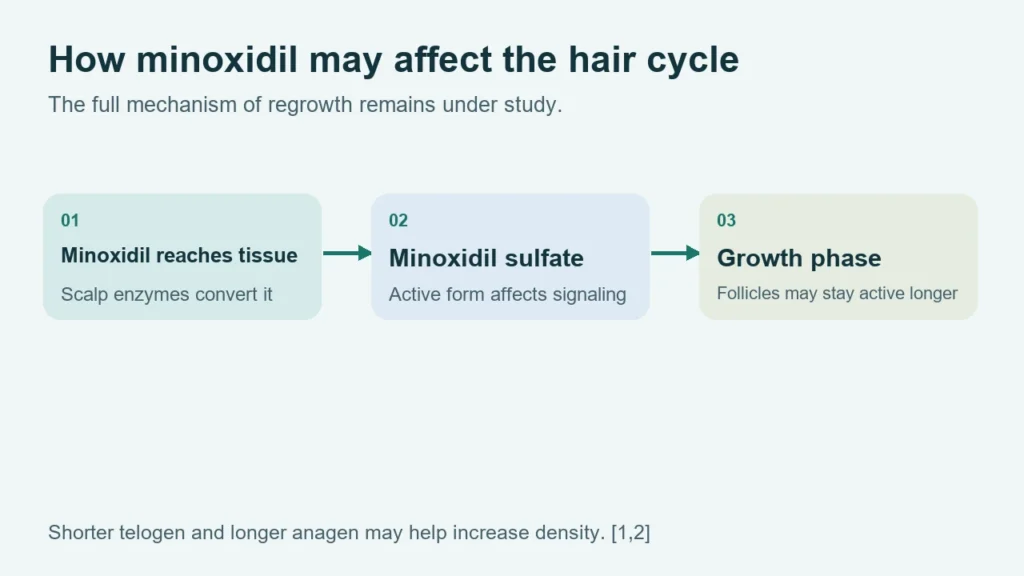
The hair cycle includes telogen, a resting phase, and anagen, the growth phase. Minoxidil can shorten telogen and prolong anagen. Active minoxidil also affects potassium channels and can widen blood vessels. Increased oxygen or nutrient delivery is a proposed explanation, and blood flow alone has not been established as the reason for clinical improvement. [1,2]
Is topical or oral minoxidil more effective?
Topical minoxidil has the most established place as a first option for pattern hair loss. A 24-week randomized trial in men found that 5 mg oral minoxidil was not superior overall to 5% topical minoxidil. People who struggle to apply topical medicine consistently can ask a physician whether oral treatment is appropriate.
| Form | U.S. approval and uses | Practical trade-offs |
|---|---|---|
| Topical solution | Labeled products include 2% and 5% solutions for indicated patterns of hair loss. | Targets the scalp. Some solutions use propylene glycol, which can irritate sensitive skin. |
| Topical foam | 5% foam products are FDA-approved for labeled hair-loss use. | Often dries faster and generally lacks propylene glycol. Follow the specific product label. |
| Oral tablet | FDA-approved for severe high blood pressure that has not responded to other treatment. Hair-loss use is off-label. | A pill can be easier to take consistently. Whole-body effects require individualized prescribing and monitoring. |
A smaller comparison published online in 2023 found no statistically significant difference between 1 mg oral minoxidil and 5% topical solution. Trials and series also examine oral doses below 5 mg. Those doses describe research, and your physician should determine any treatment dose. Topical minoxidil has also been used off-label as an adjunct for alopecia areata, chemotherapy-related loss, and stress-related shedding in selected cases. These conditions need assessment and can require different primary treatment. [1,3–5]
How long does it take to see results?
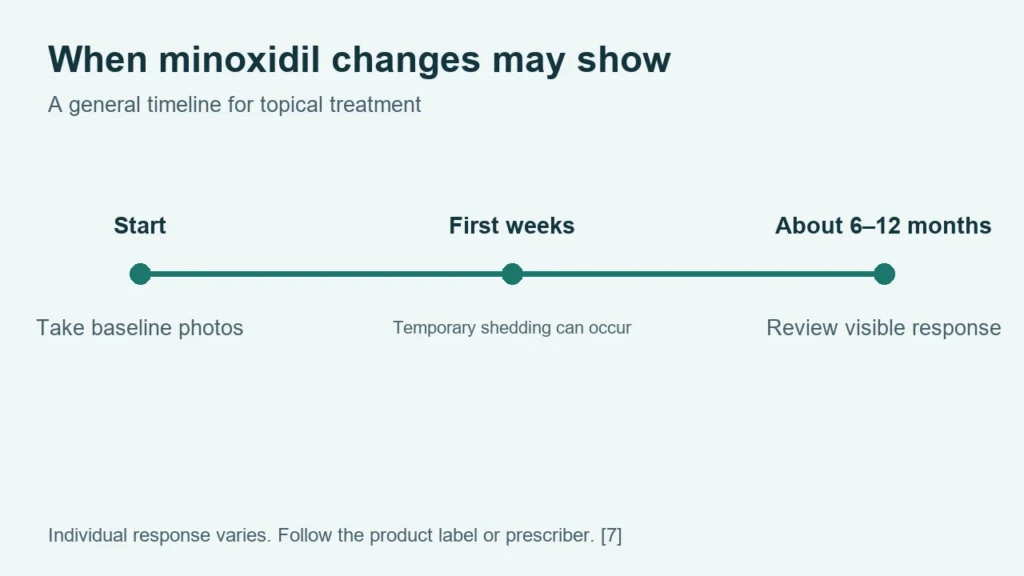
Plan to judge progress over months. Some people notice temporary shedding during the first weeks, and visible changes often take six to twelve months. A comparable baseline photo can make gradual changes easier to see. Continued use usually helps maintain benefits, and your clinician can review progress if shedding or thinning persists.
A 12-month observational report enrolled 984 men using 5% topical solution twice daily. Physicians rated the solution at least moderately effective for regrowth in about 84% of the 902 men with those ratings. The study had no placebo group. Controlled trials also support topical treatment for pattern hair loss, with variable effects on density. Sudden or patchy loss warrants assessment before starting. [1,3,6,7]
Can minoxidil be combined with other treatments?
Evidence supports adding finasteride in selected men with pattern hair loss. The two medicines act differently, and each has separate risks. Small studies also found more growth when microneedling was added to topical minoxidil. FDA has not cleared microneedling devices for hair loss or for delivering topical medication. Ask a dermatologist about appropriate use. [8–10]
A 2007 trial found comparable results with a once-daily combination of 5% minoxidil and tretinoin and twice-daily 5% minoxidil alone. The small study does not establish that tretinoin reliably speeds results or allows everyone to switch schedules. Tretinoin can irritate the scalp. Share all topical and oral medicines and supplements with your clinician. [11]
What side effects should you watch for?
Topical minoxidil can cause burning, itch, flaking, or irritation. Oral minoxidil can cause unwanted body hair, dizziness, swelling, headache, or a fast heartbeat. Contact a clinician promptly about rapid weight gain, swelling, or palpitations. Get emergency care for chest pain, trouble breathing, or fainting at any point during treatment.
- Topical effects. Dryness and scalp irritation are common concerns with topical use. Ingredients such as propylene glycol can contribute. A different formulation may help after the cause is reviewed. [1,12]
- Oral effects. Unwanted facial or body hair, fluid retention, headache, dizziness, and reflex tachycardia are reported. Temporary shedding can occur. Acne has been reported in some accounts but is less established. The U.S. tablet label carries a boxed warning for serious risks including fluid around the heart and worsening angina. Discuss heart or kidney disease, blood pressure, and antihypertensives with the prescriber. [4,5,12,13]
Common questions about PEPLIX HEALTH
A Peplix Health evaluation with an independent, board-certified physician can consider the cause of hair loss, your scalp symptoms, current medications, and your ability to use treatment consistently. Monarch Brands LLC handles management. Medical decisions include whether to recommend a labeled topical product, consider off-label oral treatment, or arrange further assessment.
Will a prescription be required?
Many labeled topical products are available over the counter. Oral minoxidil requires a prescription. Its use for hair loss is off-label and should be reviewed by the prescribing physician.
How are customized products filled?
When a patient has a clinical need for a compounded formulation and legal requirements are met, a state-licensed pharmacy operating under Section 503A may prepare it from a valid individual prescription. Compounded drugs do not have FDA approval. Ask your physician how the formulation, strength, dose, and monitoring will be chosen. [14]
This article is for education. Discuss diagnosis or treatment decisions with a licensed healthcare professional.
For consultation information, see our vitamins and wellness guide or start an online assessment.
Sources
- Suchonwanit et al. — minoxidil mechanism, effects, and formulations
- StatPearls — hair cycle physiology
- Penha et al. — oral versus topical minoxidil trial
- Asilian et al. — oral 1 mg versus topical 5%
- Review — low-dose oral minoxidil in pattern hair loss
- Rundegren — 12-month observational study
- American Academy of Dermatology — hair loss treatments
- Chen et al. — finasteride and minoxidil combination evidence
- Kumar et al. — microneedling plus topical minoxidil
- FDA — microneedling devices and approved uses
- Shin et al. — topical minoxidil and tretinoin
- MedlinePlus — topical minoxidil safety
- DailyMed — oral minoxidil label and boxed warning
- FDA — compounding and FDA approval
This article is for general education and is not medical advice. Talk with a licensed clinician before starting, stopping or changing any treatment. Compounded medications are not FDA-approved. See our safety information.
Keep reading

Wellness
Krill Oil vs Fish Oil for Omega-3s
Compare krill oil and fish oil for EPA and DHA, absorption, triglycerides, and side effects. Learn what to check on an omega-3 label.

Wellness
Sprinting Benefits and How to Start Sprint Interval Training
Learn how sprint intervals affect fitness and fat oxidation, how to start with controlled efforts, and how to fit sprinting into your week.

Wellness
CoQ10 Benefits, Dosage, and Safety
What does CoQ10 do? Explore the evidence for heart failure, fatigue, and statin symptoms, plus dosage, supplement forms, and interactions.