Magnesium for Weight Loss and Metabolic Health
Does magnesium help with weight loss? Review the evidence on blood sugar, compare supplement forms, and plan magnesium intake during GLP-1 treatment.

Magnesium supports insulin signaling, muscle function, and energy metabolism. Supplement trials show modest changes in some metabolic markers, but they do not establish meaningful weight loss or targeted belly fat loss. If you are eating less during weight management or GLP-1 treatment, review whether your meals still provide enough magnesium and protein.
Why does magnesium matter for blood sugar?
Magnesium helps enzymes process carbohydrates and supports insulin signaling at the insulin receptor. Low magnesium intake is associated with a higher risk of metabolic syndrome and type 2 diabetes. Trials suggest modest effects on some measures of glucose control, with results varying by population and outcome. These findings do not establish a fat-loss effect.
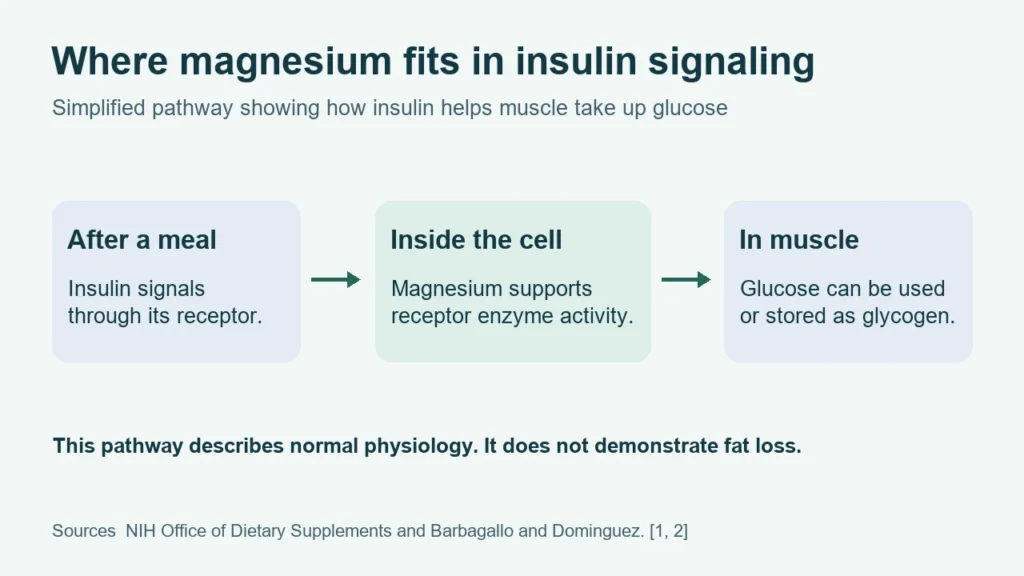
Magnesium participates in insulin receptor tyrosine kinase activity and supports insulin-mediated glucose uptake. When insulin signaling is impaired, the pancreas can initially compensate by releasing more insulin. Muscle can use glucose for energy or store it as glycogen, including after exercise. No clinical evidence shows that a magnesium supplement reliably redirects calories from fat storage to muscle. [1–3]
Observational research links higher dietary magnesium with lower risk of type 2 diabetes and metabolic syndrome. Features of metabolic syndrome include abdominal obesity, elevated blood pressure, abnormal triglycerides or HDL cholesterol, and higher fasting glucose. Overall diet and activity may partly explain these associations. The NIH reports that 48% of Americans in 2013–2016 obtained less than their estimated average requirement from foods and beverages. [1] [4–6]
What do magnesium studies show about weight, glucose, and blood pressure?
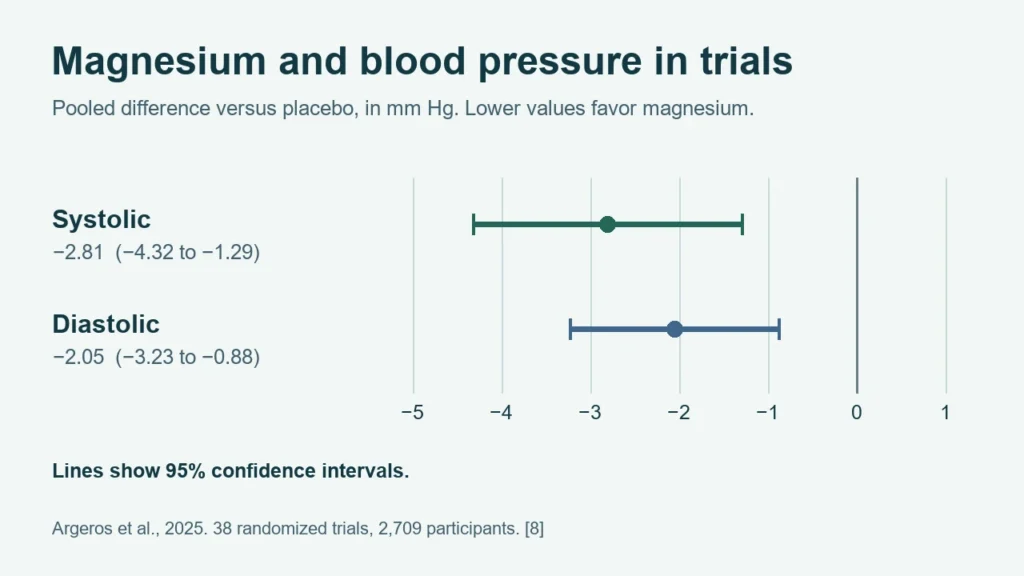
Trials have reported modest improvements in fasting glucose in people with diabetes or at elevated risk, and in estimated insulin resistance among some high-risk participants. Some trials also found small blood pressure reductions. These results answer different questions from whether a supplement produces sustained weight loss, controls appetite, or reduces belly fat.
A review of placebo-controlled trials found lower fasting glucose in participants with diabetes or at high risk. In high-risk participants, the pooled HOMA-IR estimate also improved. HOMA-IR uses fasting glucose and fasting insulin to estimate insulin resistance. The same review did not show significant changes in HbA1c or serum insulin in those high-risk groups. [3]
A separate review of 28 trials found no significant overall effects on body weight, waist circumference, or body fat percentage. Individual subgroup findings do not establish that magnesium reduces abdominal fat. There is also insufficient evidence that supplementation prevents cravings, reduces snacking, or makes a calorie deficit easier to maintain. [7]
In a blood pressure meta-analysis, average reductions were about 2.81 mm Hg systolic and 2.05 mm Hg diastolic versus placebo. Individual responses can vary, and the research did not measure whether these modest changes improved weight loss. [8]
What changes when you eat less or start GLP-1 therapy?
Calorie restriction and GLP-1 medicines can make it easier to eat smaller portions, which may reduce magnesium and other nutrient intake. Semaglutide and tirzepatide reduce appetite and can delay stomach emptying. During weight loss, prioritize adequate protein, resistance training, and a varied diet, then review whether a supplement would fill a specific gap.
Semaglutide acts at the GLP-1 receptor. Tirzepatide acts at both GIP and GLP-1 receptors. Trials found substantial average weight loss, which can include both fat and lean mass. A decline in lean mass can partly explain lower resting energy expenditure after weight loss. Weight regain has been observed after medication withdrawal. [9–11]
- Plan for muscle retention. Include adequate protein and resistance training several times a week as tolerated. Build a regular sleep schedule and address stress if it affects eating or training. [9]
- Check meal variety. A portion can meet a protein goal and still supply little magnesium. Consider legumes, nuts, seeds, leafy greens, and whole grains. Also review zinc and vitamin D intake if your choices have narrowed. [1, 9]
- Look at actual intake before increasing a dose. Exercise and sweating can contribute to mineral losses, but a higher-protein or lower-carbohydrate diet alone does not establish a higher magnesium requirement. [1, 9, 12]
Which magnesium form and dose make sense during weight loss?
No magnesium form has been shown to produce meaningful fat loss. Malate and glycinate are options for filling an intake gap, and some citrate products are intended for occasional constipation. Check the elemental dose across supplements and medicines, and ask your clinician about kidney function, digestive symptoms, and medication interactions before adding a product.
| Form | Why people choose it | What the evidence supports |
|---|---|---|
| Malate | Magnesium paired with malic acid, which participates in the citric acid cycle. | An oral option for routine intake. A daytime energy, pre-workout, or fat-loss advantage is unproven. [1, 13, 14] |
| Glycinate | Magnesium bound to glycine. Sometimes taken in the evening. | One short trial found a small improvement in self-reported insomnia symptoms. Benefits for cravings or weight loss are unproven. [15] |
| Citrate | Some products are saline laxatives for occasional constipation. | Generally better absorbed than oxide. Laxative formulations draw water into the bowel and can cause loose stools. [1, 14, 16] |
| Oxide | A low-cost option with high elemental magnesium by weight. | Generally less well absorbed than citrate and may cause diarrhea, especially at higher doses. [1, 14] |
How much elemental magnesium should you count?
Daily recommendations for most adults are 310–320 mg for women and 400–420 mg for men, depending on age. These totals include food and supplements. The adult upper limit of 350 mg per day applies to magnesium from supplements and medicines. Food magnesium falls outside that limit. A universal 400–500 mg/day target during dieting or GLP-1 treatment has not been established. [1, 9]
Read the elemental amount in Supplement Facts and check serving size. Taking a supplement with food or dividing the amount may help with digestive tolerance. Review concentrated doses or combinations with your clinician if you have kidney disease, electrolyte disturbances, or chronic metabolic or cardiovascular conditions, or if you take diuretics. Some antibiotics and oral osteoporosis medicines also require spacing. [1]
Common questions about PEPLIX HEALTH
Peplix Health is a cash-pay telehealth service managed by Monarch Brands LLC. Independent, board-certified physicians assess your health history, medications, goals, and treatment eligibility. If care is appropriate, your physician individualizes dosing and follow-up. A state-licensed pharmacy can fill an eligible patient-specific compounded prescription under applicable Section 503A and state requirements.
Will magnesium help me lose belly fat?
Research has not shown meaningful or targeted belly fat loss from magnesium. Citrate used as a laxative can change stool and water in the bowel, which may briefly change scale weight. Body fat is a separate outcome. [7, 16]
Does magnesium help preserve muscle during weight loss?
Magnesium supports normal muscle contraction, protein synthesis, and electrolyte balance. The evidence does not show that taking extra magnesium preserves muscle during GLP-1 treatment. Prioritize protein and resistance training. If intake is low, a clinician can help you address the gap and review any sleep, fatigue, or GI concerns. [1, 9, 15]
Can I take magnesium with semaglutide or tirzepatide?
Bring your medication and supplement labels to your visit. Your physician can review your food intake, current magnesium dose, kidney function, and digestive tolerance. If diarrhea, nausea, or constipation persists, discuss it before adding a laxative or changing your prescription. [1, 9, 10, 16]
Does magnesium require a compounding pharmacy?
Standard retail magnesium is generally sold as a dietary supplement. For eligible prescription drugs, Section 503A compounding requires a valid prescription for an identified patient and compliance with other federal and state conditions. Compounded medications do not undergo FDA premarket review for safety, effectiveness, or quality. [17, 18]
For consultation information, see our vitamins and wellness guide or start an online assessment.
Sources
- NIH Office of Dietary Supplements. Magnesium health professional fact sheet.
- Barbagallo and Dominguez. Magnesium, metabolic syndrome, and insulin resistance.
- Veronese et al. Meta-analysis of oral magnesium and glucose metabolism.
- Ju et al. Meta-analysis of dietary magnesium and metabolic syndrome.
- Dong et al. Meta-analysis of magnesium intake and type 2 diabetes risk.
- National Heart, Lung, and Blood Institute. Metabolic syndrome diagnosis.
- Rafiee et al. Meta-analysis of magnesium and body weight and composition.
- Argeros et al. Meta-analysis of magnesium supplementation and blood pressure.
- Joint advisory on nutritional priorities during GLP-1 therapy.
- Obesity management in adults. Review of medication mechanisms and trials.
- Wilding et al. STEP 1 trial extension on weight regain after withdrawal.
- Review of vitamin D and magnesium in athletes.
- NCBI Bookshelf. Biochemistry of the citric acid cycle.
- Pardo et al. Systematic review of magnesium supplement bioavailability.
- Schuster et al. Magnesium bisglycinate trial in adults with poor sleep.
- DailyMed. Magnesium citrate saline laxative label.
- FDA. Federal provisions for human drug compounding.
- FDA. Compounding questions and answers.
This article is for general education and is not medical advice. Talk with a licensed clinician before starting, stopping or changing any treatment. Compounded medications are not FDA-approved. See our safety information.
Keep reading

Wellness
Krill Oil vs Fish Oil for Omega-3s
Compare krill oil and fish oil for EPA and DHA, absorption, triglycerides, and side effects. Learn what to check on an omega-3 label.

Wellness
Sprinting Benefits and How to Start Sprint Interval Training
Learn how sprint intervals affect fitness and fat oxidation, how to start with controlled efforts, and how to fit sprinting into your week.

Wellness
CoQ10 Benefits, Dosage, and Safety
What does CoQ10 do? Explore the evidence for heart failure, fatigue, and statin symptoms, plus dosage, supplement forms, and interactions.