How to Get Out of a Rut When You Feel Stuck
Feeling stuck? Learn to spot a lasting slump, set one doable goal, rethink what you can control, and recognize when to seek professional support.

If work, relationships, or routines have felt flat for several days, start by identifying where you feel stuck and choose one action you can finish this week. Check whether sleep, stress, or isolation may be contributing. If symptoms persist, worsen, or interfere with everyday life, reach out to a licensed professional.
How do you tell a rough day from a rut?
A rut is an everyday description of feeling stuck, bored, or unmotivated across several days or longer. You might repeat the same routine and feel little progress toward something that matters. Notice how long it lasts, which parts of life it affects, and whether you can still enjoy your usual activities.
| What you notice | What to look for | What you can do |
|---|---|---|
| A short slump | One or two difficult days linked to a specific setback or poor sleep | Rest and see whether your energy or interest returns. |
| Feeling stuck in a routine | Repeated boredom, frustration, harsh self-talk, or indifference about change | Pick one area and test a small, measurable change. |
| Work-related burnout | Ongoing workplace stress with exhaustion, distance or cynicism about work, and reduced effectiveness | Review workload, boundaries, and available support at work. [1] |
| Persistent low mood or loss of interest | Symptoms across settings, with possible changes in sleep, appetite, energy, or concentration | Seek a clinical assessment, especially when symptoms disrupt daily life. [2] |
Why do stress and low energy make it harder to get moving?
Short sleep, ongoing demands, and setbacks at work or home can make it harder to concentrate and start tasks. Chronic workplace stress can also contribute to burnout. Pinpoint where the strain is coming from, because a workload problem may need a conversation about priorities as much as recovery time.
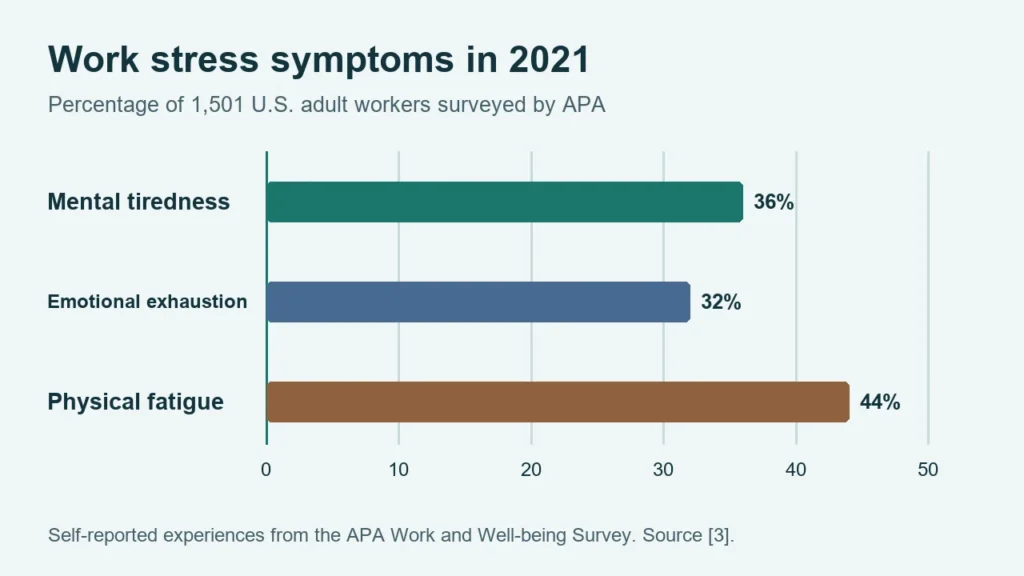
In the APA’s 2021 survey of 1,501 U.S. adult workers, 36% reported mental tiredness, 32% reported emotional exhaustion, and 44% reported physical fatigue. Those figures describe experiences reported during the pandemic and do not diagnose burnout or depression. [3]
When you are tired, an ordinary task can feel surprisingly difficult. Reduced focus and mental energy can feed a cycle of postponing tasks, feeling behind, and criticizing yourself. Look at recent changes in sleep, demands, and support before deciding what needs to change. [4]
What can you do this week to feel less stuck?
Pick a small, measurable action with a time and place. If you are replaying a problem, separate what you can influence from what depends on other people. Then give yourself support you can use today, such as a walk, a regular bedtime, an easy meal, or a conversation with someone you trust.
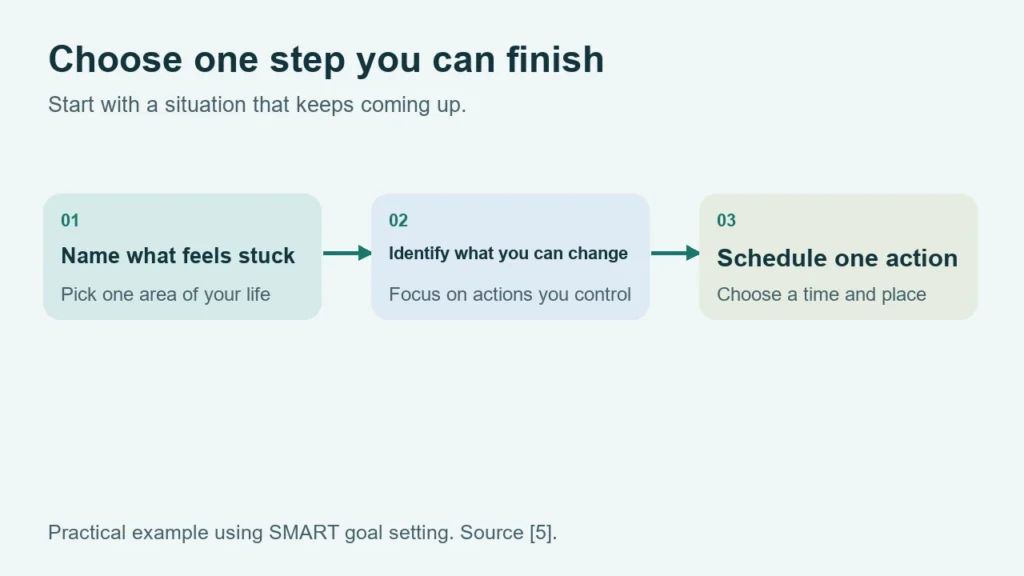
- Make one SMART goal. Write an action that is specific, measurable, achievable, relevant, and time-bound. If you want to reconnect with friends, send one person an invitation by Thursday. If the action still feels difficult, make it smaller. [5]
- Try a different perspective. Write down what happened, which parts you can influence, and the advice you would give a friend. You can also use your own name as you think through the problem. Experiments on self-talk suggest this can create psychological distance during some stressful situations. [6]
- Make the basics easier. Set a realistic bedtime, plan a nourishing meal, or schedule movement you can do regularly. A 2018 study linked activity with subsequent mood and found two-way relationships among activity, sleep, and energy. Changes can support well-being while other causes are evaluated. [7]
- Spend time outdoors and reach out. Try a short walk in a park or invite someone to join you. Studies have linked some measures of green space to less loneliness. Research also suggests potential benefits for attention and irritability, with results varying by setting and study. [8,9]
When should you talk to a mental health professional?
Seek professional support if low mood, loss of interest, or other symptoms are worsening or interfering with work, relationships, or basic responsibilities. A pattern lasting about two weeks can be a reason to ask about depression. You can contact a clinician sooner if your symptoms are distressing or you need help coping.
Tell the clinician when the changes began, how often they occur, and whether sleep, appetite, concentration, or enjoyment have changed. You can start with primary care or a licensed mental health professional. Talking to a trusted person can help you get support while you arrange care. [2]
Common questions about PEPLIX HEALTH
Peplix Health’s cash-pay care model uses independent, board-certified physicians for clinical evaluation, with management services from Monarch Brands LLC. If persistent fatigue, sleep changes, or mood concerns are affecting your routine, a physician can review your history and help you decide whether primary care, mental health care, or another evaluation is appropriate.
Will a short slump automatically lead to medication or hormone testing?
An evaluation starts with symptoms, their duration, and medical history. Testing, referral, medication, and dosing depend on what the clinician finds and what is appropriate for your situation.
When might a Section 503A pharmacy fill a prescription?
If a physician identifies a patient-specific need for a compounded medication and applicable requirements are met, a state-licensed pharmacy operating under Section 503A can fill the individual prescription. Compounded medications lack FDA approval. [10]
For consultation information, see our vitamins and wellness guide or start an online assessment.
Sources
- WHO – occupational burnout definition
- NIMH – depression symptoms and help
- APA – 2021 Work and Well-being Survey findings
- UAB – physical and mental energy
- Mayo Clinic Health System – SMART goals
- Kross et al. – self-talk and self-regulation
- NIH – physical activity, mood, and sleep
- Astell-Burt et al. – green space and loneliness
- Mayo Clinic Press – mental health and time outdoors
- FDA – Section 503A compounding requirements
This article is for general education and is not medical advice. Talk with a licensed clinician before starting, stopping or changing any treatment. Compounded medications are not FDA-approved. See our safety information.
Keep reading

Wellness
Krill Oil vs Fish Oil for Omega-3s
Compare krill oil and fish oil for EPA and DHA, absorption, triglycerides, and side effects. Learn what to check on an omega-3 label.

Wellness
Sprinting Benefits and How to Start Sprint Interval Training
Learn how sprint intervals affect fitness and fat oxidation, how to start with controlled efforts, and how to fit sprinting into your week.

Wellness
CoQ10 Benefits, Dosage, and Safety
What does CoQ10 do? Explore the evidence for heart failure, fatigue, and statin symptoms, plus dosage, supplement forms, and interactions.