How to Develop the Focus of an Elite Athlete
Learn four types of athletic focus and how to practice visualization, self-talk, and process goals for training, work, and daily life.
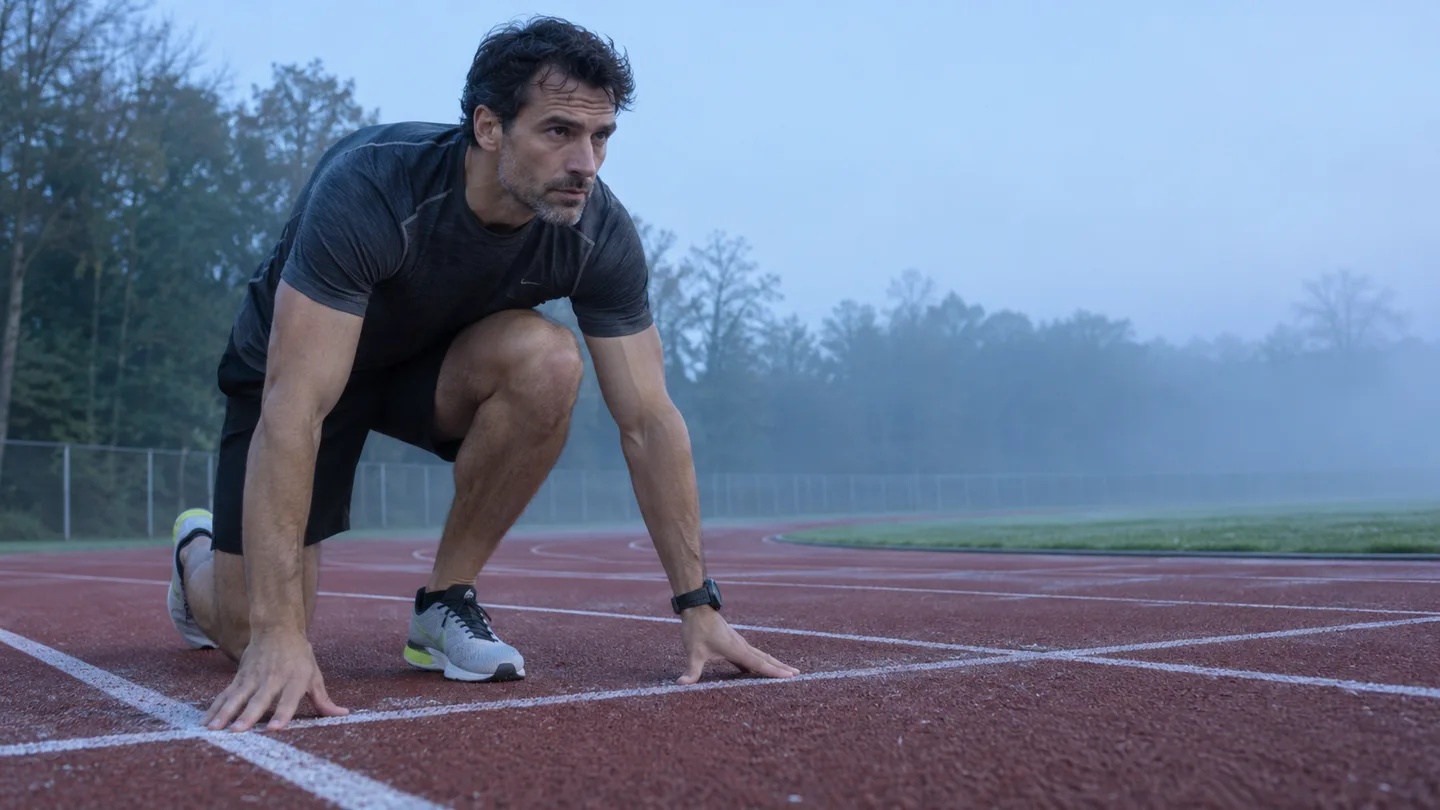
To build athletic focus, practice choosing what deserves your attention and returning to it after distractions. Rehearse a realistic scenario, use a short cue you can act on, and set goals around behaviors you control. Practice during ordinary sessions so the techniques feel familiar when the pressure rises.
What kind of focus do you need in the moment?
Sport psychologists describe attention along two dimensions. It can be internal or external, and it can be broad or narrow. The right combination depends on what you need to do next. Scan widely when conditions change, then narrow your attention to a cue that helps you carry out your decision.
Internal attention covers thoughts, feelings, and bodily sensations. External attention covers what is happening around you. Broad attention takes in several signals at once. Narrow attention zeroes in on one. These dimensions combine, and you can switch between them during the same task. [1]
| Focus type | What you attend to | When it helps |
|---|---|---|
| Broad external | Several things in your surroundings | A cyclist scans traffic, road surface, and the riders ahead before changing position. |
| Broad internal | Several thoughts, sensations, or parts of a plan | Between intervals, a runner considers pace, effort, and how much work is left. |
| Narrow external | One target or feature in the environment | A tennis player picks a landing area before a serve. |
| Narrow internal | One thought, sensation, or deliberate action | Before speaking in a meeting, pause and notice one slow exhale. |
At Paris 2024, Noah Lyles won the Olympic men’s 100 meters and Stephen Nedoroscik won bronze on pommel horse. Their events make different demands on attention. In your own training, try assessing conditions before a timed effort, choosing one cue during it, and checking how you feel after it. At work, scan an agenda, then focus on the decision being discussed. In a conversation, listen to the other person’s point before deciding how to respond. [1–3]
Which mental training techniques can improve focus?
Start with one technique you can repeat. Use imagery to rehearse a task and a likely interruption. Try brief self-talk that directs your next action. Set a process goal you can track during practice. Mental skills develop through repetition alongside physical preparation, with enough time to see which cues work for you.
- Rehearse with realistic details. Picture the setting, what you will see or hear, and how the movement will feel. Rehearse a clean start and how you would recover from a false start in practice or losing your place during a presentation. Sport psychology practitioners use imagery to support confidence, concentration, and anxiety regulation. [4]
- Give yourself a usable cue. Try a short, believable phrase such as “steady through the turn.” A 2020 study of shooting athletes linked self-talk with how much they valued effort, how competent they felt, and how much they enjoyed the activity. The study cannot predict how a particular phrase will work for you. [5]
- Break the goal into actions. If your outcome goal is a faster race, start by planning specific workouts or preparing a meal ahead of a demanding session. A systematic review found that process goals can support performance and confidence in the ability to execute a task. [6]
Does confidence help athletes perform better?
Confidence is associated with better sports performance on average, with a modest relationship across studies. You can build confidence by keeping track of actions you complete and skills you improve. A race result or presentation outcome gives feedback for your next practice session, alongside what you noticed and what you did.
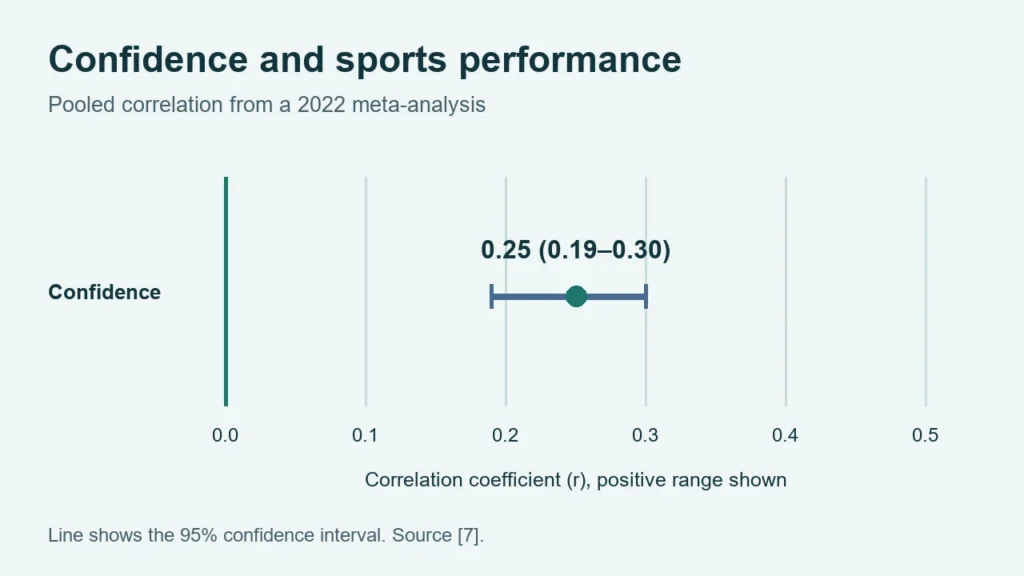
A 2022 meta-analysis estimated a correlation of 0.25 between self-confidence and athletic performance. The 95% confidence interval was 0.19 to 0.30. The relationship varied by context and does not establish that confidence alone causes better results. Keep a short record of what worked under pressure so your confidence has something specific to draw on. [7]
How do you refocus when something goes wrong?
Decide ahead of time which parts of the task you can influence. If the weather changes, a meeting runs late, or someone makes a distracting comment, name the issue and choose the next action you can take. Afterward, review the result and decide what to rehearse before the next attempt.
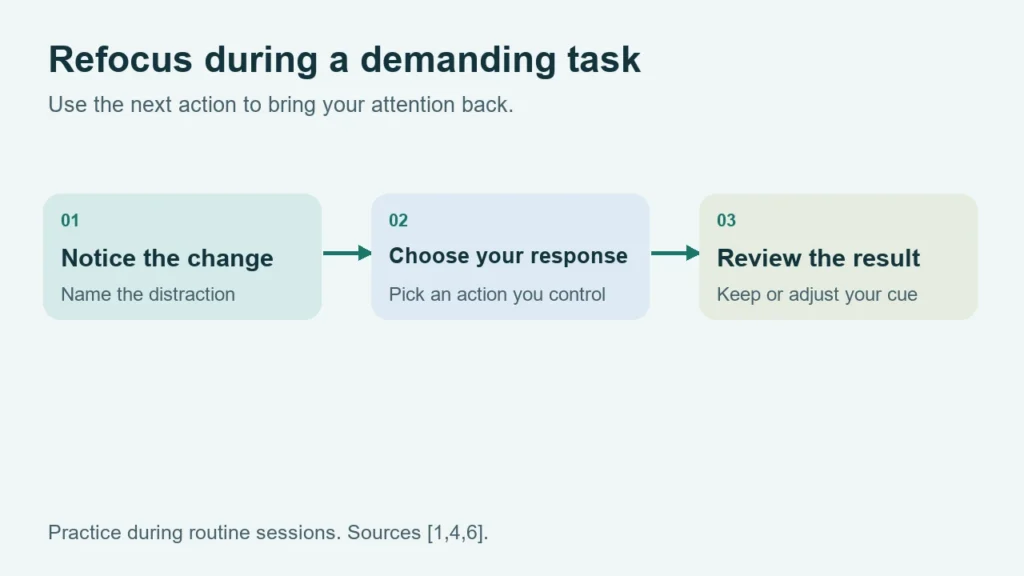
- Before the task, name one controllable action. Plan your pacing, write the first sentence of your presentation, or decide what question to ask during a difficult conversation.
- When attention drifts, return to a cue. Try a brief phrase, shift your eyes to the target, or adjust your plan when new information matters.
- Afterward, use what happened. Write down where your focus slipped, what helped you return, and one change for next time. [1,4,6]
Common questions about PEPLIX HEALTH
Mental rehearsal, process goals, and self-talk are skills you can practice on your own. If concentration difficulties persist across work, home, and training, independent, board-certified physicians can review symptoms and discuss evaluation or referral. Monarch Brands LLC provides management services for Peplix Health, including support for its cash-pay care model.
Can I discuss persistent concentration changes with a physician?
Yes. Describe when you noticed the change and whether it affects sleep, work, exercise, or daily responsibilities. A physician can review your symptoms, health history, and medicines, then decide whether further assessment or a referral makes sense.
When would a Section 503A pharmacy fill a prescription?
Treatment and dose decisions depend on an independent physician’s assessment. If an individual clinical need warrants compounding and applicable requirements are met, a state-licensed pharmacy operating under Section 503A can prepare the patient-specific prescription. Compounded drugs lack FDA approval. [8]
For consultation information, see our vitamins and wellness guide or start an online assessment.
Sources
- APA Division 47 – concentration and attention in sport
- World Athletics – Paris 2024 men’s 100 m final
- International Gymnastics Federation – Stephen Nedoroscik results
- Association for Applied Sport Psychology – sport imagery training
- Park et al. – self-talk and motivation in shooting athletes
- Systematic review – goal setting in sport
- Meta-analysis – self-confidence and athletic performance
- FDA – Section 503A compounding requirements
This article is for general education and is not medical advice. Talk with a licensed clinician before starting, stopping or changing any treatment. Compounded medications are not FDA-approved. See our safety information.
Keep reading
Wellness
Krill Oil vs Fish Oil for Omega-3s
Compare krill oil and fish oil for EPA and DHA, absorption, triglycerides, and side effects. Learn what to check on an omega-3 label.
Wellness
Sprinting Benefits and How to Start Sprint Interval Training
Learn how sprint intervals affect fitness and fat oxidation, how to start with controlled efforts, and how to fit sprinting into your week.
Wellness
CoQ10 Benefits, Dosage, and Safety
What does CoQ10 do? Explore the evidence for heart failure, fatigue, and statin symptoms, plus dosage, supplement forms, and interactions.