How Do GLP-1 Medications Help You Lose Weight?
Learn how GLP-1 drugs affect appetite and digestion, compare weight-loss trial results, and understand when compounding is considered.

GLP-1 medications such as semaglutide can reduce hunger, increase fullness, and help people eat fewer calories. They also influence blood sugar and slow stomach emptying. In a major trial, participants taking the studied semaglutide injection lost about 15% of starting weight on average. That result applies to the product and regimen tested.
How do GLP-1 medicines affect hunger and cravings?
The gut releases GLP-1 after you eat. Semaglutide activates the same receptors for longer, including receptors involved in appetite and satiety. Human studies report lower hunger, improved fullness, and changes in some cravings. Animal research suggests that brain circuits involved in food reward may contribute, although the exact human mechanisms remain under study.
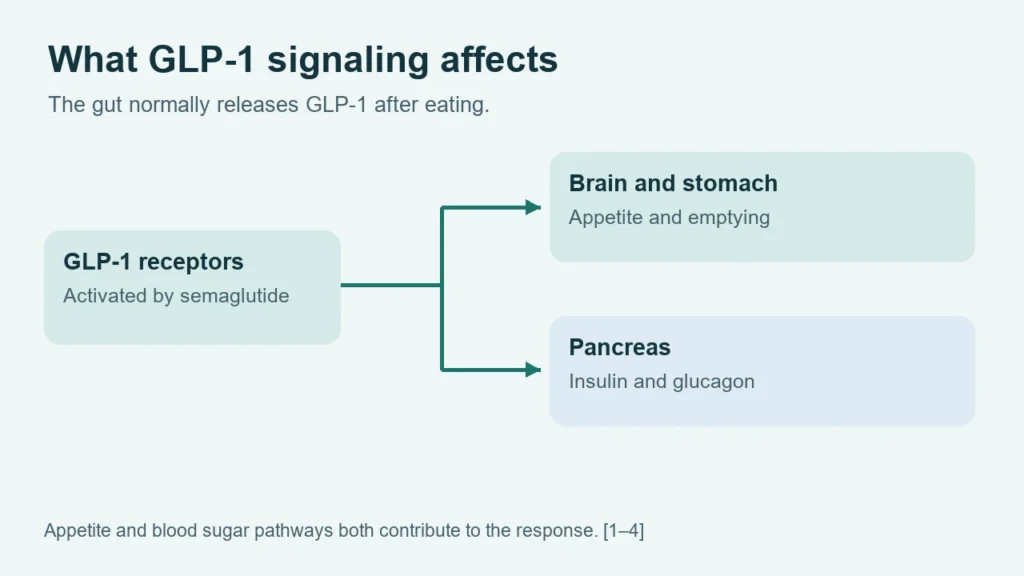
Semaglutide is a GLP-1 receptor agonist. Tirzepatide activates both GIP and GLP-1 receptors. Drugs in this area were developed first for type 2 diabetes, and certain products also have FDA approval for chronic weight management. [1,2]
The hypothalamus coordinates energy balance. POMC neurons promote fullness and AgRP neurons promote hunger. Animal studies suggest GLP-1 drugs can activate satiety circuits and inhibit hunger-related signals, with some effects occurring indirectly. Reward pathways involving the ventral tegmental area and striatum are also being studied. Some experiments suggest changes in dopamine release or clearance. These findings do not establish a uniform dopamine effect or a cure for emotional eating. [3,4]
What happens to digestion and blood sugar on semaglutide?
Semaglutide increases insulin release when blood sugar is elevated, helps suppress glucagon, and slows gastric emptying. Those effects can improve blood glucose control after meals and contribute to fullness. Slower emptying can also contribute to digestive symptoms. The treatment plan should account for your symptoms, medical history, and any other medications you take.
- Blood sugar and metabolism. Better glucose control and weight loss can improve some metabolic measures. Research also finds reductions in liver fat in some populations. The degree to which the medication directly changes insulin sensitivity, fat breakdown, or lipid metabolism apart from weight loss remains under study. [1,5]
- Digestive effects. Common effects include nausea, vomiting, constipation, diarrhea, and bloating. Severe gastroparesis is a reason the injection is generally avoided under U.S. labeling. Ileus and intestinal obstruction have been reported after marketing. Seek prompt medical advice for severe or persistent abdominal pain or vomiting. Staying hydrated is useful, and symptoms should guide any clinician-directed change in treatment. [1]
How much weight can you lose, and how do medication options compare?
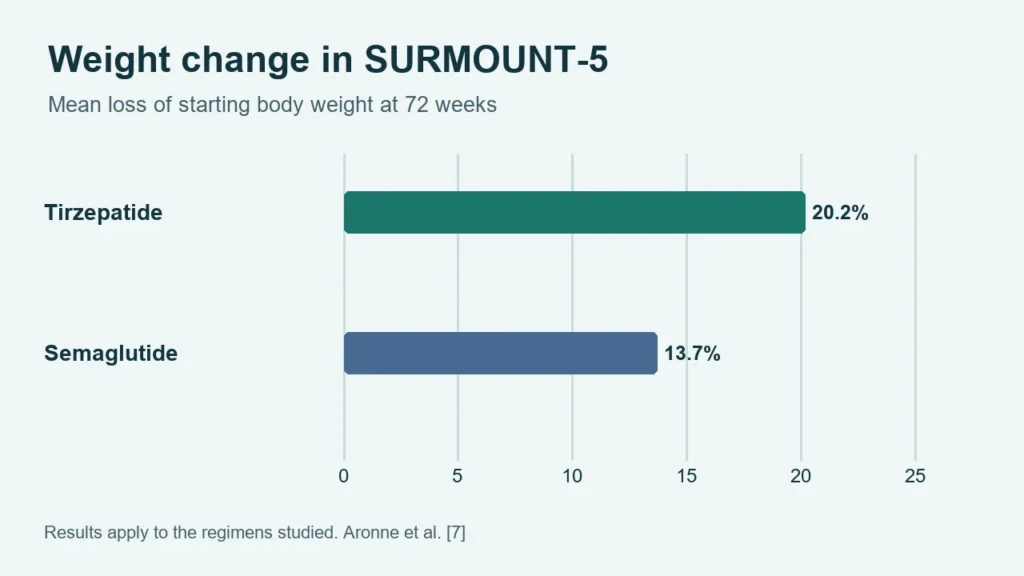
In STEP 1, adults taking the studied semaglutide injection lost 14.9% of starting weight at 68 weeks on average, compared with 2.4% on placebo. Both groups received lifestyle support. In a separate head-to-head trial, the studied tirzepatide regimen produced greater mean weight loss than the studied semaglutide regimen. Individual response varies.
| Treatment | How it works | What to compare |
|---|---|---|
| Semaglutide | Activates GLP-1 receptors. | STEP 1 tested a specific weekly injection in adults without diabetes. Product, dose, follow-up, and support matter. |
| Tirzepatide | Activates both GIP and GLP-1 receptors. | Mean loss was 20.2% versus 13.7% for studied semaglutide at 72 weeks in SURMOUNT-5. Check actual out-of-pocket prices. |
| Phentermine | Short-term appetite suppressant. | Avoid in cardiovascular disease or uncontrolled hypertension. Older studies report varying results, with guideline estimates around 3.6 percentage points greater loss than placebo. |
| Orlistat | Reduces absorption of dietary fat. | Oily stools and other digestive effects can occur. Keep fat within the prescribed meal plan. U.S. instructions generally use about 30% of calories from fat. |
| Liraglutide | Daily injectable GLP-1 agonist. | A major 56-week trial reported an average loss of 8.4 kg versus 2.8 kg with placebo. |
In orlistat studies weight loss varied, with a treatment effect near three percentage points versus placebo in guideline summaries. Starting weight, biology, dose, tolerability, consistent use, time in treatment, diet, and activity affect outcomes. Cross-trial percentages use different populations and methods. Food and activity plans should be practical enough to maintain. [6–10]
When is compounded semaglutide considered?
A state-licensed pharmacy may prepare a patient-specific prescription when applicable federal and state requirements are met. Compounded semaglutide lacks FDA premarket review. Cost and insurance barriers are real, but they do not by themselves establish a clinical need to compound. Ask your physician to explain the reason for the formulation and the approved options.
Historic reporting put some branded cash prices above $1,000 per month. Current cash prices, coverage, and extra fees vary. The FDA declared the national semaglutide injection shortage resolved in February 2025. During the shortage, compounding expanded. Current rules restrict routine copies of approved products. When a commercial product is available, a prescriber may need to document a significant difference for an individual patient. [11–13]
The approved products use semaglutide base. FDA says semaglutide sodium and acetate are different active ingredients and it is unaware of a lawful basis to use those salts in compounding. Base ingredient alone does not establish equivalence or assure quality. Ask the practice about the specific formulation, pharmacy license, concentration, and how to read the dosing units. If privacy is a reason to use telehealth, keep your other healthcare teams informed that you are taking the medication. [12,13]
Common questions about PEPLIX HEALTH
At Peplix Health, independent licensed clinicians make decisions about testing, treatment, and follow-up. Monarch Brands LLC manages the practice’s administrative services. If a physician determines that a compounded medicine is appropriate for an individual patient, a state-licensed pharmacy operating under Section 503A may fill the prescription when applicable requirements are met.
What should I bring to a Peplix Health weight-management visit?
Bring your medical history, current prescriptions, past weight-management treatments, and coverage or cash-pay questions. The evaluating clinician can discuss eligibility, treatment options, and how follow-up would work.
How do I know who prescribes and fills a medication?
Ask the independent, board-certified physician performing your evaluation about expected benefits, individualized dosing, and follow-up. Ask who will fill the prescription and whether an FDA-approved option is suitable. Compounded drugs do not undergo FDA premarket review for safety, effectiveness, or quality.
This article is for education. Discuss medical decisions with a licensed clinician.
For consultation information, see our weight-loss guide or start an online assessment.
Sources
- FDA — Wegovy U.S. prescribing information
- Holst — physiology of GLP-1
- Rodent research — GLP-1 and hypothalamic appetite circuits
- PubMed — GLP-1 agonists and human eating behavior
- Review — GLP-1 agonists and metabolic liver disease
- Wilding et al. — STEP 1
- Aronne et al. — SURMOUNT-5
- ADA — pharmacologic obesity treatment evidence
- Mayo Clinic — orlistat
- Pi-Sunyer et al. — 56-week liraglutide study
- NPR — historical U.S. prices and access barriers
- FDA — GLP-1 supply and current compounding considerations
- FDA — concerns with unapproved GLP-1 drugs
- FDA — compounding and FDA approval
This article is for general education and is not medical advice. Talk with a licensed clinician before starting, stopping or changing any treatment. Compounded medications are not FDA-approved. See our safety information.
Keep reading

Weight Loss
GLP-1 Medications for Weight Loss and Diabetes
Compare semaglutide and tirzepatide for weight loss, learn which GLP-1 pills work, and understand side effects, stopping, and pharmacy fulfillment.
Weight Loss
Compounded semaglutide vs Wegovy and Ozempic
Compare compounded semaglutide with Wegovy and Ozempic on weight loss evidence, cost, dosing safety, and when a 503A pharmacy may fill a prescription.

Weight Loss
GLP-1 Benefits Beyond Weight Loss
Learn how semaglutide and tirzepatide affect blood sugar, heart health, inflammation, food noise, and alcohol cravings. Compare the evidence.