Can Your Emotional Health Impact Your Physical Health?
Learn how stress, anxiety, and depression can affect sleep, digestion, muscle tension, and pain, and when to seek a clinical evaluation.

Yes. Stress, anxiety, and depression can affect sleep, digestion, muscle tension, and how strongly you feel pain. Physical illness or ongoing pain can also affect your mood. If a symptom is new, keeps coming back, or gets worse, a clinician can help you consider emotional and physical contributors together.
What physical symptoms can stress and anxiety cause?
Stress activates a response that can make your heart beat faster, tighten your muscles, and change how your gut feels. You may notice a headache, nausea, shaky muscles, or tight shoulders during a demanding day. Patterns can help you describe what is happening when you talk with a clinician.
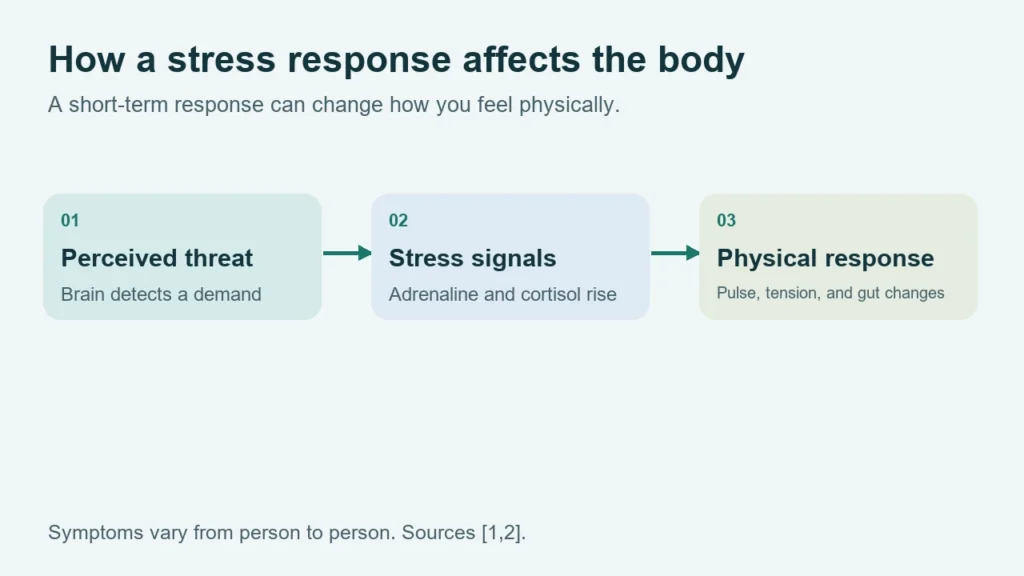
When the brain perceives a threat, it activates the sympathetic nervous system and signals the adrenal glands to release stress hormones, including adrenaline and cortisol. In the short term, this response helps you react. Repeated or prolonged stress can affect sleep, digestion, mood, and pain. Symptoms alone cannot tell you what your cortisol level is. [1,2]
| What you feel | How emotional health can contribute | What to track or discuss |
|---|---|---|
| Headache or tight neck and shoulders | Stress can increase muscle tension and can trigger or worsen headaches in some people. | Note location and timing, including sleep, screen time, and other triggers. |
| Nausea, stomach discomfort, or bowel changes | The brain and gut communicate through nerves and chemical signals. Stress can affect gut movement and sensitivity. | Note when symptoms occur, alongside meals, medications, and periods of worry. |
| More intense pain or poorer sleep | Stress and disrupted sleep can make pain feel stronger for some people. Pain also makes it harder to sleep and manage stress. | Describe when your sleep or pain changed and which activities are affected. |
| Shakiness, muscle aches, or fatigue | Stress and anxiety can contribute to shakiness, muscle tension, and tiredness. Infections and other medical conditions can cause similar symptoms. | Neck or shoulder tightness alone cannot distinguish stress from an illness. Mention fever or other new symptoms. |
Pain pathways use signals such as serotonin and norepinephrine to help regulate how the brain and spinal cord process pain. These messengers also have roles in mood and attention. Anxiety, depression, and poor sleep may affect pain sensitivity. The mechanisms are complex and can vary with the person, the type of pain, and the situation. [2–5]
What did the study on depression and psoriatic arthritis find?
A 2017 study followed 73,447 people with psoriasis. Those who developed major depression had a 37% higher adjusted rate of developing psoriatic arthritis during follow-up. The finding describes a relative association within that group. It cannot tell an individual their chance of developing arthritis or establish what caused it.
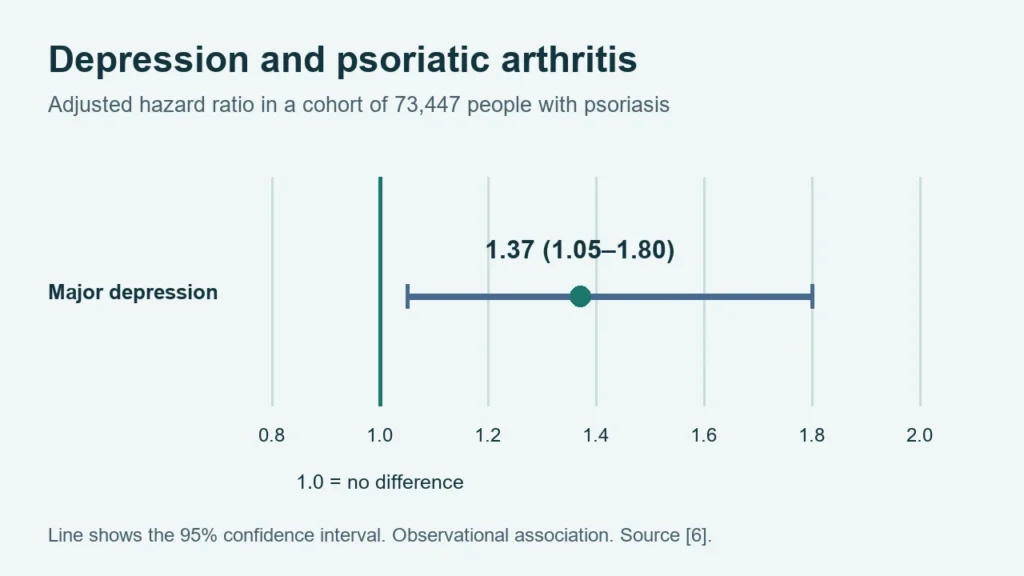
Psoriatic arthritis is an inflammatory condition that can cause joint pain, stiffness, and swelling in people with psoriasis. The study used United Kingdom primary care records and adjusted for several measured factors, including age and alcohol use. The median follow-up was 5.1 years. The adjusted hazard ratio was 1.37, with a 95% confidence interval of 1.05 to 1.80. [6,7]
Researchers proposed that systemic inflammation, physical activity, or diet could play a role. The study could not establish which factors explained the association. Depression and anxiety can make it harder to stay active or eat regularly, while chronic illness and pain can make it harder to maintain emotional well-being. [6,8]
What can you do when stress and physical symptoms overlap?
Track when symptoms show up and what else is happening around them, such as poor sleep, changes in activity, or a stressful situation. Regular meals, movement you can tolerate, and a consistent bedtime can support both physical and emotional health. A clinician can help assess symptoms that persist or disrupt your routine.
- Build a routine you can repeat. Aim for regular sleep and meals. Start with a manageable activity, such as walking, if it suits your condition. [9]
- Try one way to lower tension. Slow breathing or progressive muscle relaxation can help some people manage stress. For certain kinds of chronic pain, psychological approaches can also support coping and reduce the effect pain has on daily life. Benefits vary by condition and approach. [9,10]
- Bring physical symptoms and mood to the same visit. Describe how long symptoms last, what makes them worse, and how they affect daily life. A primary care clinician can evaluate possible health conditions and help you decide whether therapy, another referral, or medical treatment is appropriate. [8,9]
Common questions about PEPLIX HEALTH
Independent, board-certified physicians can review your symptoms and medical history and discuss whether you need further evaluation or a referral. Monarch Brands LLC provides management services for Peplix Health. For a cash-pay consultation, bring a symptom timeline and your medication list, including supplements and any recent changes in dose.
Can a cash-pay consultation help me work out whether stress is contributing?
A clinical evaluation can review the timing of symptoms and consider other causes. Whether you need an exam, testing, or mental health support depends on what your clinician finds.
When would a licensed Section 503A pharmacy fill a prescription?
A physician bases any prescription and dose on clinical findings. If a specific need warrants a compounded formulation and applicable requirements are met, a state-licensed pharmacy operating under Section 503A may fill the individual prescription. Compounded drugs lack FDA approval. [11]
For consultation information, see our vitamins and wellness guide or start an online assessment.
Sources
- Mayo Clinic – chronic stress and the body
- MedlinePlus – stress and your health
- Houston Methodist – physical effects of anxiety
- Review – nervous system mechanisms of pain modulation
- NIMH – physical and emotional symptoms of depression
- Lewinson et al. – psoriasis cohort and psoriatic arthritis
- American College of Rheumatology – psoriatic arthritis
- NIMH – chronic illness and depression
- NIMH – caring for your mental health
- NCCIH – complementary approaches to pain
- FDA – Section 503A compounding requirements
This article is for general education and is not medical advice. Talk with a licensed clinician before starting, stopping or changing any treatment. Compounded medications are not FDA-approved. See our safety information.
Keep reading

Wellness
Krill Oil vs Fish Oil for Omega-3s
Compare krill oil and fish oil for EPA and DHA, absorption, triglycerides, and side effects. Learn what to check on an omega-3 label.

Wellness
Sprinting Benefits and How to Start Sprint Interval Training
Learn how sprint intervals affect fitness and fat oxidation, how to start with controlled efforts, and how to fit sprinting into your week.

Wellness
CoQ10 Benefits, Dosage, and Safety
What does CoQ10 do? Explore the evidence for heart failure, fatigue, and statin symptoms, plus dosage, supplement forms, and interactions.