The Benefits of Play for Adults and How to Make Time for It
Learn how adult play relates to stress, mood, and connection. Explore four styles of play and simple ways to fit more fun into a busy week.

Adult play can be as simple as tossing a ball, making up a game on a walk, or trading jokes over dinner. Research links playfulness with lower perceived stress and greater life satisfaction. Start with something you already enjoy and give it a place in a routine you can realistically keep.
What counts as play for adults?
Play is an activity or a way of approaching one that you find enjoyable, absorbing, or amusing. It can be physical, social, imaginative, or quiet. Researchers describe four dimensions of adult playfulness, and you can draw on several of them in the same week or even during the same activity.
| Style | What makes it playful | One way to try it |
|---|---|---|
| Other-directed | Shared humor, games, and interaction | Invite a friend to shoot baskets or play a quick card game. |
| Lighthearted | Spontaneity and room to improvise | Dance for one song while you clear the kitchen. |
| Intellectual | Curiosity about ideas, words, or problems | Make up a word puzzle for someone on the ride home. |
| Whimsical | Enjoyment of the unusual or unexpected | Turn a trail walk into a contest for the funniest landmark name. |
The four dimensions come from a 2017 model of adult playfulness. Consider them a way to find activities that appeal to you. Singing in the car, playing fetch, and inventing a story with a child all fit, even when they take only a few minutes. [1]
What does research say about play and well-being?
Studies associate adult playfulness with better mood, lower perceived stress, more partner support, and higher life satisfaction. Each finding comes from a particular population and study design. Active play can also add movement to your day. The research leaves the ideal frequency and duration open, so choose a routine you enjoy.
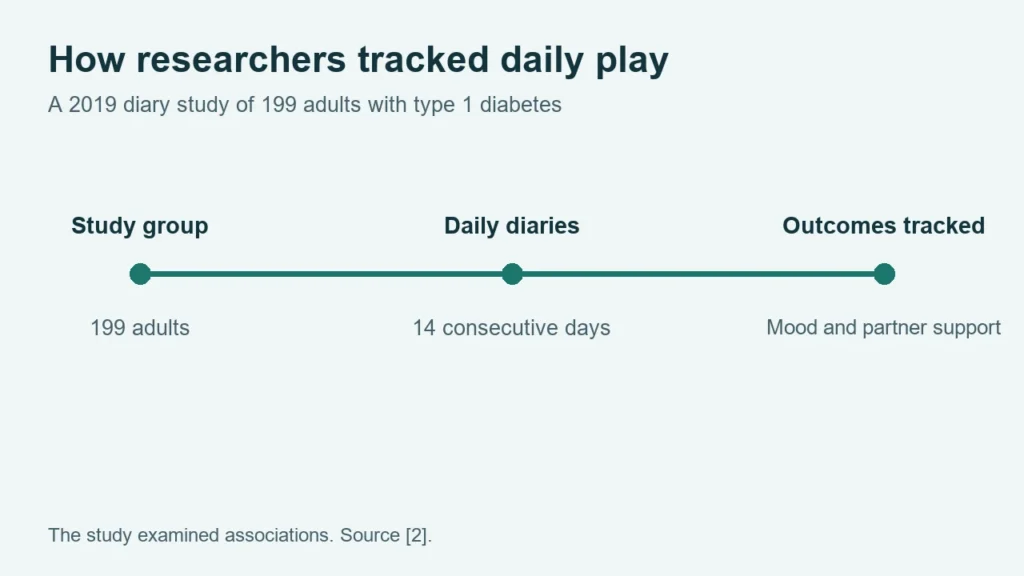
- Mood and relationships. In a 2019 diary study, 199 adults with type 1 diabetes tracked playful interactions with their romantic partners for 14 days. On days with more shared play, participants reported better mood, more support and disclosure to partners about diabetes, and better perceived coping with diabetes-related and general stressors. The study measured associations in this population. [2]
- Stress and coping. A study in Leisure Sciences found that people who reported more playfulness reported lower perceived stress and used avoidant coping strategies less often. Self-reports can show how these experiences relate, while the effect of adding a specific activity remains uncertain. [3]
- Everyday enjoyment and movement. Another study linked playfulness with life satisfaction, interest in enjoyable activities, and a more active lifestyle. A pickup game or a bike ride can add movement, while puzzles and games may offer enjoyment or company. [4,5]
How can you fit more play into a busy week?
Add play to something you already do. Share a board game after dinner, invent a scavenger hunt on a family walk, or make part of a workout into a friendly challenge. If you prefer scheduled activities, try a recreation league. Keep the commitment small enough that you look forward to it.
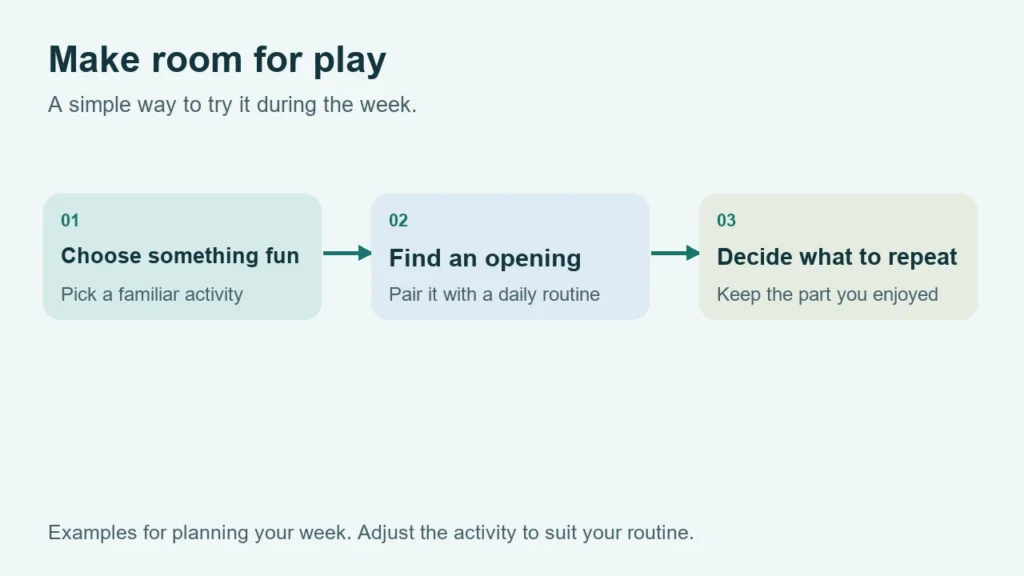
- Use a routine you already have. Pick a song for the drive home, start a short word game while waiting for dinner, or keep a deck of cards where you will see it.
- Invite someone in. Try a casual softball or kickball league, accept a child’s invitation to play, or suggest a low-stakes game with a partner or friend.
- Give movement a game element. Set a route challenge with a friend, try a social cycling class, or see how many passes your group can make. Choose an effort level that fits your current fitness.
- Notice what you want to repeat. A few minutes is a manageable starting point. At the end of the week, keep what felt enjoyable and change what felt like another task.
Common questions about PEPLIX HEALTH
Peplix Health’s cash-pay care model uses independent, board-certified physicians for clinical evaluation, with management services from Monarch Brands LLC. Play is an everyday wellness activity. If low energy, sleep changes, or a lasting loss of interest is affecting your routine, a licensed clinician can assess symptoms and discuss appropriate next steps.
Can play help when I feel too stressed to enjoy my usual activities?
An activity you usually enjoy can be a reasonable first step if it feels manageable. If you keep losing interest in activities or have persistent low mood or trouble functioning, seek an assessment from a licensed clinician. [6]
When does pharmacy fulfillment apply?
Prescribing and dose decisions depend on a physician’s evaluation. If a patient-specific medication needs compounding and applicable requirements are met, a state-licensed pharmacy operating under Section 503A can fill the individual prescription. Compounded drugs lack FDA approval. [7]
For consultation information, see our vitamins and wellness guide or start an online assessment.
Sources
- Proyer – four dimensions of adult playfulness
- Van Vleet et al. – daily play and partner support
- Magnuson and Barnett – playfulness and coping
- Proyer – playfulness and subjective well-being
- CDC – benefits of physical activity
- NIMH – depression symptoms and help
- FDA – Section 503A compounding requirements
This article is for general education and is not medical advice. Talk with a licensed clinician before starting, stopping or changing any treatment. Compounded medications are not FDA-approved. See our safety information.
Keep reading

Wellness
Krill Oil vs Fish Oil for Omega-3s
Compare krill oil and fish oil for EPA and DHA, absorption, triglycerides, and side effects. Learn what to check on an omega-3 label.

Wellness
Sprinting Benefits and How to Start Sprint Interval Training
Learn how sprint intervals affect fitness and fat oxidation, how to start with controlled efforts, and how to fit sprinting into your week.
Wellness
CoQ10 Benefits, Dosage, and Safety
What does CoQ10 do? Explore the evidence for heart failure, fatigue, and statin symptoms, plus dosage, supplement forms, and interactions.