Magnesium Benefits, Supplement Forms, and Dosage
Compare magnesium forms, read elemental doses, and learn what evidence says about magnesium for sleep, workouts, blood sugar, and testosterone.

Magnesium supports energy metabolism, muscle and nerve function, bone health, and glucose regulation. Food is a practical starting point for meeting your needs. If a supplement makes sense, compare the elemental dose, form, and tolerability. Evidence for improving sleep or blood sugar is limited to specific settings, and testosterone or performance benefits remain uncertain.
What does magnesium do in your body?
Magnesium helps more than 300 enzyme systems carry out functions such as protein synthesis, energy production, and blood sugar regulation. Many enzymes use ATP bound to magnesium. The mineral also helps move calcium and potassium across cell membranes, which supports muscle contraction and relaxation, nerve signaling, and a normal heart rhythm.
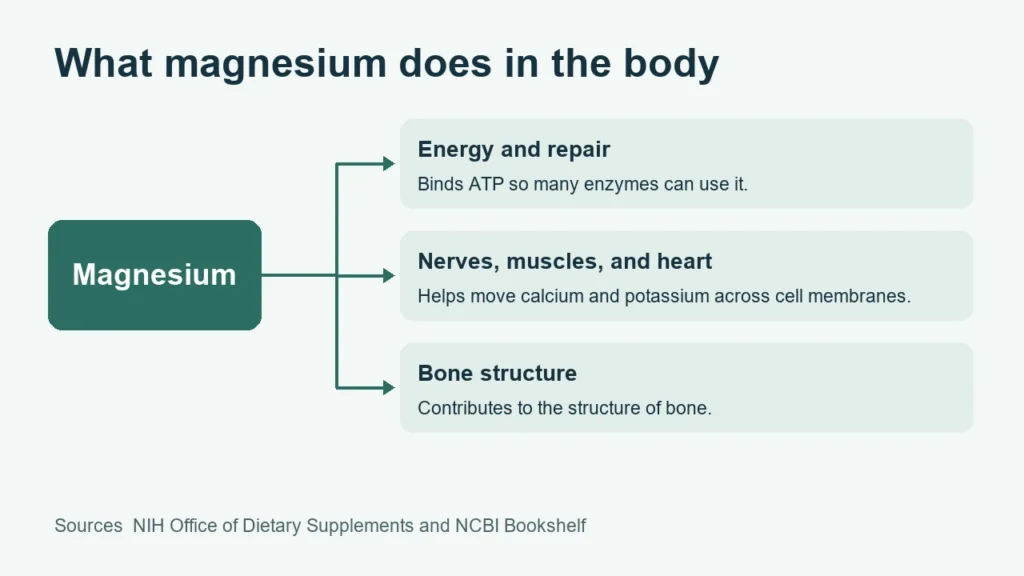
Magnesium participates in glycolysis and oxidative phosphorylation, two processes that help cells produce adenosine triphosphate (ATP). Protein synthesis supports tissue maintenance and repair. Those mechanisms explain why adequate intake matters for active adults. They do not demonstrate that extra magnesium activates muscle-growth pathways enough to improve strength or hypertrophy in people whose needs are already met. [1, 2]
Magnesium also contributes to bone structure. Calcium and vitamin D play complementary roles, and vitamin K supports proteins involved in bone metabolism. Adults in perimenopause can discuss bone health, sleep symptoms, and diet in the context of their overall care. Direct benefits for thyroid or sex hormone levels from routine supplementation remain unproven. [1, 3, 4]
Are you getting enough magnesium, and can a test tell you?
An analysis of U.S. nutrition survey data found that 48% of Americans of all ages consumed less magnesium from food and drinks than their Estimated Average Requirement. That figure measures dietary intake. A clinician evaluates possible deficiency using your diet, symptoms, medication history, and lab results together because no single test measures whole-body status well.
The 48% estimate used NHANES 2013–2016 data. In a separate analysis of 2017 through March 2020 data, 57% of adult men and 52% of adult women were below their Estimated Average Requirement from food and beverages. These estimates describe groups rather than diagnosing individuals. [1, 23]
- Look at what you eat regularly. Refining grains removes magnesium-rich parts of the kernel. Smaller portions or less variety during a calorie deficit or GLP-1 or dual GIP/GLP-1 therapy can make adequate intake harder. Include foods you can tolerate and review protein, fluids, and resistance training as part of the plan. [1, 5]
- Review risk factors. Long-term proton pump inhibitor use can lower magnesium. Some diuretics increase urinary loss, and chronic heavy alcohol use can contribute through several pathways. Sweat contains magnesium, and stress-related losses have been studied. Neither establishes a higher intake target for everyone who trains or has a demanding schedule. [1, 6, 7]
- Interpret labs in context. Less than 1% of body magnesium is in serum. Serum is commonly tested and can miss low tissue stores. Red blood cell magnesium is another measure without a proven role as a universal replacement for serum testing. Fatigue, weakness, twitches, and cramps deserve evaluation because they have many causes. [1]
Can magnesium help with sleep, workouts, blood sugar, or testosterone?
Some trials suggest oral magnesium can shorten the time it takes older adults with insomnia to fall asleep and modestly improve some glucose markers in selected groups. Evidence remains limited by study quality and differences among participants. Magnesium supports normal physiology, while predictable benefits for strength, exercise cramps, mood, or testosterone have yet to be established.
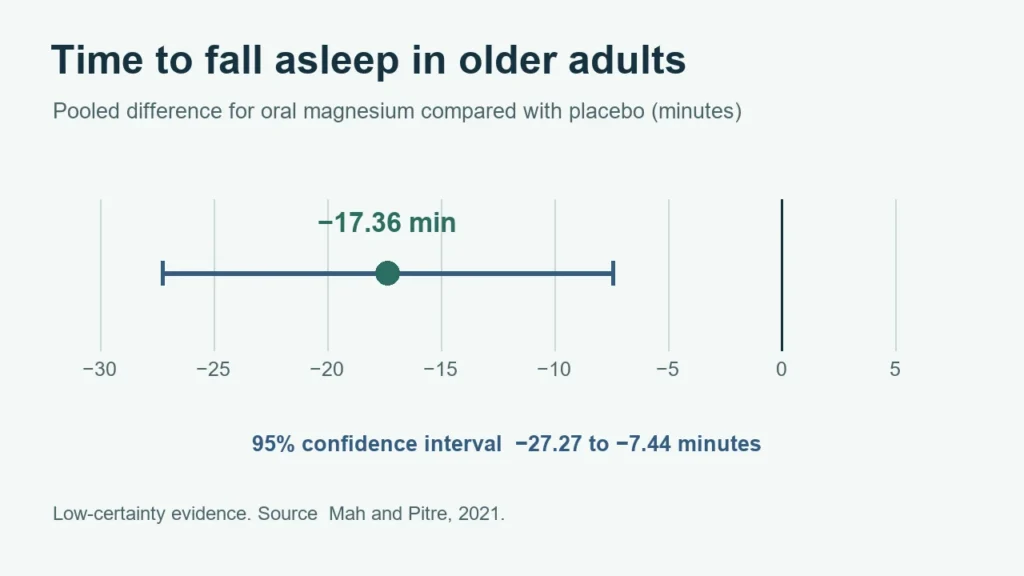
Sleep and stress. A low-certainty pooled estimate found an average 17.36-minute shorter time to fall asleep in older adults with insomnia. Total sleep time did not improve significantly, and subjective results varied. Magnesium interacts with NMDA and GABA signaling in the nervous system. Research on stress pathways, including cortisol signaling, has yet to establish a reliable clinical effect for anxiety or depression. [6, 8, 9]
Glucose and blood pressure. Magnesium supports enzymes involved in carbohydrate metabolism and insulin signaling. Reviews report modest changes in fasting glucose or insulin-resistance markers in some adults with or at risk for diabetes. Some trials also report small blood pressure reductions. These results do not establish reliable weight loss or substitute for diabetes or blood pressure treatment. [1, 10, 11]
Exercise and hormones. Low levels can affect muscle function. A Cochrane review found no randomized trials of magnesium for exercise-associated cramps in its search. Lab work suggests magnesium can influence testosterone binding to sex hormone-binding globulin (SHBG). A small four-week exercise study reported changes in free and total testosterone. Those findings cannot establish a reliable treatment for low testosterone. [1, 12–14]
Which magnesium form fits your goal?
Choose a magnesium supplement by looking at the elemental dose, the evidence for your goal, and how well you tolerate it. Citrate, aspartate, lactate, and chloride generally absorb better than oxide in small studies. Direct comparisons are limited for malate, glycinate, and L-threonate. No one formulation has established advantages across all uses.
| Form | Common reason people choose it | What the evidence supports |
|---|---|---|
| Citrate | General supplementation or occasional constipation with a labeled laxative product. | Usually better absorbed than oxide. Laxative formulations retain water in the bowel. [1, 15] |
| Oxide | A product with a relatively high elemental magnesium content by weight. | Generally lower absorption than citrate in small studies. Some is absorbed, and loose stools can occur. [1] |
| Glycinate / bisglycinate | A glycine-bound form often considered for sleep. | One short trial found a small improvement in self-reported insomnia symptoms. Comparative sleep and anxiety evidence is limited. [9, 16] |
| Malate | A malic acid-bound form sometimes chosen for energy or training. | Malate participates in the citric acid cycle. An advantage in performance, absorption, or tolerability is unproven. [1, 2, 17] |
| L-threonate | A form studied for sleep and cognition. | Small trials do not establish a reliable cognitive benefit or superiority over other forms. [18] |
| Sucrosomial | An encapsulated magnesium formulation. | A small absorption study reported differences in short-term markers. Meaningful long-term clinical advantages remain unclear. [19] |
Ask what you want to change before choosing a product. The amount absorbed, the elemental dose on the label, and your digestive tolerance all affect how practical a form is for you. [1]
How much magnesium should adults take, and when is it safe?
For adults 31 and older, recommended total intake is 320 mg a day for women and 420 mg for men, with separate values during pregnancy. The 350 mg upper limit applies to magnesium from supplements and medications. Check kidney function and medication interactions with your clinician before starting or increasing a supplement if you have risk factors.
| Age | Men, recommended daily intake | Women, recommended daily intake |
|---|---|---|
| 19–30 years | 400 mg | 310 mg |
| 31 years and older | 420 mg | 320 mg |
These recommended dietary allowances (RDAs) are designed to meet the needs of nearly all healthy people in each group. No universal 350–500 mg target has been established for athletic performance. For supplements and magnesium-containing medications, the adult upper limit is 350 mg a day. It excludes magnesium from foods and beverages and primarily addresses digestive side effects. Higher therapeutic doses require clinical guidance. [1, 7]
- Use the Supplement Facts panel. Look for the amount beside Magnesium, the elemental dose. For example, a daily product with 200 mg of elemental magnesium plus another with 150 mg totals 350 mg before counting any magnesium-containing medication. [1]
- Choose a schedule you can follow. Food or divided doses may help with tolerance. Evidence does not establish a best time for energy or sleep. Loose stools, nausea, and cramping can occur, especially at higher supplemental doses. [1, 8, 9]
- Review kidney health and prescriptions. Impaired kidneys can have difficulty clearing excess magnesium. Ask a pharmacist about spacing oral bisphosphonates and tetracycline or fluoroquinolone antibiotics. Discuss diuretics, chronic conditions, and pregnancy with your clinician before changing your regimen. [1]
Common questions about PEPLIX HEALTH
Peplix Health is a cash-pay telehealth service managed by Monarch Brands LLC. Independent, board-certified physicians review symptoms, food intake, medications, and relevant lab results. When treatment is appropriate, the physician individualizes dosing and follow-up. A state-licensed pharmacy can fill an eligible compounded prescription under applicable Section 503A requirements and state law.
Can Peplix Health help if I feel tired or cramp during GLP-1 treatment?
Bring a list of medications and supplements and describe recent changes in appetite, fluid intake, training, and sleep. Your clinician can assess diet, medication effects, and other contributors. Evidence has yet to establish that magnesium supplements preserve muscle or relieve GLP-1-related fatigue by themselves. [1, 5, 12]
Is magnesium enough to raise low testosterone?
Clinical evidence does not support using magnesium to treat testosterone deficiency. A physician can evaluate symptoms and order appropriately timed testing. Adequate protein, sleep, training, and a diet with enough zinc, vitamin D, and magnesium support general health while you address the cause. [1, 13, 14, 20]
Can I take magnesium for sleep or anxiety?
Some sleep studies report small improvements. The evidence varies by formulation and population. Persistent insomnia, anxiety, or worsening mood warrant their own assessment. [8, 9, 16]
Does magnesium require a Section 503A pharmacy?
Standard magnesium supplements are widely available. If a clinician identifies a patient-specific need for a compounded prescription drug, an eligible dispensing pharmacy must meet applicable prescription, ingredient, and quality requirements. Compounded drugs do not undergo FDA premarket approval. [1, 21, 22]
For consultation information, see our vitamins and wellness guide or start an online assessment.
Sources
- NIH Office of Dietary Supplements. Magnesium fact sheet for health professionals.
- NCBI Bookshelf. Magnesium and Mg–ATP in energy metabolism.
- NIH Office of Dietary Supplements. Vitamin D and bone health.
- NIH Office of Dietary Supplements. Vitamin K and bone health.
- Joint advisory on nutrition during GLP-1 therapy.
- Review of the relationship between magnesium status and stress.
- Scoping review of magnesium intake in physically active people.
- Mah and Pitre. Oral magnesium for insomnia in older adults.
- Systematic review of supplemental magnesium for sleep and anxiety.
- Veronese et al. Magnesium supplementation and glucose metabolism.
- Systematic review of magnesium supplementation and blood pressure.
- Cochrane. Magnesium for skeletal muscle cramps.
- Excoffon et al. Magnesium and testosterone binding to SHBG.
- Cinar et al. Magnesium and testosterone in athletes and sedentary men.
- DailyMed. Magnesium citrate saline laxative labeling.
- Randomized trial of magnesium bisglycinate for poor sleep.
- NCBI Bookshelf. Biochemistry of the citric acid cycle.
- Randomized trial of magnesium L-threonate for cognition and sleep.
- Brilli et al. Comparative study of sucrosomial magnesium absorption.
- Endocrine Society. Testosterone therapy in men with hypogonadism.
- FDA. Federal provisions for human drug compounding.
- FDA. Human drug compounding laws and policies.
- Oregon State University. U.S. magnesium intakes in the 2017–March 2020 survey.
This article is for general education and is not medical advice. Talk with a licensed clinician before starting, stopping or changing any treatment. Compounded medications are not FDA-approved. See our safety information.
Keep reading

Wellness
Krill Oil vs Fish Oil for Omega-3s
Compare krill oil and fish oil for EPA and DHA, absorption, triglycerides, and side effects. Learn what to check on an omega-3 label.

Wellness
Sprinting Benefits and How to Start Sprint Interval Training
Learn how sprint intervals affect fitness and fat oxidation, how to start with controlled efforts, and how to fit sprinting into your week.

Wellness
CoQ10 Benefits, Dosage, and Safety
What does CoQ10 do? Explore the evidence for heart failure, fatigue, and statin symptoms, plus dosage, supplement forms, and interactions.