Can Semaglutide Reduce Alcohol Cravings or Drinking?
Read what trials found about semaglutide, heavy drinking, and alcohol cravings, and learn which treatments are approved for alcohol use disorder.

Early randomized trials suggest semaglutide can reduce craving or heavy drinking in some adults with alcohol use disorder. A nine-week study found fewer drinks on days participants drank. A six-month study found fewer heavy drinking days in adults who also had obesity. Semaglutide has no FDA-approved indication for alcohol use disorder.
What did randomized trials find about semaglutide and alcohol?
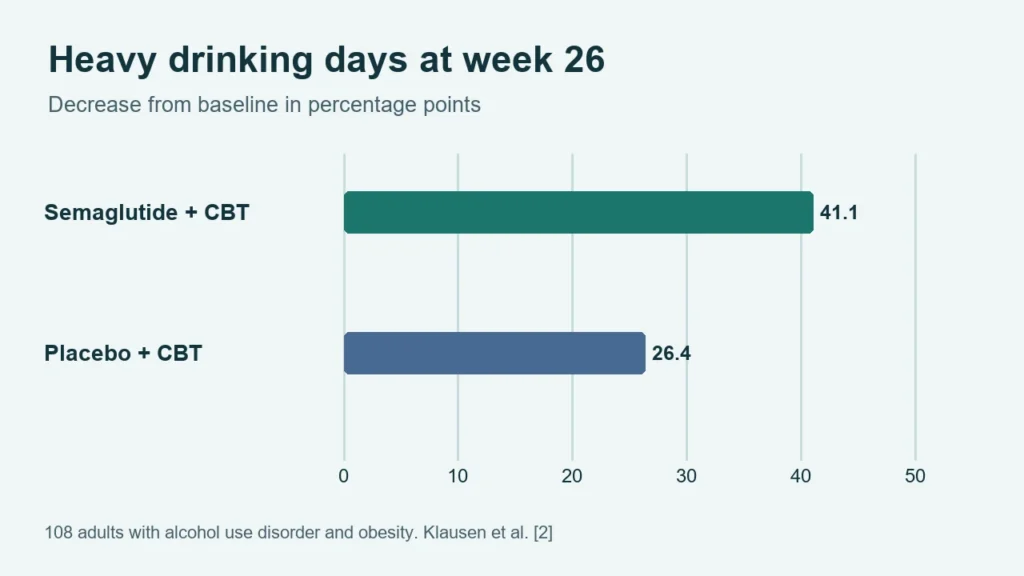
The first trial enrolled 48 adults with alcohol use disorder who were not seeking treatment. Semaglutide reduced alcohol consumed in the laboratory, average drinks per drinking day, and reported cravings. A later trial in treatment-seeking adults with obesity also found that semaglutide plus cognitive behavioral therapy reduced heavy drinking days more than placebo plus therapy.
| Study | Who was enrolled | What the study found |
|---|---|---|
| Hendershot et al., 2025 | 48 adults with AUD, nine weeks, not seeking AUD treatment | Less alcohol consumed in a controlled laboratory session and lower peak breath alcohol concentration. Fewer drinks per drinking day and lower weekly cravings. |
| Klausen et al., 2026 | 108 treatment-seeking adults with moderate to severe AUD and obesity, 26 weeks | Heavy drinking days decreased by 41.1 percentage points with semaglutide and 26.4 points with placebo. Both groups received cognitive behavioral therapy. |
The UNC trial randomized participants to a weekly injection or placebo. Its study schedule started at 0.25 mg weekly for four weeks, increased to 0.5 mg weekly for four weeks, and allowed 1.0 mg in the final week. Usual weekly maintenance dosing for weight management can differ. These are trial details for context. Weekly diaries tracked consumption and cravings. The lab session tested voluntary drinking under controlled conditions. [1,3]
In the UNC study the number of drinking days and average drinks per calendar day did not change significantly. Heavy drinking declined more over time in the semaglutide group. A small exploratory subgroup that smoked reported a greater decline in cigarettes per day. The semaglutide group lost about 5% of body weight on average. [1]
The 26-week trial extends the evidence to a treatment-seeking group with obesity. It leaves open how much benefit other groups might see, whether effects persist after stopping, and whether changing dose changes alcohol outcomes. [2]
Why might a GLP-1 medication affect alcohol cravings?
Semaglutide activates GLP-1 receptors. Some of the brain circuits involved in appetite and satiety also process motivation and reward. Researchers are studying whether GLP-1 signaling changes how reinforcing alcohol feels. Dopamine signaling and impulse control are possible areas of investigation. The clinical trials did not establish which mechanism accounts for the changes in drinking.
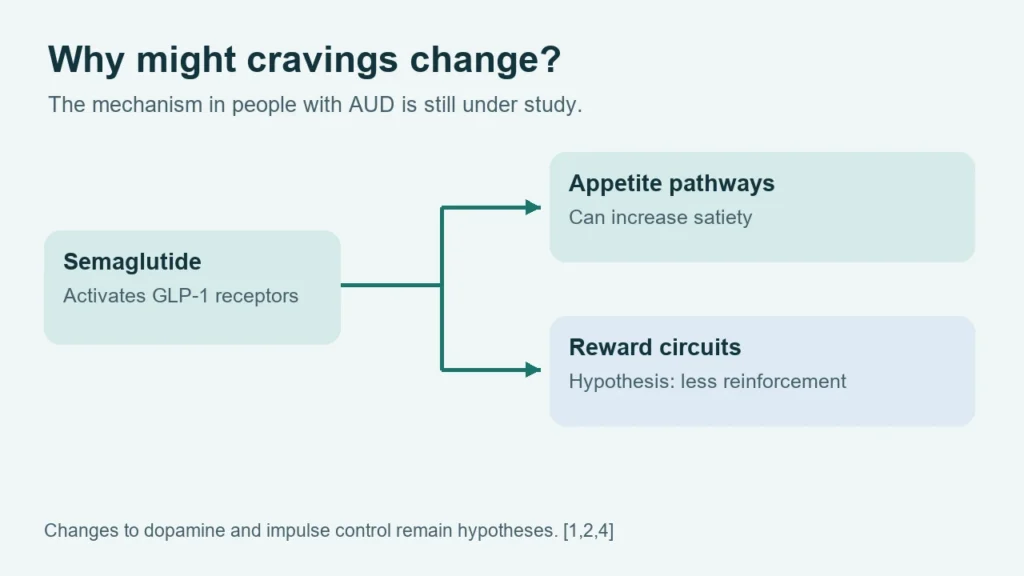
People taking semaglutide for type 2 diabetes or weight management sometimes report wanting alcohol less often. Those reports and early trials support further research into alcohol reinforcement and cue responses, including whether effects extend to nicotine or other compulsive behaviors. They do not establish that semaglutide treats another addiction or that everyone taking it will drink less. [1,2,4]
What should you do if you’re concerned about drinking?
Talk to a clinician about how much you drink, how often you have heavy drinking days, and any history of withdrawal. Effective care can include counseling, medication, and follow-up. If you drink heavily or have had withdrawal before, ask for help before making a sudden change. Withdrawal can become a medical emergency.
- Put the research in context. Alcohol use disorder is undertreated. NIAAA estimates that about 7.8% of adults with past-year AUD accessed treatment in the figures it cites for clinicians. In the 2024 national survey, 2.5% of people aged 12 and older with past-year AUD reported medication-assisted treatment. Excess alcohol increases the risks of liver disease, cardiovascular problems, and several cancers. [1,2,5,7,8]
- Review established options. FDA-approved medications for AUD include naltrexone, acamprosate, and disulfiram. Selection depends on goals, opioid use, medical history, and other factors. Counseling, mutual support, and addiction-medicine services are available. [5,6]
- Discuss changes on your current medication. If you notice changes in cravings or drinking while taking semaglutide for an approved indication, share them with the prescriber. Nausea, vomiting, constipation, diarrhea, and fatigue can occur. Get urgent help for severe withdrawal symptoms such as a seizure, confusion, or hallucinations. [3,6]
Common questions about PEPLIX HEALTH
At Peplix Health, independent licensed clinicians make decisions about testing, treatment, and follow-up. Monarch Brands LLC manages the practice’s administrative services. If a physician determines that a compounded medicine is appropriate for an individual patient, a state-licensed pharmacy operating under Section 503A may fill the prescription when applicable requirements are met.
Can I ask my Peplix Health clinician about a change in alcohol cravings?
Yes. If you take a GLP-1 medication for a metabolic indication, tell the prescriber about changes in your drinking or cravings. For alcohol use disorder or withdrawal concerns, seek a clinician experienced in addiction care.
How do I know who prescribes and fills a medication?
Ask the independent, board-certified physician performing your evaluation about expected benefits, individualized dosing, and follow-up. Ask who will fill the prescription and whether an FDA-approved option is suitable. Compounded drugs do not undergo FDA premarket review for safety, effectiveness, or quality.
This article is for education. Discuss medical decisions with a licensed clinician.
For consultation information, see our weight-loss guide or start an online assessment.
Sources
- Hendershot et al. — 2025 randomized trial in adults with alcohol use disorder
- Klausen et al. — 2026 randomized trial in alcohol use disorder and obesity
- FDA — Wegovy prescribing information
- PubMed — GLP-1 signaling, alcohol seeking and preclinical evidence
- NIAAA — alcohol treatment navigator
- ASAM — alcohol withdrawal management guideline
- NIAAA — referrals and treatment access estimate
- NIAAA — U.S. alcohol treatment statistics
- FDA — compounding and FDA approval
This article is for general education and is not medical advice. Talk with a licensed clinician before starting, stopping or changing any treatment. Compounded medications are not FDA-approved. See our safety information.
Keep reading

Weight Loss
GLP-1 Medications for Weight Loss and Diabetes
Compare semaglutide and tirzepatide for weight loss, learn which GLP-1 pills work, and understand side effects, stopping, and pharmacy fulfillment.
Weight Loss
Compounded semaglutide vs Wegovy and Ozempic
Compare compounded semaglutide with Wegovy and Ozempic on weight loss evidence, cost, dosing safety, and when a 503A pharmacy may fill a prescription.

Weight Loss
GLP-1 Benefits Beyond Weight Loss
Learn how semaglutide and tirzepatide affect blood sugar, heart health, inflammation, food noise, and alcohol cravings. Compare the evidence.