Can GLP-1 medications improve male fertility?
Can GLP-1s improve sperm count? Compare the research on GLP-1s, weight loss and enclomiphene, and learn when a fertility evaluation may help.

GLP-1 medications may improve some semen measures in some men with obesity, but they have no established role as male fertility treatments. In a 2025 matched cohort, 10 of 351 GLP-1 users reached a normal sperm count on follow-up. The study did not establish whether treatment improved pregnancy or live birth rates.
What did the 2025 GLP-1 and sperm count study find?
The study found a small difference in sperm count normalization, similar rates of motility normalization, and more semen volume normalization among controls. Each outcome used a different subset of the same matched cohorts. The percentages describe follow-up lab results among men who started with an abnormal measure.
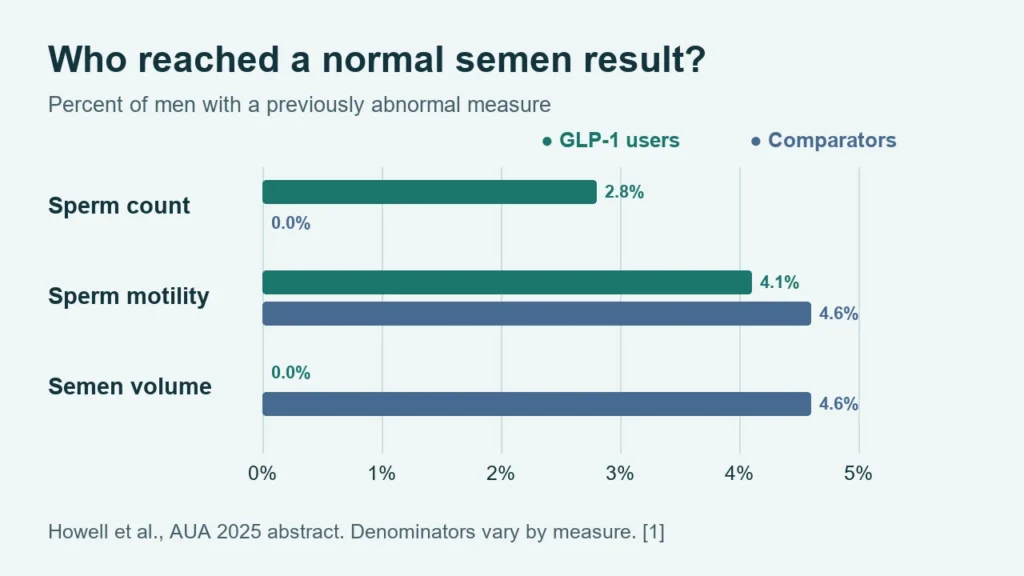
Howell and colleagues presented a retrospective TriNetX analysis at the 2025 American Urological Association meeting. They matched 385 GLP-1 users with 385 comparators. For each semen measure, they looked for a later normal result among men with an abnormal result and no earlier normal result. [1]
| Semen measure | GLP-1 group | Comparison group |
|---|---|---|
| Sperm count | 10/351 (2.8%) | 0/358 (0.0%). p = 0.001. |
| Sperm motility | 10/241 (4.1%) | 13/283 (4.6%). p = 0.805. |
| Semen volume | 0/213 (0.0%) | 10/216 (4.6%). p = 0.001. |
Ten men reached the count threshold in the GLP-1 group. How much their counts changed is unknown. A lower proportion reaching normal semen volume does not establish that GLP-1s reduced anyone’s volume. Median follow-up was 337 versus 1,036 days, and average BMI remained higher among GLP-1 users. Hormone levels were not matched. [1]
Can weight loss improve sperm count or motility?
In two studies of men with obesity, dietary interventions were followed by improvements in different semen measures. One found higher sperm concentration and total count after weight loss, with gains remaining after a year in men who kept the weight off. The other found that sperm movement improved after dietary intervention.
What did the weight-loss maintenance trial show?
In Andersen and colleagues’ substudy, men completed eight weeks of a supervised 800-calorie-per-day research diet and lost an average of 16.5 kg. Sperm concentration rose 1.49-fold and total count rose 1.41-fold. Semen volume, motility and motile sperm count did not significantly change. Those who maintained weight loss retained the concentration and count gains at 52 weeks. The randomized maintenance options included exercise, liraglutide, both, or placebo with usual activity. The initial diet phase had no randomized comparator. [2]
What did the trial on sperm movement show?
In Sharma and colleagues’ trial, men with obesity and low sperm concentration in the low-energy diet arm had higher total motility (35% to 52%) and progressive motility (29% to 46%). Both within-group changes were statistically significant. The brief dietary intervention also improved progressive motility in this subgroup. Between-group differences in either motility measure were inconclusive. These percentages describe the share of sperm that moved, so they answer a different question from the share of men whose test normalized in Howell’s study. [3]
Changes in body weight, insulin sensitivity and inflammation are plausible explanations for metabolic associations with semen measures. The cohort cannot determine whether these changes or a direct drug effect accounted for its findings. In a small 24-week randomized open-label trial, semaglutide improved sperm morphology in men with obesity, type 2 diabetes and functional hypogonadism. Pregnancy and live birth benefits remain unestablished. [4,5]
Where does enclomiphene fit when testosterone is low?
Enclomiphene is a selective estrogen receptor modulator studied in men with certain hormone patterns. It can increase pituitary signals that support testosterone and sperm production. Some studies report semen changes, while the evidence remains insufficient to show that enclomiphene improves conception or that combining it with a GLP-1 improves fertility outcomes.
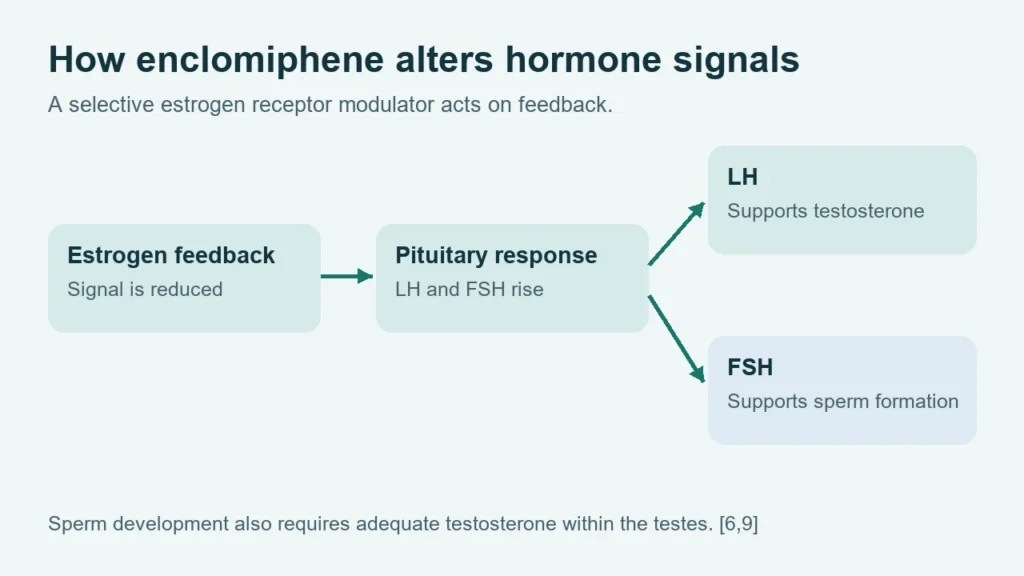
Thomas and colleagues compared enclomiphene with clomiphene in a small chart review. Motility improved within both groups. LH, FSH, and total motile sperm count improved significantly within the enclomiphene group only. Concentration rose numerically in both groups and did not reach statistical significance. Semen volume did not change significantly. Total testosterone rose in both groups, with no statistically significant difference in the change between groups. The study did not establish that one drug was superior. [6]
A separate, company-reported Maximus analysis of 1,250 men described average gains of 89.7% in free testosterone and 87.1% in LH. These hormone measurements do not establish semen or pregnancy outcomes. Enclomiphene itself has no FDA approval. [7,8]
What should you do if you’re trying to conceive?
Share your conception timeline with your clinician before changing weight or hormone medication. An infertility evaluation typically begins with a reproductive history and at least one semen analysis. If results are abnormal or symptoms suggest a hormone issue, your clinician may order repeat testing or refer you for reproductive urology evaluation.
- Bring your medication list. Include GLP-1s, testosterone, supplements and any previous fertility treatment.
- Review previous testing. Share semen results and ask whether repeat analysis, testosterone and FSH testing, or other targeted tests are indicated.
- Coordinate both partners’ evaluations. Work on weight and metabolic health alongside the fertility evaluation. Current evidence does not establish a regimen combining diet, GLP-1 medication and enclomiphene as a fertility treatment. [1–6,9]
Common questions about PEPLIX HEALTH
Peplix Health offers a cash-pay pathway to discuss metabolic and hormone concerns. Monarch Brands LLC manages nonclinical operations, and independent, board-certified physicians evaluate medical needs. If you’re trying to conceive, bring your timeline and existing lab results so your physician can discuss suitable options and whether specialty care is needed.
Can I discuss GLP-1 treatment while trying to conceive?
Yes. A physician can review whether you qualify for metabolic treatment under the relevant product indication and discuss how a reproductive specialist can evaluate abnormal semen results. Peplix Health’s educational content is for general information and does not replace individual medical advice.
How are compounded prescriptions handled?
The prescribing physician individualizes treatment and monitoring. When a compounded medication is clinically appropriate and legally available, a licensed pharmacy operating under Section 503A can fill a patient-specific prescription under applicable federal and state requirements. Compounded drugs do not undergo FDA premarket review for safety, effectiveness, or quality. [10]
For consultation information, see our weight-loss guide or start an online assessment.
Sources
- Howell et al. AUA 2025 conference abstract PD23-06
- Andersen et al. Weight loss and sperm count
- Sharma et al. Dietary interventions and sperm motility
- Goldberg and Boots. Obesity and fertility review
- Gregorič et al. Semaglutide and sperm morphology
- Thomas et al. Enclomiphene and clomiphene comparison
- Maximus. Enclomiphene protocol study summary
- Operation Supplement Safety. Enclomiphene status
- AUA and ASRM. Male infertility guideline
- FDA. Compounding questions and answers
This article is for general education and is not medical advice. Talk with a licensed clinician before starting, stopping or changing any treatment. Compounded medications are not FDA-approved. See our safety information.
Keep reading

Weight Loss
GLP-1 Medications for Weight Loss and Diabetes
Compare semaglutide and tirzepatide for weight loss, learn which GLP-1 pills work, and understand side effects, stopping, and pharmacy fulfillment.

Weight Loss
Compounded semaglutide vs Wegovy and Ozempic
Compare compounded semaglutide with Wegovy and Ozempic on weight loss evidence, cost, dosing safety, and when a 503A pharmacy may fill a prescription.

Weight Loss
GLP-1 Benefits Beyond Weight Loss
Learn how semaglutide and tirzepatide affect blood sugar, heart health, inflammation, food noise, and alcohol cravings. Compare the evidence.