Magnesium for Sleep: Forms, Dosage, and Timing
Does magnesium help you sleep? Compare glycinate, threonate, and malate, check elemental doses, and learn when to seek insomnia care.

Magnesium may modestly improve some sleep symptoms, but the evidence is limited. Glycinate has been studied, and no form, dose, or bedtime window is established as best. Review your total elemental dose and medications before adding a supplement. If sleep problems persist, seek evaluation and ask about cognitive behavioral therapy for insomnia.
How do sleep stages affect recovery and metabolic health?
Sleep cycles through non-REM and REM phases. Deep non-REM sleep is more common early in the night, and REM usually increases later. Sleep loss can affect insulin sensitivity, appetite, and muscle recovery. Adequate sleep supports general health during training or weight management, while evidence does not establish that a magnesium supplement increases restorative deep sleep.
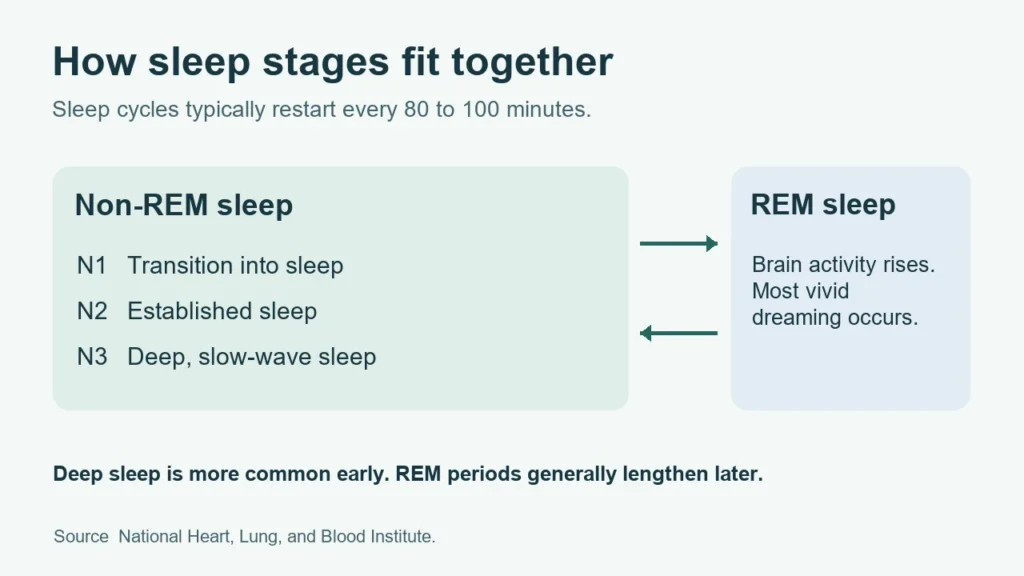
Non-REM sleep includes N1 as you drift off, N2 as sleep becomes established, and deep, slow-wave N3. Vivid dreaming often occurs in REM. Sleep supports learning, memory, mood, and immune function, with contributions from multiple stages. A major growth hormone pulse is associated with early slow-wave sleep. [1, 2]
Experimental sleep loss has reduced insulin sensitivity and increased hunger in some studies, while changes in ghrelin and leptin vary. Small studies also found lower daytime testosterone after a week of restricted sleep and lower muscle protein synthesis after a night without sleep. These findings concern sleep loss itself. They cannot establish benefits from magnesium for exercise, testosterone therapy, or GLP-1 treatment. [3–5]
Does magnesium help you fall asleep or stay asleep?
Small trials suggest oral magnesium may help some people fall asleep sooner or report fewer insomnia symptoms. Results vary by population, outcome, and formulation. Magnesium supports nerve and muscle function, but the research has not established that it reliably extends sleep, treats nighttime anxiety, or works within a few nights of starting.
A review of three trials involving 151 older adults included small studies with methodological limitations. The pooled estimate suggested an average 17.36 minutes less to fall asleep with magnesium compared with placebo, with low certainty. Total sleep time did not improve significantly. In a separate four-week bisglycinate trial, insomnia symptom scores improved slightly more than with placebo. These results do not predict how quickly you might feel a change. [6, 7]
Magnesium helps regulate excitatory NMDA receptor activity and calcium transport involved in muscle contraction. Researchers have also looked at inhibitory GABA signaling and links between stress hormones and urinary magnesium loss. Those mechanisms do not show that supplements reliably lower cortisol, reduce rumination, or switch the body into a parasympathetic state at bedtime. [8, 9]
Low magnesium can cause muscle twitches or cramps. Night cramps and restless legs can have other causes, and evidence for magnesium as a restless legs treatment is insufficient. If you have a recurrent urge to move your legs that worsens at rest and improves with movement, ask a clinician about restless legs syndrome and whether iron studies are appropriate. [8, 10, 11]
Which magnesium form is best for sleep?
No head-to-head evidence establishes a best magnesium form for sleep. Bisglycinate has shown a small benefit in one short placebo-controlled trial. L-threonate has preliminary sleep research, while malate can supply magnesium as part of your diet and supplement intake. Match the choice to the elemental dose, product quality, and digestive tolerance.
| Form | What to know | Evidence for sleep |
|---|---|---|
| Glycinate / bisglycinate | Magnesium bound to glycine. | One four-week trial found a modest improvement in self-reported insomnia symptoms. Better tolerance or absorption than all other forms is unproven. [7, 8] |
| L-threonate | Check the elemental amount per serving and cost. | Short trials have explored sleep and cognition. Human evidence does not establish a sleep advantage or superior brain delivery. [12, 13] |
| Malate | Contains malate, an intermediate in the citric acid cycle. | Provides magnesium. A daytime energy or recovery advantage is unproven, and no separate evening form is required. [8, 14] |
| Citrate | Absorbs better than oxide in some studies. Certain products are saline laxatives. | May loosen stools. Laxative formulations retain water in the bowel. [8, 15] |
| Oxide | Can contain a relatively high elemental amount by weight. | Generally less well absorbed than citrate and may cause diarrhea. Some magnesium is still absorbed. [8] |
If you already take magnesium in a multivitamin, include that dose before deciding whether to buy another form. The amount listed next to Magnesium on the Supplement Facts panel is the elemental dose. [8]
How much magnesium should you take at night?
There is no established magnesium dose for sleep or evidence that 60 to 90 minutes before bed works best. Recommended total intake is 310–320 mg daily for adult women and 400–420 mg for adult men. The 350 mg daily upper limit applies to magnesium from supplements and medicines, so count every product you take.
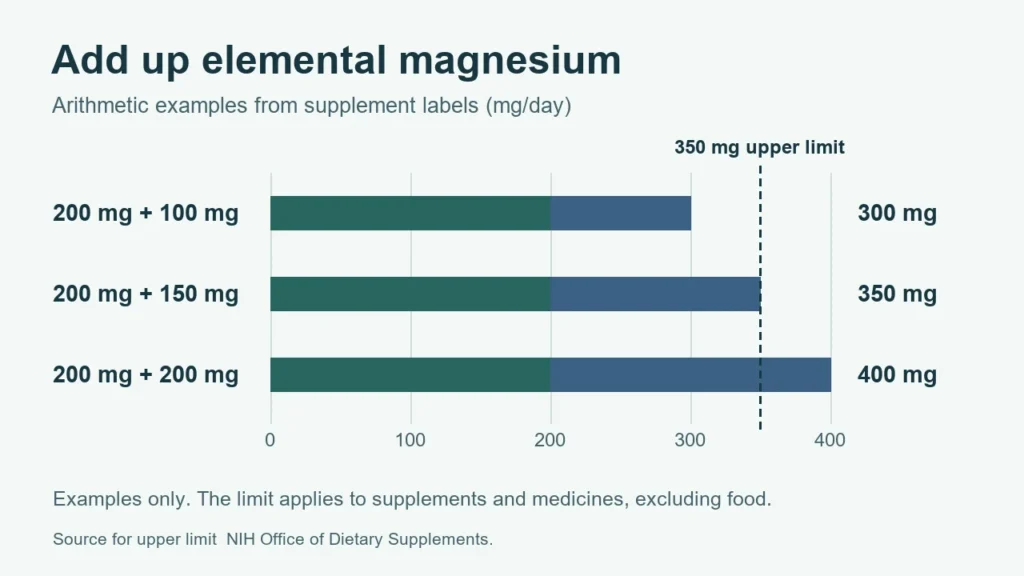
The chart uses numbers from example product labels to show how doses add up. If a multivitamin provides 200 mg of elemental magnesium, adding a 100, 150, or 200 mg supplement brings the total to 300, 350, or 400 mg before any magnesium-containing medicines. These totals do not establish a recommended nighttime regimen. [8]
If you and your clinician decide to supplement, pick a schedule you can follow and watch for diarrhea, cramping, or nausea. Taking it with food or adjusting the dose may improve tolerance. Ask before increasing the dose if you have kidney disease, are pregnant or breastfeeding, or take medicines that affect magnesium levels or absorption. A pharmacist can advise on spacing from certain antibiotics and oral bisphosphonates. [8]
What should you try first for persistent poor sleep?
Start with a regular wake time, morning light, and a cool, dark, quiet bedroom. Review caffeine, alcohol, late meals, and the timing of intense workouts. If insomnia continues or daytime function suffers, seek care. Cognitive behavioral therapy for insomnia, or CBT-I, is a recommended first-line treatment for chronic insomnia in adults.
- Protect your wind-down. Dim bright lights and put screens aside before bed. A warm shower, light stretching, a few minutes of breathing, or journaling can fit a quiet routine. Try earlier caffeine and less alcohol or heavy food close to bedtime. [16]
- Look for repeat triggers. Track bedtime, wake time, awakenings, leg symptoms, exercise timing, and medication changes. If sleep changed during GLP-1 treatment or a restrictive diet, review food intake and symptoms with the prescribing clinician. [16, 17]
- Get recurring symptoms evaluated. Ask about CBT-I if sleep is persistently difficult. Loud snoring, gasping, or marked daytime sleepiness may warrant evaluation for sleep apnea. Recurring leg discomfort is worth discussing separately. [1, 11, 16, 18]
Common questions about PEPLIX HEALTH
Peplix Health is a cash-pay telehealth service managed by Monarch Brands LLC. Independent, board-certified physicians review symptoms, health history, medications, and relevant lab results. When treatment is appropriate, the physician individualizes dosing and follow-up. A state-licensed pharmacy can fill eligible patient-specific compounded prescriptions under applicable Section 503A requirements and state law.
Can I take magnesium every night?
That depends on dietary intake, the elemental dose, kidney function, and other medications. If you use more than one product, bring the labels to your visit. A clinician or pharmacist can help verify the total and review interactions. [8]
Does magnesium work in a few nights or after two to four weeks?
Research has not established a reliable onset for sleep benefits. A four-week study measured improvement at that time, which does not show when a person should first notice a change. Discuss ongoing insomnia even if you are trying a supplement. [7, 18]
Can Peplix Health evaluate sleep changes during weight or hormone care?
Bring a brief sleep diary and a list of prescriptions and supplements. Your clinician can review when symptoms started and discuss next steps, including evaluation for a sleep disorder when indicated. [16–18]
Does magnesium for sleep require a compounding pharmacy?
Standard oral magnesium products are widely available. A compounded prescription is an option only when clinically justified and applicable requirements are met. The licensed pharmacy must follow patient-specific prescription, ingredient, and quality requirements. Compounded drugs do not undergo FDA premarket approval. [8, 19, 20]
For consultation information, see our vitamins and wellness guide or start an online assessment.
Sources
- NHLBI. Sleep phases and stages.
- Van Cauter and Copinschi. Growth hormone and sleep.
- Zhu et al. Sleep restriction and metabolic outcomes.
- Leproult and Van Cauter. Sleep restriction and testosterone.
- Lamon et al. Acute sleep deprivation and muscle protein synthesis.
- Mah and Pitre. Oral magnesium for insomnia in older adults.
- Randomized trial of magnesium bisglycinate in adults with poor sleep.
- NIH Office of Dietary Supplements. Magnesium fact sheet.
- Pickering et al. Review of magnesium status and stress pathways.
- Systematic review of magnesium for restless legs syndrome.
- AASM. Restless legs syndrome and periodic limb movement disorder guideline.
- Randomized L-threonate trial in adults reporting sleep problems.
- Randomized L-threonate trial for cognition and sleep.
- NCBI Bookshelf. Biochemistry of the citric acid cycle.
- DailyMed. Magnesium citrate saline laxative labeling.
- NHLBI. Healthy sleep habits and insomnia treatment.
- Joint advisory on nutrition during GLP-1 therapy.
- AASM. Behavioral and psychological treatments for chronic insomnia.
- FDA. Federal provisions for human drug compounding.
- FDA. Human drug compounding laws and policies.
This article is for general education and is not medical advice. Talk with a licensed clinician before starting, stopping or changing any treatment. Compounded medications are not FDA-approved. See our safety information.
Keep reading

Wellness
Krill Oil vs Fish Oil for Omega-3s
Compare krill oil and fish oil for EPA and DHA, absorption, triglycerides, and side effects. Learn what to check on an omega-3 label.

Wellness
Sprinting Benefits and How to Start Sprint Interval Training
Learn how sprint intervals affect fitness and fat oxidation, how to start with controlled efforts, and how to fit sprinting into your week.

Wellness
CoQ10 Benefits, Dosage, and Safety
What does CoQ10 do? Explore the evidence for heart failure, fatigue, and statin symptoms, plus dosage, supplement forms, and interactions.