Do GLP-1 medications change what people eat?
Do GLP-1s change cravings, food choices or grocery spending? See what the studies found and how to stay nourished when appetite drops.

GLP-1 medications can reduce hunger and energy intake, and some people report changes in cravings or food choices. A 2025 consumer survey linked current use to fewer calories and reported cuts in several food categories. The survey could not establish whether preferences permanently changed or measure what happened to the same people after stopping.
What did the 2025 study actually find?
The linked study was a four-group consumer survey published in Food Quality and Preference. Current users reported lower calorie intake than the other groups. Survey responses also suggested reductions in processed foods, sugary drinks, refined grains and beef. The findings reflect reported intake and preferences, which are different from measured nutritional quality.
Dilley and colleagues compared current users, former users, people who had never used a GLP-1 but intended to, and people who had never used one and did not intend to. The survey was separate from NHANES. Intake recall suggested a roughly 720–990 calorie difference related to weight-loss use. That estimate is not a prescribed daily deficit or a measured change in the same people. Responses suggested shifts toward water, leafy greens and fruit. [1]
| Study measure | What it can show | What remains unclear |
|---|---|---|
| Reported calories and foods | Differences in intake and reported food choices across survey groups | How much any one person changed, or how consistently they met nutritional needs. [1] |
| Randomized test-meal intake | Whether studied semaglutide changed intake or appetite under trial conditions | How participants shop or eat long term across daily settings. [2] |
| Household transactions | Changes in spending on groceries and specific food categories | How much each person ate or whether their diet improved. [3] |
The survey does not establish that users had lower BMI or waist size because of dietary changes, or consistently consumed less saturated fat and more whole grains. Differences between former and current users cannot determine how durable a preference change is. [1]
Why can your appetite or cravings feel different on GLP-1s?
GLP-1 receptor agonists influence appetite and fullness, and some can slow stomach emptying. In a randomized study, participants receiving semaglutide reported fewer cravings and ate less at a test meal. A lasting change in food preferences is still unproven, and individual responses can differ across medications and over time.
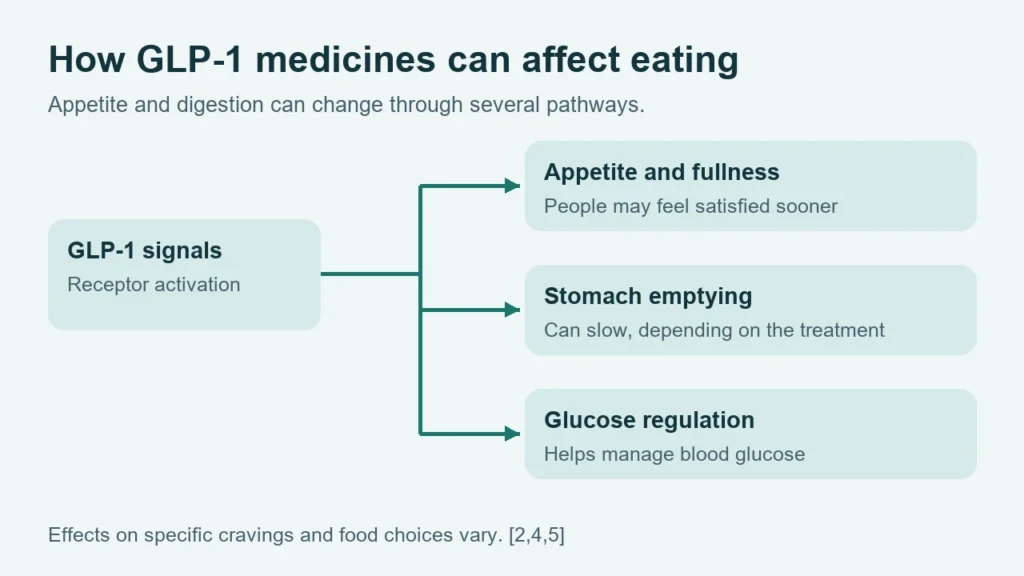
Selected GLP-1 medicines have approved uses in chronic weight management or type 2 diabetes, depending on the product. A 20-week randomized study of an oral semaglutide regimen in 61 adults with obesity found lower energy intake at a test lunch and improvements in fullness and food cravings. Reduced reward-driven eating is a possible contributor. The survey cannot establish a dopamine mechanism, a link between steadier glucose and fewer cravings, or how much motivation or coaching contributes. [1,2,4,5]
Are GLP-1s changing U.S. grocery purchases?
A U.S. household-panel study linked GLP-1 adoption to lower grocery spending within six months, with larger declines in some snack categories than in total groceries. Spending moved toward earlier patterns after discontinuation. These findings help explain how purchases can shift, while effects on the national diet or food manufacturing remain uncertain.
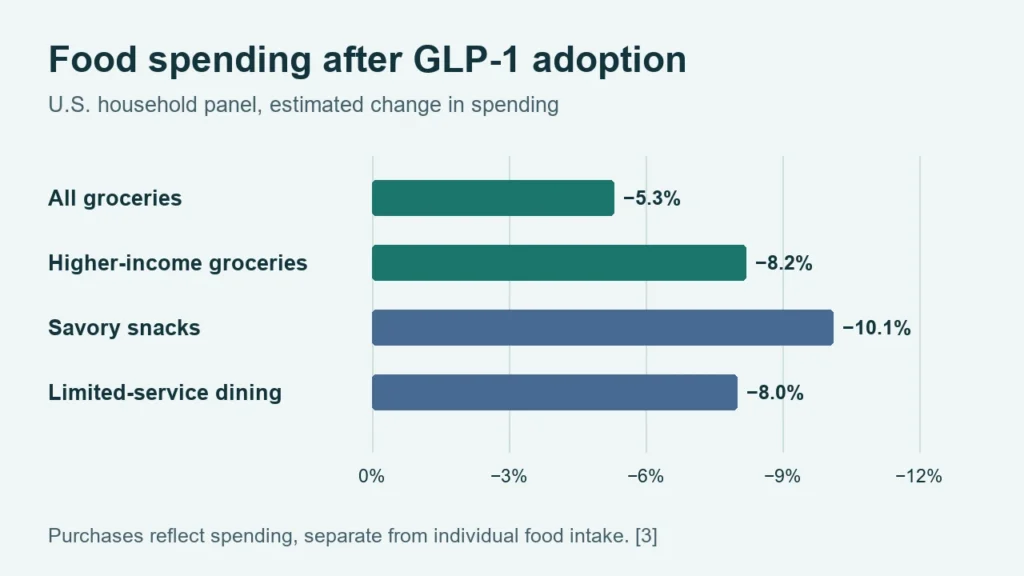
Hristakeva and colleagues reported a 5.3% decline in grocery spending, an 8.2% decline for higher-income households, and a 10.1% drop in savory snack spending in the published analysis. Spending at limited-service restaurants, fast-food outlets and coffee shops fell 8.0%. Yogurt showed the largest increase among a small group of categories that moved upward. Spending is separate from nutritional intake. [3]
Education was associated with use and interest in the Dilley survey. Household evidence also shows adoption patterns vary with income and reason for use. These studies cannot tell us how the food industry will respond or whether observed patterns will extend across populations. In a separate semaglutide trial extension, participants regained about two thirds of prior weight loss on average over a year after semaglutide and the structured lifestyle intervention ended, without measuring whether specific food preferences persisted. [1,3,6]
What should you focus on if your appetite shrinks?
If meals become smaller, aim to get enough protein, fiber, fluids and other nutrients within what you can comfortably eat. Tell your clinician if nausea or excessive fullness makes it hard to eat or drink. A licensed clinician can assess how treatment is working and whether the plan needs adjustment.
- Make small meals count. Include protein and foods such as beans, vegetables, fruit or whole grains as tolerated. Plan options you can prepare on a busy day.
- Describe what changed. Bring examples of portions, foods that are harder to tolerate, fluid intake and changes in cravings or symptoms.
- Discuss a maintenance plan. Review eating habits, follow-up and treatment options with your clinician before stopping or changing a prescription. [6,7]
Common questions about PEPLIX HEALTH
Peplix Health offers cash-pay evaluations for metabolic and weight concerns. Monarch Brands LLC manages nonclinical operations, and independent, board-certified physicians review medical history, eligibility and treatment options. If a medication is appropriate, your clinician individualizes prescribing and follow-up based on your response, tolerability and relevant medical factors.
Can I get a GLP-1 mainly to change cravings?
Cravings can be part of the clinical conversation. Prescribing depends on the medical indication, health history and product. Research on reported food choices does not establish a separate indication for changing food preferences. [1,2,4]
Who fills a compounded prescription?
If a compounded medication is clinically appropriate and legally available, a licensed pharmacy operating under Section 503A can fill a valid patient-specific prescription under federal and state requirements. FDA does not review compounded drugs for safety, effectiveness or quality before marketing. [8]
For consultation information, see our weight-loss guide or start an online assessment.
This article is for general education and does not replace individualized medical advice.
Sources
- Dilley et al. Food consumption in current, previous and potential GLP-1 users
- Gabe et al. Randomized oral semaglutide trial on appetite and energy intake
- Hristakeva et al. U.S. household GLP-1 adoption and food demand
- European Medicines Agency. Wegovy product information
- Altered eating experience during GLP-1 therapy. Review
- Wilding et al. STEP 1 semaglutide withdrawal extension
- Joint scientific advisory. Nutrition during GLP-1 therapy
- FDA. Compounding and the FDA
This article is for general education and is not medical advice. Talk with a licensed clinician before starting, stopping or changing any treatment. Compounded medications are not FDA-approved. See our safety information.
Keep reading

Weight Loss
GLP-1 Medications for Weight Loss and Diabetes
Compare semaglutide and tirzepatide for weight loss, learn which GLP-1 pills work, and understand side effects, stopping, and pharmacy fulfillment.
Weight Loss
Compounded semaglutide vs Wegovy and Ozempic
Compare compounded semaglutide with Wegovy and Ozempic on weight loss evidence, cost, dosing safety, and when a 503A pharmacy may fill a prescription.

Weight Loss
GLP-1 Benefits Beyond Weight Loss
Learn how semaglutide and tirzepatide affect blood sugar, heart health, inflammation, food noise, and alcohol cravings. Compare the evidence.