Vitamin B12 for Energy and Fatigue
Can vitamin B12 help with fatigue? Learn who should get tested, how pills compare with injections, and when deficiency symptoms may improve.

Vitamin B12 can ease fatigue when a deficiency contributes to it. B12 helps make red blood cells, supports nerve function, and plays a role in energy metabolism. Extra B12 has no proven energy boost when levels are adequate. If fatigue persists, review symptoms, diet, and medications with a clinician before choosing pills or injections.
How does vitamin B12 support energy?
Vitamin B12 helps cells make DNA and produce normal red blood cells, which carry oxygen to your tissues. It also helps an enzyme in mitochondria process products of certain fats and amino acids. B12 supports the nervous system and myelin, the protective insulation around nerves. These functions depend on adequate B12 over time.
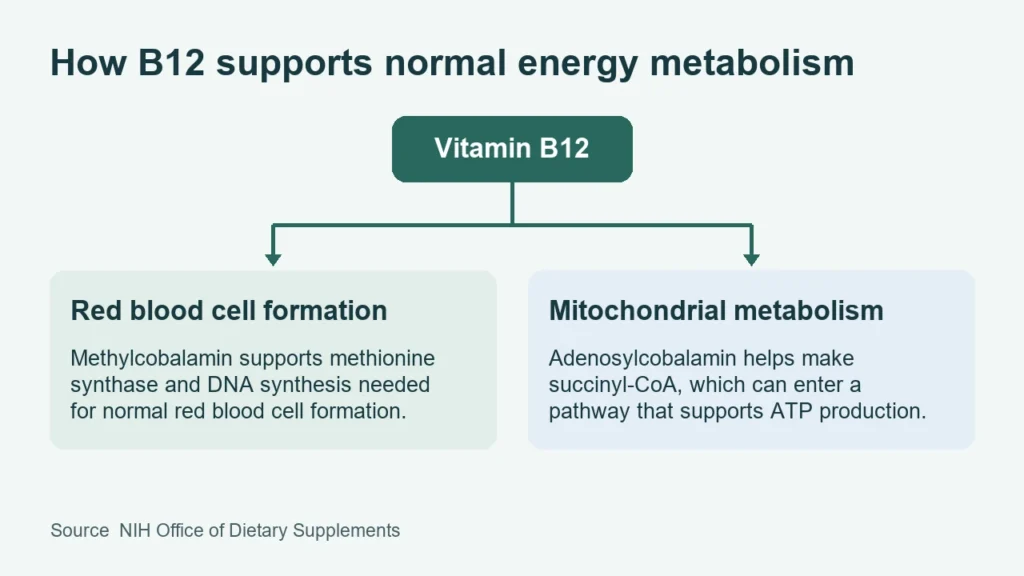
Adenosylcobalamin supports methylmalonyl-CoA mutase, which forms succinyl-CoA. This compound can enter the citric acid cycle and contribute to pathways that make adenosine triphosphate (ATP). Methylcobalamin helps methionine synthase convert homocysteine to methionine and supports the folate cycle used to make DNA. [1]
Deficiency can cause megaloblastic anemia. The bone marrow produces abnormally large, immature cell precursors, and the resulting anemia can reduce oxygen delivery. That can contribute to fatigue, pallor, and shortness of breath with activity. Concentration changes or nerve symptoms can occur even without anemia. [1, 2]
When should you get a B12 test for fatigue?
Ask about testing if persistent fatigue occurs alongside a risk factor such as a diet low in B12, long-term metformin or acid-suppressing medication, or difficulty absorbing nutrients. A clinician may start with total or active B12 and use methylmalonic acid to clarify an uncertain result. Symptoms and medical history help guide interpretation.
- Review food intake. Meat, fish, eggs, dairy, and fortified foods can provide B12. Vegans and some vegetarians may need a reliable fortified food or supplement. If you are eating substantially less on a GLP-1 medication, review overall nutrient intake with your clinician. [1, 4]
- Review absorption risks. Metformin, proton pump inhibitors, and some stomach or intestinal conditions can affect B12 absorption. Older adults are more likely to have conditions that make it harder to release B12 from food. Autoimmune gastritis and certain bariatric operations are important to mention. [1, 2]
- Tell your clinician what you already take. A complete blood count can help assess anemia. Methylmalonic acid (MMA) or sometimes homocysteine can help clarify a borderline B12 result. Kidney impairment can raise MMA, and low folate can raise homocysteine. Seek prompt care for new numbness, balance problems, or severe unexplained fatigue. [1, 2, 5]
Are B12 shots better than oral supplements?
Oral B12 works for many people, especially when low dietary intake is the likely cause. Injections bypass the digestive tract and can be appropriate for certain absorption problems or more urgent cases. A clinician chooses the product, dose, and route based on the cause and severity of deficiency, symptoms, and response to treatment.
| Option | When it may fit | What to know |
|---|---|---|
| Food, fortified food, or an oral supplement | Maintaining intake when your diet provides little B12. | Most nonpregnant adults need about 2.4 mcg a day from all dietary sources. This intake recommendation is separate from deficiency treatment. [1] |
| Higher-dose oral treatment | Clinician-directed care for confirmed deficiency, including some people with absorption problems. | A small fraction of a large dose can be absorbed without intrinsic factor. Small trials used 1,000–2,000 mcg per day and measured blood levels. Evidence comparing symptom relief is limited. [1–3] |
| Intramuscular treatment | Autoimmune gastritis, certain gastrointestinal surgeries, or cases where rapid treatment is important. | Injectable forms include cyanocobalamin and hydroxocobalamin. Some U.S. cyanocobalamin products contain 1,000 mcg per mL. The prescribed dose and frequency depend on the product and diagnosis. [1, 2, 6] |
In B12 deficiency due to autoimmune gastritis, historically associated with pernicious anemia, damage to the stomach can reduce intrinsic factor needed for ordinary B12 absorption. NICE recommends lifelong intramuscular replacement for this cause, total gastrectomy, or complete terminal ileal resection. Other causes may respond to oral treatment, with follow-up. [1, 2]
Methylcobalamin and adenosylcobalamin are active forms. The body can convert cyanocobalamin and hydroxocobalamin to active forms. NIH reports no evidence that supplemental forms differ in absorption or that sublingual products outperform swallowed forms. Use a dose matched to the purpose. Evidence does not support chasing a high-normal B12 target for more energy. [1–3]
How long does B12 take to work for fatigue?
After appropriate B12 replacement, deficiency symptoms may start to improve within two weeks or take up to three months to begin improving. Recovery depends on the underlying cause, severity, duration, and response to treatment. A separate condition can also contribute to fatigue. Follow up if symptoms persist, worsen, or change during treatment.
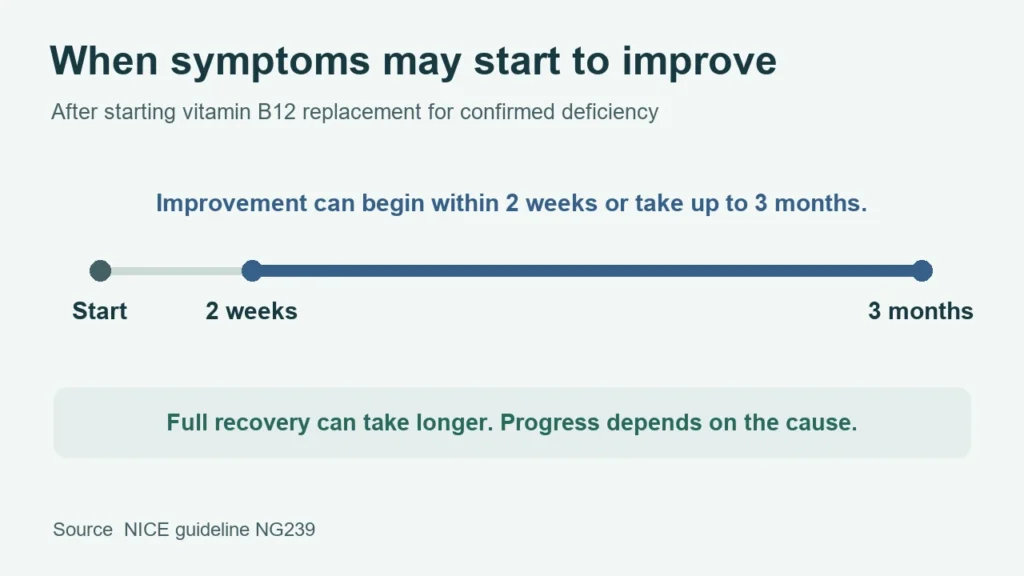
NICE gives this range for deficiency symptoms overall. There is no established timetable for separate changes in fatigue, concentration, mood, or exercise tolerance. Full resolution can take longer, and new or worsening nerve symptoms may require earlier reassessment. [2]
Evidence does not show that extra B12 improves athletic performance or endurance in people who get enough. A perceived lift after a shot cannot confirm a deficiency or tell you which ingredient in a mixed product was responsible. If you still feel exhausted despite adequate B12, ask about sleep duration and sleep apnea, iron or ferritin, thyroid function, medication effects, training load, and mental health. Testosterone testing is generally guided by compatible symptoms and clinical history. [1, 5, 7, 8]
Common questions about PEPLIX HEALTH
Peplix Health is a cash-pay telehealth service managed by Monarch Brands LLC. Independent, board-certified physicians evaluate symptoms, dietary intake, medications, and relevant lab results. When treatment is appropriate, the physician individualizes dosing and follow-up. If compounding is clinically necessary, a state-licensed pharmacy can fill an eligible prescription under applicable Section 503A and state requirements.
Is taking B12 every day safe?
B12 is water-soluble and the body stores some, mainly in the liver. U.S. nutrition authorities have not set a tolerable upper intake level because B12 has low toxicity. Dose depends on whether you are maintaining intake or treating deficiency. Share your full supplement list with your clinician. [1, 2]
Should I take B12 in the morning or before a workout?
A consistent routine, such as taking a daily supplement with breakfast, may help you remember it. B12 has no established pre-workout timing advantage. Caffeine temporarily boosts alertness by blocking adenosine receptors. If coffee or a multi-ingredient pre-workout affects your sleep, bring that up during a fatigue evaluation. [1, 5, 9]
What should I bring to a Peplix Health visit for persistent fatigue?
Bring recent labs, a list of medications and supplements, and a short timeline of changes in sleep, appetite, activity, or symptoms. Mention any reduced food intake during GLP-1 treatment. Your physician can decide which tests or treatment options fit your symptoms. [2, 4, 5]
Does B12 treatment need a compounding pharmacy?
Standard oral products and prescription injections are available. If a patient-specific compounded drug is warranted, Section 503A requires a valid prescription for an identified patient and applicable ingredient and quality standards. Compounded drugs do not undergo FDA premarket approval. [1, 6, 10, 11]
For consultation information, see our vitamins and wellness guide or start an online assessment.
Sources
- NIH Office of Dietary Supplements. Vitamin B12 fact sheet for health professionals.
- NICE. Vitamin B12 deficiency in over 16s, guideline NG239.
- Cochrane. Oral versus intramuscular vitamin B12 for deficiency.
- Joint Advisory. Nutritional priorities during GLP-1 therapy.
- American Family Physician. Fatigue in adults, evaluation and management.
- DailyMed. Cyanocobalamin injection prescribing information.
- Markun et al. B12 supplementation, cognition, depression, and fatigue.
- Endocrine Society. Testosterone therapy in men with hypogonadism.
- Ribeiro and Sebastião. Caffeine and adenosine.
- FDA. Federal provisions for human drug compounding.
- FDA. Human drug compounding laws and policies.
This article is for general education and is not medical advice. Talk with a licensed clinician before starting, stopping or changing any treatment. Compounded medications are not FDA-approved. See our safety information.
Keep reading

Wellness
Krill Oil vs Fish Oil for Omega-3s
Compare krill oil and fish oil for EPA and DHA, absorption, triglycerides, and side effects. Learn what to check on an omega-3 label.

Wellness
Sprinting Benefits and How to Start Sprint Interval Training
Learn how sprint intervals affect fitness and fat oxidation, how to start with controlled efforts, and how to fit sprinting into your week.

Wellness
CoQ10 Benefits, Dosage, and Safety
What does CoQ10 do? Explore the evidence for heart failure, fatigue, and statin symptoms, plus dosage, supplement forms, and interactions.