How Do GLP-1 Medications Affect Your Brain?
Learn how GLP-1 medicines affect appetite, what Alzheimer’s trials found, and how tirzepatide treats sleep apnea in eligible adults.
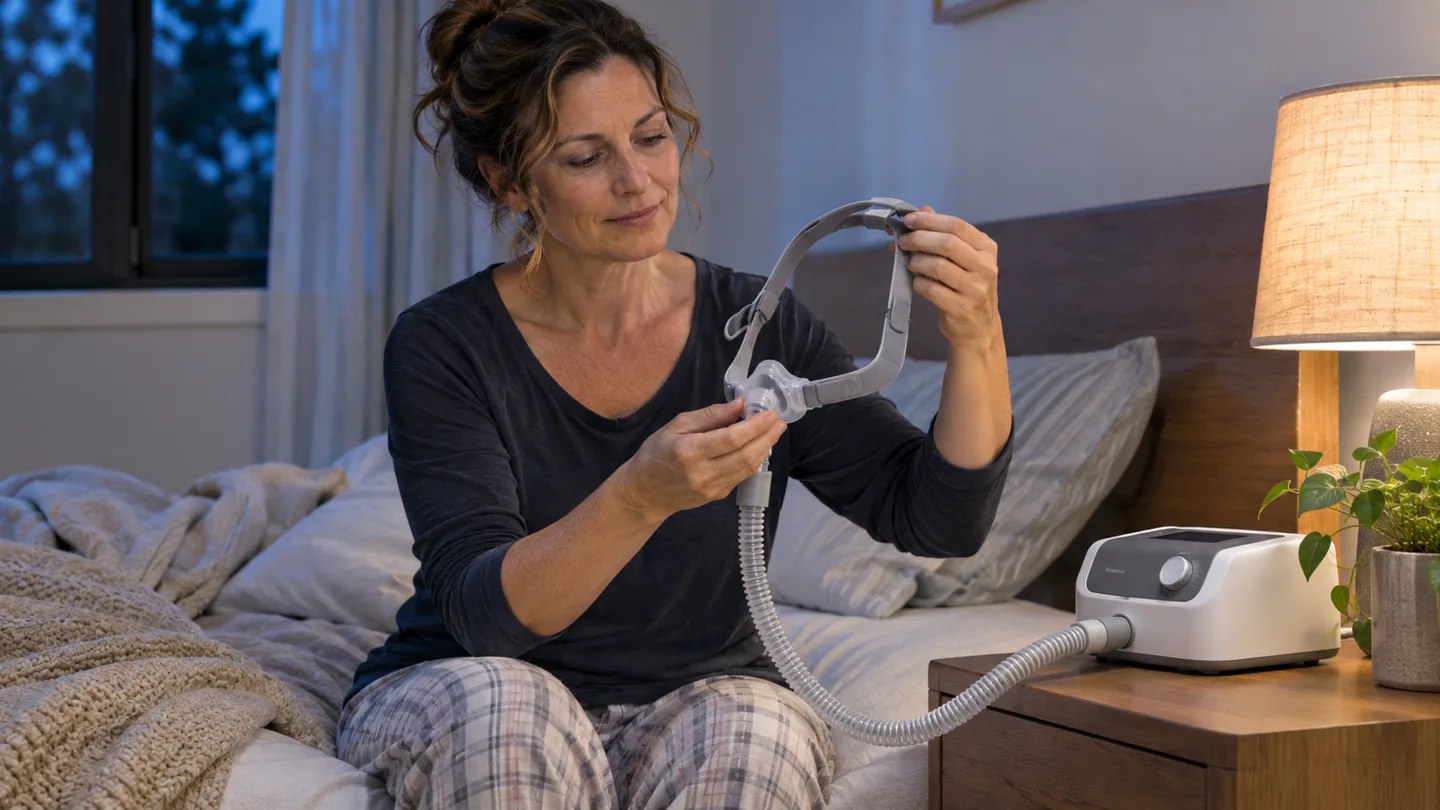
GLP-1 medicines act on brain circuits involved in appetite. Researchers are also studying effects on inflammation and brain cell function, but large trials found that oral semaglutide did not slow early Alzheimer’s disease. Tirzepatide can treat obstructive sleep apnea in eligible adults with obesity. That benefit addresses breathing during sleep.
Can GLP-1 medications slow Alzheimer’s disease?
Two large phase 3 trials, EVOKE and EVOKE+, found that oral semaglutide did not slow clinical progression in people with early symptomatic Alzheimer’s disease over 104 weeks. Smaller studies and laboratory findings still inform research. GLP-1 medications have no FDA-approved indication for preventing dementia, treating Alzheimer’s disease, or improving memory. [1–4]
| Research question | What the study measured | What the result supports |
|---|---|---|
| Does semaglutide slow early Alzheimer’s? | EVOKE and EVOKE+ tested oral semaglutide against placebo over 104 weeks. | No significant benefit on the primary clinical measure of cognition and daily function. [1] |
| Does liraglutide help in Alzheimer’s? | ELAD studied 204 adults with mild to moderate disease over 52 weeks. | The primary brain glucose metabolism outcome did not significantly improve. Secondary findings need confirmation. [2] |
| Can GLP-1 signaling change brain biology? | Laboratory studies track inflammatory, metabolic, and synaptic markers. | Findings warrant research. A biomarker change does not establish preserved memory or daily function. [3, 4] |
GLP-1 receptor agonists first entered use for type 2 diabetes. Several products later gained indications for chronic weight management or cardiovascular risk reduction in specific populations. Those approvals depend on the formulation and population studied. The EVOKE trials tested oral semaglutide for a separate question about Alzheimer’s progression. [1, 5, 6]
What do GLP-1 receptors do in the brain?
GLP-1 receptors help regulate appetite through circuits that include the hypothalamus and brainstem. Researchers are also studying GLP-1 signaling in pathways relevant to learning, inflammation, and cellular energy. Evidence for appetite regulation is established. Most proposed effects on brain-cell survival or memory still come from animal or laboratory research. [3, 4, 7]
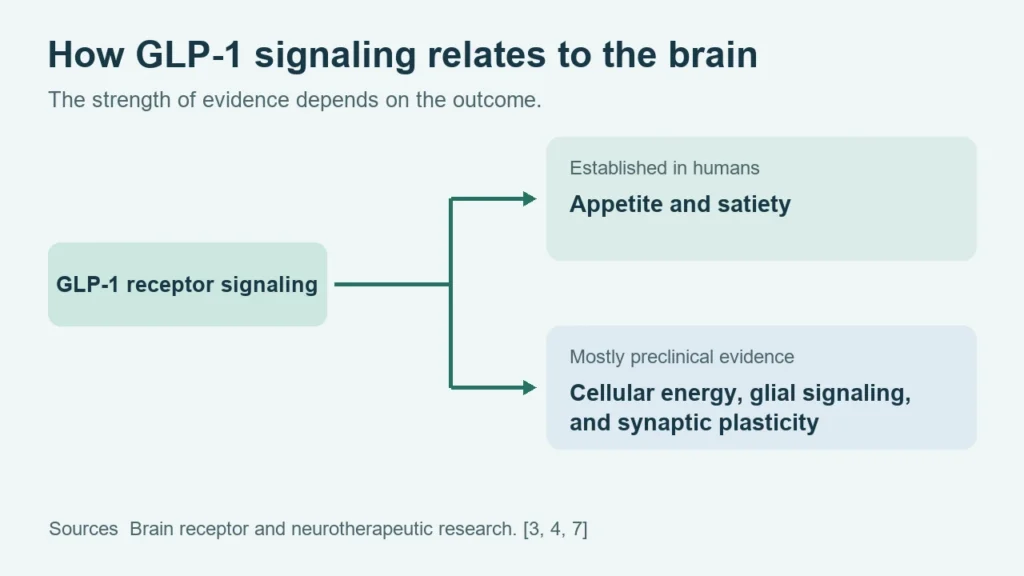
The adult brain is about 2% of body weight and accounts for roughly 20% of the body’s glucose use under typical resting conditions. Researchers are examining whether GLP-1 signaling influences neuronal energy use, mitochondrial function, or brain-derived neurotrophic factor (BDNF), a protein involved in synaptic plasticity, the ability of connections between neurons to change. Results can depend on the experimental model and the drug. [3, 8]
Microglia are the brain’s resident immune cells and help clear cellular debris. Astrocytes support neurons and also participate in inflammatory signaling. Persistent activation of these cells can involve cytokines, chemical signals that influence inflammation. In Alzheimer’s disease, inflammation interacts with amyloid plaques and tau tangles. A preclinical review found favorable changes in selected experimental measures, but it does not support a uniform 40–60% reduction in brain inflammation or a prediction of human benefit. [3, 4]
How much does tirzepatide improve sleep apnea?
In the 52-week SURMOUNT-OSA trials, tirzepatide reduced breathing interruptions per hour in adults with obesity and moderate-to-severe obstructive sleep apnea. Zepbound is FDA-approved for that population. One trial included adults who used positive airway pressure, or PAP. Sleep apnea care and any changes to PAP should be coordinated with your clinician. [6, 9]
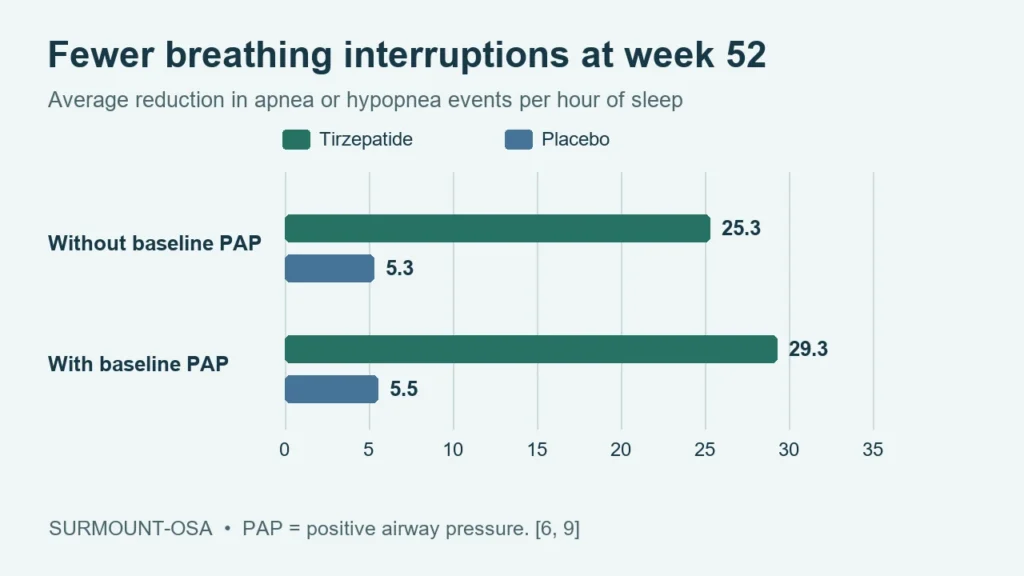
The apnea-hypopnea index (AHI) counts breathing pauses or reductions per hour of sleep. At week 52, the tirzepatide groups averaged 25.3 fewer events per hour without PAP and 29.3 fewer with baseline PAP use. The respective placebo groups averaged 5.3 and 5.5 fewer events per hour. In the trial of participants using PAP at baseline, the tirzepatide group’s estimated AHI reduction was 58.7% from baseline in the treatment-regimen analysis. [6, 9]
What can you do about sleep and brain health today?
If you snore loudly, wake up gasping, or regularly feel sleepy during the day, ask about a sleep apnea evaluation. Treating a confirmed sleep disorder addresses a measurable health problem. The tirzepatide trials did not establish that the drug restores deep sleep, clears Alzheimer’s-related proteins, or protects memory. [6, 9–11]
- Keep sleep treatment coordinated. If you already use PAP, ask your sleep clinician when to reassess. Report symptoms and any tolerability changes during weight-management treatment. [6, 9]
- Keep the brain research in context. The glymphatic system is a proposed fluid transport pathway involved in clearing substances from brain tissue. An early mouse study linked sleep to increased clearance of amyloid beta. More recent experiments found different results with other tracers and methods. The OSA trials did not measure amyloid or tau clearance. [9–11]
- Discuss supplements by need. Creatine helps buffer cellular energy, and small cognition trials, including one using 5 g daily, have reported mixed findings. DHA is a component of cell membranes, and one trial reported a benefit on a memory measure. Vitamin D and magnesium serve normal physiological functions. The magnesium learning study was in animals. For adults, the usual upper limits are 4,000 IU daily for vitamin D and 350 mg daily from supplements or medications for magnesium, unless directed by a clinician. These findings do not establish a supplement regimen that prevents dementia or enhances GLP-1 effects. [12–17]
Common questions about PEPLIX HEALTH
Peplix Health offers cash-pay telehealth through a model managed by Monarch Brands LLC. Independent, board-certified physicians review your medical history, eligibility, and medication options. When an eligible patient-specific compounded prescription is medically appropriate, a state-licensed pharmacy can fill it under Section 503A and applicable state rules. Follow-up lets your clinician reassess response and tolerability.
Is there a GLP-1 microdose for brain health?
No dose or frequency has been shown to protect cognition or prevent dementia. A licensed prescriber can adjust treatment based on the specific product, the condition being treated, and your response. An altered injection schedule or treatment outside usual weight-management eligibility has no established cognitive benefit. [1, 3, 5, 6]
What should I bring to a metabolic care visit?
Bring your medication and supplement list, weight and blood sugar history, and any sleep study results or PAP information. If you have memory changes affecting everyday life, ask for evaluation of those symptoms separately.
How does Section 503A fulfillment work?
Section 503A generally requires a valid prescription for an identified patient and limits regular compounding of essentially identical copies of commercially available medicines. Compounded drugs do not undergo FDA premarket review for safety, effectiveness, or quality. Ask why the formulation is needed and which pharmacy would dispense it. [18, 19]
For consultation information, see our weight-loss guide or start an online assessment.
This article is for general education. Review individual treatment decisions with a licensed clinician.
Sources
- EVOKE and EVOKE+. Phase 3 semaglutide Alzheimer’s trials.
- ELAD. Liraglutide in mild to moderate Alzheimer’s disease.
- Roy and colleagues. GLP-1 receptors in neurotherapeutics.
- Kong and colleagues. Experimental Alzheimer’s models systematic review.
- FDA. Wegovy prescribing information.
- FDA. Zepbound prescribing information.
- Baggio and Drucker. Brain GLP-1 receptors and food intake.
- Mergenthaler and colleagues. Glucose in brain function.
- Malhotra and colleagues. SURMOUNT-OSA phase 3 trials.
- Xie and colleagues. Sleep and metabolite clearance in mice.
- Miao and colleagues. Brain clearance during sleep and anesthesia in mice.
- Rae and colleagues. Creatine and cognitive performance trial.
- Sandkühler and colleagues. Creatine and cognitive performance trial.
- Yurko-Mauro and colleagues. DHA and age-related cognitive decline.
- NIH Office of Dietary Supplements. Vitamin D.
- NIH Office of Dietary Supplements. Magnesium.
- Slutsky and colleagues. Brain magnesium and learning in animal models.
- FDA. Compounding questions and answers.
- U.S. Code. Section 503A pharmacy compounding requirements.
This article is for general education and is not medical advice. Talk with a licensed clinician before starting, stopping or changing any treatment. Compounded medications are not FDA-approved. See our safety information.
Keep reading

Weight Loss
GLP-1 Medications for Weight Loss and Diabetes
Compare semaglutide and tirzepatide for weight loss, learn which GLP-1 pills work, and understand side effects, stopping, and pharmacy fulfillment.
Weight Loss
Compounded semaglutide vs Wegovy and Ozempic
Compare compounded semaglutide with Wegovy and Ozempic on weight loss evidence, cost, dosing safety, and when a 503A pharmacy may fill a prescription.

Weight Loss
GLP-1 Benefits Beyond Weight Loss
Learn how semaglutide and tirzepatide affect blood sugar, heart health, inflammation, food noise, and alcohol cravings. Compare the evidence.