Which Supplements Should You Take With Tirzepatide?
Learn which supplements may fill nutritional gaps on tirzepatide, how to support muscle, and when nausea or constipation needs medical attention.

Tirzepatide can reduce appetite enough that you eat less protein, fiber, and fewer micronutrients. Start by reviewing what you can eat and drink comfortably. Protein powder or a basic multivitamin may fill a specific gap. Persistent nausea, severe fatigue, or constipation calls for a conversation with your prescriber before adding supplements.
Why can eating less change your nutritional needs?
Tirzepatide activates the GIP and GLP-1 receptors, reduces calorie intake, improves blood sugar control, and delays stomach emptying. Smaller meals can reduce the amount and variety of food you eat. Your diet can still be adequate, and delayed stomach emptying alone does not establish iron, calcium, or vitamin B12 malabsorption.
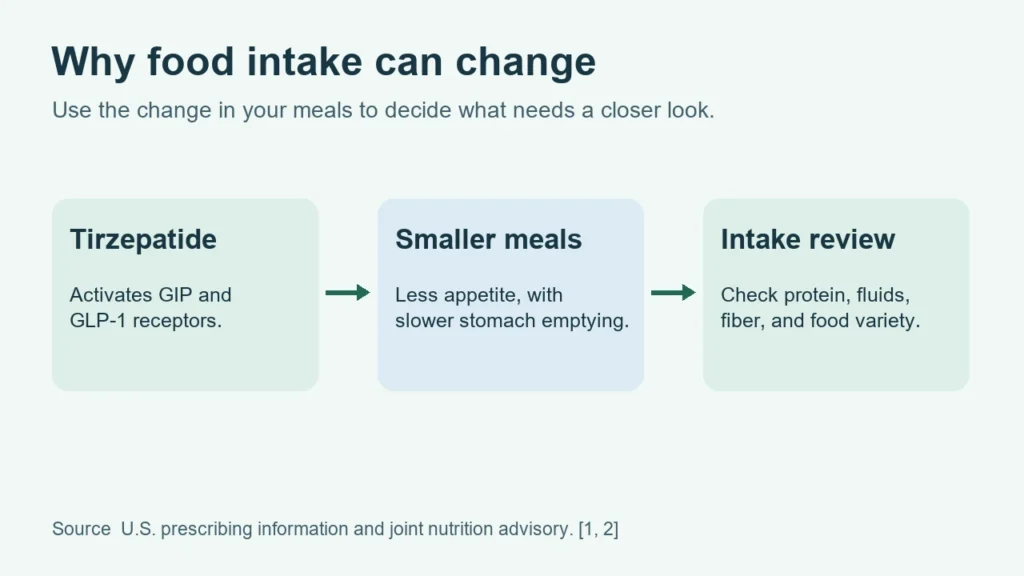
Tirzepatide can affect absorption of some oral medicines. Review prescriptions such as warfarin and oral hormonal contraceptives with your clinician, particularly when starting or increasing the dose. If you eat less meat or fewer fortified foods, check whether iron and B12 sources have dropped before attributing fatigue to the drug itself. [1, 2]
Appetite changes and GI symptoms often matter most when treatment starts or the dose increases. A prescriber may review dose progression, hydration, and food intake. Seek care early if symptoms prevent you from eating or drinking enough. [1, 2]
What helps protect muscle while you lose weight?
Adequate protein and resistance training are the first priorities for maintaining muscle during weight loss. Protein powder can help when smaller portions make your intake goal hard to meet. A fixed target based on your goal weight may not fit your needs. Ask about kidney health, activity level, and the pace of weight loss.
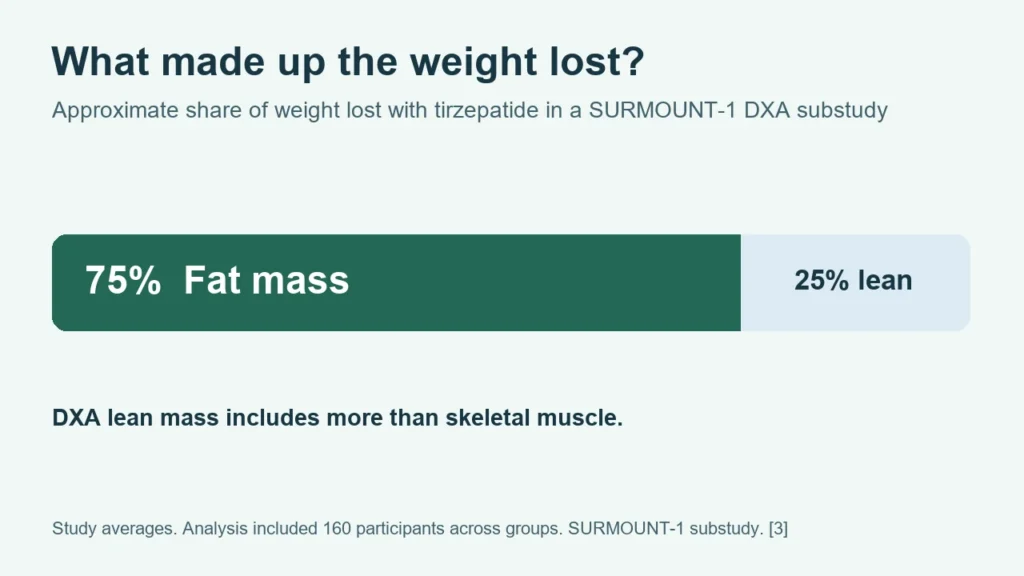
In the SURMOUNT-1 body-composition substudy, 160 participants had scans included in the analysis. About 75% of the weight lost with tirzepatide was fat mass and 25% was lean mass. Lean mass measured by DXA includes more than skeletal muscle, and these study averages cannot predict your result. [3]
A joint clinical advisory discusses roughly 80–120 g of protein daily as one practical approach for some adults, with targets individualized. Try small portions of chicken, fish, eggs, tofu, or plain Greek yogurt as tolerated. Yogurt also supplies calcium; eggs provide choline and some vitamin D. If you are short, a whey or plant protein powder with 20–30 g per serving can help. Start with a portion you can tolerate, perhaps in yogurt or a small smoothie, and include resistance training as appropriate. [2]
Which supplements should you consider first?
Choose supplements based on what your meals reliably provide and on symptoms that have been evaluated. Some people benefit from protein powder, a standard multivitamin, or targeted nutrient replacement. Routine high-dose vitamin D, fish oil, probiotics, and electrolyte powders have no established role for every tirzepatide user. Review doses and potential interactions with your clinician.
| Option | When it may help | What to check |
|---|---|---|
| Basic multivitamin | Food choices are limited over time, or a clinician identifies broad intake gaps. | Check vitamin D, B12, zinc, and selenium against other products. Methylated B12 is optional. High-dose vitamin D is a clinical decision. [2, 4, 5] |
| Omega-3 | You rarely eat oily fish or have a separate clinical indication. | Salmon supplies EPA and DHA plus selenium and B vitamins. No tirzepatide-specific 1,000–2,000 mg target is established. Disclose fish oil before surgery or if taking anticoagulants. [2, 6] |
| Electrolytes | Fluid losses from vomiting, diarrhea, or heavy sweating justify assessment. | Small, regular drinks may help. A clinician can advise about oral rehydration, sodium, potassium, and magnesium, especially with kidney or heart disease. [1, 2] |
| Iron, B12, or vitamin D | Diet, symptoms, medical history, or tests point to a gap. | Ask whether a blood count, ferritin, B12, or 25-hydroxyvitamin D test is appropriate. There is no universal three-month panel or 30 ng/mL threshold for everyone. [2, 4, 5, 7] |
When should you take supplements?
A small snack or mini-meal can be easier than a thick shake. Choose timing based on tolerance. Dietary fat can aid absorption of fat-soluble vitamins A, D, E, and K. If prescribed iron, ask about separating it from calcium and pairing it with a vitamin C source. Keep iron and calcium supplements at least four hours from levothyroxine unless your prescriber gives different instructions. [4, 7, 8]
For most adults, the vitamin D upper limit is 4,000 IU daily, unless higher intake is medically directed. The adult magnesium upper limit is 350 mg daily from supplements and medications, excluding food. Consider magnesium-rich foods such as pumpkin seeds, leafy greens, beans, and whole grains before stacking magnesium products. [4, 9]
What should you do about nausea or constipation?
For mild nausea, smaller meals, slower eating, and fluids between meals can help. Constipation may respond to fluids, gradual fiber increases, and a clinician-recommended laxative when appropriate. Evidence specific to tirzepatide is limited for ginger, magnesium glycinate, probiotics, and digestive enzymes. Persistent symptoms after a dose increase warrant a prescriber review.
- Nausea. Ginger has evidence in some other contexts, but an effective dose or schedule for tirzepatide nausea has not been established. Ginger tea or chews are optional if tolerated. Ask about your dose if symptoms interfere with eating or drinking. [1, 2, 10]
- Constipation. Ask about polyethylene glycol if fluids and fiber are insufficient. The evidence for some magnesium laxatives does not establish magnesium glycinate as a constipation treatment. A bedtime dose is optional and has no established tirzepatide-specific sleep or cramp benefit. Avoid self-treating with magnesium if kidney function is impaired. [2, 9, 11]
- Digestive discomfort. A probiotic’s evidence depends on the strain and clinical use. Neither a 10-billion-CFU label nor a digestive-enzyme blend establishes a benefit for tirzepatide symptoms. Review persistent symptoms with the prescriber. [2, 12]
What products are worth skipping, and when should you get help?
Skip products advertised to accelerate tirzepatide weight loss, including stimulant fat burners, appetite suppressants, and detox kits. Review every supplement with your prescriber. Seek urgent care for severe, persistent abdominal pain, inability to keep fluids down, or signs of dehydration. Chest pain or sudden neurological symptoms warrant emergency care.
- Fat burners and appetite suppressants. Caffeine, synephrine, and yohimbe can increase anxiety, disrupt sleep, or affect heart rate or blood pressure. Hoodia, garcinia, glucomannan, and carb blockers such as white kidney bean extract have no established role in augmenting tirzepatide. [13]
- Detoxes and collagen. Cleanse products can cause diarrhea and dehydration. Strong evidence that oral collagen prevents loose skin during weight loss is lacking. Obtain adequate dietary protein and vitamin C for normal collagen synthesis. [2, 13, 14]
- Medication and lab interactions. Disclose St. John’s wort, multi-ingredient blends, high-dose biotin, and fish oil. Biotin can distort some thyroid and other lab tests. Severe fatigue or new numbness deserves medical review, as anemia, thyroid issues, or neuropathy may need different care. Report persistent palpitations or major mood changes promptly. [1, 6–8, 15]
Common questions about PEPLIX HEALTH
Peplix Health is a cash-pay telehealth service managed by Monarch Brands LLC. Independent, board-certified physicians evaluate eligibility, customize dosing when appropriate, and coordinate follow-up. If an eligible compounded medicine is clinically appropriate, a state-licensed pharmacy can fill a patient-specific prescription under applicable Section 503A conditions and state requirements.
What should I bring to a tirzepatide follow-up?
Bring your supplement labels, current prescriptions, and a short log of meals, fluids, and symptoms. Note when symptoms began and their timing relative to a dose increase. Your physician can review your protein intake and whether targeted labs or nutrition support would help. [1, 2]
Do I need a multivitamin the day I start?
Start with an intake review. A multivitamin may help if you are consistently eating a narrow range of foods. Your physician or dietitian can spot duplicate doses and recommend targeted replacement when it is more appropriate. [2, 4, 5]
How does 503A pharmacy fulfillment work?
Compounded tirzepatide is not FDA approved or reviewed before marketing for safety, effectiveness, or quality. Section 503A has patient-specific prescription and other requirements, including restrictions on essentially copying commercially available drugs. Ask whether an FDA-approved product meets your needs and why compounding would be appropriate. [16, 17]
For consultation information, see our weight-loss guide or start an online assessment.
Sources
- FDA. Zepbound prescribing information.
- Joint advisory. Nutritional priorities during GLP-1 therapy.
- SURMOUNT-1 DXA substudy. Body composition with tirzepatide.
- NIH ODS. Vitamin D professional fact sheet.
- NIH ODS. Vitamin B12 professional fact sheet.
- Javaid et al. Omega-3 fatty acids and bleeding risk.
- NIH ODS. Iron professional fact sheet.
- DailyMed. Levothyroxine sodium prescribing information.
- NIH ODS. Magnesium professional fact sheet.
- NCCIH. Ginger usefulness and safety.
- AGA and ACG. Chronic idiopathic constipation pharmacologic guideline.
- AGA. Role of probiotics in gastrointestinal disorders.
- NIH ODS. Dietary supplements for weight loss.
- NCCIH. Detoxes and cleanses.
- NCCIH. St. John’s wort and drug interactions.
- FDA. Federal provisions for human drug compounding.
- FDA. Concerns with unapproved GLP-1 drugs.
This article is for general education and is not medical advice. Talk with a licensed clinician before starting, stopping or changing any treatment. Compounded medications are not FDA-approved. See our safety information.
Keep reading

Weight Loss
GLP-1 Medications for Weight Loss and Diabetes
Compare semaglutide and tirzepatide for weight loss, learn which GLP-1 pills work, and understand side effects, stopping, and pharmacy fulfillment.

Weight Loss
Compounded semaglutide vs Wegovy and Ozempic
Compare compounded semaglutide with Wegovy and Ozempic on weight loss evidence, cost, dosing safety, and when a 503A pharmacy may fill a prescription.

Weight Loss
GLP-1 Benefits Beyond Weight Loss
Learn how semaglutide and tirzepatide affect blood sugar, heart health, inflammation, food noise, and alcohol cravings. Compare the evidence.