How Mobility Training Supports Athletic Performance
Learn how mobility training differs from stretching, what it can do for athletic performance, and how to start a five-minute routine.
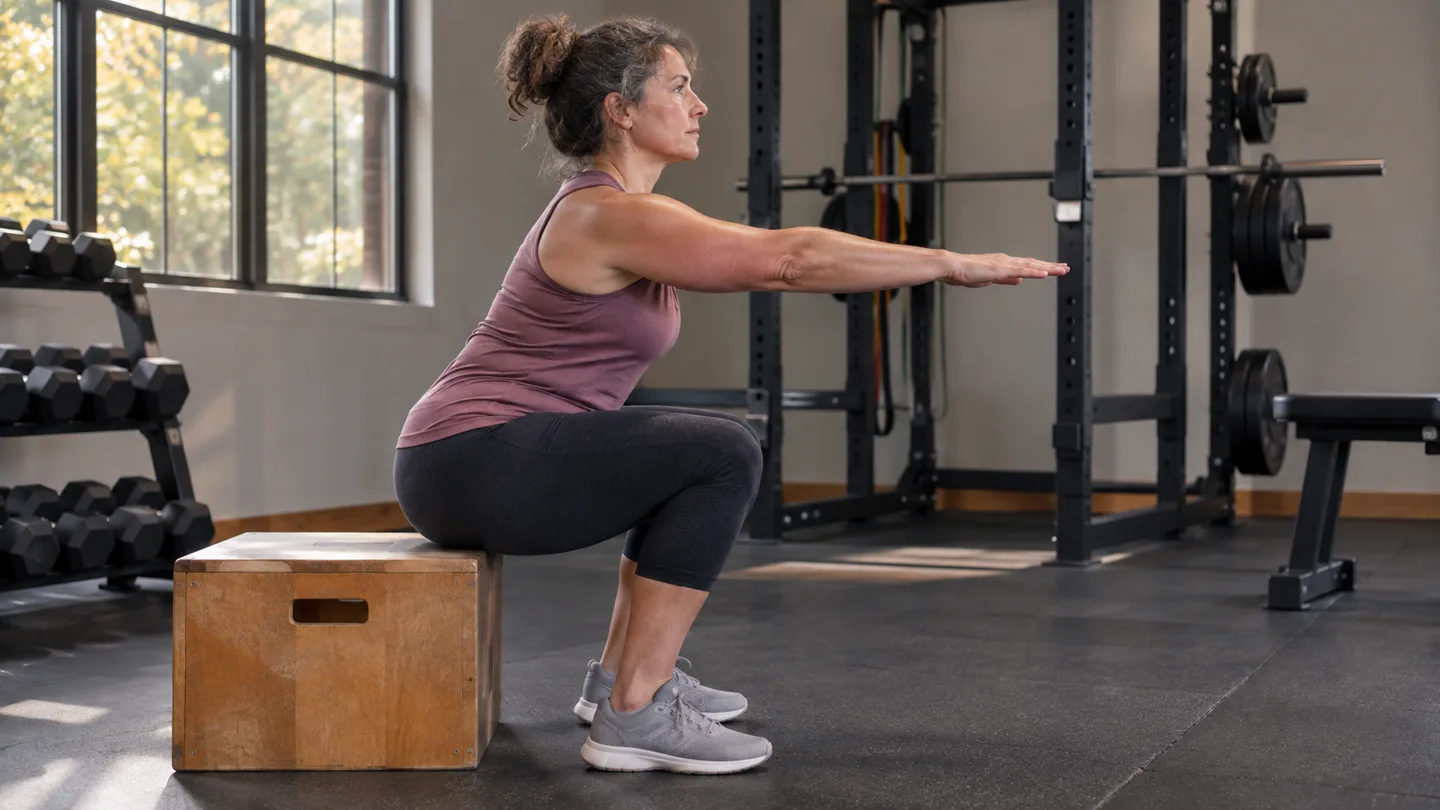
Mobility training helps you control the range of motion you need to squat, reach overhead, change direction, or carry groceries. Start with a few minutes of movements that match your next activity. Resistance training can also improve range of motion. Improvements in speed, strength, and injury risk depend on your sport and training program.
What is mobility training and how does it differ from flexibility?
Flexibility describes how far muscles and other tissues allow a joint to move. Mobility emphasizes how well you control movement through that range. Strength, stability, balance, and flexibility all contribute. The range you need depends on what you want to do, from a comfortable squat to reaching a shelf.
You may have enough passive range to put your arm overhead with assistance and still struggle to control that motion under a load. In that case, practice may involve shoulder control or strength as well as flexibility. Mobility matters at any age because the same capacities support exercise and ordinary tasks, including picking up a child or working in the yard. [1–3]
| Approach | What you practice | Example |
|---|---|---|
| Flexibility | Allow a muscle and its associated tissues to lengthen under gentle tension. | Hold a comfortable stretch for the calf or hamstring. |
| Active mobility | Move into and out of positions you can control. | Use hip circles, controlled 90/90 hip switches, or a squat to a box. |
| Strength through a chosen range | Control a load through the motion your current skill and symptoms allow. | Practice a light row or press, then increase range or load gradually. |
| Mobility during a sport | Use the range required by the activity. | Swimming, running, and golf use different joint ranges. Add focused exercises if one particular motion is limited. |
Can mobility work help you run faster or lift heavier?
Mobility work may improve performance when limited range or control gets in the way of a task. It can make a squat depth or overhead position easier to reach, while strength, technique, and practice still determine how you perform there. Research supports range-of-motion gains with resistance training using external loads.
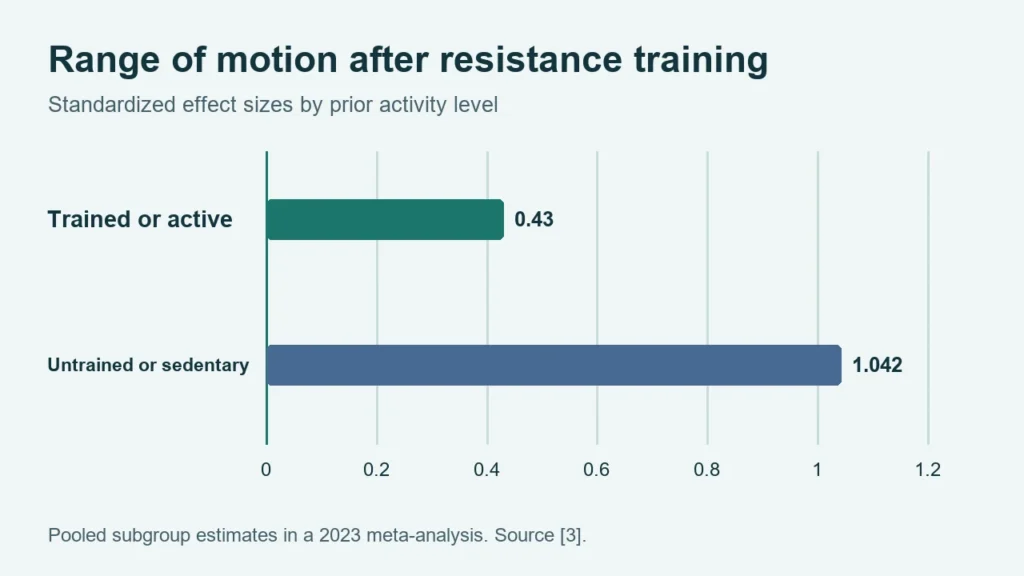
A 2023 meta-analysis of 55 eligible studies found that resistance training improved range of motion overall, with a standardized effect size of 0.73. The reported effect sizes were 1.042 in untrained or sedentary participants and 0.43 in trained or active participants. Training with body mass alone did not show a statistically significant improvement in this analysis. A separate 2024 review found potential performance benefits from mobility interventions in sporting populations, with results depending on the exercise and outcome tested. [3,4]
- Match the work to the task. Improving a limited ankle or hip range may help you reach a deeper squat. Better control in your shoulders and upper back may help you use more of the available range during rows and presses. A mobility drill cannot predict how much faster you will run or how much more you will lift. [1,3,4]
- Set realistic expectations for soreness and injury. Working on movement restrictions can help you modify training that feels uncomfortable. Stretching alone has limited evidence as a way to reduce post-workout soreness, change posture, or prevent injuries in general. Load management, strength, and recovery also matter. [1,5,6]
- Use easy movement to unwind. Gentle exercise can help with stress. The testosterone research cited in the source studied chronic stress in rats, where researchers observed lower testosterone and changes in testicular cells. It does not establish that mobility exercises raise testosterone in people. [7,8]
How can you start a five-minute mobility routine?
Use five minutes as a practical starting point. Pick one or two movements for the joints you need in your next workout, keep them controlled, and repeat them on a schedule you can maintain. Use the comfortable range you have today. Build range gradually as the movements become easier.
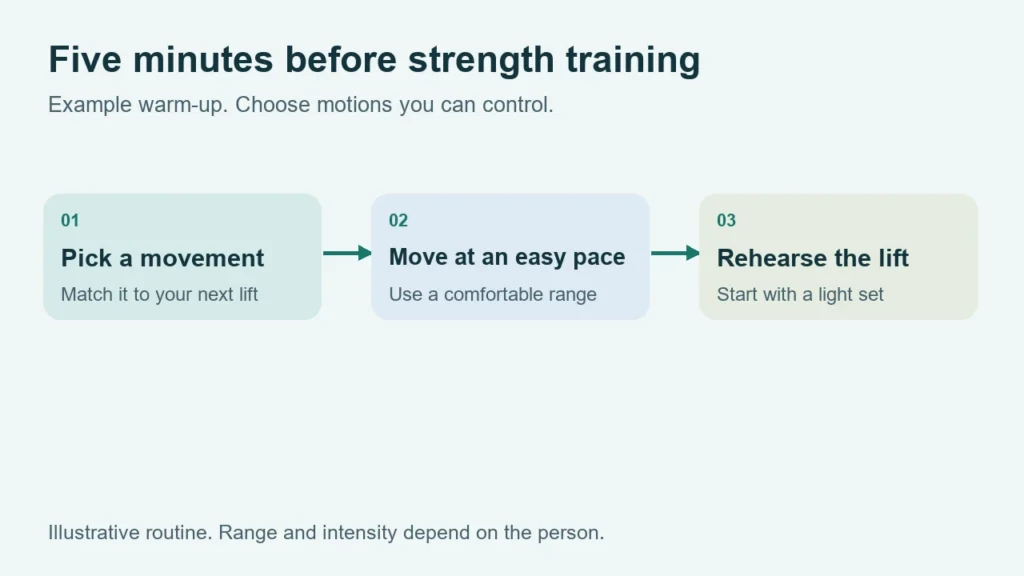
- Match a drill to the day. Before lower-body training, try hip circles, seated 90/90 transitions, or a supported squat. Before an upper-body session, try cat-cow or a gentle thoracic extension. A downward-facing dog variation can also work if your shoulders and wrists tolerate it.
- Rehearse the exercise with low effort. Follow your mobility drills with a light version of the lift or movement you are preparing to do. Increase depth or load as control improves. Five minutes is an example, and research has yet to establish it as a minimum effective dose. [1,3,5]
- Treat a hang as optional grip work. A bar hang loads the grip and forearms and puts the shoulders in an overhead position. Claims that hanging reverses repetitive strain or produces lasting spinal decompression lack solid evidence. Use foot support or skip it if overhead loading reproduces pain.
If discomfort keeps limiting training or everyday movement, a licensed clinician or physical therapist can assess your range, strength, and symptoms and help you choose modifications. [1]
Common questions about PEPLIX HEALTH
Independent, board-certified physicians can review your symptoms, medical history, and training goals and advise whether an exam or referral is appropriate. Monarch Brands LLC provides management services for Peplix Health. For a cash-pay consultation, describe when the restriction began, which movement triggers it, and whether it affects everyday activity.
Should I keep stretching if my squat hurts?
Start with a version that feels comfortable, such as a shallower squat or a supported sit-to-stand. If pain recurs or worsens, arrange an assessment. Range-of-motion work is one option a clinician may consider after identifying what limits the movement. [1]
How does licensed pharmacy fulfillment apply?
Treatment and dosing decisions depend on an independent physician’s evaluation. If an individual clinical need calls for compounding and applicable requirements are met, a state-licensed pharmacy operating under Section 503A can prepare a patient-specific prescription. Compounded medications lack FDA approval. [9]
For consultation information, see our vitamins and wellness guide or start an online assessment.
Sources
- Yale Medicine – mobility exercises and movement
- UC Davis Health – flexibility and range of motion
- Alizadeh et al. – resistance training and range-of-motion meta-analysis
- Skopal et al. – mobility training in sporting populations
- Expert consensus – practical recommendations on stretching
- MedlinePlus – guide to good posture
- Mayo Clinic – exercise and stress
- Xiong et al. – chronic stress and testosterone synthesis in rats
- FDA – Section 503A compounding requirements
This article is for general education and is not medical advice. Talk with a licensed clinician before starting, stopping or changing any treatment. Compounded medications are not FDA-approved. See our safety information.
Keep reading

Wellness
Krill Oil vs Fish Oil for Omega-3s
Compare krill oil and fish oil for EPA and DHA, absorption, triglycerides, and side effects. Learn what to check on an omega-3 label.

Wellness
Sprinting Benefits and How to Start Sprint Interval Training
Learn how sprint intervals affect fitness and fat oxidation, how to start with controlled efforts, and how to fit sprinting into your week.

Wellness
CoQ10 Benefits, Dosage, and Safety
What does CoQ10 do? Explore the evidence for heart failure, fatigue, and statin symptoms, plus dosage, supplement forms, and interactions.