Magnesium for Anxiety, Stress, and Sleep
Can magnesium help with anxiety or stress? Compare evidence, common forms, elemental doses, medication interactions, and when to seek care.

Magnesium supports normal nerve and muscle function. Small studies suggest possible benefits for sleep or perceived stress, but evidence for treating anxiety remains limited. If intake is low, meeting your daily needs is a reasonable first step. Seek professional care when anxiety persists, triggers panic, or interferes with work, sleep, or relationships.
How might magnesium affect your stress response?
Magnesium helps regulate NMDA receptors, which carry excitatory signals in the brain. Researchers have also studied its relationship to inhibitory GABA signaling and the hormonal stress response. These mechanisms help explain why magnesium is being studied. They do not show that a supplement reliably lowers cortisol, eases rumination, or shifts the body into a calmer state.
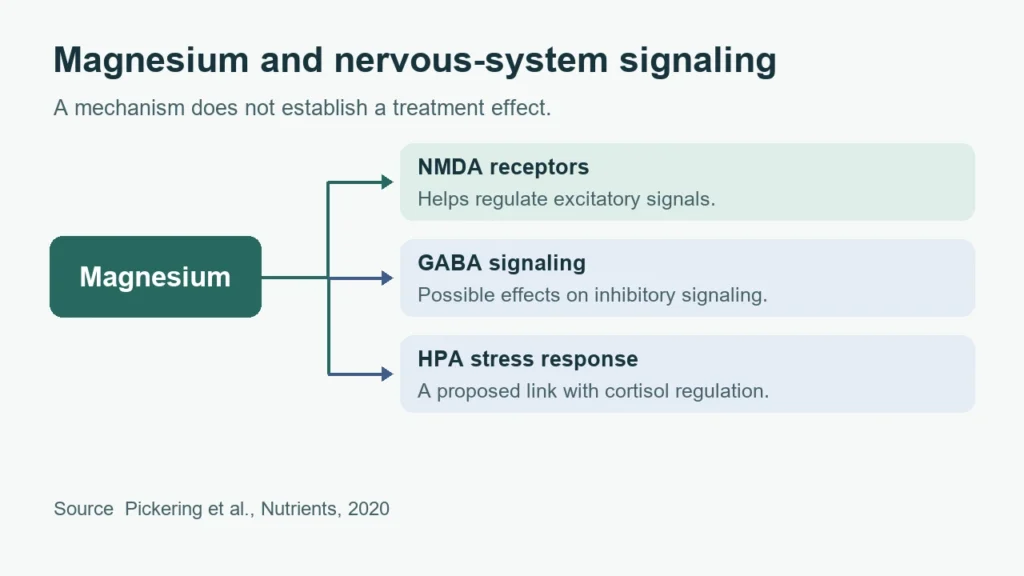
Magnesium normally blocks the NMDA receptor channel at resting membrane potentials. NMDA signaling is important for learning and memory. GABA is a major inhibitory neurotransmitter. Possible effects on GABA signaling and parasympathetic activity remain different questions from whether an oral supplement improves day-to-day anxiety. [1, 2]
The hypothalamic–pituitary–adrenal (HPA) axis helps coordinate the stress response, including normal cortisol signaling. Some research links stress to changes in magnesium handling and urinary loss. Sweat contains magnesium, but a stressful schedule alone does not establish deficiency or a higher dose requirement. Muscle tension, irritability, and racing thoughts have many possible causes. [1, 2]
What do studies say about magnesium for anxiety and sleep?
Reviews find possible improvements in self-reported anxiety or stress in some groups, with differences in the populations, forms, and doses studied. A four-week trial found a small sleep symptom benefit from magnesium bisglycinate in adults who reported poor sleep. It did not establish that bisglycinate treats anxiety or that effects start within a few days.
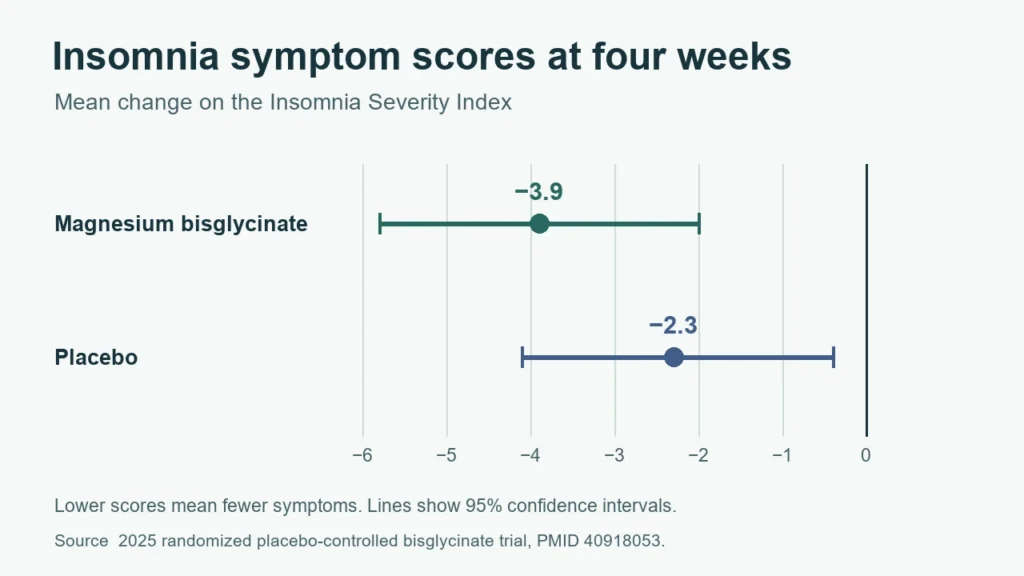
The sleep trial reported a mean Insomnia Severity Index change of −3.9 with bisglycinate and −2.3 with placebo at week four. The between-group effect was small (Cohen’s d = 0.2). A separate eight-week stress trial enrolled adults with stress and low serum magnesium and compared magnesium plus B6 with magnesium alone. Both groups improved, but without a placebo group the trial could not establish how much improvement was due to magnesium itself. [3–5]
Some small studies included people with premenstrual symptoms. The findings do not establish magnesium as treatment for premenstrual dysphoric disorder (PMDD). A clinician can evaluate symptoms that recur before menstruation, anxiety that persists across the month, or sleep difficulties that continue despite routine changes. Research does not establish a predictable two-to-four-week anxiety response. [3–5, 17]
Which magnesium form, dose, and timing should you consider?
Start by checking food intake and the elemental magnesium on any supplement label. There is no established magnesium dose or best time of day for anxiety. Adult recommended intakes are generally 310–320 mg for women and 400–420 mg for men. The 350 mg daily upper limit applies to supplements and magnesium-containing medications.
| Form | Common reason to consider it | What to know |
|---|---|---|
| Glycinate or bisglycinate | A glycine-bound form often marketed for sleep. | One trial found a small sleep benefit. Superiority for anxiety or digestive tolerance is unproven. [1, 3, 4] |
| Malate | A magnesium source that includes malate, a citric acid cycle intermediate. | Can contribute to magnesium intake. Evidence does not establish a daytime stress or energy advantage. [1, 6] |
| Citrate or oxide | Common formulations. Some citrate products are labeled for occasional constipation. | Citrate generally absorbs better than oxide. Loose stools are possible, and effects depend on dose and formulation. [1, 7] |
| L-threonate | A form studied for cognition and sleep. | Evidence for treating anxiety is limited, with no established superiority for repletion. [3, 8] |
The daily intake recommendation counts food and supplements. If you use a multivitamin plus a second magnesium product, add their elemental amounts and count relevant medicines. Food sources include leafy greens, beans, nuts, seeds, and whole grains. [1]
Evening dosing may be convenient. A divided dose or taking it with food may help with tolerance. Evidence does not establish that bedtime dosing prevents rumination or that morning-plus-evening dosing reduces all-day stress. Diarrhea, cramping, and nausea are common dose-related effects. [1, 3, 4]
When should you seek help for anxiety or persistent poor sleep?
If anxiety is worsening, panic attacks recur, or symptoms affect daily function, arrange an evaluation. A licensed clinician can discuss evidence-based options such as cognitive behavioral therapy, medication when appropriate, or CBT for insomnia when sleep is the main issue. If you might harm yourself or cannot stay safe, seek emergency help immediately.
- Review daily patterns. Consider a consistent wake time, light exposure in the morning, less bright light at night, and whether late caffeine affects sleep. Regular physical activity can support health. Ask for help if symptoms persist even when your routine improves. [9–11]
- Keep prescribed care in place. CBT can include skills for responding to anxious thoughts and exposure when appropriate. CBT-I targets chronic insomnia. Discuss panic, severe depression, or thoughts of self-harm promptly with a clinician. In the U.S., call 911 if there is immediate danger. [9, 10, 12]
- Check any supplement against your medical history. Kidney impairment increases the risk of magnesium accumulation. Ask a pharmacist about interaction or spacing with certain antibiotics, oral bisphosphonates, and levothyroxine. Diuretics can change magnesium status. Before combining supplements with an SSRI or other prescription, review the exact products and doses. [1, 13]
Common questions about PEPLIX HEALTH
Peplix Health is a cash-pay telehealth service managed by Monarch Brands LLC. Independent, board-certified physicians review symptoms, health history, and medications. They can individualize treatment and monitoring when appropriate. A state-licensed pharmacy can fill an eligible patient-specific compounded prescription under applicable Section 503A requirements and state law.
Can topical oxytocin help me relax or sleep?
FDA-approved oxytocin injection has obstetric uses. Research on intranasal oxytocin does not establish that a compounded skin cream improves anxiety or sleep or avoids next-day grogginess. If a clinician considers a compounded drug, ask about the evidence, alternatives, and follow-up. Compounded drugs do not undergo FDA premarket approval. [14–16, 18]
Can I take magnesium every day with my current treatment?
Daily use depends on your diet, elemental dose, kidney health, and medications. Bring your supplement labels and current medicines to your visit. A clinician or pharmacist can help identify interactions and determine whether a supplement would address an intake gap. [1, 13]
Can magnesium replace an SSRI or anxiety treatment?
Evidence does not support using magnesium in place of anxiety treatment. Discuss any medication changes with your prescriber. Persistent or impairing symptoms can benefit from an evaluation and an individualized treatment plan. [3, 9]
For consultation information, see our vitamins and wellness guide or start an online assessment.
Sources
- NIH Office of Dietary Supplements. Magnesium fact sheet for health professionals.
- Pickering et al. Review of magnesium status and stress pathways.
- Systematic review of supplemental magnesium for sleep and anxiety.
- Randomized trial of magnesium bisglycinate in adults reporting poor sleep.
- Pouteau et al. Magnesium with or without B6 in adults reporting stress.
- NCBI Bookshelf. Biochemistry of the citric acid cycle.
- DailyMed. Magnesium citrate saline laxative labeling.
- Randomized trial of magnesium L-threonate for cognition and sleep.
- NICE. Generalised anxiety disorder and panic disorder in adults.
- American College of Physicians. Management of chronic insomnia.
- NHLBI. Healthy sleep habits.
- SAMHSA. Crisis support and emergency guidance.
- ThyroMag trial. Magnesium salts and levothyroxine absorption.
- DailyMed. Pitocin injection prescribing information.
- FDA. Federal provisions for human drug compounding.
- FDA. Human drug compounding laws and policies.
- Boyle et al. Systematic review of magnesium for subjective anxiety and stress.
- De Cagna et al. Review of intranasal oxytocin in anxiety and depression.
This article is for general education and is not medical advice. Talk with a licensed clinician before starting, stopping or changing any treatment. Compounded medications are not FDA-approved. See our safety information.
Keep reading

Wellness
Krill Oil vs Fish Oil for Omega-3s
Compare krill oil and fish oil for EPA and DHA, absorption, triglycerides, and side effects. Learn what to check on an omega-3 label.

Wellness
Sprinting Benefits and How to Start Sprint Interval Training
Learn how sprint intervals affect fitness and fat oxidation, how to start with controlled efforts, and how to fit sprinting into your week.

Wellness
CoQ10 Benefits, Dosage, and Safety
What does CoQ10 do? Explore the evidence for heart failure, fatigue, and statin symptoms, plus dosage, supplement forms, and interactions.