Vitamin D3, Weight Loss, and GLP-1 Therapy
Does D3 help with weight loss? Learn how vitamin D supports calcium absorption, when testing matters, and how to care for muscle and bone on GLP-1s.

Vitamin D3 supplementation has not been shown to produce meaningful weight loss on its own. Adequate vitamin D helps your body absorb calcium and maintain normal muscle and bone function. If a GLP-1 medication reduces how much you eat, review your nutrient intake and strength training plan with your clinician before adding supplements.
Does vitamin D3 improve metabolism or help you lose weight?
People with obesity often have lower blood levels of 25-hydroxyvitamin D. That association does not show that low vitamin D causes obesity or makes weight loss harder. Correcting deficiency addresses a nutrient problem. Trials do not show a reliable fat-loss, strength, or mood benefit from extra vitamin D in adults who already get enough.
Vitamin D is fat-soluble. Storage in fat tissue and distribution across a larger body volume are proposed explanations for lower circulating levels in obesity. Vitamin D receptors are present in pancreatic beta cells and other tissues involved in glucose regulation, including muscle and fat. These mechanisms do not establish better insulin sensitivity, preferential muscle fueling, or fat burning from a supplement. [1–3]
Severe deficiency can contribute to muscle weakness. Evidence for improving strength or power in people who already get enough is inconsistent. Low vitamin D has been associated with depression in observational studies, but trials have not established D3 as a treatment for mood or a way to improve dietary adherence. [1]
How can GLP-1 users support bone and muscle during weight loss?
GLP-1 treatment can reduce appetite and food intake, making it harder to get enough protein and micronutrients. Weight loss can also reduce lean mass and mechanical loading on bone. Plan for adequate protein, calcium, and vitamin D, and include resistance exercise that fits your ability. The best approach depends on your individual risk.
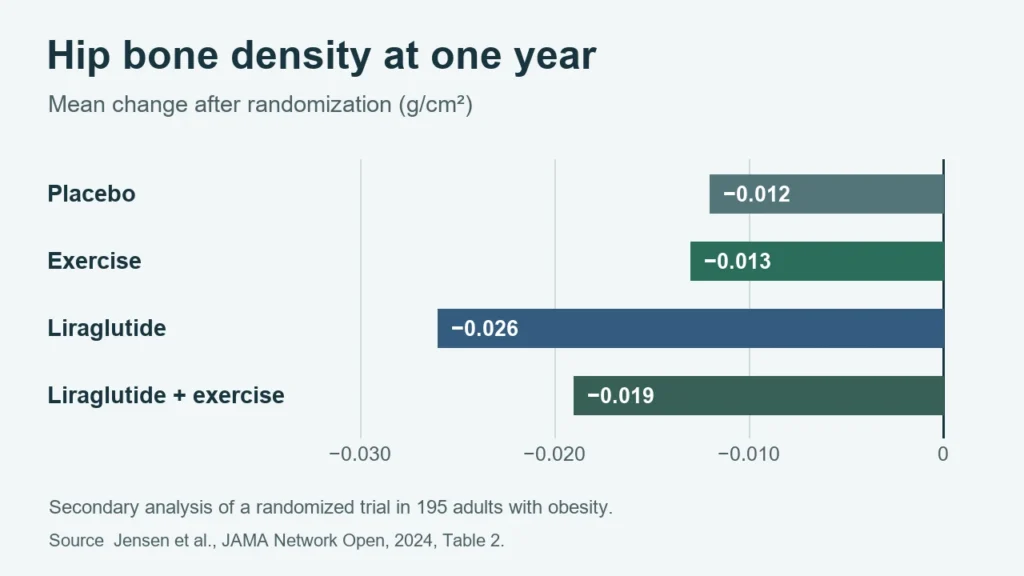
A secondary analysis of one trial followed 195 adults with obesity for a year after an initial low-calorie diet. Mean change in total hip bone mineral density was −0.012 g/cm² with placebo, −0.013 with exercise, −0.026 with liraglutide, and −0.019 with the combination. Liraglutide alone showed greater hip and spine losses than exercise alone. The combination did not differ significantly from placebo at the hip or spine. The study did not test D3 or K2 supplements. [4]
Weight loss depends on a sustained energy deficit. Two ways to support muscle and bone while you eat less are worth discussing with your clinician. [1, 5]
- Make room for protein and calcium-rich foods in smaller meals. A lower appetite can reduce vitamin D intake. A GLP-1 prescription alone does not establish a deficiency or prove that the drug directly lowers vitamin D. [1, 5]
- Make resistance training part of your weekly routine at a level appropriate for your ability. Adequate protein and training can help preserve strength and lean tissue as weight changes. [5]
Do you need to take vitamin K2 with vitamin D3?
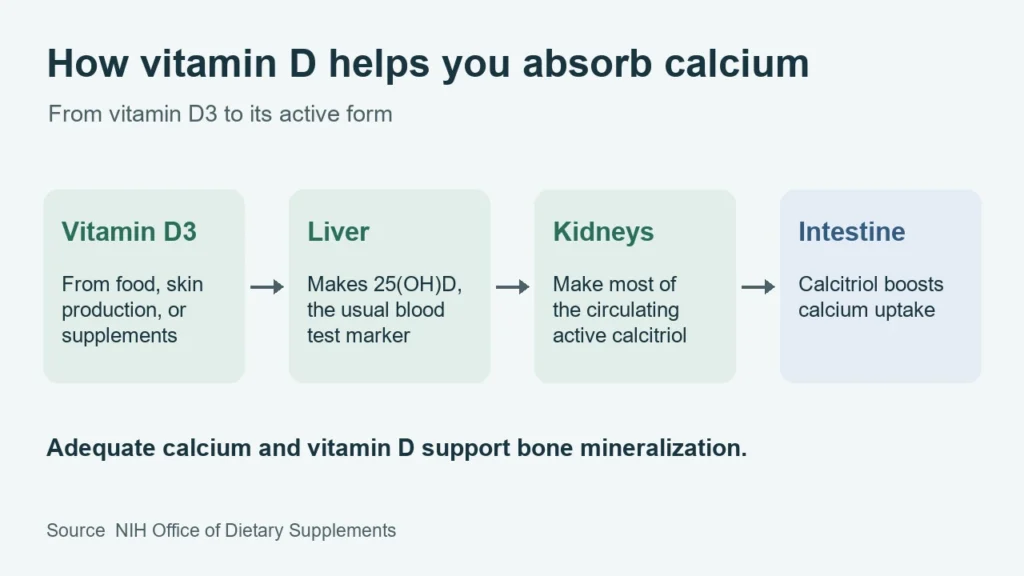
Vitamin D helps the intestine absorb calcium. Vitamin K supports activation of proteins involved in bone metabolism and blood clotting. Those roles do not establish that a high-dose D3 and K2 combination prevents bone loss or arterial calcification during GLP-1 treatment. A clinician can help you assess dietary intake, fracture risk, and medication interactions.
MK-4 is one form of vitamin K2. Vitamin K helps activate osteocalcin in bone and matrix Gla protein in blood vessels. Evidence that taking extra K2 protects bone density or prevents arterial calcification is mixed or insufficient, and it does not support routine pairing with high-dose D3 for weight loss. If you take warfarin or a similar vitamin K antagonist, discuss intake changes before starting K2. [1, 5, 6]
Keep the rest of your care plan in view. Magnesium contributes to normal muscle function and glucose regulation. B12 supports red blood cell formation and energy metabolism. Ongoing weakness, fatigue, or symptoms of a hormone disorder merit evaluation. In men, testosterone treatment requires a separate diagnosis based on compatible symptoms and consistently low levels. These decisions belong alongside a realistic plan for nutrition, activity, and sleep. [5, 7–9]
When should you test vitamin D or consider a supplement?
A 25-hydroxyvitamin D blood test is the usual measure of vitamin D status when testing is indicated. A weight-loss goal or obesity alone does not justify routine screening in otherwise healthy adults. If your clinician recommends a supplement, review the total dose from all products and whether follow-up testing is appropriate.
| Situation | What to discuss | What the evidence supports |
|---|---|---|
| Generally healthy, no indication for testing | Diet, fortified foods, and any supplements you already use. | The Endocrine Society advises against routine testing in generally healthy adults, including those with obesity. [10] |
| Known deficiency or an indication for testing | A 25(OH)D test and an individualized replacement plan. | The National Academies consider 20 ng/mL adequate for most people and deficiency risk higher below 12 ng/mL. These are population benchmarks, with no proven weight-loss target. [1, 10] |
| High-dose therapy or altered calcium balance | Kidney disease, hyperparathyroidism, other calcium disorders, and whether to monitor calcium and 25(OH)D. | The adult upper intake level is 4,000 IU/day from all sources. Clinicians may prescribe more for a defined reason. Excess vitamin D can cause high blood calcium. [1, 11] |
If you take D3, a meal that includes some fat can improve absorption. Eggs, nuts, or a little olive oil are practical options, even with a smaller meal. A morning or midday dose is fine if that is when you remember it. There is no established best time for weight loss or evidence that everyone needs to avoid evening dosing. [1, 12]
For adults 50 or older who have an indication for vitamin D supplementation or treatment, the Endocrine Society favors a daily lower dose over intermittent higher doses. A clinician may use a different schedule for a specific condition. In a three-year trial in healthy adults, high daily doses did not improve bone strength and were associated with lower bone density at some measured sites. [10, 11]
Common questions about PEPLIX HEALTH
Peplix Health is a cash-pay telehealth service managed by Monarch Brands LLC. Independent, board-certified physicians assess your weight goals, medications, diet, and relevant lab results. If treatment is appropriate, your clinician individualizes the plan and follow-up. An eligible compounded prescription can be filled by a state-licensed pharmacy under applicable Section 503A and state requirements.
Will taking vitamin D3 speed up my weight loss?
Clinical trials do not establish meaningful weight loss from D3 alone. If you have a deficiency, correcting it supports normal function. Nutrition, physical activity, and a prescription weight-management treatment when indicated address weight management directly. [1, 5]
Can vitamin D3 improve my blood sugar?
Results vary by population. The Endocrine Society suggests vitamin D alongside lifestyle changes for adults with high-risk prediabetes to help reduce progression to diabetes. This conditional recommendation does not establish a general benefit for insulin sensitivity or make D3 a treatment for diabetes. [1, 10]
How should I prepare for a Peplix Health weight-management visit?
Bring your medication and supplement list, recent labs, and a typical day of eating. Mention any fracture history or difficulty getting enough food since starting medication. This helps your physician assess whether nutrition support, testing, or a prescription change is appropriate.
Does vitamin D supplementation require a compounding pharmacy?
Standard vitamin D products are widely available. If a physician identifies a patient-specific need for compounding, a state-licensed pharmacy can fill an eligible prescription subject to applicable ingredient and quality requirements. Compounded drugs do not receive FDA premarket review for safety, effectiveness, or quality. [1, 13, 14]
For consultation information, see our weight-loss guide or start an online assessment.
Sources
- NIH ODS. Vitamin D fact sheet for health professionals.
- Drincic et al. Vitamin D concentration and body size in adults.
- Lontchi-Yimagou et al. Adipocyte vitamin D receptors and insulin sensitivity.
- Jensen et al. Bone density after exercise, liraglutide, or both.
- ACLM, ASN, OMA, and TOS. Joint advisory on nutrition during GLP-1 treatment.
- NIH ODS. Vitamin K fact sheet for health professionals.
- NIH ODS. Magnesium fact sheet for health professionals.
- NIH ODS. Vitamin B12 fact sheet for health professionals.
- Endocrine Society. Testosterone therapy for hypogonadism.
- Endocrine Society. Vitamin D for the prevention of disease.
- Burt et al. High-dose vitamin D, bone density, and bone strength.
- Dawson-Hughes et al. Dietary fat and vitamin D3 absorption.
- FDA. Compounding questions and answers.
- FDA. Federal provisions for human drug compounding under Section 503A.
This article is for general education and is not medical advice. Talk with a licensed clinician before starting, stopping or changing any treatment. Compounded medications are not FDA-approved. See our safety information.
Keep reading

Weight Loss
GLP-1 Medications for Weight Loss and Diabetes
Compare semaglutide and tirzepatide for weight loss, learn which GLP-1 pills work, and understand side effects, stopping, and pharmacy fulfillment.

Weight Loss
Compounded semaglutide vs Wegovy and Ozempic
Compare compounded semaglutide with Wegovy and Ozempic on weight loss evidence, cost, dosing safety, and when a 503A pharmacy may fill a prescription.

Weight Loss
GLP-1 Benefits Beyond Weight Loss
Learn how semaglutide and tirzepatide affect blood sugar, heart health, inflammation, food noise, and alcohol cravings. Compare the evidence.