Oxytocin Calming Cream for Sleep and Stress
Review the evidence for oxytocin cream, what the sleep study actually found, and how to confirm dosing, application, and safety with a clinician.

Oxytocin calming cream is a compounded formulation promoted for sleep, stress, or mood. One manufacturer report describes improvements during use, but controlled studies have not established those benefits for the cream. If you already have a prescription, confirm its route, dose, and application instructions directly with the dispensing pharmacist before using it.
What is oxytocin cream and how is it different from OxyContin?
Oxytocin is a peptide hormone made in the hypothalamus and released into the circulation by the posterior pituitary. It helps stimulate uterine contractions and milk letdown and is studied for roles in social behavior. OxyContin contains oxycodone, a Schedule II opioid pain medication. The products have different active ingredients, uses, and risks.
Oxytocin also acts as a signaling molecule in the brain. In some settings, social interaction or intimacy can be associated with changes in endogenous oxytocin. These observations do not establish that a cream produces the same effects. FDA-approved injectable oxytocin has obstetric uses, including medically indicated labor induction or augmentation and control of postpartum bleeding. There is no FDA-approved topical oxytocin product for sleep, stress, mood, or sexual function. [1–4]
Oxytocin is a peptide hormone. OxyContin is an extended-release oxycodone tablet with risks including addiction, misuse, and respiratory depression. [12] For oxytocin cream, evidence is insufficient to promise unimpaired alertness, freedom from next-day grogginess, or no tolerance, withdrawal, or dependence during long-term use. [1, 2, 5, 12]
Can oxytocin cream improve sleep, mood, or stress?
A manufacturer’s open-label study reported that participants slept about 25 minutes longer per night on average and that some sleep and mood scores improved. It had no placebo group, and some participants contributed to both timing groups. The study cannot establish how much improvement came from the cream or how quickly benefits would begin.
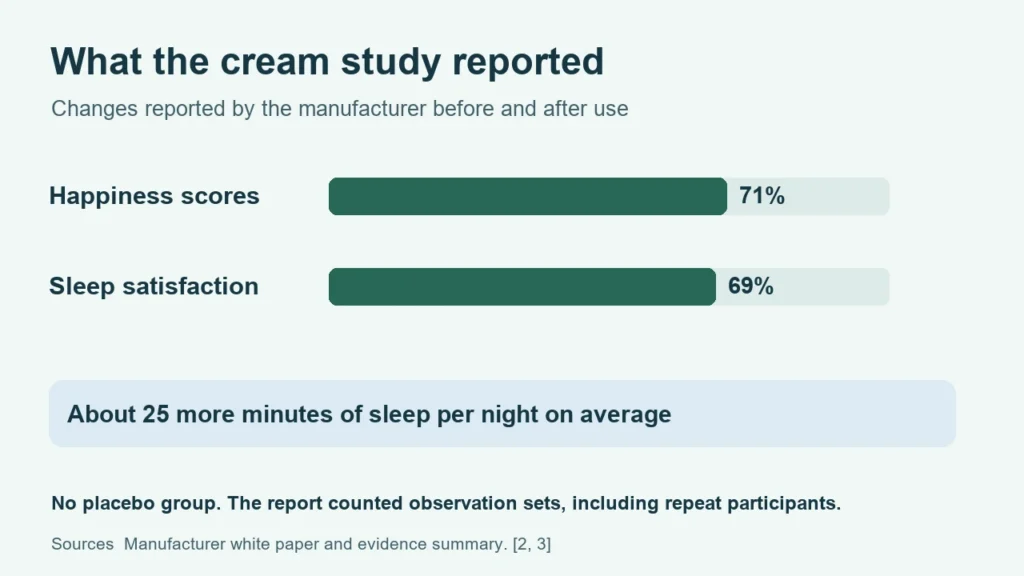
The report describes up to 60 days of observation across morning and evening schedules, with two 30-day phases and some participants completing only one. It lists 152 observation sets, rather than 152 unique participants. The main protocol used 500 IU daily and an exploratory cohort evaluated 1,000 IU. These figures describe that study. They do not establish a standard dose or schedule. [2, 3]
The manufacturer reported no morning brain fog or withdrawal or rebound symptoms during its observation period. The study was too short and lacked the design to rule out uncommon events, confirm whether repeated use affects receptor response or natural hormone production, or determine whether cycling is useful. The claims of changes within hours, within a few nights, or after several weeks are not established clinical timelines. [2, 3]
| Area of interest | What was studied | What remains uncertain |
|---|---|---|
| Sleep and mood | A topical open-label study reported better sleep satisfaction and happiness. [2, 3] | Whether the cream improves sleep onset, nighttime waking, mood, or daily stress compared with placebo. |
| Stress and social response | A small intranasal study measured changes in amygdala activity during a fear task in 15 healthy men. [4] | Whether applying a cream produces comparable exposure or lasting changes in empathy, anxiety, or day-to-day functioning. |
| Intimacy and libido | An intranasal experiment in 29 couples reported effects on some aspects of orgasm and partner interaction. [6] | The nasal study found no effect on sexual drive, arousal, or erection. Its findings cannot establish benefits from a topical formulation. |
How do you confirm the right route, dose, and timing?
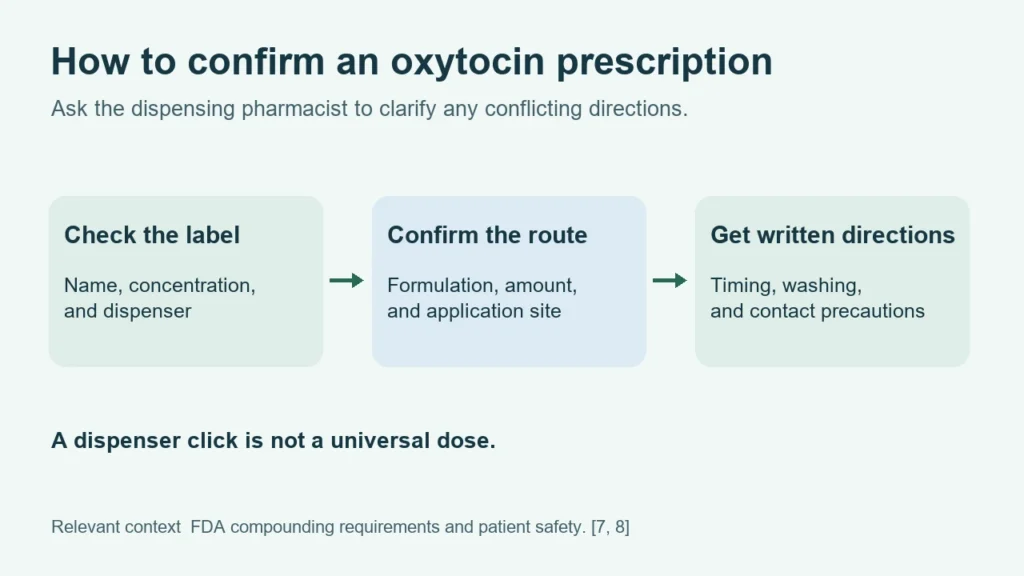
Confirm the exact formulation, route, application site, and amount with the dispensing pharmacist. A skin cream and a product formulated for the inside of the nose are different routes. Published evidence does not establish that topical oxytocin is mostly absorbed in two hours or remains active for 12 to 16 hours.
The manufacturer’s report describes an early uptake phase and a proposed skin reservoir using pharmacokinetic data from other molecules in the same base. Those data cannot determine the absorption or duration of oxytocin in this cream. Morning and evening schedules in an uncontrolled report cannot establish the best time to use it, whether before an event or at bedtime. [2]
- Match your prescription to the package. Confirm the product name, route, concentration, and amount per actuation. A pump click is a device measure. Its volume and drug content depend on the dispenser and formulation. [2, 7, 8]
- Clarify application and washing instructions. Ask the pharmacist to resolve any difference between the prescription, pharmacy label, and online information. Verify the application site, timing, handwashing, showering, and contact precautions. Pause before using a product if the directions conflict. [7, 8]
Who should speak with a clinician before using oxytocin cream?
Tell your clinician if you are pregnant, trying to conceive, breastfeeding, or have heart failure, kidney disease, low sodium, or a condition that affects fluid balance. Oxytocin can cause uterine contractions in its approved injectable form. Some fluid-related risks are documented with injection, and the risk from topical use is poorly characterized.
The manufacturer’s topical study excluded people who were pregnant or breastfeeding or had diagnosed low sodium, inappropriate antidiuretic hormone secretion, excessive water intake, moderate to severe heart failure, or stage 3 or higher chronic kidney disease. Oxytocin has antidiuretic effects, and the injectable label warns of water intoxication in certain prolonged infusion settings. Absence of topical risk data is a reason for clinician review. [1, 2]
Bring your medication list, including sleep aids, testosterone, enclomiphene, and tadalafil. Evidence is insufficient to establish how topical oxytocin interacts with these treatments. Tadalafil has a separate role in improving erectile response through PDE5 inhibition. If you also use topical testosterone, ask about transfer precautions and whether the products should be separated by site or time. [1, 5, 9, 10]
Common questions about PEPLIX HEALTH
Peplix Health is a cash-pay telehealth service managed by Monarch Brands LLC. An independent, board-certified physician reviews your symptoms, health history, and medicines. If treatment is appropriate, the physician individualizes dosing and follow-up. A state-licensed pharmacy can fill an eligible patient-specific compounded prescription under applicable Section 503A and state requirements.
What if my main goal is better sleep?
Tell the physician how long you have had trouble falling or staying asleep, how often it happens, and how it affects your days. For chronic insomnia, ask about cognitive behavioral therapy for insomnia, a recommended first-line treatment. [11]
Can I use the cream with an existing sleep or hormone prescription?
Ask your prescriber or pharmacist to review the exact formulations, doses, and routes before adding or combining anything. Bring both pharmacy labels if you use two topical products. [5, 7, 8, 10]
Does a state-licensed 503A pharmacy make a cream FDA-approved?
Compounded medicines do not undergo FDA premarket review for safety, effectiveness, or quality. Section 503A generally requires a valid prescription for an identified patient and compliance with other federal and state conditions. Ask why compounding is appropriate for your case. [7, 8]
For consultation information, see our vitamins and wellness guide or start an online assessment.
Sources
- FDA. Pitocin injection prescribing information.
- Maximus. Open-label oxytocin cream report, manufacturer white paper.
- Maximus. Manufacturer evidence summary and reported outcomes.
- Kirsch et al. Intranasal oxytocin and neural circuitry.
- MacDonald et al. Safety and subjective reactions to intranasal oxytocin.
- Behnia et al. Intranasal oxytocin and sexual experiences in couples.
- FDA. Federal provisions that apply to human drug compounding.
- FDA. Compounding questions and answers.
- Eli Lilly. Cialis U.S. prescribing information.
- FDA. AndroGel 1.62% prescribing information and transfer precautions.
- AASM. Behavioral and psychological treatments for chronic insomnia.
- DailyMed. OxyContin prescribing information and federal schedule.
This article is for general education and is not medical advice. Talk with a licensed clinician before starting, stopping or changing any treatment. Compounded medications are not FDA-approved. See our safety information.
Keep reading

Wellness
Krill Oil vs Fish Oil for Omega-3s
Compare krill oil and fish oil for EPA and DHA, absorption, triglycerides, and side effects. Learn what to check on an omega-3 label.

Wellness
Sprinting Benefits and How to Start Sprint Interval Training
Learn how sprint intervals affect fitness and fat oxidation, how to start with controlled efforts, and how to fit sprinting into your week.

Wellness
CoQ10 Benefits, Dosage, and Safety
What does CoQ10 do? Explore the evidence for heart failure, fatigue, and statin symptoms, plus dosage, supplement forms, and interactions.