Post-Workout Recovery Tools for Better Training
Compare post-workout recovery tools, including foam rollers and compression. Learn how sleep, nutrition, and rest support your next session.
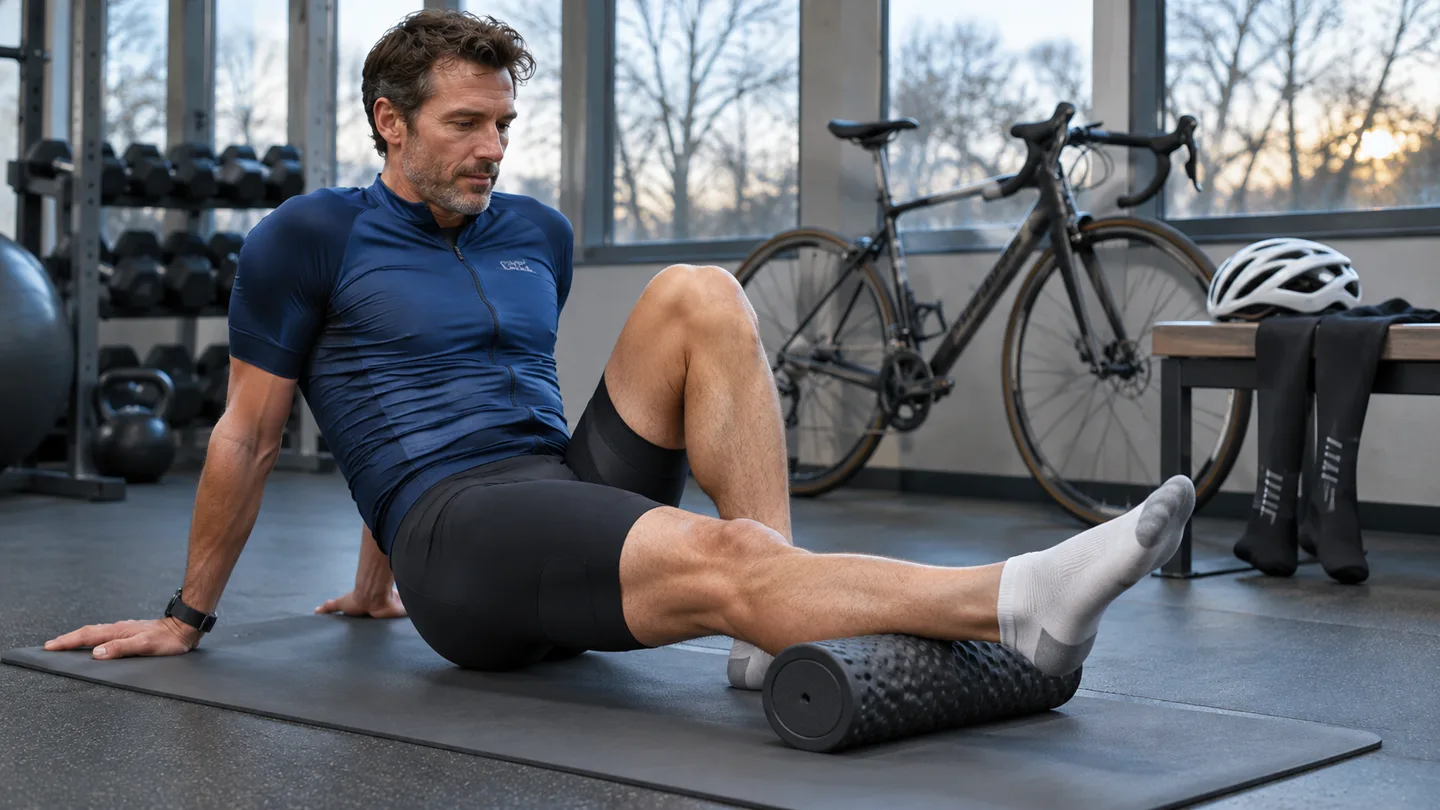
Start with sleep, enough food for your training load, and time between hard efforts. Foam rolling and massage may ease soreness, while compression can help some people feel recovered sooner. Choose a tool for the problem you notice, and adjust your training if fatigue keeps building across sessions.
What should you prioritize after a hard workout?
Protect your next night of sleep and eat enough to replace the energy you used. Carbohydrates replenish muscle glycogen, protein supplies amino acids for muscle repair, and unsaturated fats support overall nutrition. Use a full rest day or light activity based on how demanding the session was and how you feel.
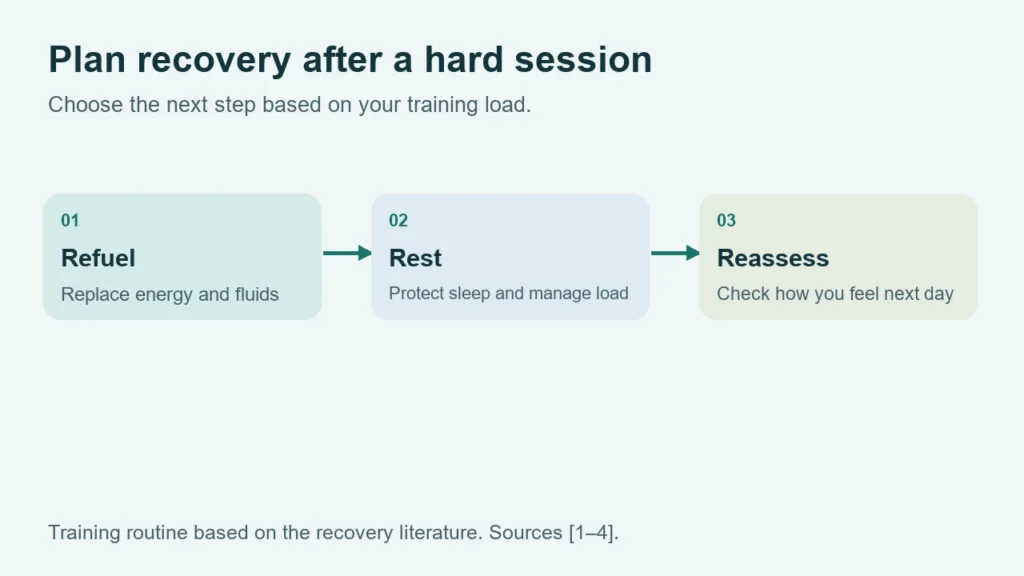
Sleep helps repair the heart and blood vessels, regulates signals of hunger and fullness, and influences how the body responds to insulin. A 2023 review found that nighttime sleep extension and naps improved selected physical or cognitive outcomes. In athletes usually sleeping about seven hours, studies examined adding 46–113 minutes at night. Naps of 20–90 minutes helped in some studies, including on attention and reaction time. Those ranges describe research protocols. Your starting point depends on your schedule and sleep needs. [1,2]
- Make the easy day easy. Take a complete rest day when you need it, or choose a walk, light swim, gentle stretching, or low-impact yoga. Planning lighter training periods can help manage cumulative fatigue. [3]
- Eat for the workload. Match overall calories and fluids to the demands of training. Include a source of carbohydrate, a source of protein, and foods with unsaturated fats across the day. A meal of rice, salmon, and vegetables covers all three. [4]
- Make room to decompress. Relaxation, social time, and counseling can help athletes manage physical and mental demands. Animal and cell research suggests that chronic stress can impair testosterone production. A difficult week or slow workout gives you little information about your testosterone level. [3,5]
Which recovery tools help with soreness or stiffness?
Foam rolling and massage can offer modest relief from delayed-onset muscle soreness, and rolling or percussive massage may briefly increase range of motion. Compression garments can help some athletes feel or perform better after hard sessions. Choose a method that fits your schedule, then judge it by how you move and feel.
| Tool | What it may help | What the evidence shows |
|---|---|---|
| Foam roller or massage ball | Soreness, local tension, or temporary mobility | Rolling uses pressure from body weight and can modestly reduce soreness. A ball concentrates pressure over a smaller area, with less direct evidence for athletic recovery. [6,7] |
| Massage gun or vibrating roller | Short-term stiffness and range of motion | Some studies report short-term mobility gains. Effects depend on the device, timing, and outcome studied. [8,9] |
| Massage | Soreness, flexibility, or relaxation | Massage can modestly improve perceived soreness and flexibility. Performance benefits are inconsistent. [10] |
| Compression garments | Perceived recovery or readiness for the next effort | Some studies find benefits after resistance training or for next-day endurance in cyclists. Effects vary by garment pressure, timing, exercise, and person. [3,11,12] |
| Static stretching | Flexibility and a predictable mobility routine | Hold a stretch at mild tension. Studies of sustained stretching programs suggest small possible muscle gains in some settings. Gentle cooldown stretching has limited evidence for accelerating recovery. [13] |
Compression applies external pressure and can alter local blood flow. Some studies report greater usefulness when garments are worn after exercise. Changes in circulation or oxygen delivery do not reliably translate into faster recovery or improved performance. Foam rolling studies have also found small sprint or flexibility effects under some conditions. Neither tool is established as a way to prevent injury. [6,11,12]
How can you build a recovery routine you will use?
Start with one change you can repeat after your hardest session. Put an easy meal on the calendar, protect bedtime, or use a roller if soreness makes movement uncomfortable. Check how you feel the next day and reduce training load if your usual pace, strength, or energy keeps declining.
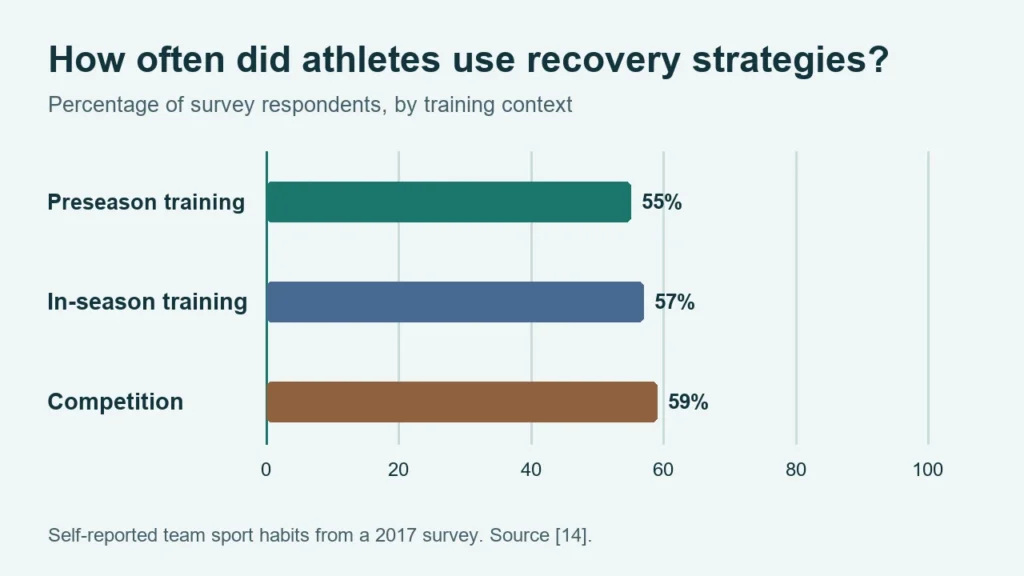
A 2017 survey found that 57% of respondents reported using recovery strategies after in-season team training, compared with 55% after preseason training and 59% after competition. These are self-reported habits. They tell you how often respondents used a strategy, with effectiveness studied separately. [14]
When should you consider cupping or dry needling?
Discuss cupping or dry needling with a qualified clinician if you have persistent, localized pain or mobility loss. Research is limited and often measures short-term symptoms in specific groups. A clinician can help identify the source of the problem and decide whether a procedure or a rehabilitation plan makes sense.
Cupping uses suction from a pump or heat to lift skin into a cup. It can leave temporary marks. It has been studied for pain, but reliable benefits for inflammation, recovery speed, or athletic performance remain unproven. Dry needling uses thin sterile needles in selected tissues, often targeting sensitive muscle areas. Some studies in overhead athletes with shoulder pain suggest possible short-term relief. Evidence for a healing response or faster general workout recovery is uncertain. [15,16]
Common questions about PEPLIX HEALTH
An independent, board-certified physician can assess persistent fatigue or other symptoms that affect training and decide whether lab testing or another evaluation is appropriate. Monarch Brands LLC provides management services for Peplix Health. Bring your training schedule, sleep habits, symptoms, and medication list to make your cash-pay visit more useful.
Do I need a prescription to improve workout recovery?
Sleep, nutrition, rest, and most recovery tools are part of a training routine. If a physician finds a medical condition, treatment and dosing depend on that diagnosis. Persistent or worsening pain may warrant an in-person sports medicine assessment.
Who fills a prescription if compounding is clinically appropriate?
When a patient-specific formulation is clinically appropriate and applicable requirements are met, a state-licensed pharmacy operating under Section 503A can prepare it based on an individual prescription. Compounded medications lack FDA approval. Ask what clinical need the formulation addresses and which pharmacy will dispense it. [17]
For consultation information, see our vitamins and wellness guide or start an online assessment.
Sources
- NHLBI – health effects of sleep deficiency
- Systematic review – sleep and athletic performance
- Narrative review – athlete recovery strategies
- Review – athlete recovery nutrition
- Research – chronic stress and reproductive hormones
- Meta-analysis – foam rolling and recovery
- Systematic review – self-myofascial release
- Systematic review – massage guns
- Research – vibrating roller
- Meta-analysis – sports massage
- Systematic review – compression garments
- Review – compression and muscle recovery
- Meta-analysis – static stretching and muscle adaptations
- Team athlete survey – reported recovery strategies
- Review – cupping and athletic performance
- Systematic review – dry needling in overhead athletes
- FDA – Section 503A requirements
This article is for general education and is not medical advice. Talk with a licensed clinician before starting, stopping or changing any treatment. Compounded medications are not FDA-approved. See our safety information.
Keep reading
Wellness
Krill Oil vs Fish Oil for Omega-3s
Compare krill oil and fish oil for EPA and DHA, absorption, triglycerides, and side effects. Learn what to check on an omega-3 label.
Wellness
Sprinting Benefits and How to Start Sprint Interval Training
Learn how sprint intervals affect fitness and fat oxidation, how to start with controlled efforts, and how to fit sprinting into your week.
Wellness
CoQ10 Benefits, Dosage, and Safety
What does CoQ10 do? Explore the evidence for heart failure, fatigue, and statin symptoms, plus dosage, supplement forms, and interactions.