Do GLP-1 Medications Preserve Muscle?
See what SEMALEAN found about semaglutide, lean mass, and grip strength, and how protein, resistance training, and follow-up can support muscle.
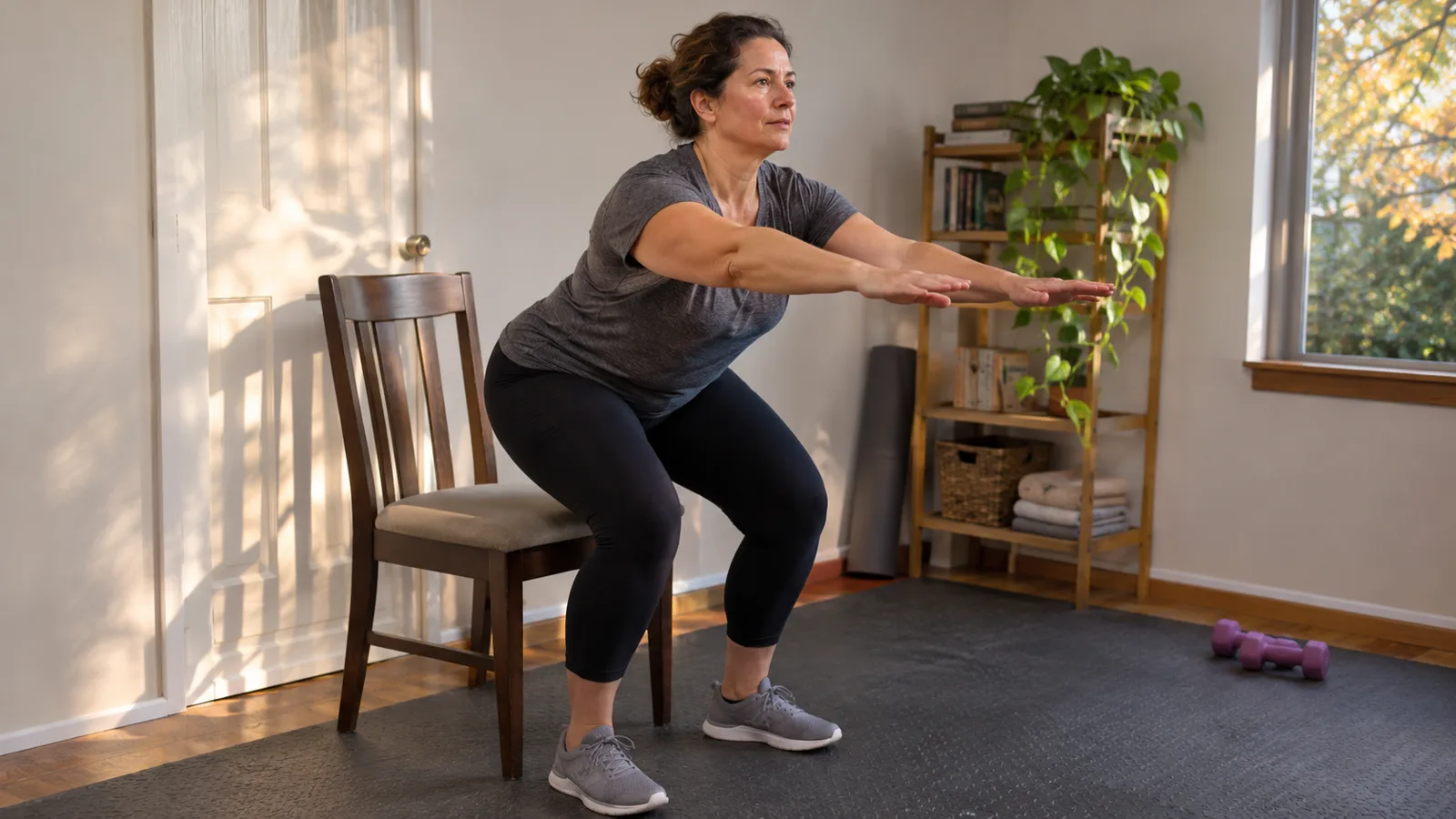
GLP-1 treatment can reduce fat mass and lean mass during weight loss. In SEMALEAN, lean mass fell early and then stabilized, while grip strength improved. Those outcomes measure different things. To support muscle during weight loss, prioritize enough protein, progressive resistance training, and follow-up if you are getting weaker or struggling to eat.
What did SEMALEAN find after a year on semaglutide?
SEMALEAN followed adults with obesity who received semaglutide 2.4 mg. Among the 106 analyzed, average weight fell 9.8% at seven months and 12.7% at 12 months. Lean mass fell about 6.6 pounds by month seven and then stabilized. Grip strength improved, even though absolute lean mass remained below baseline.
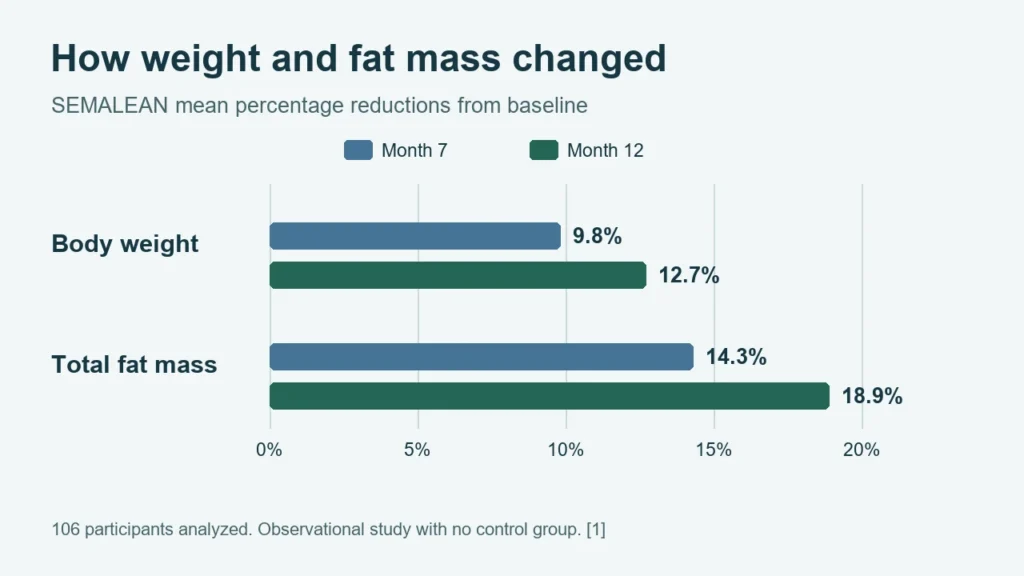
The study enrolled 115 adults, with measurements at baseline, seven months, and 12 months. Nine people stopped treatment by month seven and were excluded. Researchers used dual-energy X-ray absorptiometry (DXA) for body composition, a dynamometer for handgrip, and indirect calorimetry for resting energy expenditure. Average age was 52 years and average baseline BMI was 46.3. By month 12, 59% had lost at least 10% of body weight and 26% had lost at least 15%. [1]
| Measure | At seven months | At 12 months |
|---|---|---|
| Body weight | 9.8% below baseline | 12.7% below baseline |
| Total fat mass | 14.3% below baseline | 18.9% below baseline |
| Absolute lean mass | 3.0 kg lower, about 6.6 lb | No significant further decline after month seven |
| Handgrip strength | 3.7 kg higher, about 8.2 lb | 4.1 kg higher, about 9.0 lb, in the detailed results |
| Sarcopenic obesity | Not reported here | 33% met the study criteria, down from 49% at baseline |
Can lean mass fall while grip strength improves?
Yes. Lean mass is an estimate of tissue quantity, and a grip test measures the force someone can produce with one hand. They can move in different directions. Lean mass can also become a larger percentage of body weight as fat falls faster. That percentage alone cannot show whether someone preserved skeletal muscle.
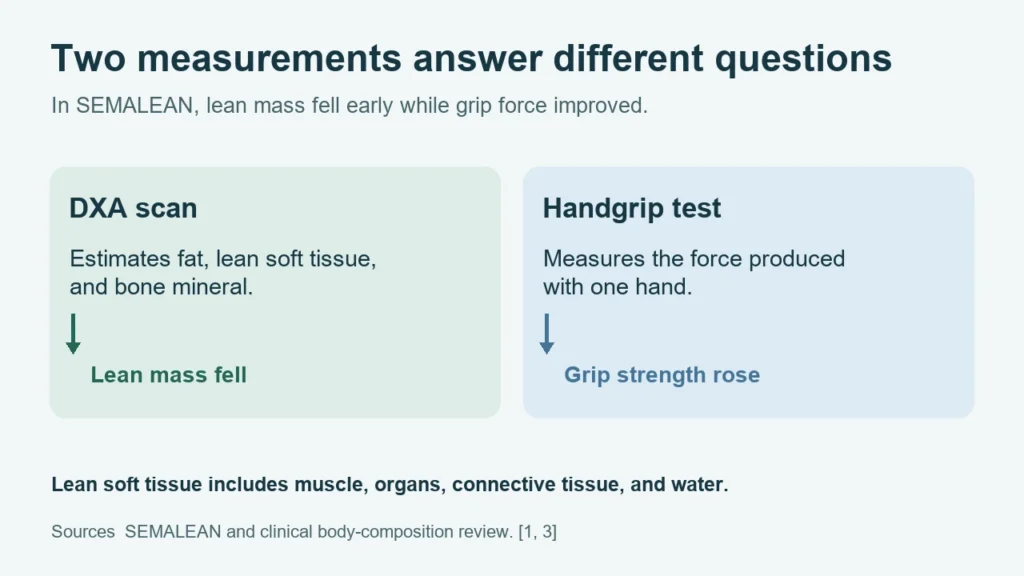
DXA separates fat, lean soft tissue, and bone mineral. Its lean estimate includes skeletal muscle and other nonfat soft tissue, such as organs, connective tissue, and water. DXA can estimate muscle-related tissue in the arms and legs. SEMALEAN found that this measure also declined early. The scan cannot determine exactly how much contractile muscle was lost. [1–3]
Consider a person whose weight falls from 280 to 244 pounds while lean mass falls from 128 to 121 pounds. Lean mass drops by seven pounds, while its share of body weight rises from 45.7% to 49.6%. SEMALEAN likewise reported a higher lean-mass share despite lower absolute lean mass. [1]
Sarcopenic obesity combines excess adiposity with low muscle mass and impaired muscle function. SEMALEAN used low grip strength and low limb lean mass to identify it in this cohort. Some participants crossed those thresholds over time. Improved grip is an important finding, but the study cannot tell whether fat loss, insulin sensitivity, changes in inflammation, a change in everyday activity, or other factors caused it. Moving a lighter body can make tasks such as stair climbing easier. Absolute grip force is a separate measure. [1, 3]
What can this study tell you about GLP-1s and muscle loss?
SEMALEAN describes body composition and strength among participants who continued semaglutide. The study had no comparator group, so it cannot separate medication effects from the effects of weight loss or other changes. It also cannot establish whether the results apply to other medicines, to different patient groups, or beyond one year.
The abstract lists a 4.5 kg grip gain at 12 months, while the detailed results and Figure 2C report 4.1 kg. Resting energy expenditure fell at seven months. It then rose from month seven to 12, including when normalized to lean mass. That finding does not establish long-term preservation of resting metabolism. [1]
In the exploratory DXA analysis from the randomized STEP 1 trial, semaglutide reduced fat mass and absolute lean mass. The share of body weight made up by lean mass still increased. Across GLP-1 studies, the balance of fat and lean loss varies. A change in facial or buttock appearance during weight loss cannot diagnose muscle loss or its severity. [2, 4]
The SEMALEAN paper declared no funding source. It also disclosed that one author was employed by Novo Nordisk at publication and that her role in designing the study preceded that employment. The lack of a control group and exclusion of people who stopped treatment limit how widely the results can be applied. [1]
How can you support muscle while taking a GLP-1?
Pair an individualized protein plan with regular resistance training. Track how you function as well as what you weigh. If appetite becomes so low that you skip meals, or you notice persistent weakness, dizziness, or difficulty completing usual activities, ask your clinician to review nutrition, side effects, and your rate of weight loss.
- Make room for protein. Include a protein source at meals, such as eggs, Greek yogurt, fish, lean meat, tofu, or beans. A joint clinical advisory discusses 80–120 g daily as one practical target for some adults. Your clinician or dietitian can tailor the amount to your nutrition, kidney health, body size, and activity. [5]
- Build strength regularly. The advisory encourages resistance work at least three times a week when appropriate. Start at a level you can sustain and increase resistance or repetitions gradually. Chair stands, gym machines, resistance bands, and weights are options. Track the tasks or exercises that matter in daily life. [5]
- Review the pace and your intake. Weight loss reduces energy stores, and lower appetite can make it harder to eat enough protein or calories. There is no universal rate proven to preserve muscle on GLP-1 treatment. If strength declines or you cannot maintain intake, review the plan and dose progression with your prescriber. [5, 6]
Should men take testosterone to preserve muscle on a GLP-1?
Testosterone can influence muscle, but GLP-1 treatment alone is not an indication for testosterone therapy. Weight loss may improve testosterone in some men with obesity. If you have compatible symptoms, a clinician can evaluate the cause and confirm whether morning testosterone is consistently low before discussing treatment and fertility considerations. [7, 8]
Common questions about PEPLIX HEALTH
Peplix Health is a cash-pay telehealth service managed by Monarch Brands LLC. Independent, board-certified physicians review your health history, medicines, and weight-management goals and individualize dosing and follow-up when appropriate. A state-licensed pharmacy can fill an eligible patient-specific compounded prescription under Section 503A and applicable state requirements.
Do I need a DXA scan to monitor muscle?
Many people can start with activity, strength, and nutrition tracking. A clinician may consider body-composition testing if there is a specific concern, such as declining function, frailty, or a history of significant muscle loss. Measurements are most useful when interpreted alongside function. [3, 5]
What should I bring to a follow-up?
Bring your weight trend, a typical day of meals, your resistance-training routine, and any changes in strength or side effects. Ask what to monitor before the next visit and how to reach your prescriber if eating or hydration becomes difficult. [5]
Is a 503A compounded GLP-1 FDA approved?
Compounded medications do not undergo FDA premarket review for safety, effectiveness, or quality. Section 503A generally requires a valid prescription for an identified patient and restricts routine compounding of essentially identical copies of commercially available drugs. Ask why a compounded product would be appropriate for you and which pharmacy would dispense it. [9, 10]
For consultation information, see our weight-loss guide or start an online assessment.
Sources
- Alissou et al. SEMALEAN full report, including measurements and disclosures.
- Wilding et al. STEP 1 exploratory body-composition analysis.
- Review. Lean mass and musculoskeletal preservation during GLP-1 therapy.
- Wilding et al. Once-weekly semaglutide in adults with overweight or obesity.
- Joint advisory. Nutritional priorities during GLP-1 therapy.
- CDC. Steps for losing weight.
- Endocrine Society. Testosterone therapy in men with hypogonadism.
- Meta-analysis. Testosterone changes after weight loss in men with obesity.
- FDA. Federal provisions for human drug compounding.
- FDA. Compounding policies as national GLP-1 supply stabilizes.
This article is for general education and is not medical advice. Talk with a licensed clinician before starting, stopping or changing any treatment. Compounded medications are not FDA-approved. See our safety information.
Keep reading

Weight Loss
GLP-1 Medications for Weight Loss and Diabetes
Compare semaglutide and tirzepatide for weight loss, learn which GLP-1 pills work, and understand side effects, stopping, and pharmacy fulfillment.
Weight Loss
Compounded semaglutide vs Wegovy and Ozempic
Compare compounded semaglutide with Wegovy and Ozempic on weight loss evidence, cost, dosing safety, and when a 503A pharmacy may fill a prescription.

Weight Loss
GLP-1 Benefits Beyond Weight Loss
Learn how semaglutide and tirzepatide affect blood sugar, heart health, inflammation, food noise, and alcohol cravings. Compare the evidence.