Magnesium Malate Benefits, Dose, and Safety
Learn what magnesium malate does, how it compares with glycinate and citrate, and how to check your elemental magnesium dose and medication risks.

Magnesium malate combines magnesium with malic acid and can help fill a dietary magnesium gap. Magnesium supports normal muscle, nerve, and energy metabolism. Evidence for malate-specific benefits for fatigue, exercise recovery, or sleep is limited. If you use a supplement, check the elemental magnesium per serving and review medications or kidney disease with your clinician.
What is magnesium malate, and can it boost energy?
Magnesium malate is magnesium bound to malate, a form of malic acid. Magnesium helps enzymes use ATP, the molecule that supplies energy for many cellular processes. Malate participates in the citric acid cycle. Those biochemical roles explain why malate is marketed for energy. Evidence has yet to show that the supplement reliably improves daytime stamina.
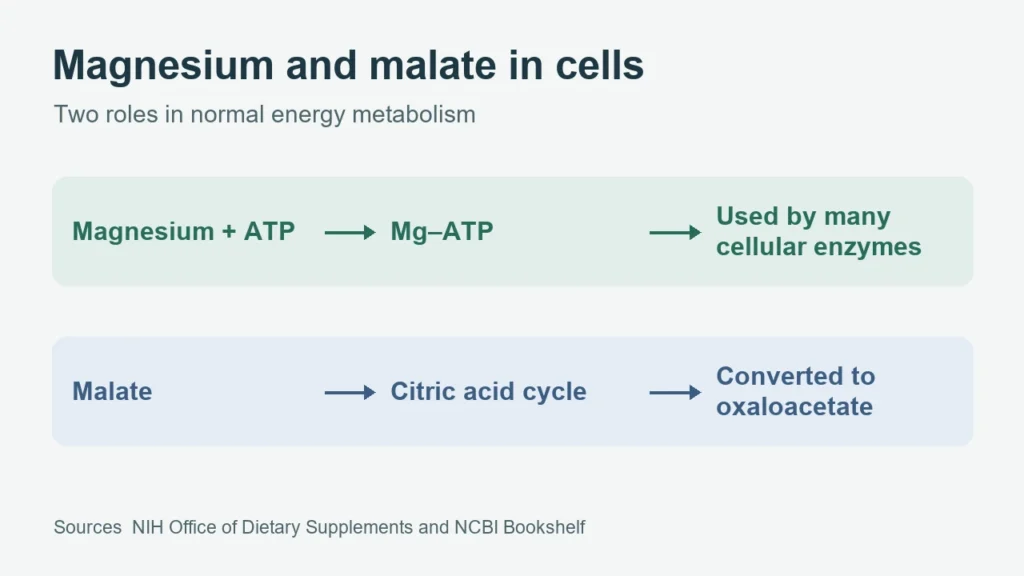
Magnesium is an essential mineral and a cofactor in hundreds of enzyme systems. It helps regulate nerve signals, blood glucose, and movement of calcium and potassium across cell membranes, processes involved in contraction and relaxation. Many reactions use adenosine triphosphate (ATP) bound to magnesium, called Mg–ATP. [1, 2]
Malic acid occurs naturally in foods such as apples. In mitochondria, malate dehydrogenase converts malate to oxaloacetate in the citric acid cycle and produces NADH, which can supply electrons for ATP production. This pathway does not establish that taking extra malate improves energy, focus, mood, or workout recovery. [2–4]
Who might benefit from reviewing their magnesium intake?
Adults who eat less during weight loss or who regularly miss foods rich in magnesium may benefit from reviewing their intake. Aim for adequate nutrition before choosing a supplement. If you have persistent fatigue, muscle twitches, cramps, or worsening recovery, a clinician can help determine whether magnesium intake or another factor needs attention.
- Lifting or training frequently. Muscle contraction and recovery use ATP. Low magnesium can contribute to weakness or cramps, but evidence for malate specifically improving exercise soreness or performance is limited. A Cochrane review found no randomized trials of magnesium for exercise-associated cramps in its search. [1, 2, 5, 6]
- Eating less on a GLP-1 medication or during a calorie deficit. Lower food intake can make it harder to get enough nutrients. Review protein, fluid intake, and resistance training with your clinician. A supplement can address an intake gap. There is no established muscle-preserving effect of magnesium malate during GLP-1 treatment or added performance benefit with testosterone therapy. [1, 7]
- Living with fibromyalgia or chronic muscle pain. Magnesium with malic acid has been studied. An evidence summary found little or no difference in pain or depressive symptoms. Discuss persistent pain and treatment options with your clinician. [8]
How much elemental magnesium should you take?
Start with your total intake from food and then check the Supplement Facts panel for the elemental magnesium per serving. For adults age 31 and older, U.S. recommended total intakes are generally 320 mg daily for women and 420 mg for men. The 350 mg daily upper limit applies to supplements and medications.
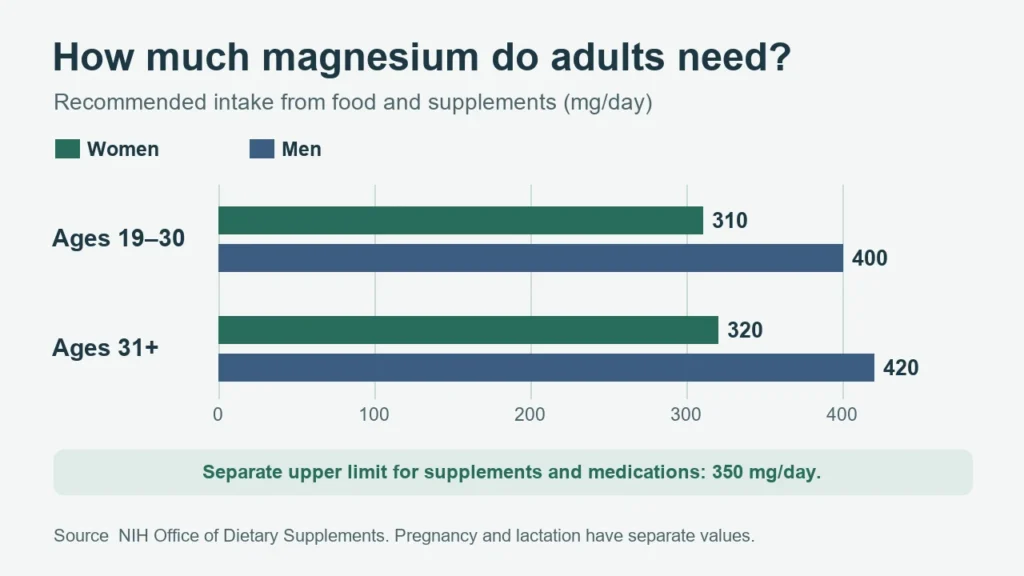
A front label that lists 1,000 mg of magnesium malate may refer to the whole compound. The amount next to Magnesium on the Supplement Facts panel is the elemental dose. Add elemental magnesium from each supplement, multivitamin, antacid, or laxative that contains it. The upper limit excludes magnesium naturally present in food and is distinct from a clinician-supervised therapeutic dose. [1]
Loose stools, nausea, and abdominal cramping can occur with supplemental magnesium. If a clinician recommends supplementation, discuss the smallest dose needed to close the gap, taking it with food if that helps tolerance, or dividing the dose. Evidence does not establish a best time of day or a predictable one-week or several-week response. [1, 5, 8]
How does malate compare with glycinate, citrate, and oxide?
Choose a form based on why you need magnesium, the elemental dose, and your tolerance. Citrate has evidence of better absorption than oxide and is also used as a laxative at appropriate doses. A trial found a small sleep benefit with bisglycinate. Direct comparisons are too limited to establish a preferred form for energy or sleep.
| Form | Where it may fit | Evidence and trade-offs |
|---|---|---|
| Malate | Meeting a magnesium intake gap if the dose and product suit you. | Direct evidence for better absorption, digestive tolerance, or exercise recovery compared with other forms is limited. [1, 5] |
| Glycinate or bisglycinate | An option to discuss if poor sleep is the main concern. | One short trial found a modest improvement in self-reported insomnia symptoms. Comparative sleep and anxiety benefits remain uncertain. [9, 10] |
| Citrate | A supplement form. Specific preparations treat occasional constipation. | Generally better absorbed than oxide. Saline laxative products promote water retention in the bowel. Dose and formulation matter. [1, 11] |
| Oxide | An option whose label can list a sizable amount of elemental magnesium. | Usually less well absorbed than citrate in small studies. It can cause diarrhea. [1] |
Morning, afternoon, or evening can fit a supplement routine. If you notice discomfort or feel more alert at night, try an earlier time. There is no established reason to use malate by day and add glycinate at night. If you use both, add their elemental doses to keep track of the total. [1, 9, 10]
Ask a clinician before starting magnesium if you have kidney disease or a significant rhythm disorder. Impaired kidneys may clear magnesium less effectively. A pharmacist can check how to space it from oral bisphosphonates and certain tetracycline or quinolone antibiotics, whose absorption can fall when taken too close together. [1]
Common questions about PEPLIX HEALTH
Peplix Health is a cash-pay telehealth service managed by Monarch Brands LLC. Independent, board-certified physicians review symptoms, diet, medications, and relevant lab results. When treatment is appropriate, the physician individualizes dosing and follow-up. A state-licensed pharmacy can fill an eligible patient-specific compounded prescription under applicable Section 503A requirements and state law.
Can I take magnesium malate every day?
Many adults can use a daily supplement to fill a dietary gap. Review total supplemental elemental magnesium, tolerance, and interactions. Consult a clinician first if you have impaired kidney function, take interacting prescriptions, or need a dose above the supplemental upper limit. [1]
Can Peplix Health help if I’m tired while taking a GLP-1?
Bring a list of medications and supplements and a snapshot of meal size, protein intake, activity, and sleep. Your clinician can review whether reduced intake, side effects, or another cause may contribute. A nutrition and activity plan can address more than any single supplement. [1, 7]
Is magnesium malate a treatment for anxiety, poor sleep, or brain fog?
Evidence has yet to establish magnesium malate as a treatment for these symptoms. Research on magnesium generally has used different formulations and outcomes. Persistent symptoms deserve their own evaluation. [9, 10]
Does magnesium malate require a Section 503A pharmacy?
Standard oral supplements are widely available. If a clinician identifies a patient-specific need for a compounded drug, the licensed pharmacy must meet applicable ingredient, quality, and prescription requirements. Compounded drugs do not undergo FDA premarket approval. [1, 12, 13]
For consultation information, see our vitamins and wellness guide or start an online assessment.
Sources
- NIH Office of Dietary Supplements. Magnesium fact sheet for health professionals.
- Gröber et al. Magnesium in prevention and therapy.
- NCBI Bookshelf. Biochemistry of the citric acid cycle.
- Study of organic acid composition in apple species.
- Systematic review of magnesium supplementation for muscle soreness.
- Cochrane. Magnesium for skeletal muscle cramps.
- Joint advisory on nutrition during GLP-1 therapy.
- Medwave evidence summary. Magnesium and malic acid in fibromyalgia.
- Randomized placebo-controlled trial of bisglycinate for poor sleep.
- Systematic review of supplemental magnesium for sleep and anxiety.
- DailyMed. Magnesium citrate saline laxative labeling.
- FDA. FD&C Act provisions for human drug compounding.
- FDA. Human drug compounding laws and policies.
This article is for general education and is not medical advice. Talk with a licensed clinician before starting, stopping or changing any treatment. Compounded medications are not FDA-approved. See our safety information.
Keep reading

Wellness
Krill Oil vs Fish Oil for Omega-3s
Compare krill oil and fish oil for EPA and DHA, absorption, triglycerides, and side effects. Learn what to check on an omega-3 label.

Wellness
Sprinting Benefits and How to Start Sprint Interval Training
Learn how sprint intervals affect fitness and fat oxidation, how to start with controlled efforts, and how to fit sprinting into your week.

Wellness
CoQ10 Benefits, Dosage, and Safety
What does CoQ10 do? Explore the evidence for heart failure, fatigue, and statin symptoms, plus dosage, supplement forms, and interactions.