What Is Enclomiphene and How Does It Compare With TRT?
Compare enclomiphene, TRT, and Clomid for low testosterone. Learn what trials found about sperm counts, side effects, and FDA approval.

Enclomiphene is an oral selective estrogen receptor modulator studied in men with secondary hypogonadism. It can raise testosterone by increasing the signals the testes receive. Trials found that sperm concentrations were better preserved than with testosterone gel. Evidence on symptom relief, long-term safety, and pregnancy outcomes remains limited, and enclomiphene has no standalone FDA approval.
How does enclomiphene raise testosterone?
The brain and pituitary normally adjust hormone signals in response to testosterone and estradiol. Enclomiphene reduces estrogen feedback in that system. The pituitary can release more LH, which prompts Leydig cells to make testosterone, and more FSH, which helps support sperm production. The response depends partly on whether the testes can respond.
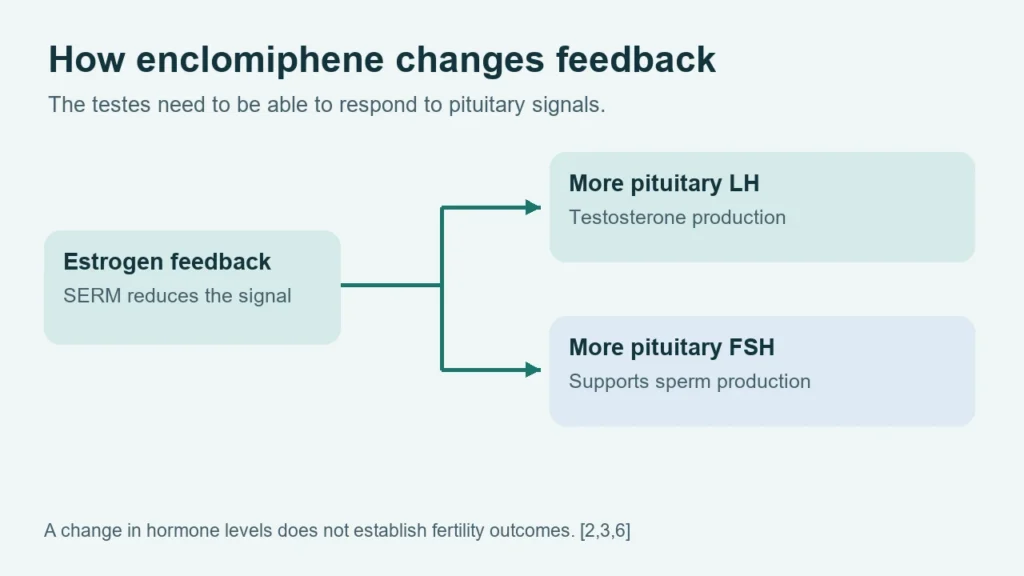
The hypothalamus releases GnRH to signal the pituitary. Some testosterone is converted to estradiol by aromatase. Estradiol feeds back to the brain and pituitary. Enclomiphene modulates that signal. TRT supplies testosterone from outside the body and generally suppresses LH, FSH, and intratesticular testosterone. Sperm counts can fall and testes may shrink. TRT is an unreliable contraceptive. [1–3]
Some studies have reported a generational decline in testosterone after accounting for factors such as weight and smoking. A landmark Boston-area cohort examined men aged 45–79, so it tells us less about younger adults. Persistent low libido, fatigue, changes in body composition, and low motivation are reasons to discuss evaluation. Symptoms overlap with sleep disorders, depression, medication effects, and other conditions. [1,4]
What changes did enclomiphene studies report?
Controlled trials consistently found increases in total testosterone and the pituitary hormones LH and FSH in selected men with secondary hypogonadism. A 16-week study in overweight men with testosterone at or below 300 ng/dL found sperm concentrations were maintained with enclomiphene and fell with topical testosterone. These lab results do not establish symptom relief or fertility outcomes.
In a six-week dose-ranging study, the 25 mg arm averaged about 604 ng/dL at week six. Testosterone, LH, and FSH rose, with gonadotropin results varying by group. In the phase 3 studies, the sperm endpoint was preservation of concentration over about 16 weeks. The studies did not determine whether treatment increases the chance of pregnancy or live birth. [2,3]
What did a real-world analysis find?
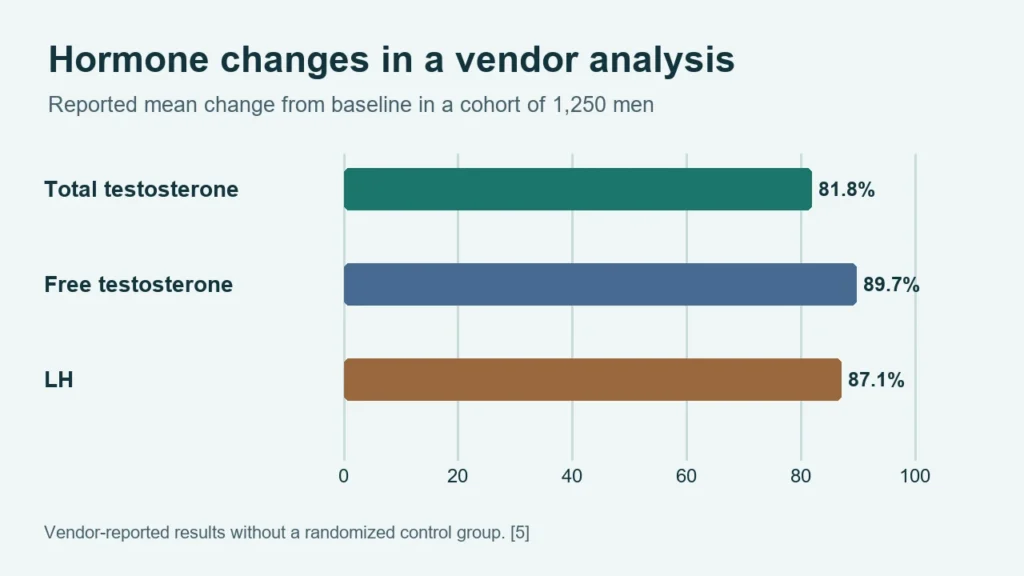
A vendor-reported analysis of 1,250 patients described average rises of 81.8% in total testosterone, 89.7% in free testosterone, and 87.1% in LH. When men suspected of primary hypogonadism and those with prior TRT were excluded, the company reported rises of 87.7% for total testosterone and 96.5% for free testosterone. It reported approximately 67% and 150% increases in free testosterone in groups taking 6.25 and 12.5 mg, respectively. These groups lack the comparability of a randomized dose study. [5]
The same vendor materials reported improvements in mood (67%), energy (55%), sports ability (50%), libido (48%), work performance (46%), and happiness (42%). These self-reported results have no placebo comparison. The report described shorter and longer follow-up, with some patients remaining on treatment for years. Long-term safety can’t be established from continued use in a company cohort. [5,6]
How do enclomiphene, Clomid, TRT, and other options compare?
These options act at different points in the hormone system. Testosterone therapy replaces the hormone directly. Enclomiphene and clomiphene alter feedback, hCG mimics LH at the testes, and aromatase inhibitors reduce conversion to estradiol. A physician can weigh the cause of low testosterone, fertility goals, approved indications, and the strength of evidence for each option.
| Option | What it does | What to discuss |
|---|---|---|
| Enclomiphene citrate | Oral SERM that increases pituitary signaling. | Limited evidence for symptom and long-term outcomes. No standalone FDA approval. |
| Clomiphene citrate | Mixed SERM containing enclomiphene and zuclomiphene. | FDA-approved for ovulatory dysfunction in women. Use in men is off-label. |
| Testosterone replacement | Supplies testosterone through products including gels, injections, or oral capsules. | May help sexual symptoms, bone density, and body composition in selected patients. Can suppress sperm and raise hematocrit. |
| hCG | Injectable hormone that acts at the LH receptor. | Some products are approved for selected male hypogonadotropic hypogonadism. Frequency varies. Local pain, bruising, or swelling can occur. |
| Aromatase inhibitors | Reduce conversion of testosterone to estradiol. | Off-label for low testosterone. Excess estradiol suppression can harm bone health. |
Clomid contains roughly 62% enclomiphene and 38% zuclomiphene in common descriptions. The U.S. label allows 30–50% of the cis isomer zuclomiphene. Zuclomiphene can act as an estrogen agonist in some tissues and persist for more than a month. Mood changes and breast discomfort have been reported with clomiphene. The contribution of each isomer to those effects remains unclear. [6,7]
Exogenous testosterone can improve libido or body composition in selected men. Benefits for fatigue, motivation, and cognition are less consistent. TRT can raise hematocrit and change estradiol or DHT levels. Route affects hormone peaks and metabolite levels. DHT contributes to hereditary hair follicle miniaturization, but trials have not shown that enclomiphene prevents hair loss. Avoid using hormone therapy for sports performance. [1,6]
Is enclomiphene FDA-approved and what are the risks?
Enclomiphene was developed as Androxal and reached phase 3 trials. The FDA requested more evidence of clinical benefit in 2015, and the drug remains unapproved as a standalone product. Oral enclomiphene in clinical trials raised hormone levels, but long-term safety remains uncertain. The rules for lawful compounding depend on the ingredient, prescription, and applicable requirements.
Repros submitted results from multiple studies to FDA and was later acquired by Allergan. The agency did not consider normalization of testosterone alone sufficient to establish clinical benefit. In 2022, FDA’s Pharmacy Compounding Advisory Committee voted against recommending enclomiphene citrate for the 503A Bulks List. A nomination or advisory vote alone does not establish lawful availability. Compounded products, including multi-ingredient products such as enclomiphene with pregnenolone, do not have FDA approval. [6,8,9]
- Possible side effects. Trials described headache, hot flushes, nausea, and abdominal discomfort. A vendor analysis also reported weight changes, libido changes, allergy, and acne, and counted 75 discontinuations associated with adverse effects. FDA reviewers raised concerns about limited safety data and possible thromboembolic events. Seek prompt evaluation for a suspected serious reaction. [5,6]
- What happens after stopping. Serum levels peak about two to three hours after a dose, and the drug’s half-life is about ten hours. One short study still found increases in testosterone, LH, and FSH at least seven days after treatment ended. Testosterone can later move toward baseline, with timing that varies. After stopping either treatment, the underlying symptoms can recur. TRT recovery may also take time because it suppresses the hormone axis. [1–3,6]
Who should talk to a physician about enclomiphene?
Start with symptoms, two properly timed morning testosterone measurements, and an evaluation for the cause. A clinician may add free testosterone, LH, FSH, or other tests depending on the results. Men hoping to preserve fertility should bring that goal up early. Symptoms with normal testosterone warrant a broader review before considering hormone treatment.
AUA guidance uses a total testosterone cutoff below 300 ng/dL to support diagnosis in symptomatic men with repeat testing. The lab method, age, SHBG, and underlying conditions matter. A licensed physician can discuss contraindications, the evidence behind each option, and whether changes in symptoms and labs warrant an adjustment. Doses up to 25 mg have been studied under supervision. Study doses do not define an appropriate regimen for an individual. [1–3]
Common questions about PEPLIX HEALTH
At Peplix Health, independent licensed clinicians make decisions about testing, treatment, and follow-up. Monarch Brands LLC manages the practice’s administrative services. If a physician determines that a compounded medicine is appropriate for an individual patient, a state-licensed pharmacy operating under Section 503A may fill the prescription when applicable requirements are met.
Can I discuss fertility before choosing a treatment?
Yes. Tell your evaluating clinician whether you want children now or later. They may recommend testing or referral to a reproductive urologist. Ask the practice for current treatment availability in your state.
How do I know who prescribes and fills a medication?
Ask the independent, board-certified physician performing your evaluation about expected benefits, individualized dosing, and follow-up. Ask who will fill the prescription and whether an FDA-approved option is suitable. Compounded drugs do not undergo FDA premarket review for safety, effectiveness, or quality.
This article is for education. Discuss medical decisions with a licensed clinician.
For consultation information, see our low testosterone guide or start an online assessment.
Sources
- Endocrine Society — testosterone therapy clinical guideline
- Wiehle et al. — dose-ranging study and hormone response
- Kim et al. — phase 3 comparison with topical testosterone
- Travison et al. — population-level testosterone trends
- Maximus — vendor analysis, methodology and reported outcomes
- FDA — enclomiphene evidence and safety review
- DailyMed — Clomid prescribing information
- FDA — advisory committee meeting minutes
- FDA — Section 503A bulk drug substances
- FDA — compounding and FDA approval
This article is for general education and is not medical advice. Talk with a licensed clinician before starting, stopping or changing any treatment. Compounded medications are not FDA-approved. See our safety information.
Keep reading

Testosterone
Does Enclomiphene Build Muscle?
Does enclomiphene build muscle? Review the evidence on testosterone, lean mass, fertility, and what to discuss before treatment.

Testosterone
MCT Oil vs. Seed Oils in Injectable Testosterone
Compare MCT, sesame, and cottonseed oil in injectable testosterone. Learn what carriers do and what to ask about irritation or allergies.

Testosterone
Does Vitamin D Raise Testosterone?
Does vitamin D raise testosterone? Review results from clinical trials, food sources, safe intake, and when to ask about testing.