Types of Testosterone Replacement Therapy and How to Choose
Compare oral TRT, injections, skin gels, and nasal gel. Learn how each route affects daily use, monitoring, and fertility decisions.

The main testosterone replacement therapy options include oral capsules, injections, skin gels or creams, and nasal gel. They differ in timing, absorption, monitoring, and side effects. A clinician should confirm low testosterone before prescribing and discuss fertility plans, since testosterone from any route can suppress sperm production.
How do the main types of TRT compare?
Compare the tasks you’ll repeat and the risks that matter to you. Oral products may need to be taken with meals, injections have product-specific intervals, and skin gels require care to prevent transfer. Nasal gel requires multiple applications a day. Your clinician can match a formulation and monitoring plan to your routine.
| TRT route | What the routine usually involves | Main trade-offs to discuss |
|---|---|---|
| Oral capsules | FDA-approved oral testosterone undecanoate products follow their own meal, timing, and monitoring instructions. Jatenzo, for example, is taken twice daily with food. | Meal timing, blood pressure, and possible suppression of sperm production. Compounded testosterone base has different evidence and lacks FDA approval. [1,2,5,10,12] |
| Injection | Cypionate and enanthate injectable regimens may be weekly or every two weeks. Some products are given under the skin, and long-acting formulations have a different schedule. | Peaks and troughs, injection-site symptoms, and fertility. The prescriber sets dose, route, and timing. [1] |
| Skin gel or prescribed cream | Many gels are applied daily to clean, dry skin. The approved site varies by product and strength. | The medicine can rub off on another person. Confirm application site, drying time, and contact precautions. [1,3] |
| Nasal gel | Natesto uses a metered gel pump inside both nostrils three times daily. | Frequent administration may be harder to fit into the day. Discuss nasal symptoms and any other medicines used in the nose. [4] |
What should you know about oral and injectable TRT?
Older oral alkylated androgens, such as methyltestosterone, have been associated with liver injury. Some newer oral testosterone undecanoate formulations use lipid-based delivery and rely in part on intestinal lymphatic absorption to bypass first-pass liver metabolism. Follow the meal instructions for the exact product. One short oral study reported no liver adverse events, with long-term safety outside its scope. Blood pressure is a monitoring priority. [1,2,5,10,13]
An injectable ester can produce a rise after the shot and a decline before the next dose. Some men notice changes in energy, libido, or mood across the interval. Injection-site pain, swelling, or irritation can occur. Tell your clinician about persistent lumps or suspected allergic reactions. Natural testosterone usually runs higher in the morning and lower later in the day, with timing and degree of variation differing by age and sleep schedule. [1,9,14]
How do you use skin or nasal testosterone safely?
Use the exact instructions for the product you receive. Skin gels need careful application and steps to prevent transfer to partners or children. Nasal testosterone is a gel delivered by a pump. The two routes have different handling rules, and nasal symptoms or other nasal medications can affect whether that route fits.
- Skin products. The gel passes through the skin into the bloodstream. Some labeled gels use the upper arms and shoulders, and some also allow the abdomen. Standard AndroGel instructions prohibit genital application. Wash your hands with soap and water after use, allow the site to dry, and cover it with clothing. Wash the site before anticipated skin-to-skin contact. Secondary exposure has caused signs of early sexual development in children. [3]
- Nasal products. Natesto is dispensed after gently blowing your nose, according to the label. Avoid blowing your nose or sniffing for one hour after use. Runny nose, congestion, nasal discomfort, cough, and sinus symptoms may occur. Discuss nasal sprays and all other medicines, including insulin or other diabetes medicines and corticosteroids, with your prescriber. [4]
Can any TRT route protect fertility?
All routes of external testosterone can lower the signals needed for sperm production. Some oral studies found that luteinizing hormone and follicle-stimulating hormone stayed within reference ranges in some participants. Those blood levels cannot establish fertility preservation. If you hope to have children, discuss that before selecting any testosterone treatment.
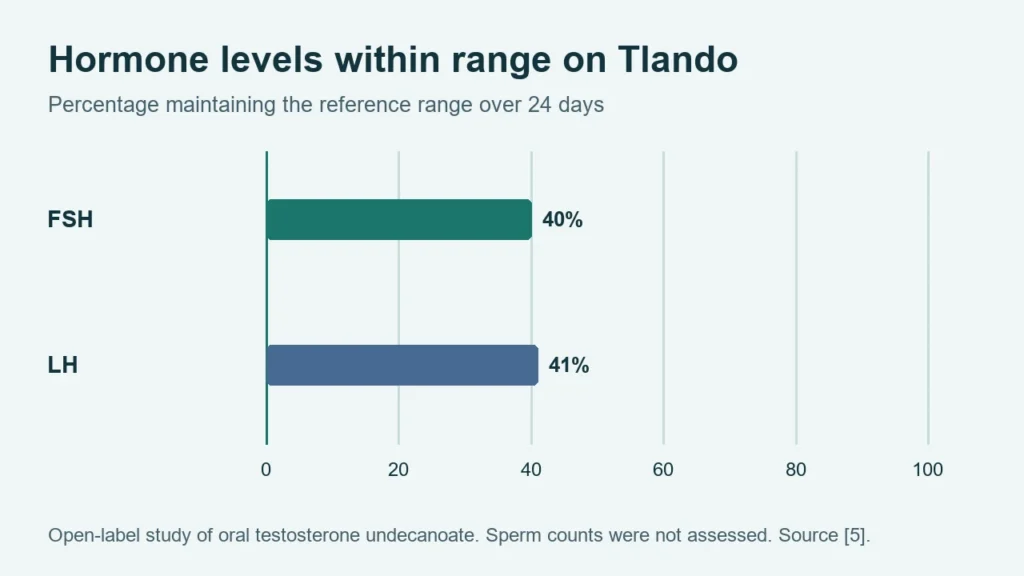
In a 24-day, open-label study of oral testosterone undecanoate (Tlando), 40% of participants maintained follicle-stimulating hormone (FSH) in range and 41% maintained luteinizing hormone (LH) in range. Mean levels of both hormones fell. Other oral testosterone undecanoate studies reported variable suppression, and findings on blood hormones alone cannot confirm sperm counts. [5,6]
External testosterone can reduce pituitary LH and FSH through hormonal feedback. This can lower testosterone inside the testes and reduce sperm production. Enclomiphene, which lacks FDA approval, has been studied by itself in selected men with secondary hypogonadism. A company-authored report on combining it with compounded oral testosterone base measured LH and FSH. Evidence that the combination preserves fertility is limited. If fertility is a priority, ask about a semen analysis, specialist referral, and options that do not rely on adding external testosterone. [1,6–8,11]
How do you decide whether TRT is right for you?
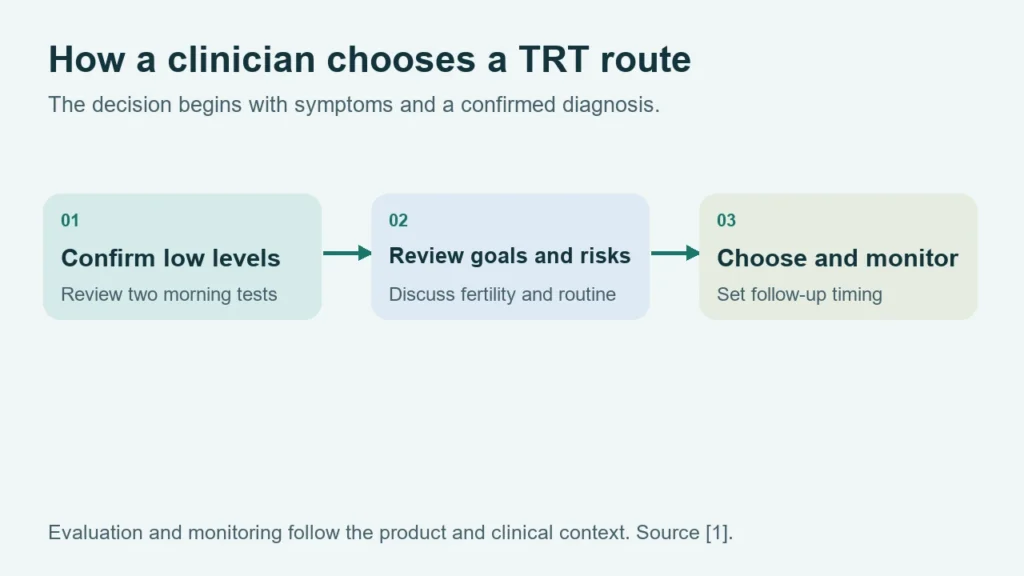
Start with symptoms, two separate morning testosterone tests, and an evaluation of the underlying cause. Then discuss sleep, other health conditions, blood pressure, and fertility goals. If TRT is appropriate, your prescriber can help you choose a route you can use consistently and set the timing for follow-up labs.
Low libido, fewer spontaneous erections, erectile difficulties, smaller testes, or reduced body or facial hair can be clues. Fatigue and changes in body fat have many possible causes. Testosterone can decline gradually with age. One longitudinal review reported an average total testosterone decline of about 1.6% each year, which cannot predict an individual’s levels. [1,9]
TRT for confirmed hypogonadism can improve libido and some aspects of sexual function and increase lean mass. Body fat may decrease, and changes in erections, energy, and sexual satisfaction vary. Evidence for improving memory or concentration is limited. Review cost, treatment burden, hematocrit, blood pressure, and appropriate prostate assessment before choosing a route. [1,10]
Common questions about PEPLIX HEALTH
Independent, board-certified physicians evaluate symptoms, lab results, and treatment goals. Monarch Brands LLC provides management services for Peplix Health. At a cash-pay consultation, ask about which routes are appropriate, what monitoring would cost, and how your prescriber would adjust the formulation or dose if symptoms or lab results change.
Can I request a particular type of TRT?
You can share route preferences, work and travel schedules, and fertility goals. The physician determines eligibility and explains the available options and follow-up requirements.
Who fills a prescription if compounding is appropriate?
If an individual clinical need warrants a compounded formulation and applicable requirements are met, a state-licensed pharmacy operating under Section 503A can prepare a patient-specific prescription. Compounded drugs lack FDA approval. The prescriber can individualize dosing and explain what the pharmacy will dispense. [12]
For consultation information, see our low testosterone guide or start an online assessment.
Sources
- Endocrine Society – evaluation and treatment of hypogonadism
- DailyMed – Jatenzo prescribing information
- FDA – AndroGel 1% prescribing information
- FDA – Natesto prescribing information and instructions
- Oral testosterone undecanoate – 24-day Tlando study
- Review – spermatogenesis and testosterone deficiency treatments
- Kim et al. – enclomiphene monotherapy and sperm count
- FDA – enclomiphene application history
- Review – testosterone changes with aging
- FDA – testosterone labeling and blood pressure changes
- Maximus – company-authored testosterone base and enclomiphene report
- FDA – Section 503A compounding requirements
- Review – testosterone replacement formulations
- FDA – testosterone cypionate prescribing information
This article is for general education and is not medical advice. Talk with a licensed clinician before starting, stopping or changing any treatment. Compounded medications are not FDA-approved. See our safety information.
Keep reading

Testosterone
What Is Enclomiphene and How Does It Compare With TRT?
Compare enclomiphene, TRT, and Clomid for low testosterone. Learn what trials found about sperm counts, side effects, and FDA approval.

Testosterone
Does Enclomiphene Build Muscle?
Does enclomiphene build muscle? Review the evidence on testosterone, lean mass, fertility, and what to discuss before treatment.

Testosterone
MCT Oil vs. Seed Oils in Injectable Testosterone
Compare MCT, sesame, and cottonseed oil in injectable testosterone. Learn what carriers do and what to ask about irritation or allergies.