Topical Testosterone for Men: Gels, Creams, and Safety
Learn how topical testosterone works, compare gels and creams, and review application sites, transfer precautions, and possible side effects.

Testosterone gel raises blood testosterone through skin absorption in men with confirmed hypogonadism. Daily application avoids needles and can improve some sexual symptoms and body composition. Gels and compounded creams differ in absorption, approval status, and application instructions. Follow the exact label and take steps to prevent transfer to other people.
Who might benefit from testosterone gel or cream?
A clinician considers topical testosterone when symptoms and two separate morning blood tests support hypogonadism. Low libido, erectile changes, fatigue, and changes in muscle or body fat can prompt evaluation. Age can influence testosterone levels, and medical conditions or medications may contribute at any age. The cause matters before choosing a treatment.
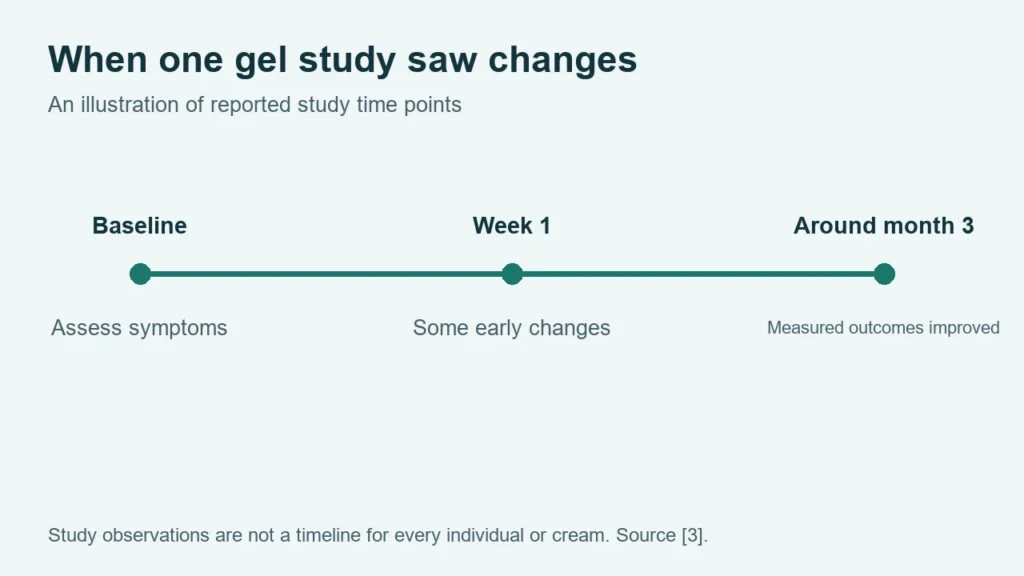
Testosterone influences sexual function, body composition, metabolism, and reproduction. Prescribed replacement can help libido and some aspects of sexual function and increase lean mass in some men. Energy, mood, and erectile response vary. Erectile dysfunction may need a separate evaluation. A gel study reported some early symptom changes by the first week and improvements in measured outcomes by about three months, but these findings do not predict a specific timeline for an individual. [1–3]
Several manufactured testosterone gels have FDA approval for certain causes of male hypogonadism. A compounded cream is a separate formulation and can absorb differently. Evidence from an approved gel does not establish that every cream gives the same results. Home lab kits can be convenient, but a clinician may need a properly timed venous result to confirm low testosterone. [1,4,5]
How do topical products compare with injections and capsules?
Gels and creams are applied to skin and can fit a predictable daily routine. Injections may be less frequent, and oral capsules can avoid both needles and skin transfer. Products vary in how and when they are used and monitored. Discuss your health history, household, and routine before choosing a formulation.
| Option | What to consider | What to confirm |
|---|---|---|
| Manufactured testosterone gel | Daily skin application, with a risk of skin-to-skin transfer. Some products come in metered pumps or single-use packets. | Exact dose, site, drying and wash intervals, and when to take follow-up blood tests. |
| Compounded testosterone cream | Formulated for a patient-specific clinical need when appropriate. Absorption, strength, and instructions can vary. | Reason for compounding, pharmacy, exact application instructions, and monitoring. |
| Injectable or oral TRT | Avoids topical transfer. Injection schedules vary, and oral products have specific food instructions. | Needle or capsule routine, monitoring, out-of-pocket cost, and safety considerations. |
How do you apply testosterone gel without transferring it?
Apply testosterone only to the clean, dry skin sites listed for your prescription. Wash your hands with soap and water immediately, allow the site to dry, and cover it with clothing. Wash the site before expected skin contact and follow the label’s showering interval. Product instructions take priority over general advice about absorption.
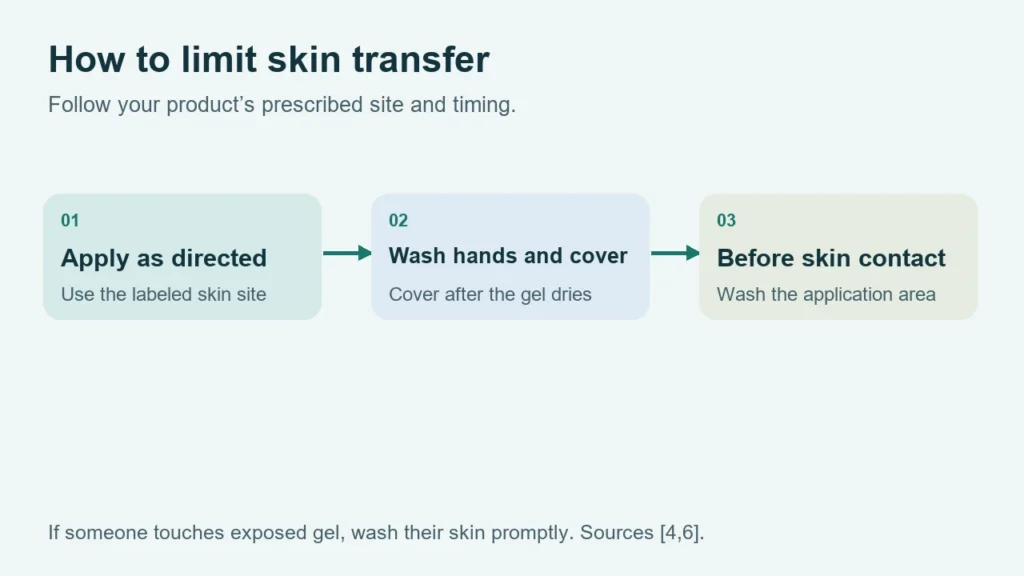
- Use the correct site. AndroGel 1.62% is applied to the shoulders and upper arms only. Some 1% gels also allow the abdomen, and some products are labeled for the front or inner thighs. Sites are not interchangeable. Keep standard gels off the genitals, and avoid shaving solely for application. Ask the prescriber or pharmacist if a compounded product’s directions are unclear. [4,6]
- Prevent accidental exposure. Children and partners should avoid uncovered or unwashed application sites. If contact occurs, wash the exposed skin thoroughly with soap and water promptly. Contact a healthcare professional if exposure is repeated or if someone develops signs of androgen exposure such as new body hair or acne. [4,6]
What side effects and follow-up should you discuss?
Possible effects include application-site irritation or itching, acne, headache, breast enlargement, mood changes, and an increase in hematocrit. Testosterone can also suppress sperm production and raise blood pressure. Review prostate or breast cancer history, untreated severe sleep apnea, a recent heart attack or stroke, and any allergy before starting treatment.
Tell the clinician about changes in sexual function or new symptoms. For most patients, monitoring includes testosterone, blood pressure, hematocrit, and a prostate risk review when appropriate. Timing depends on the product and why it was prescribed. For example, the FDA label for AndroGel 1.62% calls for predose morning testosterone checks around days 14 and 28 after starting or changing dose. Do not change sites or doses based on symptoms alone. [1,4,7]
Common questions about PEPLIX HEALTH
Independent, board-certified physicians evaluate symptoms and blood tests, choose a formulation and dose, and determine follow-up. Monarch Brands LLC provides management services for Peplix Health. Ask what a cash-pay visit includes, who will review your monitoring labs, and whether a manufactured product fits your medical needs and daily routine.
Can I use topical TRT if I have young children?
Discuss household contact and transfer precautions with your physician. If following them reliably would be difficult, ask about other appropriate forms.
Who fills a compounded testosterone cream prescription?
Where clinically and legally appropriate, a state-licensed pharmacy operating under Section 503A may prepare a patient-specific prescription. Compounded products do not have FDA approval. Ask which pharmacy would fill it and request instructions for the specific formula. [5]
This article is educational. Discuss diagnosis, dosing, and side effects with a licensed healthcare professional.
For consultation information, see our low testosterone guide or start an online assessment.
Sources
- Endocrine Society — diagnosing and monitoring testosterone deficiency
- Review — testosterone replacement benefits and risks
- Review — gel studies and patient outcomes
- FDA — AndroGel 1.62% prescribing information
- FDA — compounding and FDA approval
- MedlinePlus — topical testosterone information
- FDA — testosterone labeling and blood pressure
This article is for general education and is not medical advice. Talk with a licensed clinician before starting, stopping or changing any treatment. Compounded medications are not FDA-approved. See our safety information.
Keep reading

Testosterone
What Is Enclomiphene and How Does It Compare With TRT?
Compare enclomiphene, TRT, and Clomid for low testosterone. Learn what trials found about sperm counts, side effects, and FDA approval.

Testosterone
Does Enclomiphene Build Muscle?
Does enclomiphene build muscle? Review the evidence on testosterone, lean mass, fertility, and what to discuss before treatment.

Testosterone
MCT Oil vs. Seed Oils in Injectable Testosterone
Compare MCT, sesame, and cottonseed oil in injectable testosterone. Learn what carriers do and what to ask about irritation or allergies.