Can Testosterone Therapy Improve Metabolic Health?
Can testosterone therapy improve metabolism? Learn what fat-cell research found and how clinicians address low testosterone, weight, and blood sugar.

Testosterone replacement therapy can treat symptoms of confirmed testosterone deficiency. Blood sugar, weight, and cardiovascular risk still need their own evaluation and treatment. A 2025 study found differences in how fat tissue from men with obesity or type 2 diabetes handles sex hormones, raising questions that routine blood hormone tests alone cannot answer.
What did the study find inside fat tissue?
Researchers found more aromatase and lower expression of the gene for estrogen receptor alpha in fat beneath the skin of men with obesity. In separate lab experiments using samples from men without diabetes, estradiol reduced glucose uptake under insulin stimulation, while testosterone increased baseline uptake. These experiments measured cells outside the body.
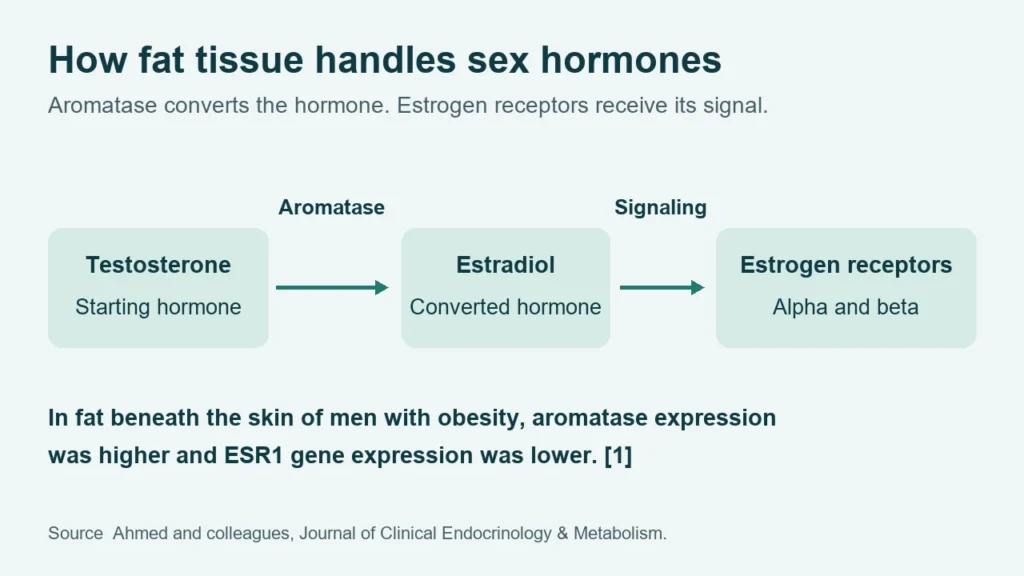
Aromatase converts testosterone into estradiol. The enzyme is active in male adipose tissue, and estradiol signals through receptors that include estrogen receptor alpha, encoded by ESR1, and estrogen receptor beta, encoded by ESR2. In the 2025 Journal of Clinical Endocrinology & Metabolism study, higher aromatase expression in subcutaneous fat was linked to measures of adiposity, elevated blood sugar, and insulin resistance. ESR1 gene expression and the ESR1-to-ESR2 gene expression ratio were lower in men with obesity. [1]
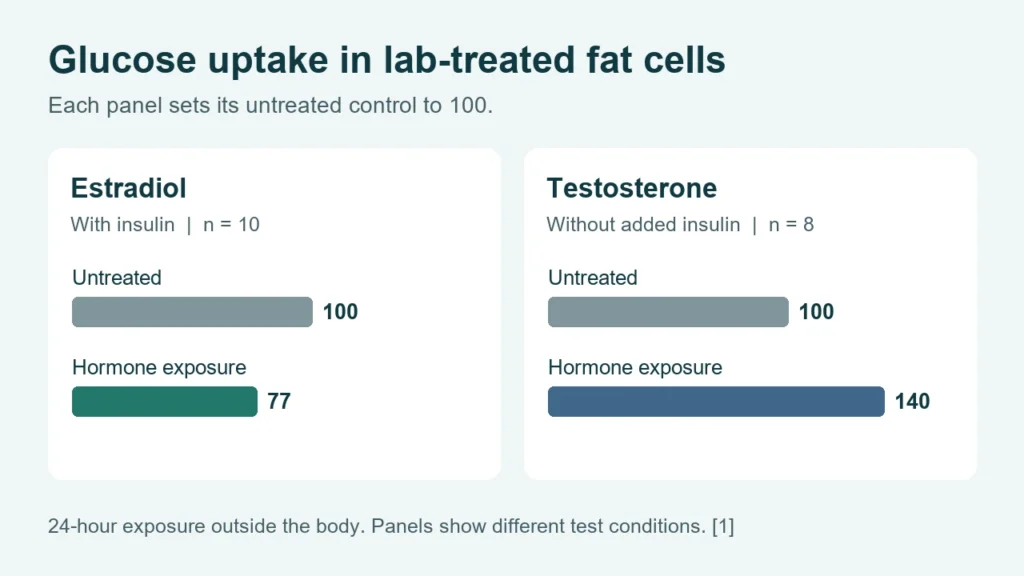
After 24 hours of laboratory exposure, estradiol reduced absolute glucose uptake under insulin stimulation by 23%. Testosterone increased basal uptake, measured without added insulin, to 1.4 times the untreated level. Neither hormone significantly changed the fold increase from baseline after adding insulin. The two findings come from different test conditions and cannot be used to compare therapies. Researchers did not treat participants with TRT or measure a clinical treatment response. [1]
Why can symptoms persist when testosterone is in range?
Blood testosterone helps your clinician confirm deficiency and monitor treatment. It tells you little about how a particular fat depot responds to hormones. Persistent fatigue, changes in libido, or stalled weight loss deserve a separate review of symptoms, medication timing, sleep, glucose, and other factors before changing a prescribed dose.
In the study, circulating estradiol did not correlate with aromatase expression in fat. The researchers measured enzyme and receptor expression, which tells us about the presence of those molecules. Enzyme activity and local estradiol concentrations would need separate measurements. These group-level findings cannot explain an individual patient’s symptoms or establish that increasing a TRT dose worsens insulin resistance. [1]
Healthy fat tissue helps store energy as triglycerides and responds to insulin. When its capacity to store fat safely is exceeded, lipids can accumulate in the liver, skeletal muscle, and pancreas. This is one proposed pathway connecting adipose dysfunction with fatty liver, insulin resistance, and impaired insulin secretion. The distinction matters because the Ahmed study measured cell glucose uptake and did not trace fuel movement between organs. [1, 2]
- Confirm the original diagnosis. Guidelines use compatible symptoms and consistently low testosterone, confirmed on separate fasting mornings before treatment. Free testosterone can clarify the picture when total testosterone is borderline or sex hormone-binding globulin is altered, as can occur with obesity or diabetes. [3]
- Review treatment response. Compare follow-up levels drawn at the appropriate time for your formulation with symptoms, side effects, and hematocrit. Discuss fertility goals and prostate monitoring when relevant. If symptoms persist, your clinician may evaluate other explanations such as sleep apnea, medication effects, depression, or anemia. [3]
Which treatments address weight and blood sugar?
Nutrition, regular activity, and resistance training form the basis of a practical metabolic plan. Medication may also be appropriate for eligible people with obesity or type 2 diabetes. A clinician can review the evidence and choose a treatment for each diagnosis, with a separate plan for testosterone deficiency if confirmed.
| Treatment or approach | What it addresses | What the evidence supports |
|---|---|---|
| Testosterone replacement therapy | Confirmed symptomatic hypogonadism | Can improve some deficiency symptoms, including sexual symptoms, in appropriately diagnosed men. Glucose control requires its own care plan. [3, 4] |
| GLP-1-based medicines | Product-specific indications, including weight management or type 2 diabetes | Trials at studied doses support weight loss or glycemic improvement, depending on the product and population. A semaglutide trial substudy also measured reductions in visceral fat. [5–7] |
| Sermorelin | Stimulates pituitary growth hormone release | Evidence is insufficient to recommend it with TRT and GLP-1 therapy for adult sleep, exercise recovery, or body recomposition. [8] |
Discuss A1c or fasting glucose, blood pressure, lipids, and weight or waist trends. In the TRAVERSE diabetes substudy, testosterone did not significantly reduce progression from prediabetes to diabetes or improve glycemic control compared with placebo. The Endocrine Society recommends against using TRT to improve glycemic control in men with type 2 diabetes. [3, 4]
Do low GLP-1 doses improve the response to TRT?
Starting doses help patients adjust to treatment, and maintenance doses depend on the product, indication, and tolerability. Wegovy injection and Zepbound each have a labeled escalation schedule. Research has yet to show that GLP-1 microdosing restores ESR1 signaling, lowers aromatase activity, or improves a patient’s response to TRT. The adipose study did not test GLP-1 medicines. [1, 5, 6]
Common questions about PEPLIX HEALTH
Peplix Health provides cash-pay telehealth through a model managed by Monarch Brands LLC. Independent, board-certified physicians review your symptoms, hormone results, and metabolic health before recommending or adjusting treatment. When an eligible prescription requires compounding, a state-licensed pharmacy can fill a patient-specific prescription under Section 503A and applicable state requirements.
What should I bring to a hormone and metabolic evaluation?
Bring your latest testosterone and A1c or glucose results, a medication list, and a brief record of symptoms and weight changes. If you already use TRT, include the product, schedule, and timing of your last dose relative to the blood draw. Share fertility plans before changing treatment. [3]
Can TRT and a GLP-1 medicine be prescribed together?
A physician can consider both when each has a clinical indication. The visit should establish the goal, monitoring plan, and dose for each medication. Current evidence does not establish a combined regimen that reverses the fat-tissue findings or reliably improves the response to testosterone. [1, 3, 5, 6]
What does Section 503A pharmacy fulfillment mean?
Section 503A generally requires a valid prescription for an identified patient and limits routine production of essentially identical copies of commercially available drugs. Compounded drugs do not undergo FDA premarket review for safety, effectiveness, or quality. Ask which pharmacy would dispense your medication and why the formulation fits your needs. [9, 10]
For consultation information, see our low testosterone guide or start an online assessment.
This article is for general education. Review medication decisions with your licensed clinician.
Sources
- Ahmed and colleagues. Aromatase and estrogen receptors in adipose tissue.
- Review. Adipose tissue dysfunction and metabolic complications.
- Endocrine Society. Testosterone therapy for hypogonadism.
- Bhasin and colleagues. TRAVERSE glycemic outcomes substudy.
- FDA. Wegovy prescribing information.
- FDA. Zepbound prescribing information.
- Wilding and colleagues. STEP 1 body composition exploratory analysis.
- FDA. Pharmacy Compounding Advisory Committee briefing document.
- FDA. Understanding the risks of compounded drugs.
- U.S. Code. Section 503A pharmacy compounding requirements.
This article is for general education and is not medical advice. Talk with a licensed clinician before starting, stopping or changing any treatment. Compounded medications are not FDA-approved. See our safety information.
Keep reading

Testosterone
What Is Enclomiphene and How Does It Compare With TRT?
Compare enclomiphene, TRT, and Clomid for low testosterone. Learn what trials found about sperm counts, side effects, and FDA approval.

Testosterone
Does Enclomiphene Build Muscle?
Does enclomiphene build muscle? Review the evidence on testosterone, lean mass, fertility, and what to discuss before treatment.

Testosterone
MCT Oil vs. Seed Oils in Injectable Testosterone
Compare MCT, sesame, and cottonseed oil in injectable testosterone. Learn what carriers do and what to ask about irritation or allergies.