Oxytocin and Sexual Health
Learn what oxytocin studies found about sex and bonding, how ED drugs work, and what remains uncertain about compounded oxytocin cream.

Oxytocin is involved in social behavior and can change around sexual activity. A study of 49 couples found that partners’ salivary oxytocin changed in sync after sex, but it did not test a treatment. Evidence does not establish that oxytocin cream improves libido, erections, orgasm, or bonding, alone or with erectile dysfunction medication.
When does oxytocin change around partnered sex?
In a 2025 at-home study, 49 young adult couples collected saliva before sex, immediately afterward, and at 20 and 40 minutes afterward. Partners’ oxytocin changes were related across the post-sex samples. The timing data suggest patterns worth studying, but they cannot show that oxytocin rose during sex or caused stronger orgasms or closer bonding.
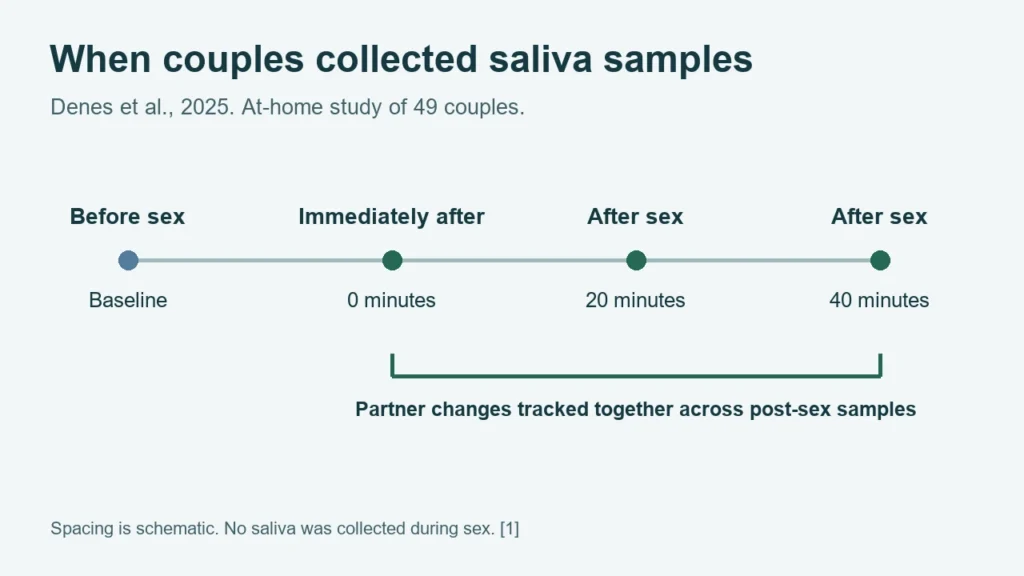
The observational study included 49 mixed-sex couples, or 98 people. The average pattern in men rose from the first to the last sample. Women’s group averages were highest at the first and last samples. Time was not a statistically significant predictor. The study also did not find the expected associations with orgasm. [1]
The researchers described the post-sex pattern as synchrony. That means partners’ changes tracked together statistically across the samples after sex. It does not mean their concentrations became identical at minute 40. The study did not demonstrate that synchronized levels caused partners to feel closer. Small earlier lab studies measured changes in circulating oxytocin around orgasm or ejaculation, with differing results depending on sampling and setting. [1, 2]
How is oxytocin linked to arousal and emotional closeness?
Oxytocin is made in the hypothalamus, enters the bloodstream through the posterior pituitary, and also acts as a signaling molecule in the brain. Small human experiments suggest it can influence responses to partner images or threatening cues. Those experiments do not establish that changing oxytocin levels reliably improves arousal, pleasure, or relationship satisfaction.
In one intranasal study, men who viewed images of their female partner showed changes in reward-related brain activity, including the nucleus accumbens. A separate intranasal experiment in 15 healthy men found reduced amygdala responses during a fear-related task. Neither experiment measured those brain responses during partnered sex. [3, 4]
An intranasal experiment in 29 couples found differences in certain orgasm-related experiences and partner interactions, with no observed improvement in sexual drive, arousal, erections, or lubrication. Earlier neurobiology research discusses links between circulating oxytocin and orgasmic contractions. The findings cannot establish that oxytocin treatment increases orgasm intensity or pleasure in women or men. [2, 5, 6]
Can oxytocin cream improve sex or be paired with ED medication?
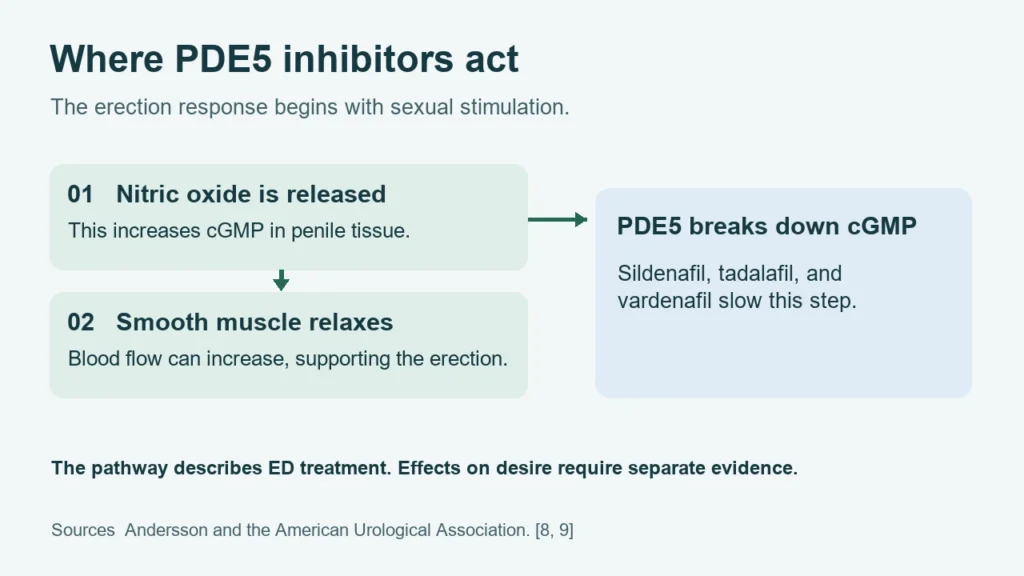
No controlled human evidence establishes that compounded oxytocin cream improves sexual function or intimacy. Sildenafil, tadalafil, and vardenafil are approved options for erectile dysfunction. They support the erection response through a known blood-flow pathway. Whether combining any of them with oxytocin cream improves outcomes or is safe for a given person remains uncertain.
| Option or evidence | What it addresses | What to discuss |
|---|---|---|
| Topical oxytocin cream | A manufacturer evaluated a once-daily formulation in an open-label report focused on mood, stress, and sleep. [7] | User accounts of stronger erections, confidence, or connection are subjective. The report does not establish an effect on sexual function or a benefit when combined with an ED medicine. |
| Intranasal oxytocin in research | Small studies evaluated particular social, brain imaging, or sexual-experience outcomes. [3–5] | Intranasal findings do not establish how a cream is absorbed or what dose or route would help. |
| Sildenafil, tadalafil, or vardenafil | Prescription PDE5 inhibitors help treat ED. Clinical effects depend on sexual stimulation. [8, 9] | A physician selects one based on your history, other medicines, timing, and side effects. Nitrates are contraindicated with PDE5 inhibitors. |
During sexual stimulation, nitric oxide helps raise cyclic guanosine monophosphate (cGMP), which relaxes smooth muscle and increases penile blood flow. A PDE5 inhibitor slows cGMP breakdown. [8, 9]
ED can occur with diabetes, hypertension, or vascular disease, and it can warrant cardiovascular evaluation. Performance anxiety, medication effects, and relationship concerns can also affect sexual function. An assessment can help identify which contributors matter in your case. [9]
Common questions about PEPLIX HEALTH
Peplix Health is a cash-pay telehealth service managed by Monarch Brands LLC. Independent, board-certified physicians review your symptoms, medical history, and medications. When treatment is appropriate, the physician individualizes dosing and follow-up. A state-licensed pharmacy may fill an eligible patient-specific compounded prescription under Section 503A and applicable state requirements.
What should I tell my physician about erection problems or changes in desire?
- Describe the pattern. Share when symptoms began, how often they occur, and whether your concern is desire, erections, orgasm, pain, or anxiety. These concerns can have different causes. [9]
- Bring your medication list. Include nitrates, blood pressure medicines, and anything you use for sexual health. Mention diabetes, cardiovascular symptoms, and any recent medication changes. [9]
Can oxytocin replace sildenafil or tadalafil?
Evidence does not establish oxytocin cream as an ED treatment. A physician can evaluate erectile symptoms and discuss appropriate options, including whether an FDA-approved PDE5 inhibitor is safe for you. [7–9]
Does a 503A pharmacy prescription mean the product is FDA approved?
Compounded medicines do not undergo FDA premarket review for safety, effectiveness, or quality. Section 503A generally requires a valid prescription for an identified patient and compliance with applicable federal and state conditions. Discuss why compounding is appropriate for your case. [10, 11]
For consultation information, see our low testosterone guide or start an online assessment.
Sources
- Denes et al. Salivary oxytocin and naturally occurring partnered sex.
- Systematic review. Oxytocin, sexual arousal, and orgasm.
- Scheele et al. Oxytocin and brain reward response to images of a partner.
- Kirsch et al. Oxytocin and neural circuitry for social cognition and fear.
- Behnia et al. Intranasal oxytocin, sexual experience, and partner interaction.
- Meston and Frohlich. The neurobiology of sexual function.
- Maximus. Open-label oxytocin cream manufacturer white paper.
- Andersson. PDE5 inhibitor pharmacology and clinical applications.
- American Urological Association. Erectile dysfunction guideline.
- FDA. Federal provisions for human drug compounding.
- FDA. Compounding questions and answers.
This article is for general education and is not medical advice. Talk with a licensed clinician before starting, stopping or changing any treatment. Compounded medications are not FDA-approved. See our safety information.
Keep reading

Testosterone
What Is Enclomiphene and How Does It Compare With TRT?
Compare enclomiphene, TRT, and Clomid for low testosterone. Learn what trials found about sperm counts, side effects, and FDA approval.

Testosterone
Does Enclomiphene Build Muscle?
Does enclomiphene build muscle? Review the evidence on testosterone, lean mass, fertility, and what to discuss before treatment.

Testosterone
MCT Oil vs. Seed Oils in Injectable Testosterone
Compare MCT, sesame, and cottonseed oil in injectable testosterone. Learn what carriers do and what to ask about irritation or allergies.