What Do Men’s Blood Work Results Mean?
Learn how to read testosterone, SHBG, LH, PSA, liver enzymes, hematocrit, and creatinine results and what to ask your clinician.

Start with the lab’s reference interval and ask what the test was ordered to answer. Testosterone, SHBG, LH, and FSH help explain different parts of hormone function. Other markers can flag liver injury, kidney function, prostate concerns, or changes in red blood cells. Symptoms and trends help a clinician interpret the numbers.
What is a normal testosterone level for men?
AUA guidance uses total testosterone below 300 ng/dL as a threshold that supports a diagnosis when symptoms and repeat early-morning results agree. The association’s 450–600 ng/dL treatment target applies to some men receiving therapy. Healthy men can have results outside that target, depending on age, health, and how the lab measures testosterone.
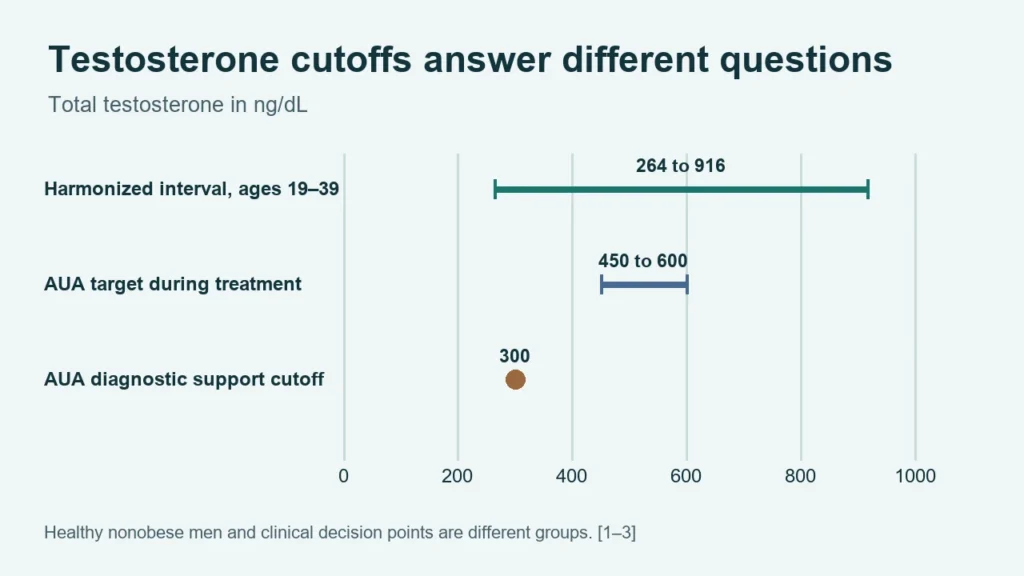
Total testosterone includes unbound testosterone and testosterone attached to SHBG or albumin. Free testosterone is the unbound fraction, roughly 1–3% of the total. Bioavailable testosterone also includes the fraction loosely bound to albumin. Testosterone contributes to sexual function, muscle and bone maintenance, and red blood cell production. Energy and mood symptoms can have many causes. [1–3]
When does free testosterone help?
Free testosterone can help when total testosterone is near a diagnostic threshold or SHBG is unusually high or low. A laboratory may measure it by equilibrium dialysis or estimate it with a validated formula using total testosterone, SHBG, and albumin, such as the Vermeulen equation. Results depend on the method. A value of 50 pg/mL and commercial percentile rankings should not be treated as universal thresholds. [2,3]
SHBG binds testosterone and estradiol. A rough SHBG example is 10–70 nmol/L, with some laboratory intervals extending beyond it. Aging, thyroid disease, liver disease, body composition, and medication use can change SHBG. An unexpectedly high or low result is a reason to review the full panel and history. [2,4]
How do LH, FSH, and estradiol help explain symptoms?
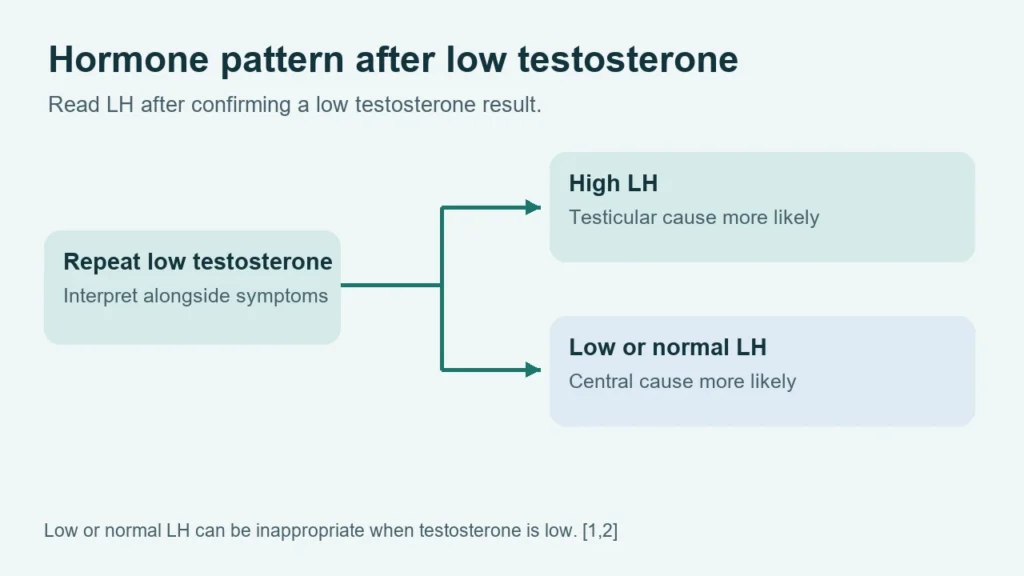
LH signals the testes to produce testosterone. FSH supports sperm production. When low testosterone is confirmed, high LH points toward a testicular cause. Low or inappropriately normal LH suggests a pituitary or hypothalamic cause. Estradiol helps support bone health and sexual function. Each result is best read as part of a pattern.
What do the patterns mean for fertility?
High FSH can suggest impaired sperm production after testicular injury, genetic conditions, or some cancer treatments. Low or inappropriately normal FSH can reflect reduced pituitary or hypothalamic signaling or suppression from hormones taken from outside the body. A semen analysis assesses sperm count directly. A medication challenge with enclomiphene is not standard for diagnosing hypogonadism. Discuss fertility goals before considering testosterone therapy, which can suppress sperm production. [2,5]
Estradiol comes partly from conversion of testosterone. Both extremes may matter. Very low levels can contribute to bone loss and affect libido or body composition. Breast enlargement can accompany relative estrogen excess. Low libido, erectile difficulty, and infertility need a broader assessment. [2,6]
What can a broader men’s health panel tell you?
A broader panel helps answer questions that testosterone alone cannot address. PSA provides information about the prostate. ALT and GGT can point to liver or bile duct problems. Hematocrit measures the share of blood made up of red cells, and creatinine helps estimate kidney function. Use the interval shown on your own report.
| Marker | Illustrative adult male value | What to ask your clinician |
|---|---|---|
| LH and FSH | LH about 1.24–7.8 IU/L. FSH about 1.5–12.4 mIU/mL. | How do these pituitary signals fit my testosterone and fertility goals? |
| Estradiol | About 10–40 pg/mL with some assays. | Would a more sensitive assay or a repeat result change the plan? |
| PSA | 4.0 ng/mL is a historical flag, with interpretation varying by age and risk. | Is a repeat test appropriate before further evaluation? |
| ALT and GGT | Example intervals 7–56 U/L for ALT and 6–50 U/L for GGT. | Could alcohol, medication, exercise, a metabolic condition, or bile duct disease explain the result? |
| 25-hydroxyvitamin D | At least 20 ng/mL is adequate for most people under NIH guidance. | Do my symptoms or risk factors warrant care for deficiency? |
| Hematocrit | Roughly 40–50%. Age and altitude matter. | If on testosterone, is a dose review or assessment for other causes needed? |
| Creatinine | Roughly 0.7–1.3 mg/dL. | What do my eGFR, urine testing, and previous results show? |
How do these markers change follow-up?
- PSA. Made in the prostate. Benign enlargement, inflammation, prostate cancer, age, and testosterone treatment can influence results. Review family history, symptoms, trends, and whether to repeat a newly elevated result. [2,7]
- ALT and GGT. ALT helps identify liver cell injury and is commonly included in a comprehensive metabolic panel. ALT is present in muscle and other tissues, and hard training can temporarily affect results. Fatty liver disease, alcohol-related injury, hepatitis, medications, iron overload, and other conditions can raise ALT. GGT, an enzyme also found in the kidney, pancreas, and heart, can rise with alcohol, some medications, metabolic disease, or bile duct problems. A low ALT result often has limited significance by itself. Report jaundice or new abdominal pain promptly. [8,9]
- Vitamin D. It supports bone and immune function and helps regulate calcium. Marked deficiency may cause bone pain, muscle weakness, low calcium, or fragile bones. Fatty fish, eggs, fortified foods, and some mushrooms can contribute to intake. Sun-related synthesis varies. High supplement doses can cause toxicity and high calcium, often with levels above 150 ng/mL. A level above 50 ng/mL is not a desirable universal target. [10]
- Hematocrit. Red blood cells transport oxygen. Smoking, sleep apnea, dehydration, blood disorders, altitude, and testosterone can raise hematocrit. Blood loss and deficiencies such as iron, B12, or folate can lower it. High values can increase blood viscosity. Clinicians monitor hematocrit before and during TRT and generally intervene if it exceeds 54%. [2,11]
- Creatinine. The kidneys filter this muscle-metabolism waste product. Muscle mass, hydration, and creatine supplements can affect the reading. Review eGFR, urine albumin, blood pressure, diabetes, and frequent NSAID use if relevant. Seek assessment for a sudden rise or associated swelling or urinary changes. [12]
How can you act on an abnormal blood test?
Compare the result with prior tests and bring your symptom timeline to the visit. Mention medications, supplements, recent illness, sleep, alcohol intake, and strenuous exercise. A clinician can decide whether a repeat test, additional markers, lifestyle changes, treatment for an underlying condition, or a specialist visit makes sense.
Regular resistance exercise, enough dietary protein and micronutrients, seven to nine hours of sleep for most adults, and moderation with alcohol support general health. Exercise can change testosterone temporarily, and lifestyle changes may help some underlying causes. A licensed physician can discuss approved testosterone therapy when appropriate and explain the limited evidence and approval status of alternatives such as enclomiphene. Routine monitoring usually focuses on symptoms, testosterone, hematocrit, and prostate risk, with other tests ordered when clinically indicated. [1,2,13]
Common questions about PEPLIX HEALTH
At Peplix Health, independent licensed clinicians make decisions about testing, treatment, and follow-up. Monarch Brands LLC manages the practice’s administrative services. If a physician determines that a compounded medicine is appropriate for an individual patient, a state-licensed pharmacy operating under Section 503A may fill the prescription when applicable requirements are met.
Can I bring my own blood work to a consultation?
Ask what records the practice can review. Bring the full dated report, the lab reference intervals, your medication and supplement list, and the reason each test was ordered.
How do I know who prescribes and fills a medication?
Ask the independent, board-certified physician performing your evaluation about expected benefits, individualized dosing, and follow-up. Ask who will fill the prescription and whether an FDA-approved option is suitable. Compounded drugs do not undergo FDA premarket review for safety, effectiveness, or quality.
This article is for education. Discuss medical decisions with a licensed clinician.
For consultation information, see our low testosterone guide or start an online assessment.
Sources
- AUA — testosterone deficiency guideline
- Endocrine Society — testosterone therapy guideline
- Travison et al. — harmonized testosterone reference ranges
- MedlinePlus — SHBG blood test
- Cleveland Clinic — FSH
- Mayo Clinic Laboratories — estradiol
- AUA and SUO — early detection of prostate cancer
- Cleveland Clinic — ALT testing
- MedlinePlus — GGT testing
- NIH — vitamin D reference values and safety
- Cleveland Clinic — hematocrit
- Mayo Clinic — creatinine test
- FDA — enclomiphene review for pharmacy compounding
- FDA — compounding and FDA approval
This article is for general education and is not medical advice. Talk with a licensed clinician before starting, stopping or changing any treatment. Compounded medications are not FDA-approved. See our safety information.
Keep reading

Testosterone
What Is Enclomiphene and How Does It Compare With TRT?
Compare enclomiphene, TRT, and Clomid for low testosterone. Learn what trials found about sperm counts, side effects, and FDA approval.

Testosterone
Does Enclomiphene Build Muscle?
Does enclomiphene build muscle? Review the evidence on testosterone, lean mass, fertility, and what to discuss before treatment.

Testosterone
MCT Oil vs. Seed Oils in Injectable Testosterone
Compare MCT, sesame, and cottonseed oil in injectable testosterone. Learn what carriers do and what to ask about irritation or allergies.