How can you tell if enclomiphene is working?
Learn when enclomiphene can raise testosterone, which labs help assess response, and what to review with your clinician if symptoms persist.

Enclomiphene can raise testosterone within two weeks in some men with secondary hypogonadism. A higher lab value shows a hormonal response, while symptom improvement needs its own assessment. Compare follow-up labs with baseline, note changes in daily life and ask your prescriber when to review results together before changing treatment.
How soon can enclomiphene change testosterone levels?
Clinical trials detected a testosterone rise by two weeks in some participants. A separate six-week study also reported increases in testosterone, LH and FSH. An eight- to twelve-week visit can be a practical time to reassess, but studies do not establish a reliable deadline for feeling better or a standard monitoring schedule.
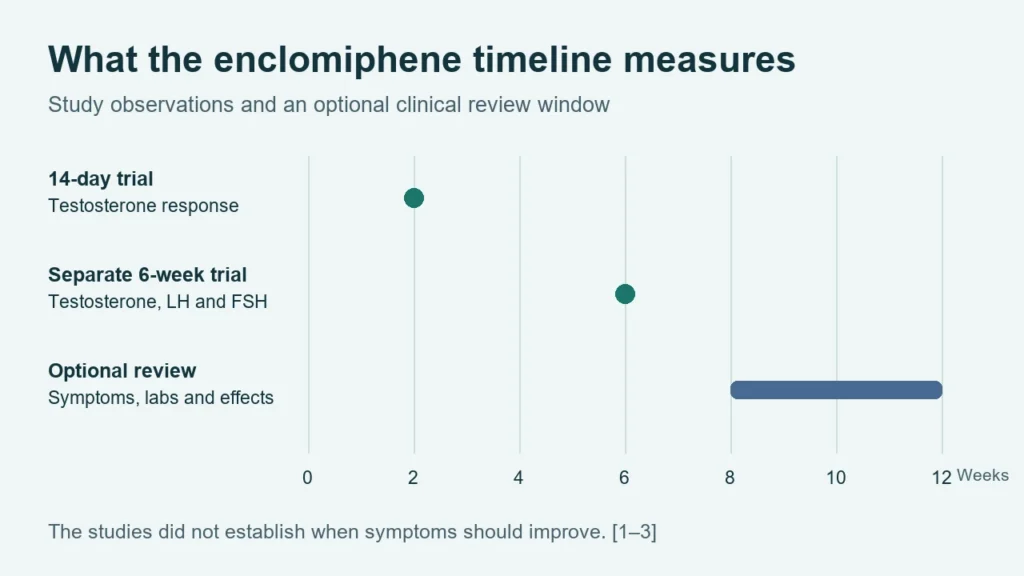
A 14-day trial reported a biochemical response in selected men with low testosterone. A distinct six-week study included daily doses of 6.25, 12.5 and 25 mg. Those were research regimens, and response differed across participants. FDA reviewers found that the studies had not demonstrated clinically meaningful improvement in signs or symptoms of hypogonadism. [1–3]
| Check-in | What to compare | What it can tell you |
|---|---|---|
| Baseline | Symptoms, testosterone and relevant additional labs | Establishes the comparison point and helps identify why testosterone is low. [4] |
| Early follow-up | Repeat labs at the time your prescriber specifies | Total testosterone, LH and FSH can rise in selected men. Lab response does not establish symptom benefit. [1–3] |
| Around 8–12 weeks if agreed | Symptoms, follow-up results, side effects and goals | A review can help decide whether to investigate other causes or revisit treatment. [3,4] |
Which labs help explain your response to enclomiphene?
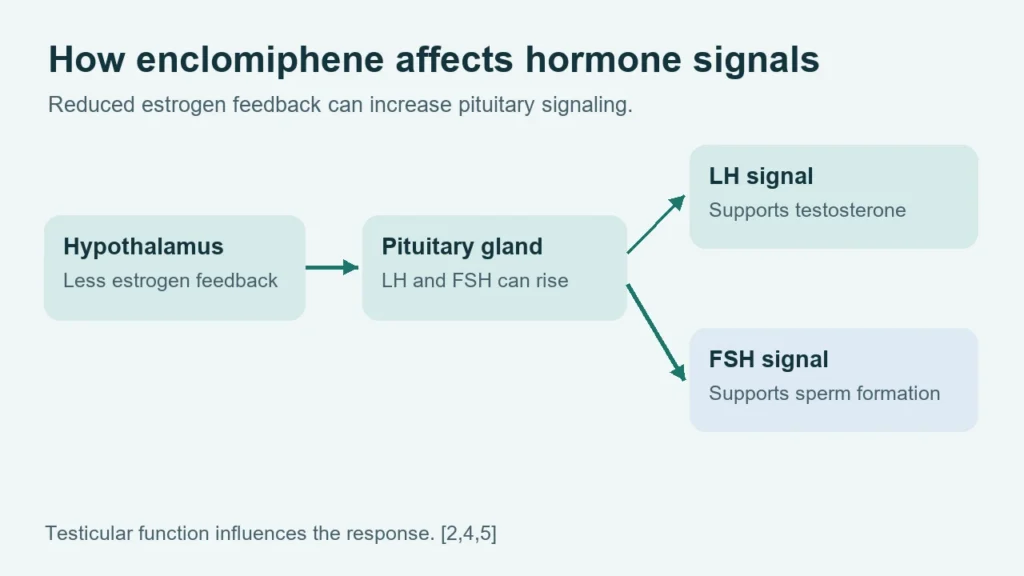
Compare testosterone and relevant pituitary markers using consistent sample timing and, where feasible, the same laboratory method. Enclomiphene can raise LH and FSH as it reduces estrogen feedback in the brain. The response depends in part on testicular function. Free testosterone, SHBG and estradiol can add context when clinically indicated.
- Total and free testosterone. Total includes bound and unbound hormone. Free testosterone is the unbound portion. A high SHBG level can leave free testosterone low even if total looks acceptable. When indicated, clinicians may measure free testosterone by equilibrium dialysis or calculate it from total testosterone, SHBG and albumin. [4]
- LH and FSH. LH signals Leydig cells to produce testosterone. FSH supports sperm formation through Sertoli cells. A rise can be consistent with enclomiphene’s effect on pituitary signaling, but there is no required increase for every patient. A high LH with persistently low testosterone can prompt evaluation of how the testes respond. Semen testing, when indicated, answers a different question. [2,4,5]
- Estradiol. Some testosterone is converted to estradiol, so estradiol may rise. A level alone does not identify the cause of mood changes, swelling or breast symptoms. Evidence does not establish that enclomiphene prevents gynecomastia. Report breast tenderness or enlargement to your prescriber. [3,5,6]
What if your testosterone rises and you still feel the same?
Symptoms and lab results can change at different rates. Record what has changed in energy, sexual desire, erections, sleep, mood and focus. If you still feel the same after eight to twelve weeks, or feel worse sooner, review the findings with your prescriber before attributing symptoms to testosterone or changing doses.
- Track the changes you can describe. Record when symptoms occur and how they affect your day. You can also note changes in weight, strength or body composition without assuming the medicine caused them. A late-day energy dip does not establish a hormone fluctuation. [3,4]
- Review possible causes. Sleep quality, stress, nutrition, other medication and medical conditions can influence symptoms. If testosterone stays low, a clinician can review adherence and testing, consider pituitary or testicular causes, and decide whether changing or stopping treatment makes sense. [2–4]
What if erections are still weaker than you expect?
Erectile function and libido are different concerns. Blood vessel health, blood pressure, medications and psychological factors can affect erections. Regular activity and nutrition can support vascular health. Evidence for L-citrulline and L-arginine is limited. If medication is appropriate, a clinician may discuss an approved PDE5 inhibitor such as tadalafil. Nitrates are contraindicated with PDE5 inhibitors, and tadalafil’s U.S. label advises against combining it with other PDE5 inhibitors, including vardenafil. [7,8]
When might a clinician discuss testosterone replacement instead?
TRT supplies testosterone directly. It can be considered for appropriately diagnosed hypogonadism after reviewing the cause, treatment goals and risks. It can suppress sperm production, so discuss family plans before switching. The need for ongoing therapy depends on the diagnosis and response. A low result despite enclomiphene calls for reassessment before adding or switching to testosterone. [4,5]
Common questions about PEPLIX HEALTH
Peplix Health offers cash-pay evaluation for hormone concerns. Monarch Brands LLC manages nonclinical operations, and independent, board-certified physicians assess symptoms, labs and treatment risks. If treatment is appropriate, the physician individualizes the dose and follow-up plan. Bring previous labs, your medication list and any changes you have noticed since starting.
Should I increase my dose if my labs barely changed?
Ask the prescriber to interpret your results and review timing and adherence. Study doses do not establish the right dose for an individual. Discuss side effects, including new breast symptoms or mood changes, before the next planned visit if they concern you. [2–4]
Is enclomiphene FDA approved, and how is compounding handled?
Enclomiphene itself does not have FDA approval. If a compounded medicine is clinically appropriate and legally available, a licensed pharmacy operating under Section 503A may fill a valid patient-specific prescription subject to applicable federal and state requirements. FDA does not review compounded drugs for safety, effectiveness or quality before marketing. [3,9,10]
For consultation information, see our low testosterone guide or start an online assessment.
This article is for general education and does not replace individualized medical advice.
Sources
- Wiehle et al. Serum testosterone response within 14 days
- Wiehle et al. Six-week pharmacodynamic study
- FDA. Enclomiphene citrate clinical evidence briefing
- Endocrine Society. Testosterone therapy clinical guideline
- Kim et al. Enclomiphene, pituitary hormones and sperm counts
- Rodriguez et al. Enclomiphene and secondary hypogonadism review
- European Association of Urology. Erectile dysfunction guideline
- Cialis. U.S. prescribing information
- Operation Supplement Safety. Enclomiphene regulatory status
- FDA. Compounding questions and answers
This article is for general education and is not medical advice. Talk with a licensed clinician before starting, stopping or changing any treatment. Compounded medications are not FDA-approved. See our safety information.
Keep reading

Testosterone
What Is Enclomiphene and How Does It Compare With TRT?
Compare enclomiphene, TRT, and Clomid for low testosterone. Learn what trials found about sperm counts, side effects, and FDA approval.

Testosterone
Does Enclomiphene Build Muscle?
Does enclomiphene build muscle? Review the evidence on testosterone, lean mass, fertility, and what to discuss before treatment.

Testosterone
MCT Oil vs. Seed Oils in Injectable Testosterone
Compare MCT, sesame, and cottonseed oil in injectable testosterone. Learn what carriers do and what to ask about irritation or allergies.