Do Longevity Hacks Actually Help You Live Longer?
Learn what research says about longevity hacks and which habits can support healthspan, from exercise and sleep to home cooking and social connection.

Most popular longevity hacks have limited evidence that they extend human life. If your goal is more years with the energy and ability to do what matters to you, prioritize regular physical activity, adequate sleep, nutritious meals, social connection, and reducing tobacco and alcohol risks. Add optional habits only when they serve a clear purpose.
What’s the difference between lifespan and healthspan?
Lifespan is the total number of years you live. Healthspan describes how long you live in good health, with definitions varying across studies. Day to day, that can mean walking comfortably, managing your health conditions, staying connected, or living independently. Those outcomes give you concrete ways to assess a wellness routine.
Start with an ability you want to preserve. If that means keeping up on a family trip, you can track how far you walk comfortably or how well you recover from longer days. Well-managed chronic conditions can be compatible with healthy aging. Looking at function alongside medical measures gives you a fuller picture. [1]
Do cold plunges, saunas, or supplements extend lifespan?
A practice can help with a specific goal while evidence about lifespan remains uncertain. Research on cold plunges often tracks short-term outcomes, and sauna studies that find lower mortality are largely observational. Before paying for a routine, ask what researchers measured, who they studied, and whether the benefits justify the cost or risk.
| Popular longevity hack | What the evidence says | What to consider |
|---|---|---|
| Cold plunges or saunas | Cold-water studies tend to look at short-term effects. Some sauna cohorts report lower mortality among frequent users. [2,3] | An association in sauna users cannot establish longer life from starting a sauna routine. |
| Mouth taping | Evidence for routine use is limited. Nasal obstruction can make taping risky. [4] | Discuss persistent snoring, waking up gasping, or daytime sleepiness with a clinician. |
| Extreme calorie restriction | A two-year trial found a change in one measure of biological aging, while other measures showed no significant change. [5] | A change in a biomarker does not tell you how many years someone will live. |
| Alkaline water or greens powders | Claims about living longer need direct human evidence for the product and outcome. Plain water meets most hydration needs. [6] | Review any supplement’s ingredients and purpose before buying it. |
| Colloidal silver | FDA has warned that colloidal silver is unsafe and ineffective for treating disease. It can cause permanent skin discoloration and interfere with some medicines. [7] | Avoid taking it for longevity. |
Which habits have better evidence for healthy aging?
Build the routine you can keep. Adults can work toward 150 minutes of moderate activity per week and two days of strength training. Prioritize seven to nine hours of sleep, cook more often if it helps you eat well, and make time for people you care about. Avoid tobacco and limit alcohol.
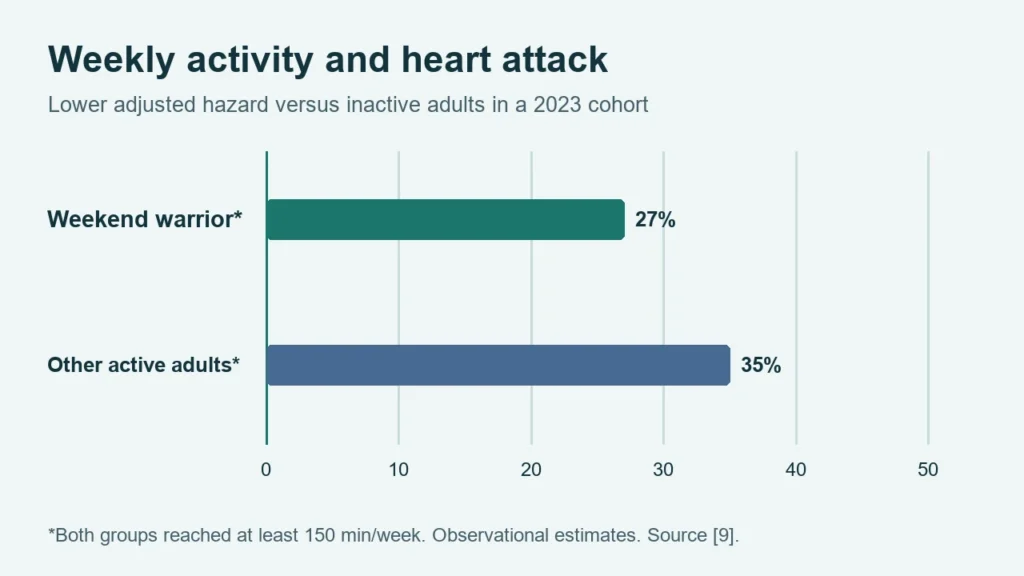
- Fit movement into the week you have. A 2023 JAMA study of 89,573 adults found lower rates of heart attack and stroke among people who reached at least 150 minutes of moderate-to-vigorous activity per week, including those who logged at least half of it in one or two days. The study was observational. Start at an intensity that fits your fitness and health. [8,9]
- Protect time for sleep. Seven to nine hours is a practical range for most adults. Habitually short sleep, especially around five hours or less, has been associated with cardiovascular disease, obesity, type 2 diabetes, and earlier death. A consistent wake time can help you see how much time you need to set aside. [10,11]
- Reduce tobacco and alcohol risks. CDC estimates that smoking raises the risk of coronary heart disease and stroke by two to four times. Even light smoking carries cardiovascular risk. If you do not use tobacco, avoid starting to vape. Alcohol increases the risk of several cancers, and avoiding binge drinking reduces alcohol-related harm. [12–14]
- Cook a meal you can repeat. In two prospective cohorts, eating home-prepared meals more often was associated with lower rates of weight gain, obesity, and type 2 diabetes. A repeatable dinner can make it easier to choose ingredients and portions that suit you. [15]
- Schedule time with people. A 2023 review of 90 cohort studies found that social isolation and loneliness were each associated with earlier death. Try a standing walk, meal, or call if seeing people otherwise gets crowded out. [16]
How can you turn those habits into a plan?
Choose one change that fits your schedule and addresses a gap you notice. Put it next to a routine you already follow, try it for a week, and review how it felt. Track a practical outcome such as energy, walking comfort, sleep regularity, or the number of meals you prepared.
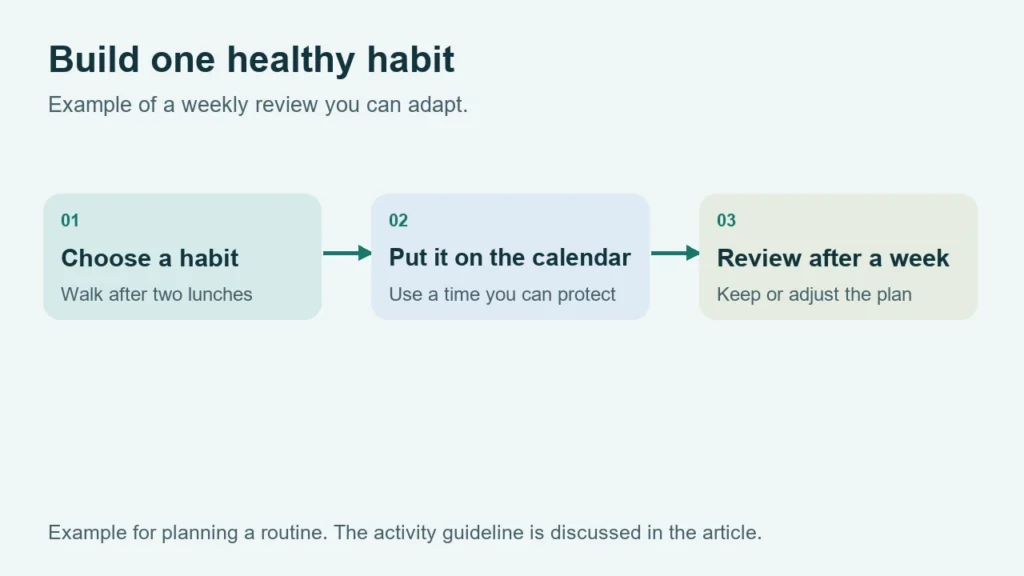
If your schedule changes, make the action smaller or move it to a time you can protect. Repeat that review before adding another habit.
Common questions about PEPLIX HEALTH
Independent, board-certified physicians can review your goals, medical history, and relevant health measures before recommending next steps. Monarch Brands LLC provides management services for Peplix Health. For a cash-pay consultation, bring your medications, supplements, and recent results so you can discuss what changes are most relevant to your health.
Can a physician tell me which longevity practice fits my health?
A clinician can consider your symptoms, medications, fitness, and health history and discuss the risks of a specific practice. Persistent fatigue, poor sleep, or difficulty exercising may warrant evaluation.
How does pharmacy fulfillment work when a clinician recommends compounding?
Prescribing and dose decisions are individualized. If a patient-specific formulation is clinically appropriate and applicable requirements are met, a state-licensed pharmacy operating under Section 503A can prepare it on an individual prescription. Compounded drugs lack FDA approval. [17]
For consultation information, see our longevity guide or start an online assessment.
Sources
- WHO – healthy ageing and functional ability
- Cain et al. – cold-water immersion review
- Laukkanen et al. – sauna use and mortality cohort
- Systematic review – mouth taping and sleep apnea indicators
- CALERIE trial – calorie restriction and biological aging measures
- Mayo Clinic – alkaline water
- NCCIH – colloidal silver safety
- CDC – adult physical activity
- Khurshid et al. – weekend warrior activity and cardiovascular outcomes
- NIH – healthy sleep duration
- Harvard Medical School – sleep and disease risk
- CDC – cigarette smoking and cardiovascular disease
- CDC – e-cigarettes
- CDC – alcohol and cancer
- Zong et al. – home-prepared meals and diabetes risk
- Wang et al. – social isolation, loneliness, and mortality
- FDA – Section 503A compounding requirements
This article is for general education and is not medical advice. Talk with a licensed clinician before starting, stopping or changing any treatment. Compounded medications are not FDA-approved. See our safety information.
Keep reading

Peptides & Longevity
BPC-157 and Growth Hormone in Tendon Recovery
Learn what BPC-157 studies found in rat tendon cells, what IGF-1 can tell you, and why tesamorelin has no proven role in tendon recovery.

Peptides & Longevity
Growth Hormone Secretagogues and the Evidence Behind Them
Compare tesamorelin, sermorelin, CJC-1295, ipamorelin and MK-677. Learn what studies found about GH, IGF-1, safety and FDA status.

Peptides & Longevity
What the FDA Peptide Compounding Review Means for Patients
See what the July 2026 FDA advisory votes and HHS draft mean for BPC-157, TB-500, Semax, and other peptides considered for 503A compounding.