10 Foods That Support Healthy Testosterone
Review 10 foods that support hormone health, what studies say about zinc and testosterone, and when persistent symptoms warrant blood testing.
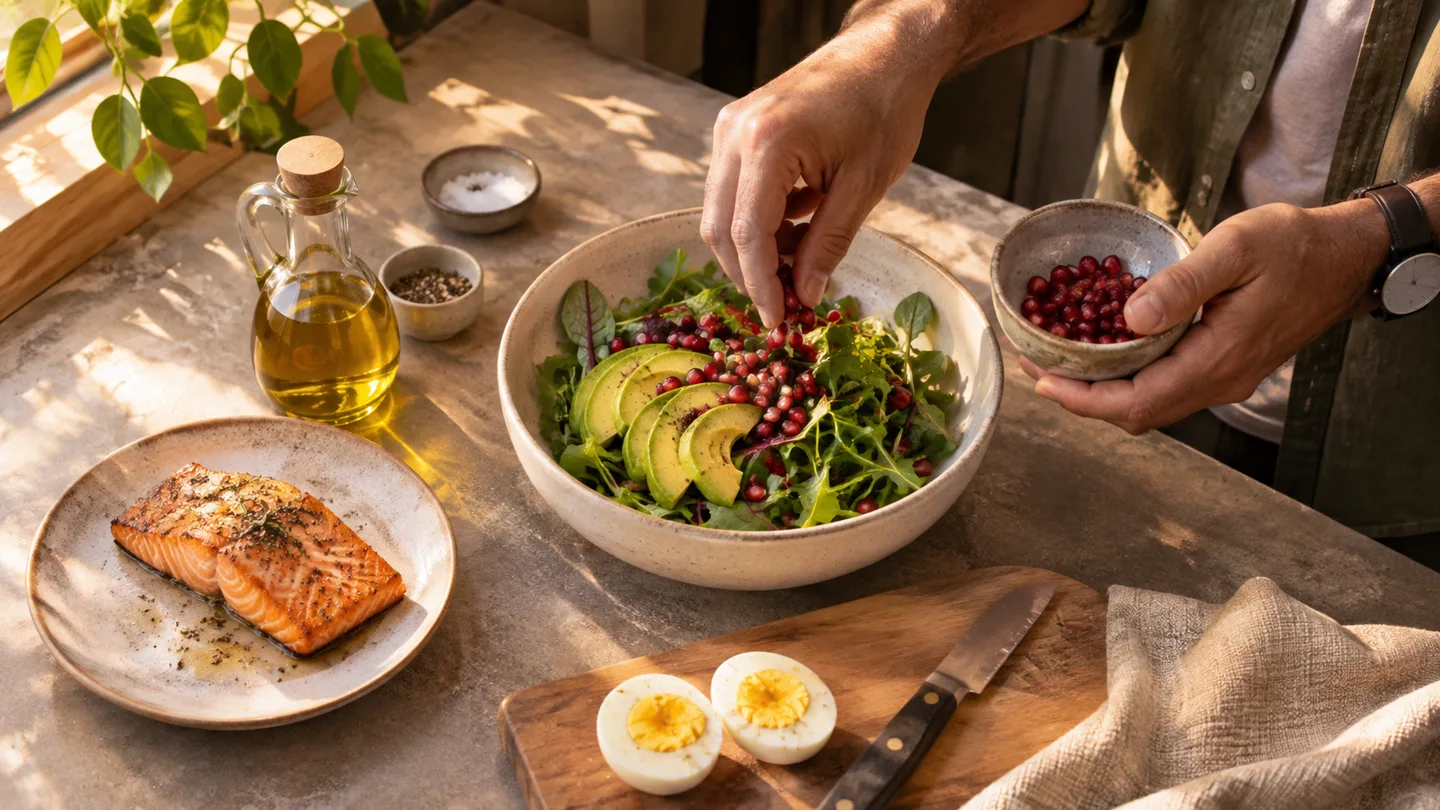
Foods such as oysters, eggs, leafy greens, and fatty fish provide nutrients involved in normal hormone production and muscle health. Correcting a deficiency can matter, but no single food reliably raises testosterone in men who already get enough nutrients. If low libido or erection problems persist, ask about properly timed blood tests.
Which foods belong in an eating pattern that supports testosterone?
Build meals around enough protein, unsaturated fat, and a mix of vegetables, fruit, and fiber-rich carbohydrates. The ten foods below offer different benefits, from zinc and vitamin D to protein and magnesium. Use the options you can eat consistently and consider food preferences, allergies, budget, and convenience when planning meals.
| Food | What it provides | Easy way to use it |
|---|---|---|
| 1. Whey protein | Convenient dairy protein that helps meet protein needs for muscle repair. | Add it to a smoothie if you need extra protein. |
| 2. Fatty fish | Salmon and some tuna provide omega-3 fats, protein, and varying amounts of vitamin D and zinc. | Use baked salmon in a grain bowl or keep canned fish on hand. |
| 3. Oysters | Rich in zinc and a source of selenium. Zinc supports normal reproductive function. | Choose cooked oysters if you eat shellfish. |
| 4. Leafy greens | Spinach and kale contribute magnesium. Low magnesium status has been linked to oxidative stress. | Add spinach to eggs or sauté greens with onion. |
| 5. Avocado | Unsaturated fats, some magnesium, and boron. | Slice it onto toast, a grain bowl, or salad. |
| 6. Whole eggs | Protein, plus vitamin D and selenium, primarily from the yolk for vitamin D. | Boil eggs for a portable meal or add one to a salad. |
| 7. Onions | Flavor and plant compounds. Hormone claims rely largely on animal research. | Roast them or start a soup or skillet meal with them. |
| 8. Ginger | A flavorful ingredient also studied for nausea. Hormone effects are mainly preclinical. | Grate it into a marinade or blend a small amount into a smoothie. |
| 9. Extra-virgin olive oil | Monounsaturated fat and polyphenols. Replacing some saturated fat with unsaturated fat can support LDL cholesterol. | Use it in a dressing or on roasted vegetables. |
| 10. Pomegranate | Fruit with polyphenols and fiber when you eat the arils. | Add arils to oats or a salad. Treat juice as a beverage, not a therapy. |
Sources for food composition and evidence [2–11,16–18].
Do any of these foods reliably raise testosterone?
Human studies are strongest when they address a real nutrient shortfall, such as zinc deficiency. Several other claims come from small trials, studies of symptoms or other hormones, and animal experiments. A change in salivary testosterone or an exercise-related cortisol response does not establish a sustained change in blood testosterone.
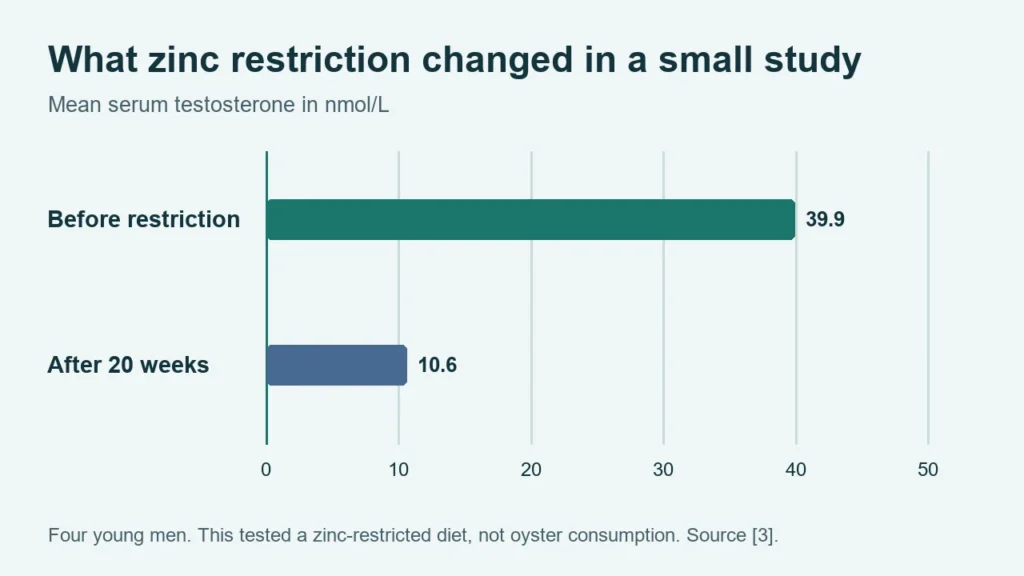
- Zinc and oysters. Zinc is involved in sperm production. In an older experiment, four young men placed on a zinc-restricted diet had a fall in mean serum testosterone from 39.9 to 10.6 nmol/L after 20 weeks. This supports the importance of avoiding deficiency and does not measure an effect of eating oysters. [2,3]
- Whey, fish, and eggs. A two-week study in ten men found a smaller exercise-related cortisol response under some conditions with whey, without establishing a durable rise in testosterone. Vitamin D status has been associated with reproductive measures, but supplementation trials do not show a consistent testosterone increase. Fish or krill oil provides some omega-3s and does not replace all the nutrients in fish. One small resistance-training study compared whole eggs with egg whites. Evidence that eggs or selenium reliably raise testosterone remains limited. [4–6]
- Leafy greens, avocado, onions, and ginger. Magnesium supports normal cellular function. A small body of boron research has looked at free testosterone, but free testosterone is the unbound portion of total testosterone, not a separate hormone that boron has been shown to create. Animal studies of onion or ginger have explored oxidative stress, LH signaling, or testicular blood flow. Human benefits remain uncertain. [7–9]
- Olive oil and pomegranate. A small study in healthy Moroccan men reported higher serum testosterone after switching to olive oil or argan oil. It lacked a usual-diet control group. A 2012 conference abstract in 60 healthy men and women reported an average 24% rise in salivary testosterone after two weeks of pomegranate juice. It does not establish a lasting serum effect or treatment benefit. Research also explores pomegranate polyphenols, blood pressure, inflammation, and cholesterol, with mixed findings across outcomes. [10,11]
How can you make these foods part of a busy week?
Pick a few ingredients you can combine in different meals. Batch-cook a protein and vegetables, keep one fast recipe in rotation, and use a smoothie when you need a portable option. Add regular activity, enough sleep, and less heavy drinking to support overall health while you evaluate any ongoing symptoms.
- Make a quick breakfast. Blend whey if desired with fruit, spinach, and a little ginger, or prepare eggs and greens the night before.
- Rotate two simple dinners. Try salmon with roasted onion and greens, then a bean bowl topped with avocado and an olive oil dressing. Look for recipes by ingredients you already have.
- Plan a small prep session. Wash greens, portion cooked grains, and divide proteins into meals. Whole fruit, dairy if tolerated, or a bowl of leftovers can fit a balanced routine. Strength training, about seven to nine hours of sleep, and stress management are useful habits for overall health. [1,12]
When should you get tested for low testosterone?
Ask a clinician if low libido, erection difficulties, or a loss of strength persists. Testosterone helps regulate sexual development, reproduction, muscle, and bone. Levels can decline with age, but younger men can have deficiency too. An evaluation generally requires compatible symptoms and two morning blood tests to confirm an unexpectedly low result.
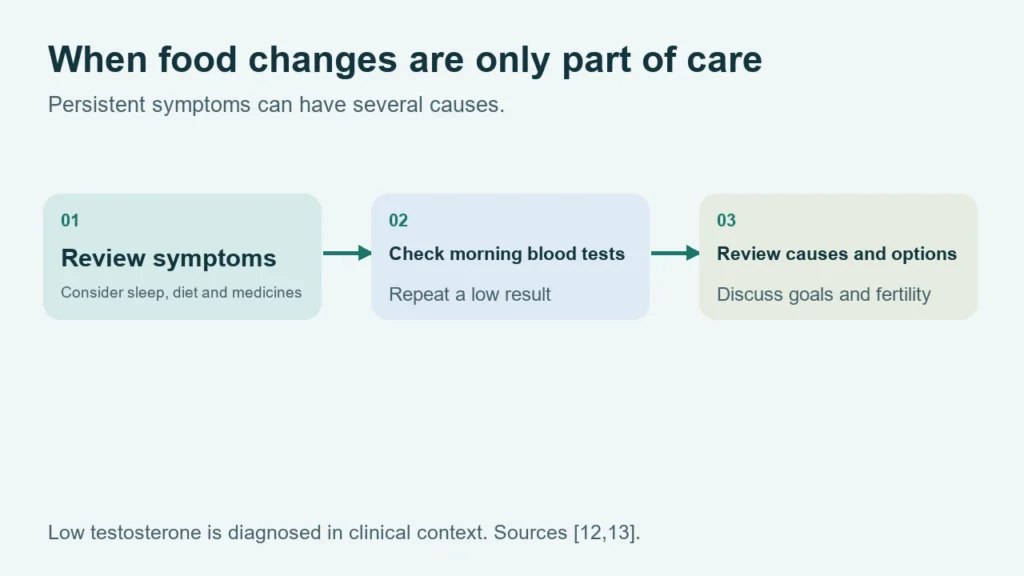
The American Urological Association uses total testosterone below 300 ng/dL as a reasonable cutoff to support diagnosis in context. Fatigue, increased body fat, low mood, poor concentration, and sleep problems can have other causes. A clinician may discuss approved testosterone therapy, including oral formulations for appropriate patients, or other approaches based on the cause and fertility goals. Enclomiphene has no standalone FDA approval. [1,12–14]
Common questions about PEPLIX HEALTH
Independent, board-certified physicians evaluate symptoms and lab results and discuss treatment choices. Monarch Brands LLC manages Peplix Health’s administrative services. A clinician can advise whether nutrition changes, additional testing, or medication may fit your situation. Ask what cash-pay visits, laboratory work, and follow-up would include before deciding on care.
Can I start with nutrition and still have my symptoms assessed?
Yes. Share your usual diet, sleep, medications, and any supplements. The clinician can decide if testing is appropriate while you make manageable lifestyle changes.
Who fills a prescription when compounding is appropriate?
When a physician identifies a patient-specific need and legal requirements are met, a state-licensed pharmacy operating under Section 503A may fill the prescription. Compounded drugs do not have FDA approval. Ask which pharmacy would fill it and how the formulation and dose were chosen. [15]
This article is educational. Discuss persistent symptoms and treatment decisions with a licensed healthcare professional.
For consultation information, see our low testosterone guide or start an online assessment.
Sources
- StatPearls — testosterone physiology
- NIH — zinc food sources and reproductive health
- Prasad et al. — zinc status and testosterone
- Kraemer et al. — whey and exercise-related hormone responses
- Review — vitamin D and male reproduction
- Review — whole eggs and training
- NIH — magnesium food sources
- Review — onion and testosterone
- Review — ginger and testosterone
- Derouiche et al. — olive and argan oil study
- Al-Dujaili and Smail — pomegranate conference abstract
- Endocrine Society — testosterone therapy and diagnosis
- American Urological Association — testosterone deficiency guideline
- FDA — enclomiphene citrate review
- FDA — compounding and FDA approval
- NIH — boron food sources and hormone evidence
- NIH — omega-3 fatty acids and food sources
- Harvard Health — extra-virgin olive oil and dietary fats
This article is for general education and is not medical advice. Talk with a licensed clinician before starting, stopping or changing any treatment. Compounded medications are not FDA-approved. See our safety information.
Keep reading

Testosterone
What Is Enclomiphene and How Does It Compare With TRT?
Compare enclomiphene, TRT, and Clomid for low testosterone. Learn what trials found about sperm counts, side effects, and FDA approval.

Testosterone
Does Enclomiphene Build Muscle?
Does enclomiphene build muscle? Review the evidence on testosterone, lean mass, fertility, and what to discuss before treatment.

Testosterone
MCT Oil vs. Seed Oils in Injectable Testosterone
Compare MCT, sesame, and cottonseed oil in injectable testosterone. Learn what carriers do and what to ask about irritation or allergies.