How to Support Testosterone Naturally: 10 Daily Habits
Learn what sleep, exercise, diet, fasting, and alcohol may mean for testosterone, and when persistent symptoms warrant blood testing.
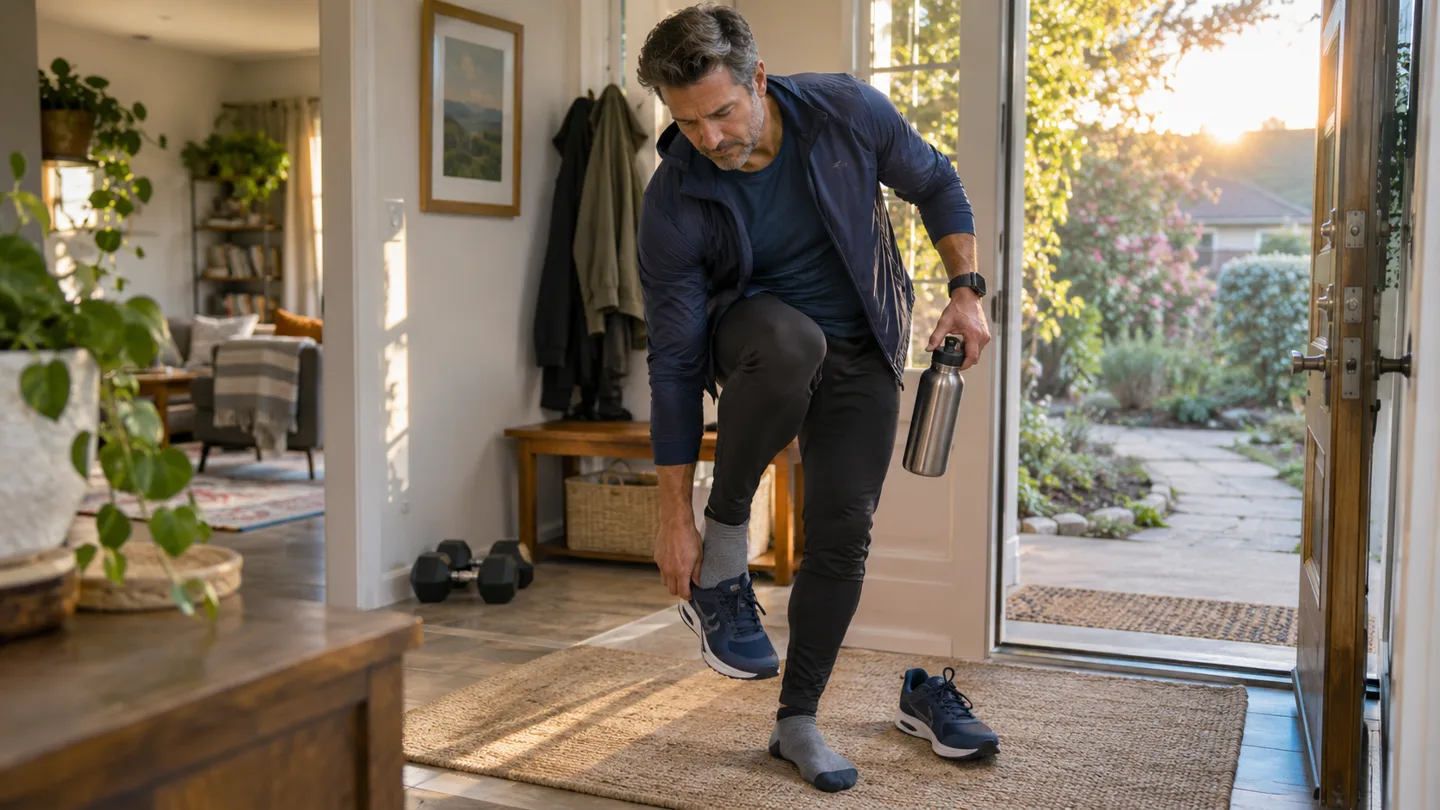
Consistent sleep, regular exercise, adequate nutrition, and less heavy drinking can support the conditions your body needs to make testosterone. These habits can improve health even when a resting testosterone level changes little. If low libido, fewer morning erections, or other symptoms persist, ask a clinician about two properly timed morning tests.
Which food and training habits have the best evidence?
Use a balanced eating pattern, train regularly, and eat enough to support recovery. Exercise can briefly raise testosterone, while a lasting rise in resting levels is less certain. Severe restriction can affect hormones in lean men, whereas medically appropriate weight loss can help some men with obesity and low testosterone.
- 1. Build meals you can repeat. Include lean protein, unsaturated fat, complex carbohydrates, and vegetables or fruit. Leafy greens, chicken, lean beef, fatty fish, beans, and whole grains are examples. Avoid an aggressive calorie deficit if you are already lean or struggling to recover from training. [1,2]
- 2. Train for strength and fitness. Resistance training improves muscle and function. Aerobic work and intervals can also improve fitness. Studies report temporary post-exercise hormone changes, while a synthesis of 12 training studies found little overall effect on resting testosterone in insufficiently active men. Keep the routine you can sustain. [3]
- 3. Match protein to your needs. Protein supports muscle repair. Limited analyses linked very high intakes above 3.4 g/kg/day, studied in low-carbohydrate diets, with lower total testosterone. The source review cites typical intake around 1.3 g/kg/day and higher sports-diet ranges, which describe examples rather than a prescription. Your needs vary with age, health, and training. [4]
- 4. Choose an eating window you can fuel. A review of four trials in lean, active young men found lower total or free testosterone after eight-hour time-restricted eating windows over 4–44 weeks. Lean mass and strength did not worsen, and fat mass declined. These trials do not represent all fasting approaches or people trying to lose weight. [5]
| Habit | What the evidence supports | Practical starting point |
|---|---|---|
| Strength and aerobic activity | Improved fitness and muscle function. Resting testosterone response varies. | Put sessions on your calendar and allow time for recovery. |
| Adequate food and protein | Supports recovery and muscle maintenance. | Choose portions and meal timing you can sustain without underfueling. |
| Consistent sleep | Supports energy, mood, and hormone regulation. | Set a regular bedtime and wake time and address possible sleep apnea. |
What else can support sleep, recovery, and hormone health?
Protect sleep, drink less if you drink heavily, and make room for stress management. Reduce harmful workplace noise to protect hearing. Outdoor activity can help build a routine, while vitamin D supplementation has not reliably raised testosterone. None of these habits provides a predictable hormone change for an individual.
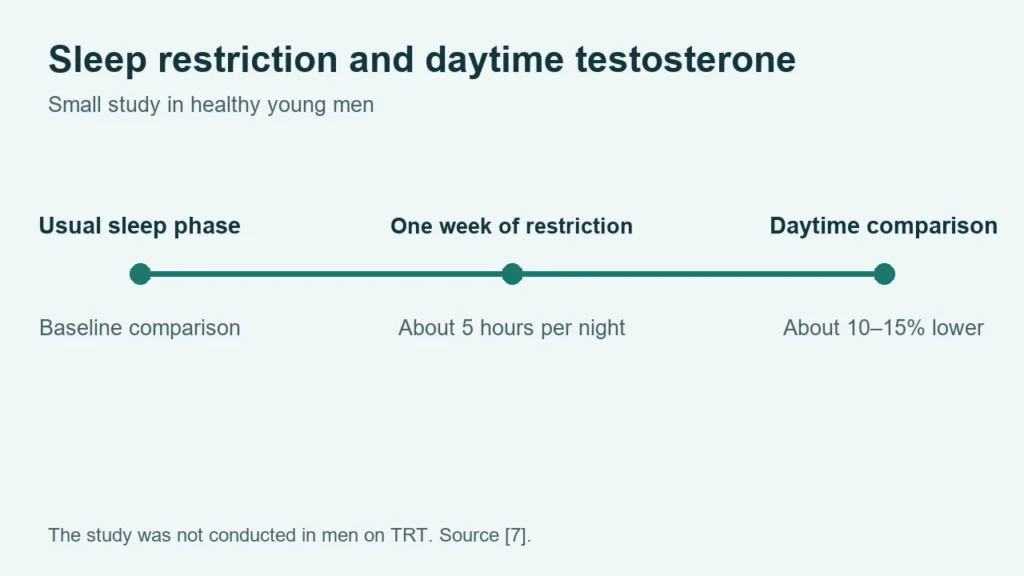
- 5. Give sleep a regular slot. Aim for about seven to nine hours if appropriate for you. Use a cool, dark, quiet room and reduce late screen use if it delays bedtime. Testosterone secretion relates to sleep, but effects vary. A small study found 10–15% lower daytime testosterone after a week of five-hour nights. [6,7]
- 6. Limit heavy drinking. Heavy alcohol use can disrupt testicular and reproductive hormone function. Cortisol changes and other stress responses may contribute. Drinking less can also support sleep and recovery. [8]
- 7. Manage ongoing stress. Stress hormones can affect communication between the brain and testes. Some studies find temporary reductions during sustained stress and changes as participants adapt. These findings do not establish a predictable rebound. A walking break, regular exercise, or professional support can help manage stress. [9]
- 8. Protect your hearing in loud settings. A survey found lower free and total testosterone in an older subgroup of men above about age 37 with certain occupational noise exposure. It did not establish a hormonal benefit from noise reduction or show the same effect in every age group. Follow workplace hearing protection guidance. [10]
- 9. Go outside and meet vitamin D needs safely. Sunlight helps skin make vitamin D, but effects vary with skin tone, season, latitude, and time outdoors. There is no universal ten-minute exposure rule. Vitamin D status and sperm measures have been associated in some infertility studies. Supplements can correct low intake or deficiency, but a consistent testosterone boost has not been established. Use sun protection. [11,12]
- 10. Make decisions without chasing a hormone effect. Small financial studies linked testosterone measures with trading results or risk-taking. They do not show that investing gains raise long-term testosterone or justify taking financial risks. Focus on lower-risk habits you can control. [13,14]
When should you look beyond lifestyle changes?
If sexual symptoms persist or you have unexplained loss of strength or energy, start with an evaluation. A licensed clinician can review medicines, sleep, weight changes, and medical history, then confirm whether testosterone is consistently low. Treatment depends on the cause and whether preserving sperm production is a priority for you.
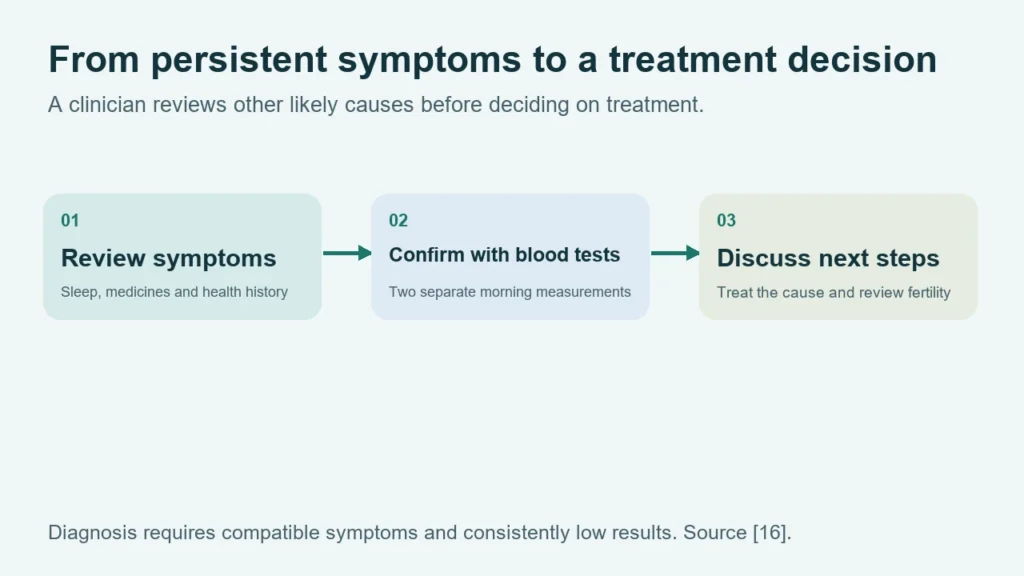
Population studies have reported lower average testosterone over time in some U.S. groups. Differences in age, health, weight, and methods complicate interpretation. They cannot predict your level. A clinician may order repeat morning total testosterone and additional tests when indicated. Approved oral TRT is an option for selected causes of hypogonadism. Enclomiphene has no standalone FDA approval and should not be treated as a general lifestyle add-on. [15–17]
Common questions about PEPLIX HEALTH
Independent, board-certified physicians assess symptoms, review blood work, and discuss treatment options. Monarch Brands LLC provides management services for Peplix Health. Bring information about sleep, alcohol, exercise, nutrition, medicines, and fertility plans. Ask which services and cash-pay follow-ups are available and what your clinician recommends based on the findings.
Should I try lifestyle changes before asking for testing?
Lifestyle changes can begin while you seek evaluation. A clinician can determine whether symptoms call for testing now and whether a separate treatable condition may be involved.
How is any prescription individualized and filled?
An independent physician determines the product, dose, and monitoring. When a compounded prescription meets a patient-specific need and applicable requirements, a state-licensed pharmacy operating under Section 503A can prepare it. Compounded products do not have FDA approval. [18]
This article is educational. Discuss persistent symptoms and treatment decisions with a licensed healthcare professional.
For consultation information, see our low testosterone guide or start an online assessment.
Sources
- Corsetti et al. — Mediterranean diet and reproductive markers
- Meta-analysis — calorie restriction and testosterone
- Sports Medicine — exercise training and resting testosterone
- Whittaker — high-protein diets and testosterone
- Review — intermittent fasting and reproductive hormones
- Sleep duration and health guidance
- Leproult and Van Cauter — sleep restriction study
- Review — alcohol and testosterone synthesis
- Stress and testosterone research
- Workplace noise and testosterone survey
- Vitamin D and infertility study
- NIH Office of Dietary Supplements — vitamin D
- Coates and Herbert — traders and hormone associations
- Financial decisions and testosterone study
- Travison et al. — population trends in testosterone
- Endocrine Society — testosterone therapy guideline
- FDA — review of enclomiphene citrate
- FDA — compounding and FDA approval
This article is for general education and is not medical advice. Talk with a licensed clinician before starting, stopping or changing any treatment. Compounded medications are not FDA-approved. See our safety information.
Keep reading

Testosterone
What Is Enclomiphene and How Does It Compare With TRT?
Compare enclomiphene, TRT, and Clomid for low testosterone. Learn what trials found about sperm counts, side effects, and FDA approval.

Testosterone
Does Enclomiphene Build Muscle?
Does enclomiphene build muscle? Review the evidence on testosterone, lean mass, fertility, and what to discuss before treatment.
Testosterone
MCT Oil vs. Seed Oils in Injectable Testosterone
Compare MCT, sesame, and cottonseed oil in injectable testosterone. Learn what carriers do and what to ask about irritation or allergies.