Does Testosterone Therapy Help You Lose Weight?
Can TRT help with fat loss or muscle retention? Review clinical trial findings, metabolic limits, and how doctors assess low testosterone.

Testosterone replacement therapy can improve body composition in some men with confirmed testosterone deficiency. Studies have found reductions in fat mass and better preservation of lean mass, sometimes with little additional change on the scale. TRT treats hypogonadism. Weight management and blood sugar concerns deserve their own assessment and treatment plan.
How are testosterone and body fat connected?
Men with obesity often have lower measured total testosterone. Lower levels of sex hormone-binding globulin can partly explain that result, while greater obesity and related illness can also suppress the hormonal signals to the testes. Visceral fat, inflammation, and insulin resistance can contribute. Symptoms and repeat blood tests help clarify the cause.
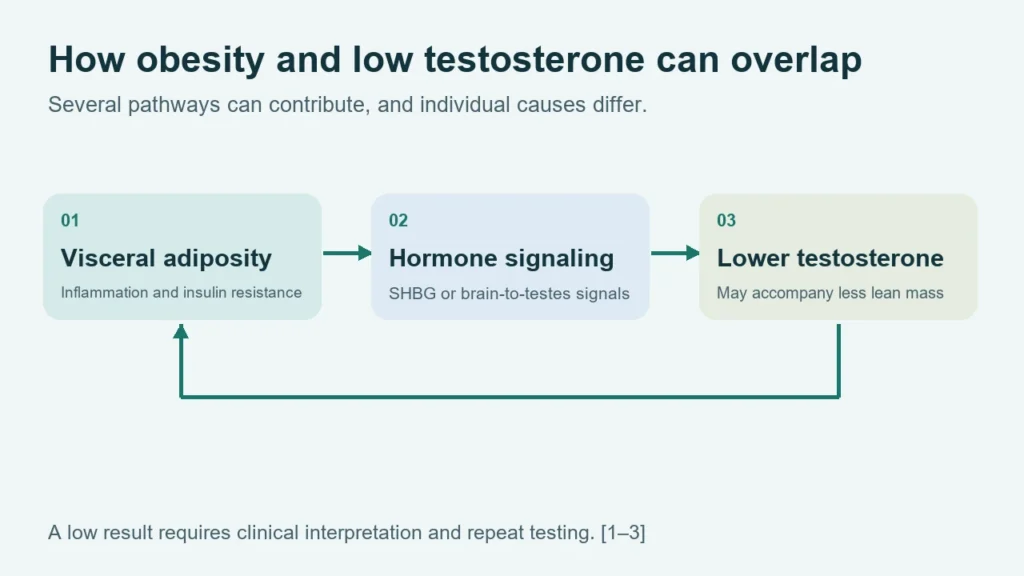
Visceral fat is the fat around internal organs. It is associated with inflammatory signals and insulin resistance. Low testosterone also commonly accompanies lower lean mass and greater fat mass. This can become a two-way relationship. Treating sleep apnea or other health problems and addressing weight can help some men recover testosterone levels. [1–3]
What does testosterone do in fat and muscle?
Laboratory studies suggest testosterone can influence enzymes involved in lipolysis, the breakdown of stored fat, and may inhibit the development of new fat cells in some models. Human research also shows that testosterone can stimulate muscle protein synthesis. These mechanisms help explain body composition changes. Their effects on a person’s total weight and energy expenditure can vary. [2,4,5]
What did a study find about fat loss and lean mass on TRT?
In a 56-week trial, men with obesity and low or low-normal testosterone followed a diet program and received testosterone or placebo. The testosterone group lost more fat and retained more lean mass on average. Total weight loss was similar. Body composition and scale weight can therefore tell different stories about the same treatment.
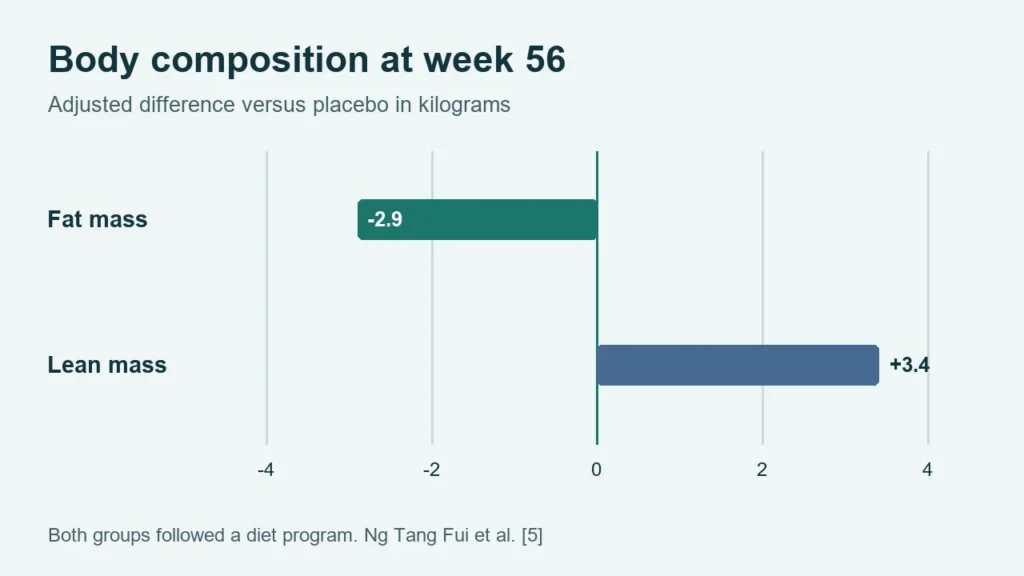
The study enrolled 100 men, and 82 completed it. The adjusted difference versus placebo at week 56 was 2.9 kg less fat and 3.4 kg more lean mass. The testosterone group also lost more visceral fat. Both groups initially lost lean mass during the 10-week low-energy diet. During the 46-week maintenance phase, the testosterone group regained more lean mass. These findings apply to the studied population and protocol. [5]
| Outcome | What studies suggest | What to monitor |
|---|---|---|
| Body fat | Some trials find less fat, including visceral fat, in men with low testosterone. | Waist and weight trends, plus metabolic labs when indicated. |
| Lean mass | Testosterone supports protein synthesis and can improve lean mass. Lean mass includes tissue other than muscle. | Strength and daily function alongside relevant measurements. |
| Energy and activity | Some men report improved mood or energy. Trial results for vitality are mixed. | Symptoms and day-to-day activity. Look for other causes of fatigue. |
| Blood sugar | Associations with insulin sensitivity and HbA1c vary. A large trial found no significant improvement in glycemic control. | Use standard diabetes or prediabetes care and follow-up. |
TRT is one part of care for confirmed deficiency. Resistance training and adequate protein can help preserve muscle while losing weight. A man who feels better may find it easier to stay active, but the largest older-men vitality trial did not meet its primary endpoint. Fatigue and low motivation alone are nonspecific. [1,6,7]
Does raising testosterone prevent diabetes or heart disease?
Muscle uses glucose and fatty acids for fuel, and lean mass can affect glucose uptake. Despite these relationships, trials disagree on whether testosterone changes diabetes risk in particular populations. The Endocrine Society recommends against using TRT to improve blood sugar control in men with type 2 diabetes. Cardiovascular risks still need individualized review.
Observational studies link testosterone with insulin sensitivity and markers such as HbA1c. In T4DM, a two-year trial alongside a lifestyle program in men without pathological hypogonadism, 12% taking testosterone and 21% taking placebo met the trial’s glucose definition of diabetes at follow-up. Hematocrit above 54% triggered safety review in 22% versus 1%. In the TRAVERSE substudy of men with hypogonadism, TRT did not significantly prevent progression to diabetes or improve glucose control. [8–10]
In TRAVERSE, major cardiovascular events occurred in 7.0% of men using the studied gel and 7.3% using placebo. The trial met its noninferiority criterion in men with existing cardiovascular disease or high risk. Atrial fibrillation, acute kidney injury, and pulmonary embolism occurred more often in the testosterone group. FDA updated labeling in 2025 and called for blood pressure warnings based on monitoring studies. [11,12]
Who should consider an evaluation for low testosterone?
If reduced libido, fewer spontaneous erections, or other signs of testosterone deficiency persist, a physician can review possible causes and order two separate early-morning tests. An individualized plan considers symptoms, fertility goals, and risk factors. If TRT is appropriate, follow-up helps determine whether the dose is effective and well tolerated.
- Confirm the diagnosis. Clinical guidelines associate hypogonadism with compatible symptoms and consistently low testosterone. Ask whether obesity-related SHBG changes make free testosterone useful. LH and FSH can help identify whether the cause is testicular or central. [1]
- Discuss treatment and risks. Review fertility plans, blood pressure, sleep apnea, elevated red cell counts, and prostate history. Testosterone can suppress sperm production. Your clinician can check hematocrit before and during treatment and assess prostate risk as appropriate. [1,12,13]
- Track two sets of goals. For hormone treatment, review symptoms, testosterone levels, and adverse effects. For weight management, agree on practical nutrition, activity, and metabolic goals that fit your schedule. Your clinician can discuss evidence-based obesity treatment if appropriate. [1,6,13]
Common questions about PEPLIX HEALTH
Independent, board-certified physicians evaluate patients and decide whether testing or treatment is appropriate. Monarch Brands LLC manages Peplix Health’s administrative operations. If you want help with fatigue, weight, or a low testosterone result, ask about the scope of the visit, cash-pay costs, and the follow-up needed for any proposed treatment.
Can I book a visit to discuss both weight and testosterone?
Ask the practice which services are available in your state. Bring your lab results, weight history, medication list, fertility plans, and a short list of symptoms.
Who chooses my dose and where is it filled?
The prescribing physician individualizes formulation and dosing and follows outcomes and labs. When clinically and legally appropriate, a state-licensed pharmacy operating under Section 503A can fill a compounded prescription for an individual patient. Compounded drugs do not have FDA approval. [14]
This article is for education. Discuss diagnosis or treatment decisions with a licensed healthcare professional.
For consultation information, see our low testosterone guide or start an online assessment.
Sources
- Endocrine Society — testosterone therapy clinical guideline
- Kelly and Jones — metabolic effects of testosterone
- Review — obesity, inflammation, and male hypogonadism
- Griggs et al. — muscle protein synthesis
- Ng Tang Fui et al. — 56-week body composition trial
- Cava et al. — preserving muscle during weight loss
- Snyder et al. — testosterone trials and vitality
- Pitteloud et al. — associations with insulin sensitivity
- Wittert et al. — T4DM trial
- Bhasin et al. — TRAVERSE diabetes substudy
- Lincoff et al. — TRAVERSE cardiovascular outcomes
- FDA — testosterone labeling and blood pressure
- Dobs and Campbell — individualized testosterone management
- FDA — compounding and FDA approval
This article is for general education and is not medical advice. Talk with a licensed clinician before starting, stopping or changing any treatment. Compounded medications are not FDA-approved. See our safety information.
Keep reading
Testosterone
What Is Enclomiphene and How Does It Compare With TRT?
Compare enclomiphene, TRT, and Clomid for low testosterone. Learn what trials found about sperm counts, side effects, and FDA approval.

Testosterone
Does Enclomiphene Build Muscle?
Does enclomiphene build muscle? Review the evidence on testosterone, lean mass, fertility, and what to discuss before treatment.
Testosterone
MCT Oil vs. Seed Oils in Injectable Testosterone
Compare MCT, sesame, and cottonseed oil in injectable testosterone. Learn what carriers do and what to ask about irritation or allergies.