TRT Side Effects: 5 Ways to Manage Them
Learn which labs to check during TRT, how to review injection timing, and when to discuss fertility, breast symptoms, or side effects.

Testosterone replacement therapy can raise hematocrit or blood pressure, cause acne or breast symptoms, and reduce sperm production. A clinician can manage many concerns with timed labs, symptom review, and changes to the dose or formulation when appropriate. Discuss fertility before treatment and contact your prescriber between visits if symptoms change.
1. Which labs should you monitor on TRT?
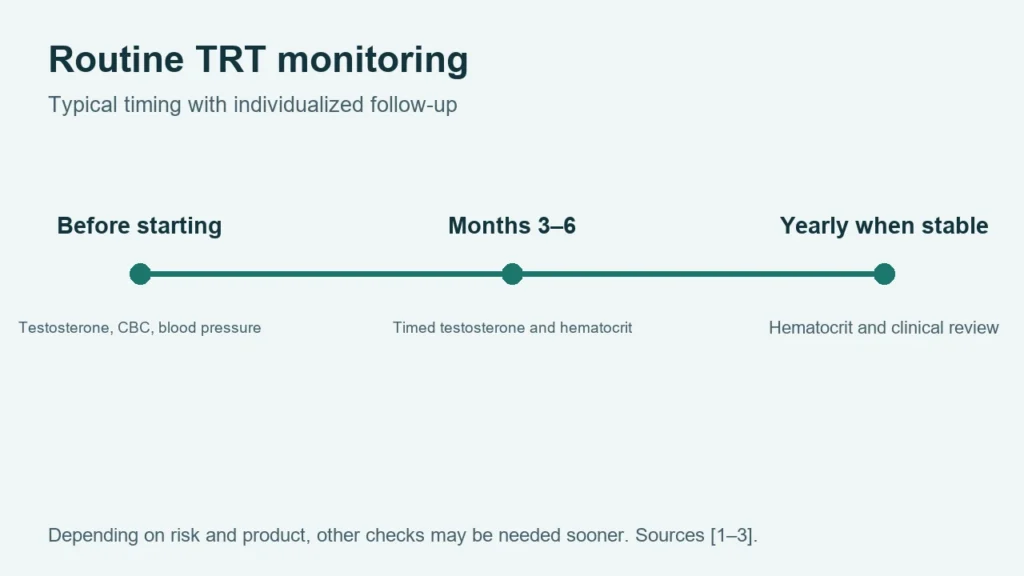
Discuss baseline testosterone, a complete blood count with hematocrit, blood pressure, and prostate screening when appropriate. The Endocrine Society recommends checking testosterone and hematocrit about three to six months after starting, then checking hematocrit annually once stable. Product-specific instructions or a concerning result can call for an earlier check or a different schedule.
| Check | When it is useful | What to discuss |
|---|---|---|
| Total testosterone and selected free testosterone | Measure at the right time for the formulation. Free testosterone may clarify results when binding is altered. | Ask when to draw blood relative to your injection or application and how the result affects your dose. |
| CBC and hematocrit | Before treatment, at three to six months, then annually if stable. | A hematocrit above 54% generally calls for pausing treatment under medical direction and evaluating possible causes such as sleep apnea or hypoxia. |
| Blood pressure and PSA | Blood pressure at baseline and periodically. PSA at baseline and three to twelve months when prostate monitoring is chosen. | Review cardiovascular risks, prostate history, and the follow-up plan for a rise in PSA. |
| Estradiol | Consider if breast tenderness or enlargement occurs or when another clinical indication exists. | Review symptoms and the whole treatment plan before adding an estrogen-lowering medication. |
Keep a short record of medication dates, libido, mood, energy, breast symptoms, weight changes, and blood pressure if requested. Discuss new symptoms promptly. Seek emergency care for chest pain, sudden trouble breathing, or stroke symptoms. [1–3]
2. What should you do if you feel peaks and troughs?
If mood, libido, or energy changes recur at the same point in your injection cycle, record when they occur and share the pattern with your prescriber. Some formulations can produce peaks after administration and lower levels before the next dose. A clinician can review timed labs and consider adjusting the interval or formulation.
In older intramuscular studies, some testosterone enanthate regimens peaked around 24–48 hours, and one every-two-week cypionate regimen produced peak values around days two to five. Timing varies with dose, interval, route, and product. A prescriber may use smaller, more frequent doses for some regimens. Twice-weekly injections are not a universal starting schedule. Keep reminders, a medication log, refill dates, and lab appointments aligned with the prescribed plan. [1,4]
3. How can you protect fertility before and during TRT?
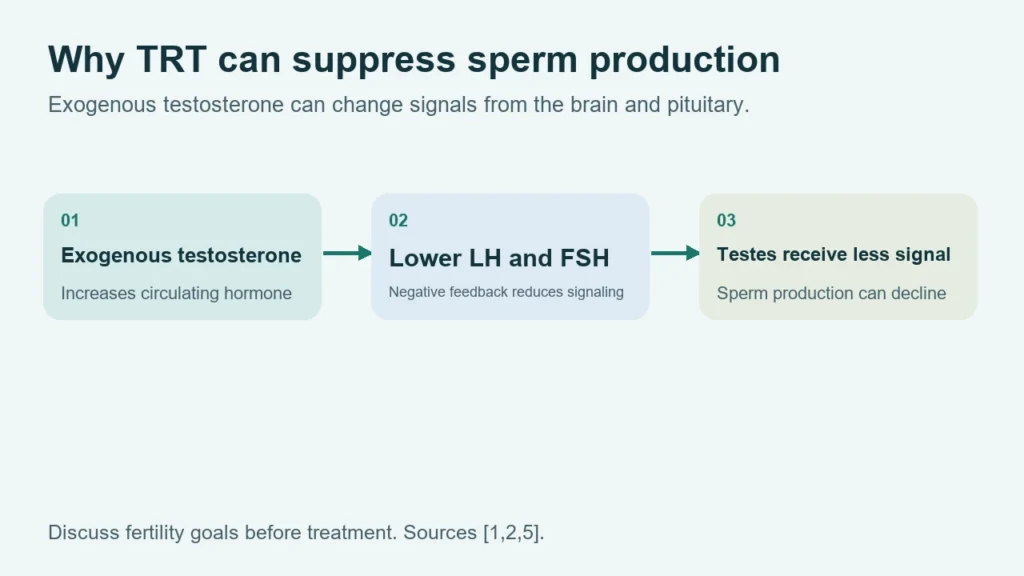
Testosterone from outside the body can lower LH and FSH and suppress sperm production. If you want children soon or may want them later, tell your clinician before starting therapy. A reproductive specialist can discuss semen testing and alternatives. Adding enclomiphene to TRT has limited evidence as a way to preserve fertility.
Enclomiphene is a selective estrogen receptor modulator. By reducing estrogen feedback at the hypothalamus and pituitary, it can increase LH and FSH and stimulate the testes in some men with secondary hypogonadism. Trials using 12.5 mg and 25 mg studied enclomiphene as a separate treatment, including comparisons with testosterone gel. Improved hormone levels or sperm concentrations in those trials do not establish reliable fertility preservation when used together with TRT. Enclomiphene has no standalone FDA approval. [5,6]
4. Which habits can support your overall health during TRT?
Regular sleep, resistance training, aerobic activity, and a balanced diet can support energy, muscle function, and cardiovascular health during TRT. Their effect on hormone levels varies. Tell your clinician if you snore heavily, wake unrefreshed, or feel sleepy during the day. These symptoms can warrant evaluation for sleep apnea.
- Sleep. A small study in healthy young men found daytime testosterone was about 10–15% lower after one week of five-hour nights. It did not study men on TRT. Age-related declines are gradual on average and differ by population and hormone measure. [7]
- Movement and nutrition. Lifting supports strength and lean mass. Small studies have reported increases in free testosterone after interval training in particular groups, but this does not establish a lasting advantage during TRT. Include foods such as chicken, fish, beans, nuts, olive oil, avocado, and leafy greens for protein, unsaturated fats, and micronutrients. [8]
5. How should you handle breast tenderness or high estradiol?
Aromatase converts some testosterone into estradiol. It is active in body fat and other tissues. If new breast tissue grows or becomes tender, contact your clinician, who can assess the tissue, review medications and hormone levels, and consider adjustments. Food and supplements have not been shown to reliably prevent or treat TRT-related gynecomastia.
Cruciferous vegetables such as broccoli, cauliflower, and kale contain compounds related to DIM that have been studied for estrogen metabolism. Mushroom compounds have shown effects on aromatase in laboratory research. Neither is an established treatment for breast enlargement. Zinc supports reproductive function, particularly when correcting deficiency. Discuss supplements and any estrogen-lowering medicine with your clinician. A new hard lump, nipple discharge, or skin change needs prompt evaluation. [2,9–11]
Common questions about PEPLIX HEALTH
Independent, board-certified physicians evaluate symptoms, lab results, fertility goals, and treatment risks. Monarch Brands LLC provides Peplix Health’s management services. The treating physician selects an appropriate formulation, individualizes the dose, and sets a follow-up schedule. Ask about cash-pay lab costs and how to reach the practice about side effects.
Can I bring my current TRT records?
Bring your prescription label, dose dates, recent lab reports, and symptom notes. Tell the physician if you are trying to conceive or have noticed breast changes, blood pressure changes, or recurring symptoms between injections.
Who fills an individualized compounded prescription?
If a physician identifies a patient-specific need and applicable requirements are met, a state-licensed pharmacy operating under Section 503A can prepare the prescription. Compounded products do not have FDA approval. Ask which pharmacy will fill any prescription and how to reach it with product questions. [12]
This article is educational. Discuss symptoms and treatment decisions with a licensed healthcare professional.
For consultation information, see our low testosterone guide or start an online assessment.
Sources
- Endocrine Society — clinical guideline and monitoring schedule
- American Urological Association — testosterone deficiency guideline
- FDA — testosterone labeling and blood pressure
- Pastuszak et al. — product-specific testosterone pharmacokinetics
- Kim et al. — enclomiphene versus testosterone gel
- FDA — review of enclomiphene citrate
- Leproult and Van Cauter — sleep restriction study
- Hayes et al. — interval training and free testosterone
- Endotext — gynecomastia and aromatase
- Review — dietary diindolylmethane
- Review — dietary zinc and reproductive health
- FDA — compounding and FDA approval
This article is for general education and is not medical advice. Talk with a licensed clinician before starting, stopping or changing any treatment. Compounded medications are not FDA-approved. See our safety information.
Keep reading

Testosterone
What Is Enclomiphene and How Does It Compare With TRT?
Compare enclomiphene, TRT, and Clomid for low testosterone. Learn what trials found about sperm counts, side effects, and FDA approval.

Testosterone
Does Enclomiphene Build Muscle?
Does enclomiphene build muscle? Review the evidence on testosterone, lean mass, fertility, and what to discuss before treatment.

Testosterone
MCT Oil vs. Seed Oils in Injectable Testosterone
Compare MCT, sesame, and cottonseed oil in injectable testosterone. Learn what carriers do and what to ask about irritation or allergies.