Is TRT a Steroid? How Medical Use Differs From Misuse
Testosterone is an anabolic steroid. Learn how prescribed TRT differs from misuse, how low testosterone is diagnosed, and what monitoring involves.

Yes. The testosterone used in testosterone replacement therapy (TRT) is an anabolic-androgenic steroid. Prescribed TRT treats confirmed testosterone deficiency and aims for a physiologic level with ongoing monitoring. Anabolic steroid misuse involves taking these drugs outside prescribed care, often to enhance physique or performance. The purpose, dosing, and risks differ.
How is prescribed TRT different from anabolic steroid misuse?
TRT is prescribed for men with compatible symptoms and consistently low testosterone after a clinician evaluates the cause. The dose is adjusted for the formulation, blood levels, and response. Steroid misuse often involves higher exposure or several drugs, with increased risks to fertility, cardiovascular health, the liver, and mental health.
| What to compare | Prescribed TRT | Anabolic steroid misuse |
|---|---|---|
| Purpose | Treat confirmed testosterone deficiency and its symptoms. | Often used to gain muscle or improve appearance or athletic performance. |
| Dose and target | Individualized for a physiologic level. Endocrine Society guidance generally aims for the mid-normal range. | May involve supraphysiologic doses, cycling, or multiple agents. There is no standard dose multiplier. |
| Oversight | A licensed prescriber reviews risks, measures response, and adjusts the dose when appropriate. | Use outside medical directions has no prescribed monitoring plan. In the U.S., anabolic steroids are Schedule III controlled substances. [12] |
| Risks | May suppress sperm production, raise hematocrit, and increase blood pressure. Other risks depend on the person and product. | Can impair fertility and cause serious cardiovascular, liver, and psychiatric harm. Risk varies by drug, dose, and duration. |
Testosterone is produced naturally. It also belongs to the same pharmacologic class as other anabolic-androgenic steroids. An approved formulation can still be misused if it is taken outside medical instructions. FDA-approved prescription options include injections, skin gels, and oral testosterone undecanoate capsules. Formulation changes how doses are given and when follow-up levels should be drawn. [1–5]
What testosterone level qualifies for TRT?
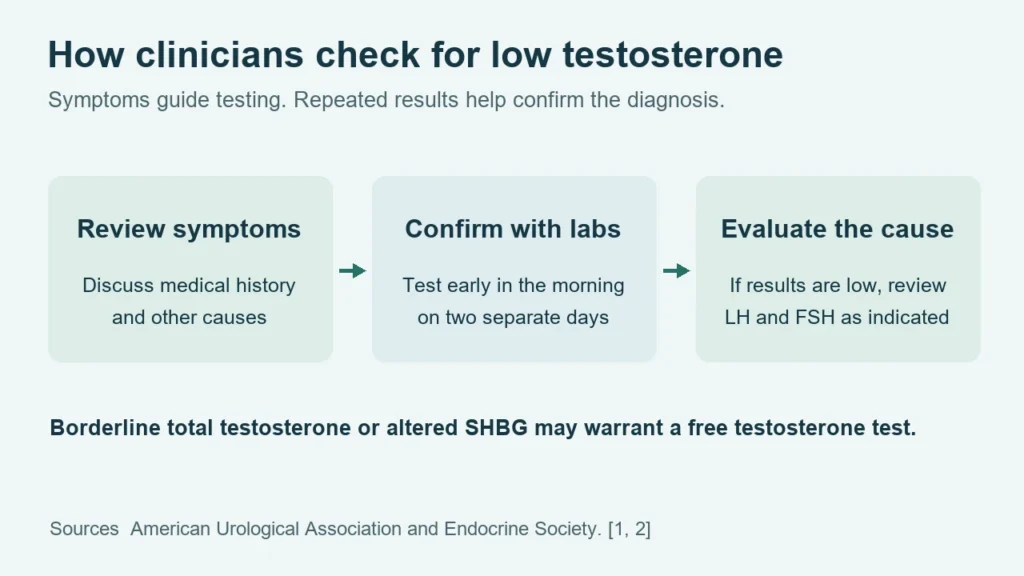
The American Urological Association uses total testosterone below 300 ng/dL as a reasonable cutoff that supports diagnosis when symptoms are present. Clinicians generally confirm low results with two separate early-morning tests. A borderline value or altered sex hormone-binding globulin can warrant a reliable free testosterone measurement and evaluation for other causes.
Low libido and reduced spontaneous erections can be clues. Fatigue, mood changes, poor concentration, reduced muscle mass, or difficulty recovering from exercise can also occur, but have several possible causes. Sleep problems, obesity, diabetes, some medications, and other conditions can overlap with or influence testosterone deficiency. Symptoms above 300 ng/dL still deserve evaluation, including free testosterone when appropriate. They do not by themselves establish that TRT would help. [1, 2]
- Confirm the result. Repeat an early-morning total testosterone measurement before starting treatment. The Endocrine Society recommends fasting samples. Consider an accurate free testosterone estimate or measurement when total testosterone is borderline or SHBG is likely altered. [1, 2]
- Look for the cause. LH and FSH can help distinguish a testicular problem from one involving pituitary or hypothalamic signaling. Further evaluation, which can include prolactin testing in certain cases, depends on the results and symptoms. [1, 2]
- Separate the threshold from the target. The AUA recommends aiming for the middle portion of the normal reference range, commonly around 450–600 ng/dL. The Endocrine Society recommends a mid-normal level. A universal target of 600–1,100 ng/dL is unsupported. Timing and interpretation depend on the formulation, assay, and patient response. [1, 2]
What benefits and risks should you consider before TRT?
TRT can improve sexual desire and some aspects of sexual function in men with confirmed deficiency. It can also increase lean mass, while effects on fatigue, mood, body fat, and concentration vary. Treatment decisions should include a review of fertility, blood pressure, hematocrit, and prostate risk when appropriate, followed by ongoing monitoring.
In the Testosterone Trials, older men with low testosterone reported improved sexual function and modest changes in mood, while the primary vitality outcome did not significantly improve. A separate trial found no improvement in memory. Changes in muscle or body composition do not make testosterone a treatment for obesity or diabetes. The Endocrine Society recommends against prescribing TRT to improve glycemic control. [2, 6, 7]
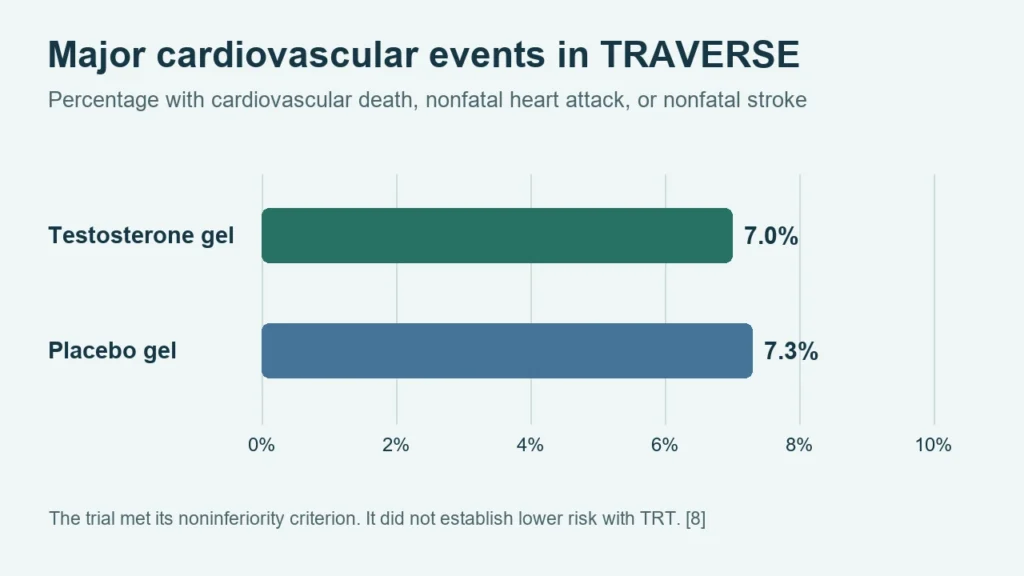
TRAVERSE enrolled 5,246 men ages 45–80 with symptoms, two fasting testosterone results below 300 ng/dL, and existing or elevated cardiovascular risk. Testosterone gel met the trial’s noninferiority criterion for the main cardiovascular endpoint. Atrial fibrillation, acute kidney injury, and pulmonary embolism occurred more often in the testosterone group. The result applies to the population and regimen studied. In 2025, FDA removed boxed-warning language about increased cardiovascular outcomes and required blood pressure warnings for testosterone products. [8, 9]
Tell your clinician if you plan to have children. Testosterone can suppress sperm production. Also discuss untreated severe sleep apnea, elevated hematocrit, relevant prostate or breast cancer history, and recent cardiovascular events. Follow-up generally covers treatment response, side effects, testosterone, hematocrit, blood pressure, and prostate risk assessment when appropriate. [1, 2, 9]
Common questions about PEPLIX HEALTH
Peplix Health offers cash-pay telehealth through a model managed by Monarch Brands LLC. Independent, board-certified physicians review symptoms, lab results, and medical history before recommending or adjusting therapy. When a patient-specific compounded prescription is appropriate and eligible, a state-licensed pharmacy can fill it under Section 503A and applicable state requirements.
What should I bring to a testosterone evaluation?
Bring prior testosterone results with the dates and times of collection, a medication and supplement list, and a brief symptom history. Share your fertility plans. If you already take testosterone, include your formulation, dose schedule, and the timing of your last dose relative to your labs. [1, 2]
What if I still feel tired after my level reaches the target?
Ask your clinician to review when the blood sample was taken, which symptoms have changed, and whether another explanation is more likely. Sleep disorders, mood conditions, and medication effects can contribute to fatigue. Your clinician can use that review to decide whether a dose change or a different evaluation makes sense. [1, 2, 6]
What does 503A pharmacy fulfillment mean for TRT?
Section 503A generally requires a valid prescription for a specific patient and restricts regular compounding of essentially identical copies of commercially available medicines. FDA does not review compounded drugs for safety, effectiveness, or quality before marketing. Ask why the formulation fits your needs and which pharmacy would dispense it. [10, 11]
For consultation information, see our low testosterone guide or start an online assessment.
This article provides general education. Discuss personal treatment decisions with a licensed clinician.
Sources
- American Urological Association. Evaluation and management of testosterone deficiency.
- Endocrine Society. Clinical practice guideline on testosterone therapy for hypogonadism.
- FDA. Testosterone product information.
- FDA. Jatenzo oral testosterone prescribing information.
- National Institute on Drug Abuse. Anabolic steroids and other performance-enhancing drugs.
- Snyder and colleagues. Effects of testosterone treatment in older men.
- Resnick and colleagues. Testosterone treatment and cognitive function.
- Lincoff and colleagues. TRAVERSE cardiovascular safety trial.
- FDA. Class-wide testosterone labeling changes.
- FDA. Compounding questions and answers.
- U.S. Code. Section 503A pharmacy compounding requirements.
- Code of Federal Regulations. Schedule III anabolic steroids.
This article is for general education and is not medical advice. Talk with a licensed clinician before starting, stopping or changing any treatment. Compounded medications are not FDA-approved. See our safety information.
Keep reading

Testosterone
What Is Enclomiphene and How Does It Compare With TRT?
Compare enclomiphene, TRT, and Clomid for low testosterone. Learn what trials found about sperm counts, side effects, and FDA approval.

Testosterone
Does Enclomiphene Build Muscle?
Does enclomiphene build muscle? Review the evidence on testosterone, lean mass, fertility, and what to discuss before treatment.

Testosterone
MCT Oil vs. Seed Oils in Injectable Testosterone
Compare MCT, sesame, and cottonseed oil in injectable testosterone. Learn what carriers do and what to ask about irritation or allergies.