Male Sexual Dysfunction Symptoms Causes and Treatment
Learn what causes erection problems, changes in desire, ejaculation difficulties, and pain during sex, plus when to seek a clinical evaluation.

Male sexual dysfunction includes recurring problems with desire, erections, ejaculation, orgasm, or pain during sex. A clinician can review when the change started, check for medication or health factors, and discuss treatment tailored to the symptom. You can seek care as soon as a recurring problem causes distress or pain.
Which symptoms are you noticing?
Changes in desire, difficulty getting or keeping an erection, and ejaculation that comes sooner or later than you want are common reasons to seek care. Difficulty reaching orgasm and pain during sex also deserve attention. One person can have several symptoms at once, and each can have a different cause.
| Symptom | What you might notice | A detail to share |
|---|---|---|
| Low sexual desire | Fewer sexual thoughts or less interest in sex alone or with a partner. Persistent low desire that causes distress can fit male hypoactive sexual desire disorder. | Whether desire changed suddenly or gradually and whether the change causes distress. |
| Erectile dysfunction (ED) | Difficulty getting or maintaining an erection sufficient for sexual activity. | Whether it happens in specific situations or also affects spontaneous erections. |
| Premature ejaculation | Ejaculation occurs sooner than desired, often shortly after penetration, with difficulty delaying it and associated distress. | Whether this pattern has always occurred or represents a change. |
| Delayed ejaculation or orgasm | Ejaculation takes much longer than desired or does not occur. Orgasm can be delayed or absent despite adequate stimulation. Absence of orgasm is called anorgasmia. | Whether you experience orgasm, ejaculation, both, or neither. |
| Pain during sex or ejaculation | Pain can occur before, during, or after sex. It may feel like burning or tightness, or occur during an erection, thrusting, or ejaculation. | Where the pain is, what triggers it, and whether you have other symptoms such as urinary changes. |
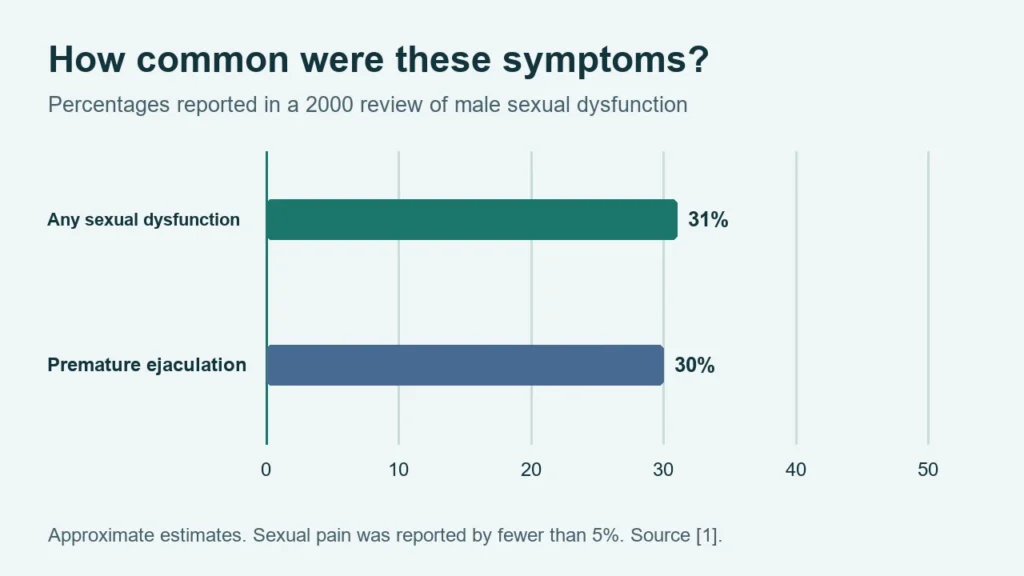
Erectile and premature ejaculation symptoms are among the most commonly reported concerns. A 2000 review reported sexual dysfunction in about 31% of men and sexual pain disorders in fewer than 5%. Prevalence estimates vary with age, how researchers define symptoms, and how they ask about them. Concerns can affect confidence, relationships, and quality of life. [1–5]
What can cause sexual dysfunction in men?
Sexual function depends on circulation, nerves, hormones, medications, and mental health. Diabetes, high blood pressure, and heart disease can contribute to erection problems. A medication change, stress, or relationship strain can also affect desire or ejaculation. Symptoms become more common with age, and men can experience them at any age.
- Circulation and physical health. ED can be an early sign of cardiovascular disease. Diabetes, hypertension, and heart disease are associated with higher rates of ED. Penile injury, changes in penile shape, foreskin problems, or a sexually transmitted infection can contribute to pain or other symptoms. [2,4,6]
- Hormones and medication. Testosterone deficiency can contribute to reduced libido and sometimes erection problems. Antidepressants, antiandrogens, opioids, and some blood pressure drugs, including certain diuretics, can also affect sexual function. Review any recent dose or medication change with your prescriber before changing treatment. [2,6,7]
- Mood, stress, and daily habits. Depression, anxiety, performance worries, relationship strain, smoking, heavy drinking, recreational drugs, inactivity, and poor diet can contribute. More than one factor may apply, and some changes in sexual desire are part of normal variation. [2,6]
When should you see a doctor about sexual symptoms?
Book an assessment if symptoms keep recurring, are sudden, or cause pain or distress. A clinician will usually ask about sexual function, medical history, medications, and lifestyle and may perform a focused exam. Blood work or other testing depends on your symptoms and any health risks identified during the visit.
Some DSM-5 criteria use symptoms lasting about six months and occurring on roughly 75% to 100% of relevant sexual occasions, with significant distress. Male hypoactive sexual desire disorder also has a duration criterion of about six months. Criteria vary by condition. You can ask for help whenever symptoms are affecting you, including before these thresholds are met. [5]
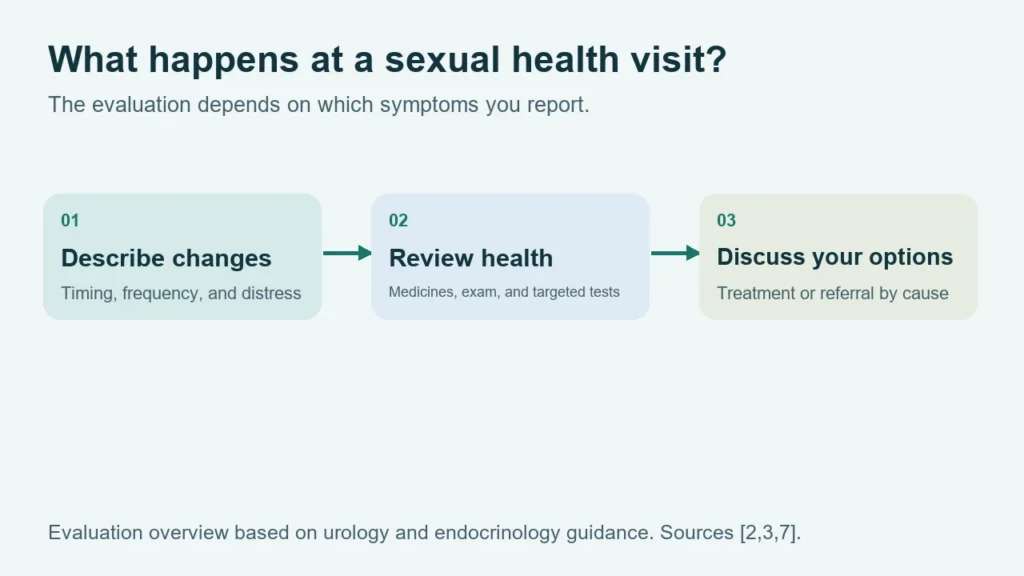
The clinician may check blood pressure, review diabetes and cardiovascular risk, or order glucose, cholesterol, or testosterone testing when indicated. A testosterone deficiency diagnosis requires compatible symptoms and consistently low levels, generally confirmed with two separate morning blood draws. A clinician might recommend an in-person exam for pain, injury, penile curvature, or suspected infection. [2,4,7]
Which treatments can help?
Treatment depends on the symptom and its cause. An erection medication may help ED, while early or delayed ejaculation needs a different evaluation. Treatment can also include adjusting a contributing medication, managing a health condition, or working with a sexual health therapist. Discuss fertility goals before considering any hormone treatment.
For ED, a clinician may prescribe a PDE5 inhibitor such as sildenafil, tadalafil, or vardenafil after reviewing cardiovascular risk and other medications. PDE5 inhibitors must never be taken with nitrates because the combination can cause a dangerous drop in blood pressure. Options can also include a vacuum erection device, counseling, or specialist-directed treatment. [2]
For premature ejaculation, options can include behavioral strategies, topical anesthetics, and certain prescription medications. For delayed ejaculation or absent orgasm, a clinician may review contributing medicines, assess underlying health conditions, or recommend psychosexual therapy. Pain requires treatment directed at its cause. [2–4]
Oral testosterone is one formulation a clinician may discuss for confirmed hypogonadism. External testosterone can suppress sperm production. Enclomiphene lacks FDA approval in the United States, and a clinician should review the evidence and alternatives before considering it. [7,8]
Common questions about PEPLIX HEALTH
Independent, board-certified physicians evaluate symptoms and medical history, then decide whether testing, a prescription, or referral is appropriate. Monarch Brands LLC provides management services for Peplix Health. For a cash-pay visit, bring your medication list and describe when the change started, how often it occurs, and whether you have fertility goals.
Can I ask about sexual symptoms during a telehealth visit?
A telehealth visit can start with your symptom history and a medication review. The physician can determine whether blood work, an in-person exam, or a urology referral is appropriate.
How does pharmacy fulfillment work if my prescription needs compounding?
If the physician identifies a patient-specific need and applicable requirements are met, a state-licensed pharmacy operating under Section 503A can prepare a prescription at the prescribed strength. Compounded drugs lack FDA approval. The physician sets dosing and follow-up. Ask which pharmacy will dispense the medication and how to verify its license. [9]
For consultation information, see our low testosterone guide or start an online assessment.
Sources
- Rosen – prevalence and risk factors review
- American Urological Association – erectile dysfunction guideline
- AUA and SMSNA – disorders of ejaculation guideline update
- Cleveland Clinic – causes of pain during sex
- International Consultation on Sexual Medicine – definitions and epidemiology
- Review – erectile dysfunction and clinical risk factors
- Endocrine Society – testosterone therapy guideline
- FDA – enclomiphene clinical and regulatory review
- FDA – Section 503A requirements
This article is for general education and is not medical advice. Talk with a licensed clinician before starting, stopping or changing any treatment. Compounded medications are not FDA-approved. See our safety information.
Keep reading

Testosterone
What Is Enclomiphene and How Does It Compare With TRT?
Compare enclomiphene, TRT, and Clomid for low testosterone. Learn what trials found about sperm counts, side effects, and FDA approval.

Testosterone
Does Enclomiphene Build Muscle?
Does enclomiphene build muscle? Review the evidence on testosterone, lean mass, fertility, and what to discuss before treatment.

Testosterone
MCT Oil vs. Seed Oils in Injectable Testosterone
Compare MCT, sesame, and cottonseed oil in injectable testosterone. Learn what carriers do and what to ask about irritation or allergies.