Can You Combine Testosterone, Sermorelin, and GLP-1s?
Can you combine testosterone, sermorelin, and GLP-1s? Learn what the evidence says about muscle retention, weight loss, and clinician monitoring.
Adults with confirmed testosterone deficiency and a separate indication for weight or diabetes treatment may be candidates for both therapies after medical evaluation. Evidence does not establish that adding sermorelin improves fat loss, muscle retention, sleep, or recovery. Each medication needs a clear reason for use and its own monitoring plan.
What does each treatment actually do?
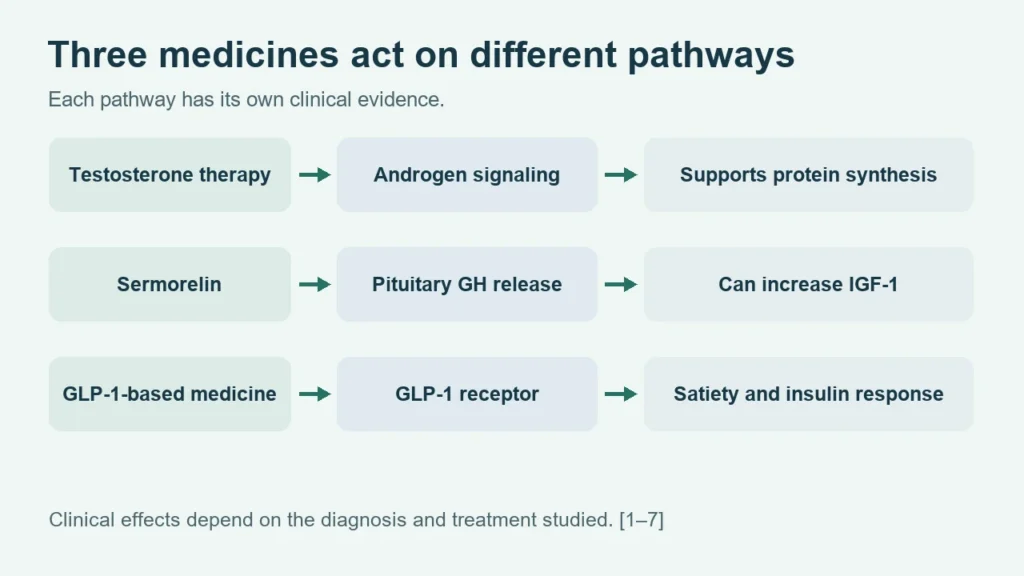
Testosterone replacement treats symptomatic testosterone deficiency, while GLP-1-based medicines have product-specific indications for obesity or type 2 diabetes. Sermorelin stimulates the pituitary to release growth hormone. These therapies act through different pathways, so a clinician evaluates the expected benefit and risks of each before deciding whether any are appropriate for you.
Some people describe fewer food cravings, or less “food noise,” during GLP-1 treatment. Semaglutide trials have measured appetite and food reward. Complete relief is an individual response, and good nutrition remains important when appetite changes. [3, 8]
| Therapy | How it works | What a clinician can assess |
|---|---|---|
| Testosterone replacement therapy (TRT) | Restores androgen exposure and can stimulate muscle protein synthesis. | Whether symptoms and repeated low morning testosterone support a diagnosis, and whether treatment improves symptoms. [1, 2] |
| GLP-1-based treatment | GLP-1 receptor activation increases satiety, slows gastric emptying, and supports glucose-dependent insulin release. Tirzepatide also activates the GIP receptor. | Whether the exact product is indicated for your weight or glucose goals, and how you respond to its labeled dosing schedule. [3–5] |
| Sermorelin | A growth hormone-releasing hormone analog that prompts pituitary growth hormone release. Growth hormone can raise insulin-like growth factor 1 (IGF-1). | Whether a suspected growth hormone disorder needs specialist evaluation. Adult use for sleep, recovery, or body recomposition lacks FDA approval and reliable clinical evidence. [6, 7] |
Does research show that stacking all three works?
Studies of individual drugs and studies of injected growth hormone alongside testosterone answer different questions. The evidence reviewed here does not establish that TRT, sermorelin, and a GLP-1 medicine together improve body composition or recovery more than indicated care. It also cannot establish that lower doses keep combined side effects down.
- Testosterone and metabolism. Pitteloud and colleagues found an association between testosterone and insulin sensitivity and mitochondrial measures. That design could not establish that giving testosterone improves them. A randomized TRAVERSE substudy found TRT did not improve glycemic control or significantly prevent progression to diabetes. The Endocrine Society advises against prescribing testosterone for glucose control. [1, 9, 10]
- Growth hormone and sermorelin. Corpas and colleagues found that growth hormone-releasing hormone (1–29) increased GH and IGF-1 in older men under study conditions. GH helps regulate fat mobilization, but these hormone changes do not establish that sermorelin improves deep sleep, preserves glycogen, or accelerates workout recovery. [6, 7]
- Growth hormone with sex steroids. Blackman and colleagues reported increases in lean mass and reductions in fat in older adults treated with injected growth hormone and sex steroids. Adverse effects were frequent. The study used growth hormone itself and did not test either sermorelin or GLP-1 treatment as part of a three-drug regimen. [11]
- Proposed synergy. Some GLP-1 trials have measured reductions in visceral fat. The studies above do not show that combining the three therapies preferentially directs nutrients to muscle, improves human mitochondrial function, stabilizes energy or motivation, or preserves muscle during a calorie deficit. Aromatase converts testosterone to estradiol in fat tissue, but this does not establish that estradiol causes a self-reinforcing cycle of fat gain during TRT. [3, 10–13]
How much of GLP-1 weight loss comes from lean mass?
A DXA substudy of tirzepatide found that about 75% of weight lost was fat mass and about 25% was lean mass. The proportions vary across studies and individuals. DXA lean mass includes water, organs, and other soft tissue as well as muscle, so changes in lean mass and strength answer different questions.
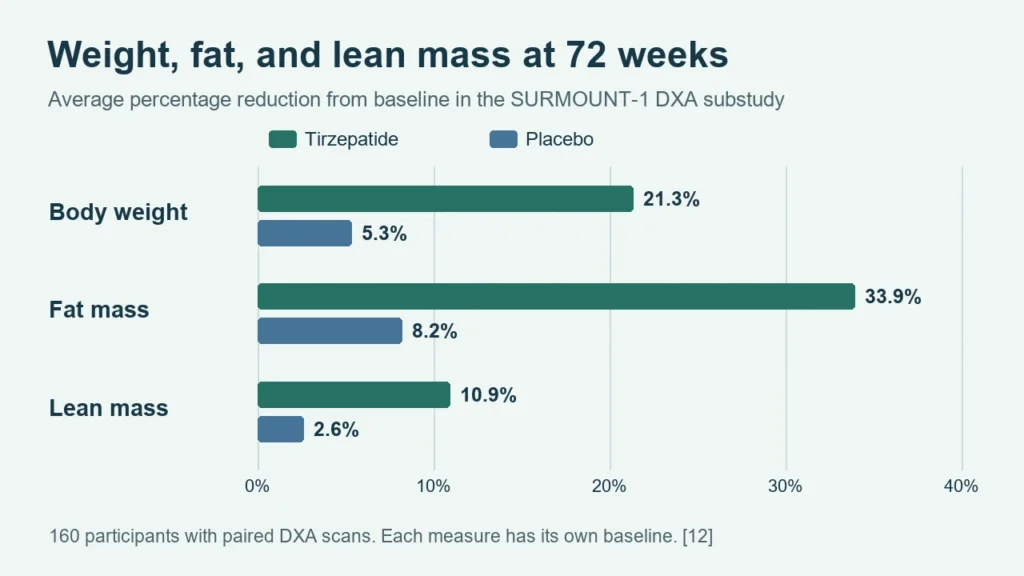
At 72 weeks, the SURMOUNT-1 DXA substudy reported a roughly 75/25 fat-to-lean split for both tirzepatide and placebo, with substantially more total weight loss in the tirzepatide group. The cited review describes considerable variation across studies, with selected estimates near 25% and others over 40%. Those numbers are group averages. They do not predict an individual’s muscle loss or demonstrate that a low-dose strategy protects muscle. [12, 14]
How can you protect strength while losing weight?
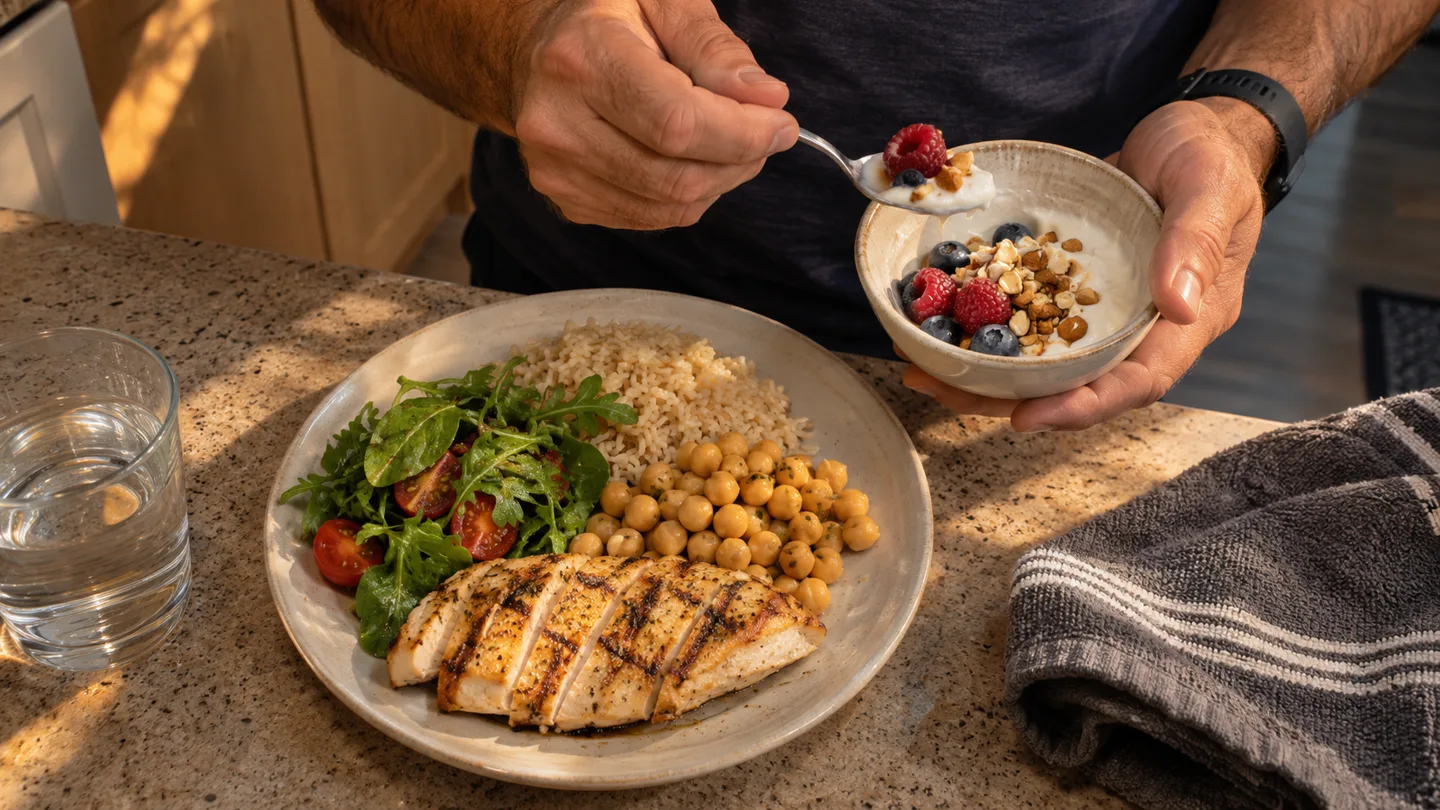
Resistance training and enough protein are practical ways to support strength and lean tissue during weight loss. If appetite drops so much that you struggle to eat adequately, ask your clinician to review your nutrition and medication plan. Tracking strength, food intake, and symptoms gives you more context than the scale alone.
- Make training repeatable. A joint clinical advisory for GLP-1 therapy advises strength training at least three times per week where appropriate, with the plan adapted to your fitness, limitations, and recovery. Record a few exercises you can repeat so you can follow strength over time. [15]
- Set a protein target you can meet. A dietitian or clinician can help choose a target based on body size, kidney health, activity, and intake. The advisory discusses 80–120 g daily as one practical target for some adults. Smaller protein-rich meals may help when large portions feel uncomfortable. A fixed target based on current weight can overestimate needs in adults with obesity. [15]
- Use supplements for a specific need. Food variety matters. Review vitamin D or other micronutrients if intake or testing suggests a gap. Creatine monohydrate has evidence for repeated high-intensity exercise, and 3–5 g daily is a commonly studied maintenance range. Cognitive benefit is less established. Magnesium glycinate has limited evidence for sleep, and 400 mg of elemental magnesium from supplements exceeds the adult supplemental upper limit of 350 mg per day unless clinician-directed. [15–17, 20]
Common questions about PEPLIX HEALTH
Peplix Health offers cash-pay telehealth through a model managed by Monarch Brands LLC. Independent, board-certified physicians review symptoms, medications, laboratory results, and goals before making prescribing decisions. When a patient-specific compounded prescription is medically appropriate and eligible, a state-licensed pharmacy can dispense it under Section 503A and applicable state requirements.
Can I use testosterone and a GLP-1 medication together?
A clinician can consider both when each has its own indication. TRT follow-up typically covers symptoms, testosterone, hematocrit, fertility goals, and prostate assessment when appropriate. Guidelines generally target the mid-normal testosterone range during treatment. The weight or diabetes plan has separate goals for response, tolerability, and nutrition. [1, 4, 5]
Can I take smaller GLP-1 doses more often or add sermorelin at bedtime?
Injectable Wegovy and Zepbound use labeled once-weekly schedules with dose escalation. Taking a fraction of the maintenance dose every three to five days has not been shown to preserve muscle. Evidence also does not establish that nightly dosing, five days per week, or dosing on an empty stomach improves adult recovery with sermorelin. Review proposed changes with your prescriber. [4–7, 14]
What should I ask about 503A pharmacy fulfillment?
Ask why the formulation is needed, which pharmacy will dispense it, and how to confirm the concentration and directions. Section 503A generally requires a valid patient-specific prescription and restricts regular compounding of essentially identical copies of commercially available drugs. Compounded drugs do not undergo FDA premarket review for safety, effectiveness, or quality. [18, 19]
For consultation information, see our low testosterone guide or start an online assessment.
This article is for general education. Review medication decisions with a licensed clinician.
Sources
- Endocrine Society. Testosterone therapy for hypogonadism.
- Ferrando and colleagues. Testosterone and net protein synthesis.
- Drucker. Mechanisms and therapeutic application of GLP-1.
- FDA. Wegovy prescribing information.
- FDA. Zepbound prescribing information.
- Corpas and colleagues. Growth hormone-releasing hormone in older men.
- FDA. Advisory committee briefing on growth hormone secretagogues.
- Randomized trial of semaglutide, appetite, and food reward.
- TRAVERSE substudy. Testosterone and glycemic outcomes.
- Pitteloud and colleagues. Testosterone, insulin sensitivity, and mitochondrial measures.
- Blackman and colleagues. Growth hormone and sex steroids in older adults.
- SURMOUNT-1. Body composition during tirzepatide treatment.
- Ahmed and colleagues. Aromatase and estrogen receptors in fat tissue.
- Neeland and colleagues. GLP-1-based therapies and lean mass.
- Joint clinical advisory. Nutritional priorities during GLP-1 therapy.
- NIH Office of Dietary Supplements. Exercise and athletic performance.
- NIH Office of Dietary Supplements. Magnesium.
- FDA. Understanding the risks of compounded drugs.
- U.S. Code. Section 503A pharmacy compounding requirements.
- Randomized trial of magnesium bisglycinate for poor sleep.
This article is for general education and is not medical advice. Talk with a licensed clinician before starting, stopping or changing any treatment. Compounded medications are not FDA-approved. See our safety information.
Keep reading

Testosterone
What Is Enclomiphene and How Does It Compare With TRT?
Compare enclomiphene, TRT, and Clomid for low testosterone. Learn what trials found about sperm counts, side effects, and FDA approval.

Testosterone
Does Enclomiphene Build Muscle?
Does enclomiphene build muscle? Review the evidence on testosterone, lean mass, fertility, and what to discuss before treatment.

Testosterone
MCT Oil vs. Seed Oils in Injectable Testosterone
Compare MCT, sesame, and cottonseed oil in injectable testosterone. Learn what carriers do and what to ask about irritation or allergies.