Diet and Testosterone: 7 Foods and Drinks to Review
See how alcohol, refined carbs, sugary drinks, and other foods relate to testosterone. Find practical food swaps and learn when to ask about testing.

Heavy drinking can suppress testosterone, and diets high in sugary drinks or industrial trans fats have been linked to lower levels in observational studies. Evidence for individual foods such as dairy is less clear. A balanced eating pattern supports metabolic health, and persistent symptoms of low testosterone deserve a clinical evaluation.
How can what you eat affect testosterone?
Meals can change a testosterone result for a few hours, while eating patterns that affect body weight and metabolic health may influence hormone levels over time. These are different effects. A study that links one food with lower testosterone cannot establish what would happen if you removed it from your diet.
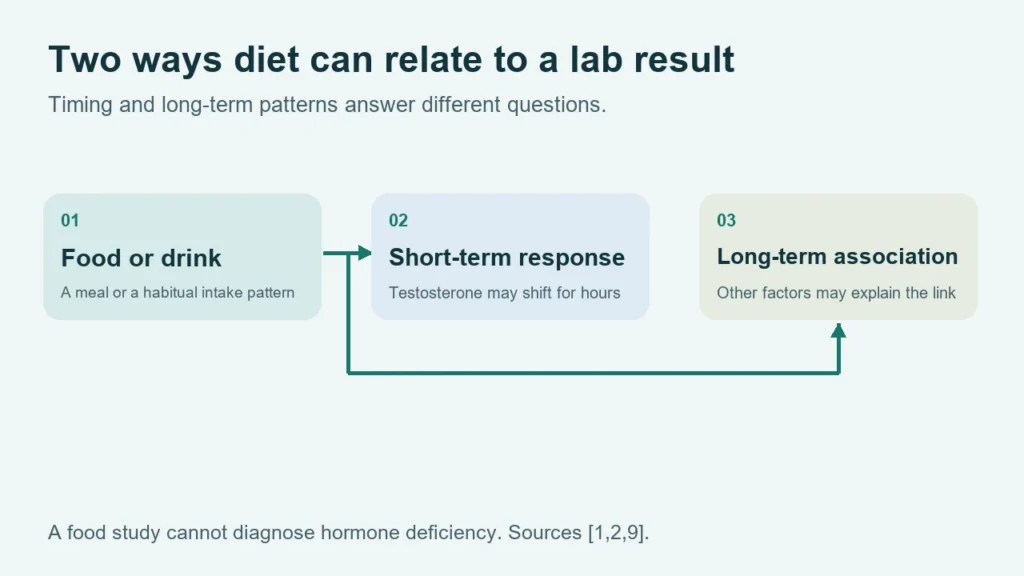
In a study of 14 men with type 2 diabetes and hypogonadism given 75 g of glucose, testosterone fell an average of 11% at one hour before treatment and returned to baseline by two hours. After 23 weeks of intramuscular testosterone therapy, the study found no average decline at the same time point. This small study examined a short-term response, and its findings do not justify taking testosterone in response to food or blood sugar changes. [1]
Which seven foods and drinks are linked to lower testosterone?
Heavy alcohol use has the strongest direct evidence among these examples. Research on refined carbs, sugary drinks, processed meats, dairy, food packaging, and trans fats ranges from observational associations to short-term studies and exposure research. You can make practical swaps for overall health while keeping the size and certainty of the hormone effect in perspective.
| Food or exposure | What the evidence suggests | A practical choice |
|---|---|---|
| Alcohol | Large amounts or chronic heavy intake can lower testosterone. Some small studies observed a temporary rise after lower intake. | Drink less if you drink. A short-term change is not a health reason to start. |
| Refined carbohydrates | An observational study linked a pattern high in bread and pastries and low in some nutrient-rich foods with lower testosterone. | Choose whole grains and beans more often. Keep room for foods you enjoy. |
| Processed meats | Some dietary pattern studies link these foods with lower testosterone. Food composition and the rest of the diet can matter. | Swap some servings for fish, chicken, beans, or lean unprocessed meat. |
| Dairy | One study linked total monounsaturated fat intake to lower total and calculated free testosterone. It did not establish a dairy effect. | Plain yogurt or milk can supply useful nutrients. Choose based on preference and overall diet. |
| Sugary drinks | A U.S. survey found higher odds of a low testosterone result in men reporting the highest intake. | Try water, unsweetened coffee or tea, or sparkling water. |
| Packaged foods | Some bisphenols and phthalates are studied for possible endocrine effects. Exposure comes from multiple sources. | Choose minimally processed foods when practical. Use food-safe containers as directed. |
| Industrial trans fats | One cross-sectional study linked higher intake to lower total and calculated free testosterone and smaller testicular volume. | Favor unsaturated fats from nuts, olive oil, seeds, and fish. |
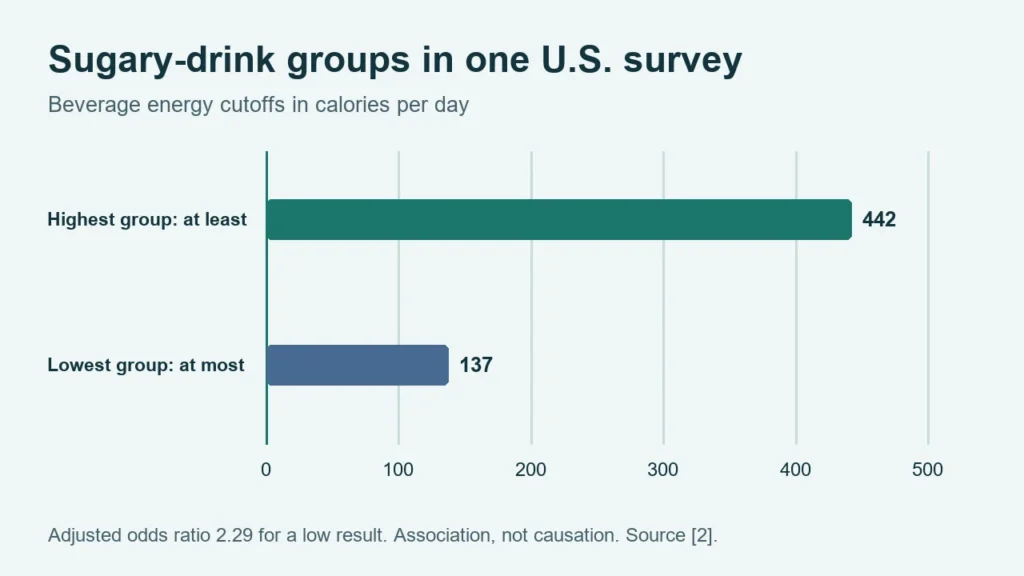
In a U.S. survey of 545 men aged 20–39, the highest sugary-drink group, at least 442 calories per day, had 2.29 times the adjusted odds of being below the study’s testosterone cutoff than the lowest group, at most 137 calories a day. The study used a cutoff below 231 ng/dL. The groups are research categories, and drinks vary in calories. The study design cannot show cause and effect. [2]
What do alcohol, carbohydrates, and trans fat studies leave open?
Heavy alcohol use may interfere with testicular and hormonal signaling. Inflammatory changes and stress-hormone activity may contribute. A small 2023 study found higher testosterone and less sperm DNA fragmentation in a subgroup after three months on a low-carbohydrate Mediterranean food plan. It tested several changes together and did not isolate cutting out refined carbs. [3–5]
The fat-intake study was observational and did not isolate dairy or additives in processed meats. Some studies have also linked trans fats with sperm measures, but fertility outcomes cannot be inferred from those associations. In the United States, FDA action removed most industrial partially hydrogenated oils from the food supply. Packaged foods and restaurant meals vary, and packaging alone does not determine their nutritional value. [6–8]
What does a practical diet for hormone health look like?
Build most meals around a protein, vegetables or fruit, a fiber-rich carbohydrate, and unsaturated fat. Replace a sugary drink with water if that’s an easy change. Adequate calories and protein support muscle and daily function. If low libido, fewer morning erections, or unexplained fatigue persists, ask whether testosterone testing is appropriate.
- Keep repeatable options on hand. Use eggs, fish, chicken, yogurt, beans, or lentils for protein. Add vegetables, fruit, whole grains, and fats such as olive oil or nuts.
- Evaluate symptoms instead of chasing a food rule. Clinicians generally diagnose testosterone deficiency when compatible symptoms accompany repeatedly low morning blood levels. Treatment depends on the cause and fertility goals. Oral testosterone has approved uses. Adding enclomiphene is not an established way to counteract a dietary effect or to preserve fertility during TRT. [9,10]
Common questions about PEPLIX HEALTH
Independent, board-certified physicians evaluate symptoms and review relevant lab results before deciding whether hormone treatment is appropriate. Monarch Brands LLC manages Peplix Health’s administrative services. Bring a medication and supplement list along with any recent results, and ask what the evaluation, laboratory work, and cash-pay follow-up would include.
Can I discuss nutrition before considering medication?
Yes. Ask your clinician what changes are realistic and whether symptoms suggest a need for testing, another evaluation, or treatment.
Who prepares a compounded prescription?
When an independent physician identifies a patient-specific need and legal requirements are met, a state-licensed pharmacy operating under Section 503A can fill the prescription. Compounded drugs do not have FDA approval. Ask the prescriber how they individualize the dose and why a compounded formulation would be suitable. [11]
This article is educational. Discuss persistent symptoms or treatment choices with a licensed healthcare professional.
For consultation information, see our low testosterone guide or start an online assessment.
Sources
- Dhindsa et al. — oral glucose before and during TRT
- Chen et al. — sweetened beverages and total testosterone
- Review — alcohol and testosterone synthesis
- Nutrients — dietary patterns and testosterone
- Corsetti et al. — Mediterranean diet and semen study
- Dietary fats, reproductive hormones, and testicular volume
- Review — endocrine-disrupting chemicals and reproductive health
- FDA — final determination on partially hydrogenated oils
- Endocrine Society — testosterone therapy guideline
- Kim et al. — enclomiphene compared with testosterone gel
- FDA — compounding and FDA approval
This article is for general education and is not medical advice. Talk with a licensed clinician before starting, stopping or changing any treatment. Compounded medications are not FDA-approved. See our safety information.
Keep reading

Testosterone
What Is Enclomiphene and How Does It Compare With TRT?
Compare enclomiphene, TRT, and Clomid for low testosterone. Learn what trials found about sperm counts, side effects, and FDA approval.

Testosterone
Does Enclomiphene Build Muscle?
Does enclomiphene build muscle? Review the evidence on testosterone, lean mass, fertility, and what to discuss before treatment.

Testosterone
MCT Oil vs. Seed Oils in Injectable Testosterone
Compare MCT, sesame, and cottonseed oil in injectable testosterone. Learn what carriers do and what to ask about irritation or allergies.