Can Finger Length Tell You Your Testosterone Level?
Learn what the 2D:4D finger ratio measures, why it cannot tell you your testosterone level, and which blood tests can evaluate low testosterone.
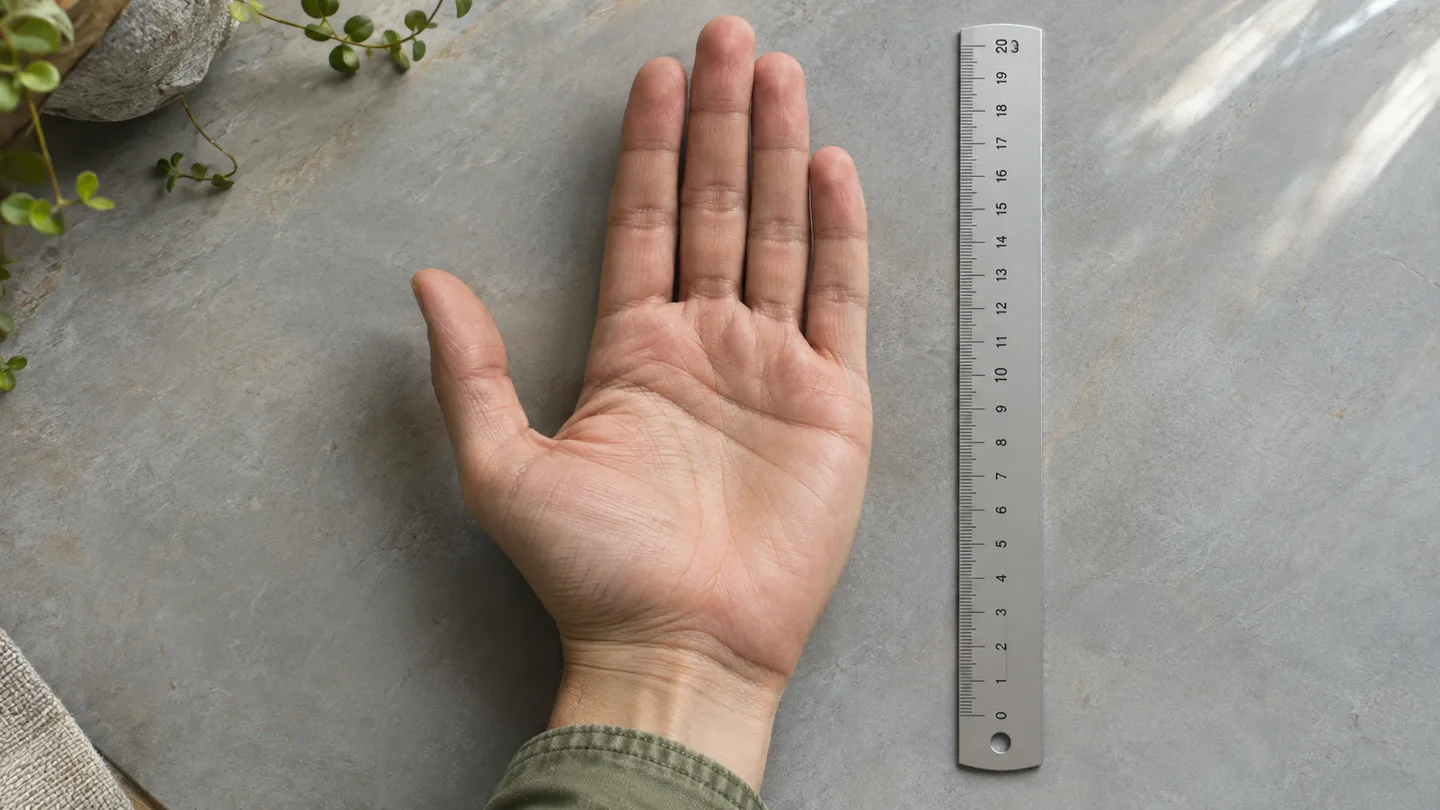
Finger length cannot reliably tell you whether your current testosterone is high or low. The 2D:4D ratio compares the index and ring fingers and has been studied as a possible marker of development before birth. If symptoms suggest low testosterone, a clinician can evaluate them using properly timed blood tests.
What is the 2D:4D ratio and how do you measure it?
Divide the length of your index finger, the second digit, by the length of your ring finger, the fourth digit, on the same hand. A value below one means the ring finger is longer. A value above one means the index finger is longer. The result describes relative finger length.
With your palm up, lay your hand flat and keep the fingers straight and relaxed. For a repeatable estimate, measure each finger from the base crease on the palm side to the fingertip using the same units. A visual comparison can show which finger is longer. Measurements can vary by hand and technique. [1]
The internet claim assigns “high testosterone” to a longer ring finger and “low testosterone” to a longer index finger. It grew out of the hypothesis that prenatal androgen exposure might leave a visible marker in finger proportions. The hypothesis and a current laboratory hormone result answer different questions. [1,2]
What does research say about finger length and testosterone?
A meta-analysis of 54 studies and 8,077 participants found no consistent association between 2D:4D and adult testosterone, testosterone changes, or prenatal testosterone overall. A subset measured in amniotic fluid raised a question for future research. These results do not support using finger lengths to estimate someone’s current testosterone level.
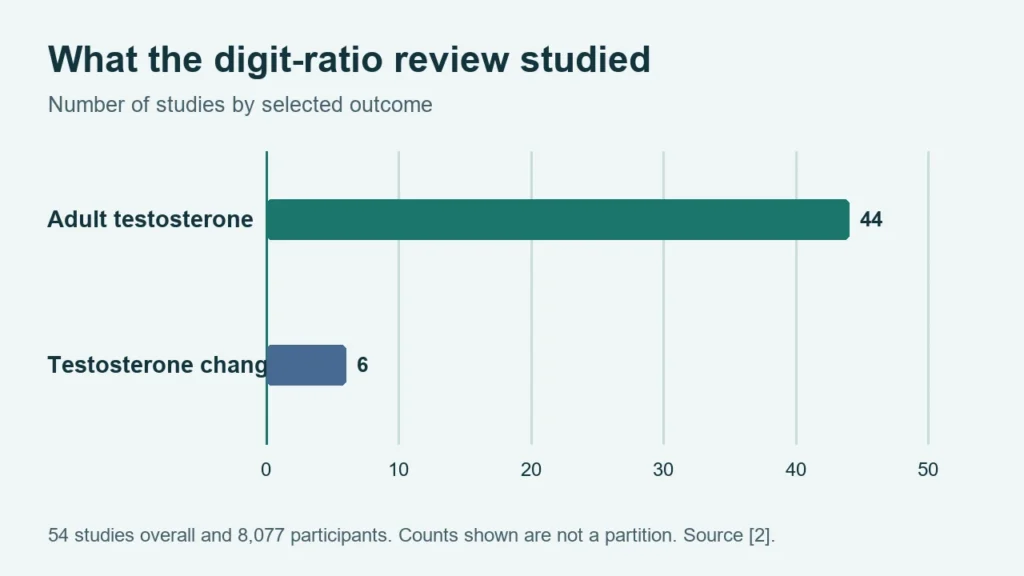
The meta-analysis included 44 studies examining adult testosterone and six examining changes in testosterone. Results did not show a reliable relationship whether testosterone was measured in blood or saliva, or whether the right or left hand was used. A possible association in a subgroup with amniotic fluid measurements required confirmation. [2]
- Sociability and social capital. A 2019 observational study reported associations between a lower ratio and some measures of social connections in men. It did not validate the ratio against current testosterone. [3]
- Aggression and sports claims. A 2005 questionnaire study found an association with self-reported physical aggression in men and no such association in women. It cited earlier reports on perceived masculinity, dominance, and performance in some sports. Those findings do not establish a diagnostic test or allow personality or ability to be inferred from an individual’s fingers. [4]
How should you check for low testosterone?
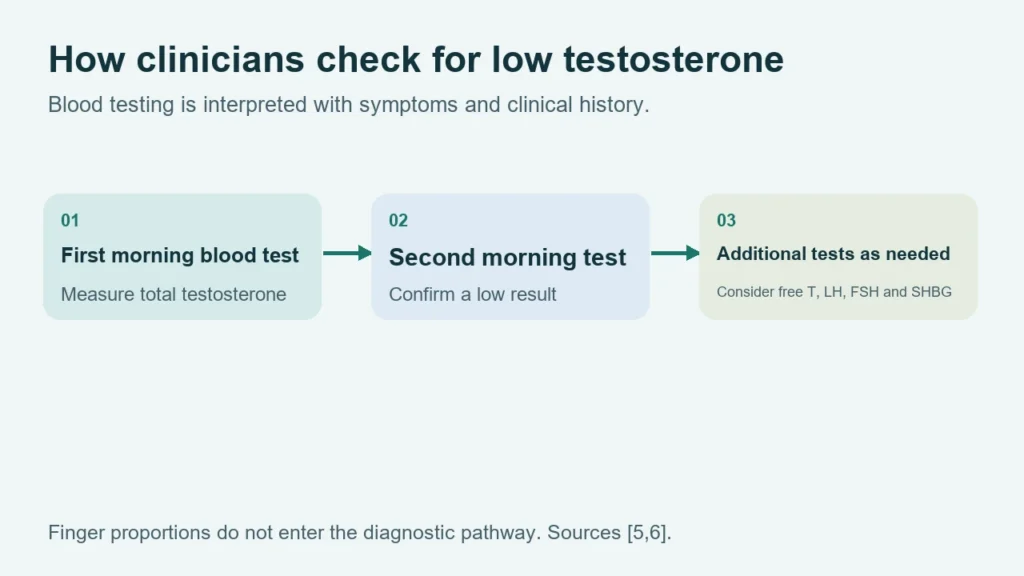
Ask a clinician about testing if you have a persistent drop in libido, erectile changes, or other symptoms that may fit testosterone deficiency. A venous total testosterone test early in the morning is the usual starting point. A second morning result helps confirm a low value before deciding whether further investigation or treatment is appropriate.
| Method or marker | What it tells you | How to use it |
|---|---|---|
| Finger ratio | Relative digit length. | No clinical role in diagnosing low or high testosterone. |
| Morning total testosterone | Measures circulating free and protein-bound testosterone. | Repeat a low result on a separate morning. Use the assay and lab reference interval. |
| Free testosterone and SHBG | Help interpret how much testosterone is unbound when total levels are borderline or binding is altered. | Use a validated calculation or an appropriate laboratory method when indicated. |
| LH and FSH | Pituitary signals that can help distinguish testicular from central causes. | Often checked after low testosterone is confirmed. |
| Validated home blood collection | A convenient collection option for some panels, depending on the lab and sample method. | Ask what the kit measures, how results are validated, and whether a low result needs venous confirmation. |
Other symptoms can include fatigue, poor concentration, mood or sleep changes, lower muscle mass, and reduced bone density. They may have causes unrelated to testosterone. Interpret results alongside symptoms, age, health history, and medicines. A home panel may include total testosterone, calculated free testosterone, LH, or FSH, depending on the service. [5–7]
What are the next steps if your tests are low?
Treatment depends on the cause and whether compatible symptoms accompany repeatedly low results. Sleep, regular physical activity, nutrition, and treatment of underlying conditions may help in some cases. A licensed physician can discuss testosterone replacement, including approved oral formulations when appropriate, and review how each option could affect fertility and follow-up.
Bring your full reports and an up-to-date medication list. Ask about untreated sleep apnea, weight changes, illness, or other factors that may contribute. A clinician can assess whether an intervention is likely to help sexual symptoms or body composition and explain why fatigue, body fat, mood changes, or poor erections alone do not establish a need for testosterone. [5,6]
Common questions about PEPLIX HEALTH
Independent, board-certified physicians can assess symptoms, review lab results, and decide whether testing or treatment is appropriate. Monarch Brands LLC manages Peplix Health’s administrative services. If you bring an at-home report, include the collection time, sample type, lab reference intervals, and any medication or supplements that may affect the result.
Can I ask about oral testosterone or other TRT options?
Yes. An independent physician can review indications, expected benefits, risks, and formulation-specific monitoring. Bring up fertility goals before starting any testosterone prescription.
Who fills a compounded prescription?
A state-licensed pharmacy operating under Section 503A can fill a valid patient-specific prescription when clinical needs and applicable legal requirements are met. Compounded drugs do not have FDA approval. Ask who would dispense the medication and why that formulation is appropriate. [8]
This article is educational. Discuss symptoms and treatment decisions with a licensed healthcare professional.
For consultation information, see our low testosterone guide or start an online assessment.
Sources
- Study methods — index-to-ring digit measurement
- Sorokowski and Kowal — meta-analysis of digit ratio and testosterone
- Buchholz et al. — digit ratio and social capital
- Bailey and Hurd — digit ratio and physical aggression questionnaire
- Endocrine Society — testosterone therapy and diagnosis guideline
- American Urological Association — testosterone deficiency guideline
- Marshall et al. — testosterone measurement in microsamples
- FDA — compounding and FDA approval
This article is for general education and is not medical advice. Talk with a licensed clinician before starting, stopping or changing any treatment. Compounded medications are not FDA-approved. See our safety information.
Keep reading

Testosterone
What Is Enclomiphene and How Does It Compare With TRT?
Compare enclomiphene, TRT, and Clomid for low testosterone. Learn what trials found about sperm counts, side effects, and FDA approval.

Testosterone
Does Enclomiphene Build Muscle?
Does enclomiphene build muscle? Review the evidence on testosterone, lean mass, fertility, and what to discuss before treatment.

Testosterone
MCT Oil vs. Seed Oils in Injectable Testosterone
Compare MCT, sesame, and cottonseed oil in injectable testosterone. Learn what carriers do and what to ask about irritation or allergies.