What to expect in your first year on testosterone therapy
What happens in the first year on TRT? Compare timelines for libido, strength and bone density, and learn when to expect follow-up labs.

Testosterone replacement therapy can affect different symptoms and measurements on different schedules. A clinical review reported changes in sexual interest around three weeks and body composition around 12 to 16 weeks. Bone density changes can take six months or longer. Your clinician monitors benefits, hormone levels and safety throughout the first year.
How soon do libido, erections or mood change on TRT?
Sexual interest may change within weeks, while erectile function can take several months. Some studies reported changes in depressive mood or quality of life early in treatment. Energy and concentration do not reliably follow the same schedule. Early changes in one symptom do not tell you how the others will respond.
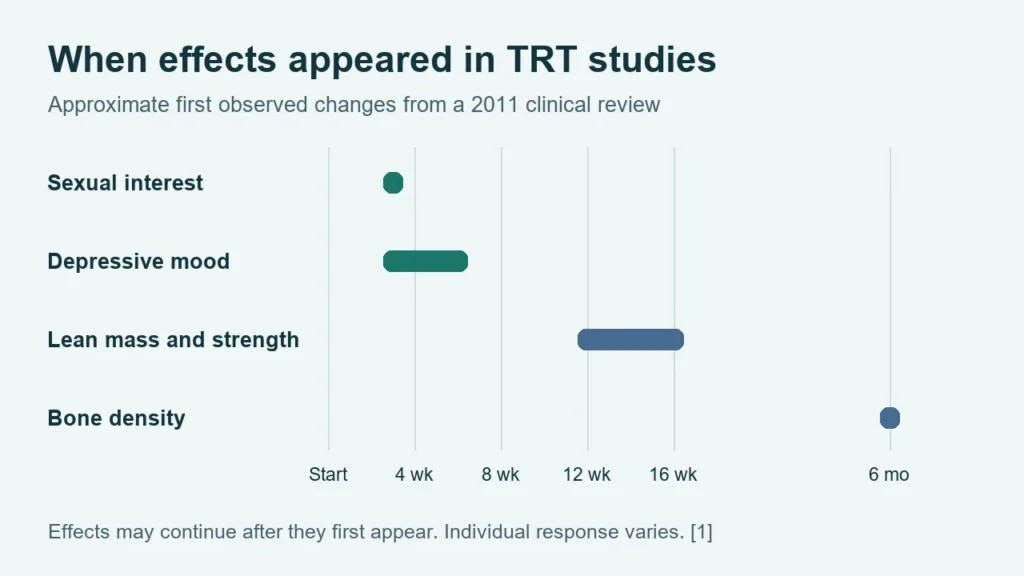
The 2011 review by Saad and colleagues summarized studies that used different testosterone formulations and enrolled different groups of patients. Sexual interest changed around week three and tended to level off by week six. Some men may notice changes in spontaneous erections earlier, while erections or ejaculation can take up to six months to change. Quality-of-life effects appeared around weeks three to four in some studies. Changes in depressive mood were detectable around weeks three to six, with the largest effects observed later in some studies. [1]
In the Testosterone Trials, testosterone improved sexual activity in older men with low testosterone. The primary vitality outcome did not significantly improve. Fatigue or erectile symptoms that persist are worth discussing because they can have other causes. [2,3]
When can TRT affect strength, body composition or bone?
Some studies found changes in lean mass, fat mass and measured strength by about three to four months. Bone density changes were detectable around six months and could continue beyond the first year. Changes depend on baseline health, formulation, activity and other factors. Testosterone therapy is prescribed for medically evaluated deficiency.
| Outcome | When changes appeared in reviewed studies | What to keep in mind |
|---|---|---|
| Lean mass, fat mass and strength | Around 12–16 weeks, often leveling off by 6–12 months | Visible changes and strength gains vary. Resistance training and adequate nutrition support function. [1] |
| Lipids and blood glucose | Lipid changes from about week four in some studies. Glycemic changes were reported at 3–12 months. | These changes vary. A later randomized trial did not find improved glycemic control. [1,4] |
| Bone mineral density | About six months, sometimes continuing for years | Density improvement does not guarantee fracture prevention. [1,5] |
The TRAVERSE diabetes substudy found that testosterone did not prevent progression from prediabetes or improve glycemic control. A separate fracture analysis did not show fewer clinical fractures. Continue usual care for cholesterol, diabetes risk and bone health. [4,5]
What tests should you expect during the first year?
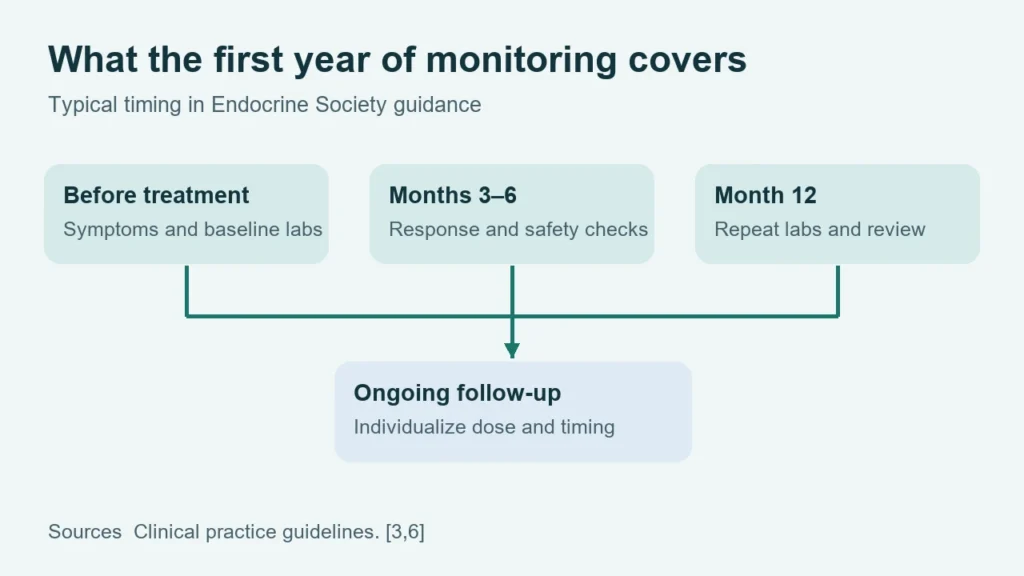
The Endocrine Society recommends checking testosterone and hematocrit three to six months after starting therapy, again at 12 months and then annually. Baseline tests and the timing of follow-up blood draws depend on the formulation and your health history. Your clinician also reviews symptoms, adverse effects and relevant prostate screening.
Testosterone stimulates red blood cell production. Hemoglobin and hematocrit can rise by about three months, with some studies seeing peak changes around months nine to 12. That can help correct anemia in some men, but an excessive rise needs medical review. The Endocrine Society recommends that clinicians hold therapy and investigate if hematocrit exceeds 54%, then determine whether and how to restart it. [1,3]
- Before starting. Confirm symptoms and consistently low testosterone, check baseline hematocrit, and discuss fertility, blood pressure and prostate risk as appropriate. [3,6]
- At follow-up. Record changes that matter to you and any side effects. The physician will time testing to your formulation and decide whether the prescribed dose needs adjustment. [3]
- When results and symptoms disagree. If testosterone has reached the intended range and symptoms persist, ask your clinician to revisit the diagnosis, other causes and the reason to continue therapy. [3,6]
What if your progress is slower than the timeline?
Study timelines are estimates, and a slower response on one measure can be expected. Persistent symptoms or new side effects warrant a review with your clinician, who can check treatment levels, timing, other diagnoses and safety. The decision to continue depends on the overall response and risks over time.
Bring a list of the symptoms you wanted to improve and examples from the past few weeks. Tell your clinician about new medications, changes in sleep or other medical conditions. If your blood pressure rises or you are planning to conceive, raise that at follow-up. Testosterone can raise blood pressure and suppress sperm production. [3,6,7]
Common questions about PEPLIX HEALTH
Peplix Health offers cash-pay evaluation for hormone concerns. Monarch Brands LLC manages nonclinical operations, and independent, board-certified physicians confirm whether treatment is medically appropriate. Your physician sets the dose and follow-up plan based on symptoms, laboratory results, treatment formulation, side effects and your personal health goals and risk factors.
Can I get testosterone for bodybuilding or sports performance?
Peplix Health’s clinical evaluation addresses suspected medical testosterone deficiency. Diagnosis depends on symptoms, relevant signs and laboratory testing. The strength and body composition changes described here were studied in a treatment context. [1,3]
Who fills a compounded prescription when one is appropriate?
When clinically appropriate and legally available, a licensed pharmacy operating under Section 503A can fill a valid patient-specific prescription subject to federal and state requirements. Compounded medications do not undergo FDA premarket review for safety, effectiveness or quality. [8]
For consultation information, see our low testosterone guide or start an online assessment.
This article is for general education and does not replace individualized medical advice.
Sources
- Saad et al. Onset and duration of testosterone treatment effects
- Snyder et al. Effects of testosterone treatment in older men
- Endocrine Society. Testosterone therapy guideline
- Bhasin et al. TRAVERSE diabetes substudy
- Snyder et al. Testosterone treatment and fractures
- AUA. Testosterone deficiency guideline
- FDA. Class-wide labeling changes for testosterone products
- FDA. Compounding and the FDA
This article is for general education and is not medical advice. Talk with a licensed clinician before starting, stopping or changing any treatment. Compounded medications are not FDA-approved. See our safety information.
Keep reading

Testosterone
What Is Enclomiphene and How Does It Compare With TRT?
Compare enclomiphene, TRT, and Clomid for low testosterone. Learn what trials found about sperm counts, side effects, and FDA approval.

Testosterone
Does Enclomiphene Build Muscle?
Does enclomiphene build muscle? Review the evidence on testosterone, lean mass, fertility, and what to discuss before treatment.

Testosterone
MCT Oil vs. Seed Oils in Injectable Testosterone
Compare MCT, sesame, and cottonseed oil in injectable testosterone. Learn what carriers do and what to ask about irritation or allergies.