How to Test Your Testosterone Levels and Read the Results
Compare clinic and at-home testosterone tests. Learn when to test, what total and free testosterone mean, and how to follow up on results.
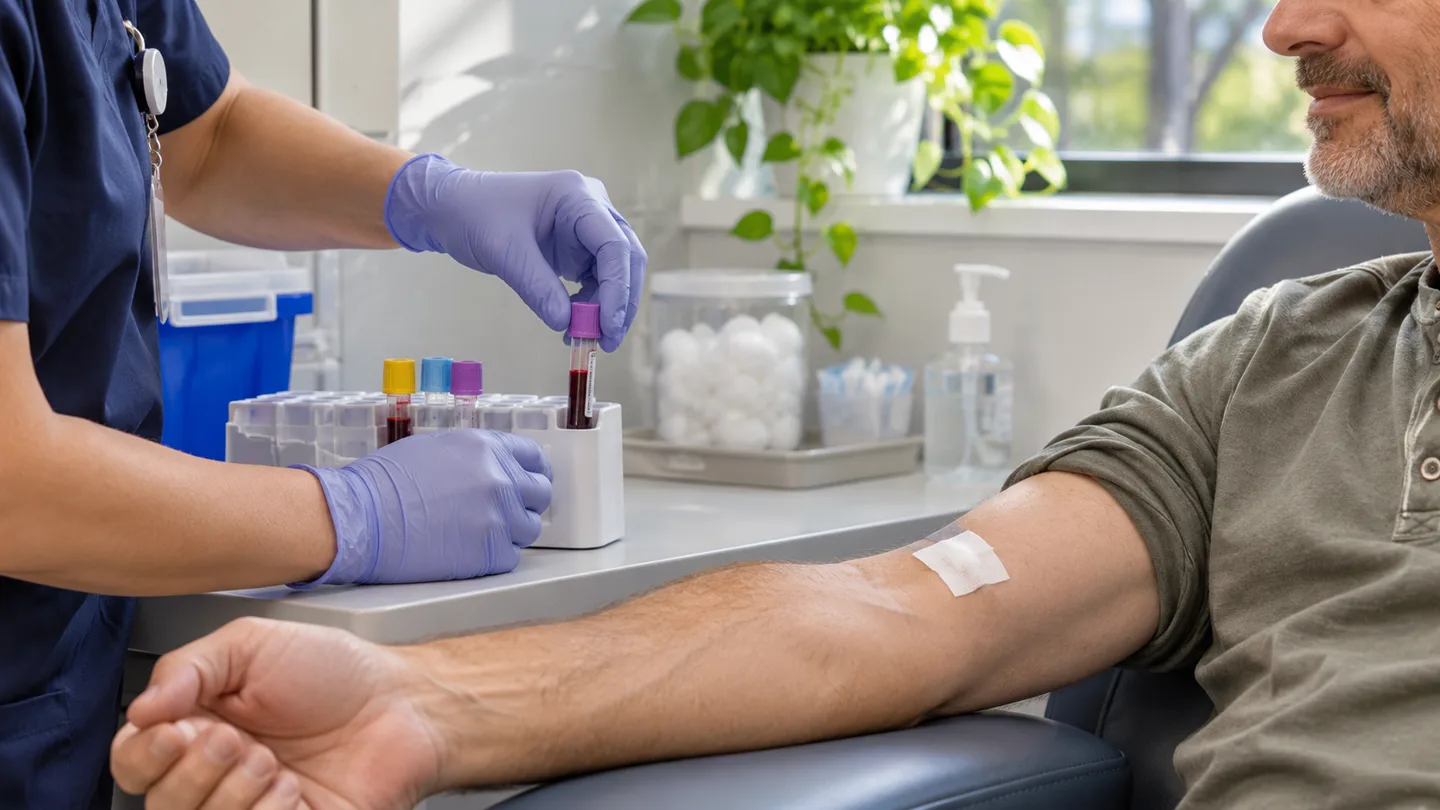
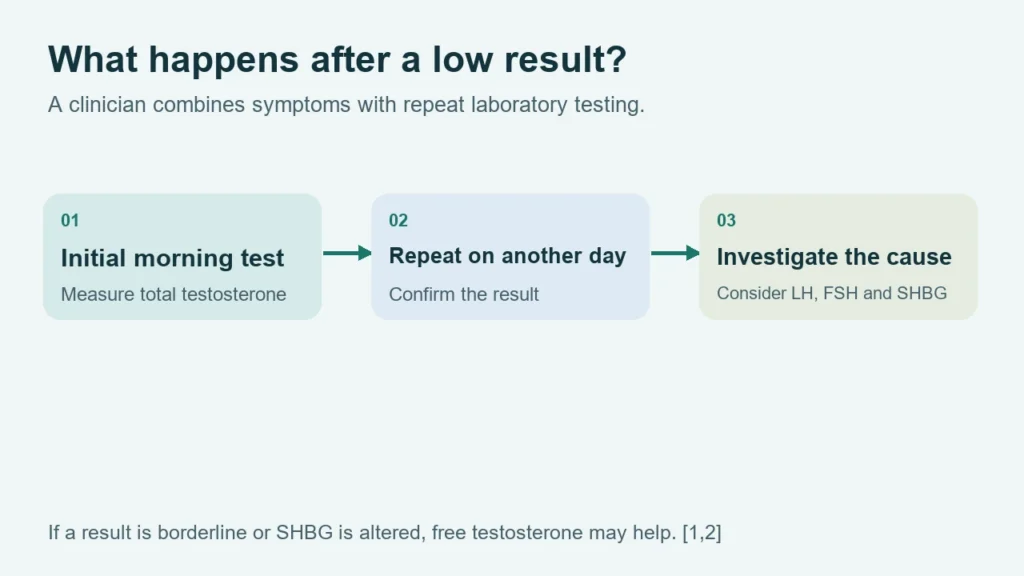
If you have symptoms of testosterone deficiency, start with a clinician-ordered total testosterone blood test early in the morning. A low value usually needs confirmation on a separate morning. Free testosterone, SHBG, and other markers can help when results are borderline or when your clinician needs to look for a cause.
Which type of testosterone test should you use?
A laboratory serum test from a vein is the standard first choice for diagnosis. Upper-arm collection devices and finger-prick kits can be convenient where validated. Check which markers are available and how the lab handles the sample. Saliva is easy to collect, but it is not the recommended test for diagnosing low testosterone.
| Method | What you provide | What to check |
|---|---|---|
| Clinic venous draw | A phlebotomist collects a small arm-vein sample. The draw itself usually takes only a few minutes. | Preferred for diagnostic confirmation and testing multiple markers. |
| At-home upper-arm draw | A device collects capillary blood from the upper arm, then you mail the sample. | Check whether the assay and reference interval are validated for this sample type. |
| At-home finger draw | Finger-prick blood may be collected in a tube or dried on a card. | Small sample volume, collection technique, and handling can affect results. |
| At-home saliva | A small saliva sample avoids a needle. | Salivary results cannot substitute for serum total or validated free testosterone in diagnosing hypogonadism. |
Home kits can often be collected within minutes. Turnaround depends on shipping, receipt, and lab processing, and results can take days. Check lab certification, the assay, and whether free testosterone is measured or calculated. Timing, food intake, insufficient sample, transport, home technique, and lab methods can affect comparisons. A clinician may repeat a surprising home result with a venous sample. [1–4]
What is the best time of day to test testosterone?
Testosterone is typically higher early in the day, especially in younger men. For initial diagnostic testing, morning blood draws on two separate days reduce the chance that a later draw or daily variation will look like deficiency. Ask if you should fast and what timing is best if you work nights.
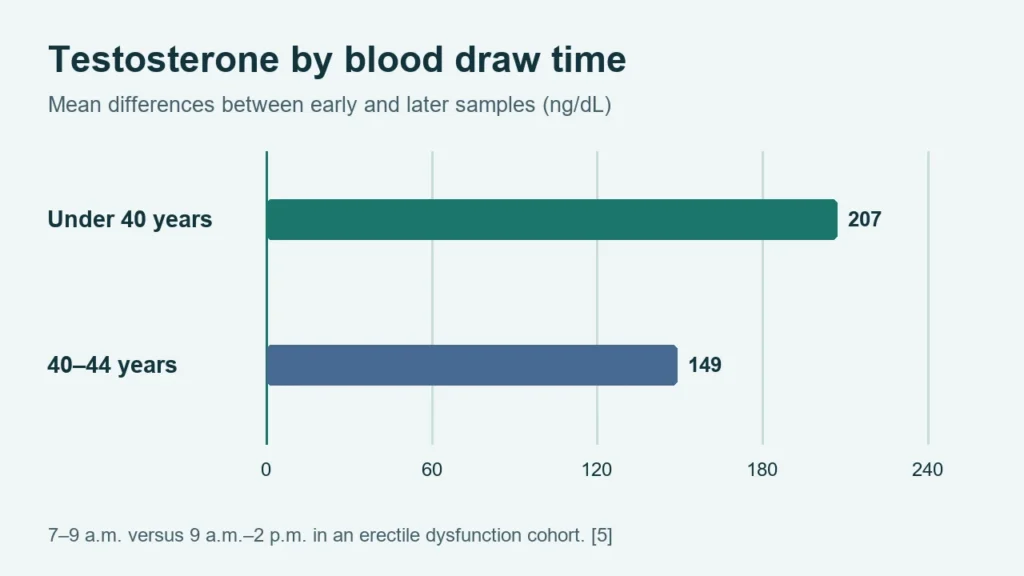
A typical collection window is about 7–10 a.m. A retrospective study in men evaluated for erectile dysfunction found that the mean level was 207 ng/dL lower after 9 a.m. in the under-40 group and 149 ng/dL lower in men aged 40–44. Those were comparisons between groups of samples, not within-person changes or a formula you can apply to your result. Guidelines still recommend morning sampling for diagnosis without a cutoff at age 45. [1,2,5]
- Age and health matter. Average testosterone can decline gradually as men age, with rates that vary by population and marker. Secular declines were reported in some cohorts. Obesity, diabetes, kidney or endocrine disease, and acute illness can affect results. [1,6,7]
- Review sleep and medication timing. Sleep disruption, major calorie restriction, and illness or physiological stress can affect values. Tell your clinician about antiandrogens, corticosteroids, opioids, and any testosterone or anabolic steroids. Ask when to draw blood if you already use a gel, cream, injection, or oral product. [1,2]
What do total testosterone, free testosterone, and estradiol tell you?
Total testosterone counts both bound and unbound hormone and is usually the first test. Free testosterone is the small fraction that circulates without a binding protein. It may help when total testosterone is borderline or SHBG is altered. Estradiol, LH, and FSH can help answer other questions when clinically indicated.
The testes produce most testosterone in men, and typical concentrations are higher in men than women. Reference intervals vary with age, sex, assay, and sample type. A large fraction binds tightly to SHBG, around 70% in some estimates, and another 20–30% may bind loosely to albumin. These proportions vary. About 1–2% is often free. Bioavailable testosterone includes free hormone and the fraction loosely bound to albumin. [1,3,7,8]
If your total level looks normal despite persistent symptoms, an elevated SHBG can make free testosterone informative. Free testosterone can be measured by equilibrium dialysis or calculated from total testosterone, SHBG, and albumin using a validated formula. Estradiol supports bone health and sexual function. Unexpected levels need interpretation alongside symptoms and medications. [1,8]
What should you do with a low or high testosterone result?
Bring the full report to your clinician before changing medication or supplements. Testosterone deficiency generally requires consistent symptoms plus low testosterone on repeat morning testing. A high result also needs context, including the assay and recent medication use. Further testing and follow-up depend on what the clinician suspects and what treatment you receive.
- Low results. Possible causes include testicular disorders, pituitary or hypothalamic problems, obesity, long-term illness, and medication effects. Symptoms can include lower libido, erectile difficulty, less body hair or muscle, greater fat mass, low bone density, fatigue, changes in mood, or trouble concentrating. Sexual symptoms are often more informative than fatigue alone. [1–3]
- High results. Recent dosing and use of testosterone or anabolic steroids are important explanations. Rare causes include testicular or adrenal tumors, congenital adrenal hyperplasia, and unusual pituitary disorders. Acne, blood pressure changes, body-hair changes, and mood or behavior changes are nonspecific and cannot diagnose a high level. [1–3]
- Follow-up. The AUA uses below 300 ng/dL as a threshold that supports diagnosis with symptoms and repeat results. If treatment starts, clinicians may reassess symptoms and labs at about three to six months, with subsequent timing based on therapy and results. Testosterone, hematocrit, and prostate assessment when appropriate are common parts of monitoring. [1,2]
Common questions about PEPLIX HEALTH
Peplix Health’s care model puts testing and treatment decisions with independent, board-certified physicians. Monarch Brands LLC manages administrative services. Bring your dated results, the time each sample was taken, and your medication list. Ask whether any at-home result needs confirmation and what follow-up would be needed if treatment is appropriate.
Can I bring my own lab results?
Ask which results the practice can review. Include units, the lab reference interval, sample type, time of day, and any therapy timing.
Who decides the formulation, dose, and pharmacy?
An independent physician individualizes the plan. If a compounded prescription meets a patient-specific need and applicable requirements, a state-licensed pharmacy operating under Section 503A can fill it. Compounded medicines do not have FDA approval. [9]
This article is for education. Discuss diagnosis or treatment decisions with a licensed healthcare professional.
For consultation information, see our low testosterone guide or start an online assessment.
Sources
- Endocrine Society — diagnostic testing and monitoring guideline
- American Urological Association — testosterone deficiency guideline
- MedlinePlus — testosterone testing
- Marshall et al. — testosterone in capillary microsamples
- Long et al. — timing data from Welliver and colleagues
- Travison et al. — age-independent population trends
- Travison et al. — harmonized reference ranges
- Review — binding of testosterone to SHBG and albumin
- FDA — 503A compounding requirements and oversight
This article is for general education and is not medical advice. Talk with a licensed clinician before starting, stopping or changing any treatment. Compounded medications are not FDA-approved. See our safety information.
Keep reading
Testosterone
What Is Enclomiphene and How Does It Compare With TRT?
Compare enclomiphene, TRT, and Clomid for low testosterone. Learn what trials found about sperm counts, side effects, and FDA approval.

Testosterone
Does Enclomiphene Build Muscle?
Does enclomiphene build muscle? Review the evidence on testosterone, lean mass, fertility, and what to discuss before treatment.
Testosterone
MCT Oil vs. Seed Oils in Injectable Testosterone
Compare MCT, sesame, and cottonseed oil in injectable testosterone. Learn what carriers do and what to ask about irritation or allergies.