Does Lifting Weights Increase Testosterone?
Learn why lifting can briefly raise testosterone, what that means for resting levels, and how strength training supports long-term health.
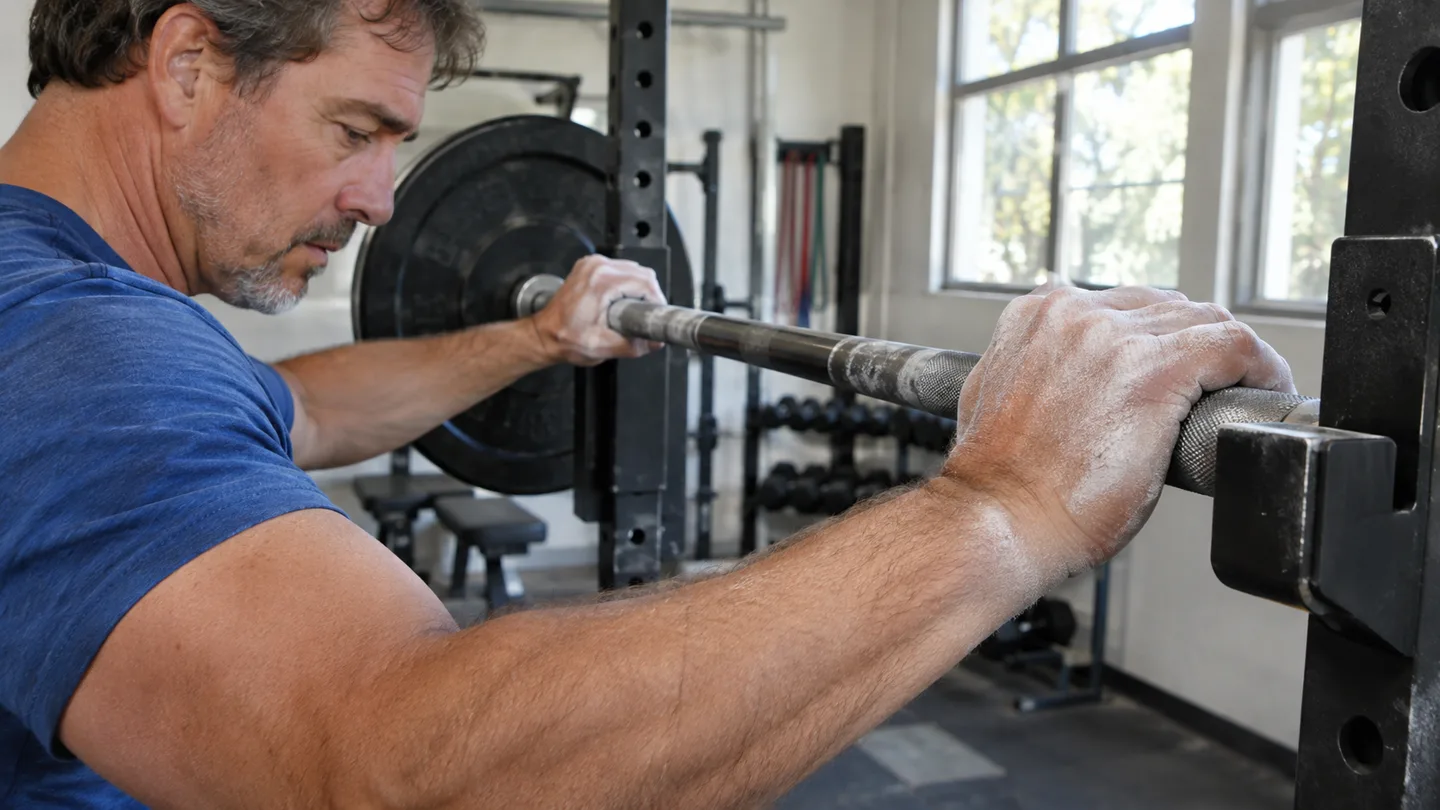
Lifting weights can briefly raise measured testosterone after a demanding workout, especially when you use large muscle groups. Research has yet to show a reliable, lasting increase in resting testosterone from lifting alone. Train for strength and long-term health, and ask a clinician about persistent symptoms of low testosterone.
How long does testosterone rise after lifting?
A testosterone increase can show up immediately after resistance exercise and may fade during early recovery. The response varies with training volume, intensity, rest, and the muscles involved. A short-lived rise after a workout measures a different thing from the resting testosterone level a clinician uses to assess possible deficiency.
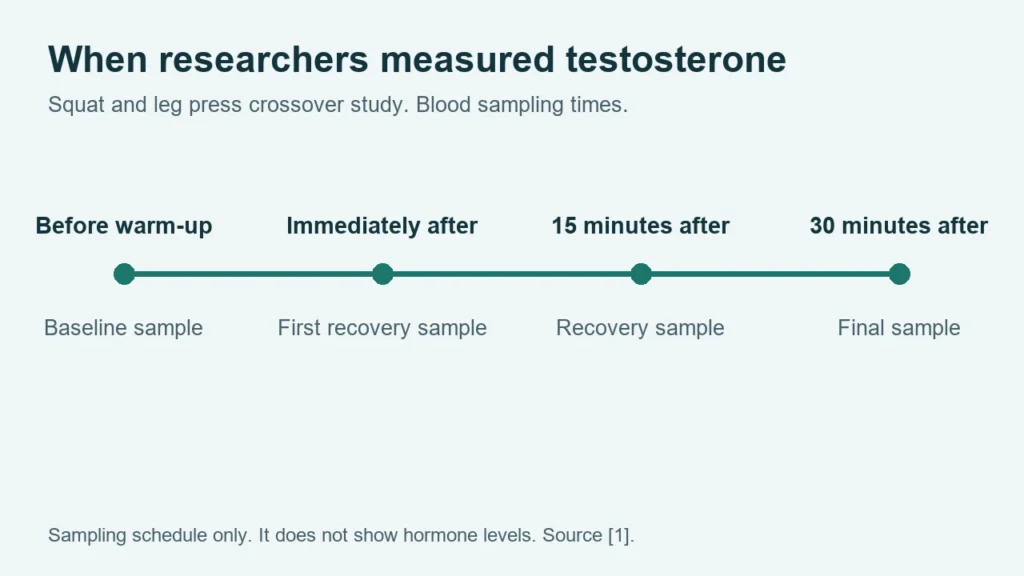
In a small crossover study, recreationally trained men completed separate squat and leg press sessions. Blood was drawn before the warm-up, immediately after exercise, and 15 and 30 minutes into recovery. The squat produced a larger acute testosterone response than the leg press. The study did not test which exercise would raise resting testosterone over weeks or months. [1]
Reviews find that demanding sessions with more total work, shorter rests, and several large muscle groups can produce an acute rise. Findings on long-term resting levels are mixed. Changes in plasma volume, hormone clearance, and signaling may all influence the measured response. A blood sample taken after lifting can reflect the workout as well as the individual’s hormone status. [2,3]
Which strength exercises are most useful?
Pick exercises you can perform consistently and progress with good technique. Squats and other compound lifts recruit several joints and muscle groups at once. Machine exercises and smaller lifts can also build strength. A study that finds a larger short-term hormone response doesn’t establish that one exercise builds more muscle over time.
| Training option | What it trains | How to use the evidence |
|---|---|---|
| Squats and other compound lifts | A squat uses the quadriceps, glutes, and other lower-body muscles, with the calves, hamstrings, abdomen, and back helping control or stabilize the motion. | Use a version that suits your mobility and skill. The squat study’s hormone results concern one workout. [1] |
| Leg press and targeted lifts | A machine can support the trunk while training the lower body. A curl focuses on fewer muscles. | Include these when they fit your goals, equipment, or ability to train comfortably. |
| Higher-volume sets with short rests | Submaximal loads are lighter than your one-repetition maximum. Multiple sets can build fatigue, especially near failure. | A study protocol using about 90 seconds of rest recorded short-term increases in total testosterone and sex hormone-binding globulin (SHBG). It does not establish an ideal rest interval. [4,5] |
SHBG binds circulating testosterone, so a change in total testosterone or SHBG cannot establish how free testosterone changed. Researchers have proposed that lactate could contribute to the acute hormonal response. The evidence does not establish that lactate causes a meaningful testosterone increase in people who lift. Training to failure is optional. [2,4,5]
What are the long-term benefits of lifting weights?
Regular strength training can improve strength, help manage blood sugar and blood pressure, support bone density, and reduce visceral fat. Studies also report improvements in some symptoms of anxiety and depression. These benefits matter whether or not your resting testosterone changes, and their size depends on your training and starting health.
- Blood sugar and abdominal fat. Muscles use glucose during activity, and regular training can support glucose regulation. In a nine-month randomized study of adults with type 2 diabetes and a BMI in the normal range, strength training improved HbA1c more than aerobic training. Average HbA1c changes were −0.44 percentage points with strength training, −0.24 with aerobic training, and −0.35 with combined training. Only the strength group’s change from baseline reached statistical significance. Other research found modest reductions in fat mass and visceral fat. [6,7]
- Blood pressure and cholesterol. Resistance training can help lower blood pressure. Studies report small or variable improvements in lipids, including LDL cholesterol. One observational cohort linked less than an hour of weekly resistance exercise with a lower rate of metabolic syndrome. Those findings do not establish that exactly 30 minutes a week prevents heart disease. [8–10]
- Bone health and function. Mechanical loading can stimulate bone remodeling, helping maintain or improve bone density at some sites. Stronger muscles can support balance and daily tasks. Actual fracture prevention depends on factors including bone health, balance, and fall risk. [11]
- Mood and brain health. Trials and reviews report reductions in anxiety or depressive symptoms for some participants. Researchers have also studied brain-derived neurotrophic factor (BDNF), a protein involved in plasticity, learning, and memory. A change in circulating BDNF does not by itself establish improved memory or learning. [12–14]
How do you build a routine you can sustain?
Start with two weekly strength sessions that work the major muscle groups. Use a level of effort you can recover from, and add activity you enjoy, such as brisk walking. Track the weights and repetitions you can perform with control. Increase the difficulty gradually when your technique and recovery stay consistent.
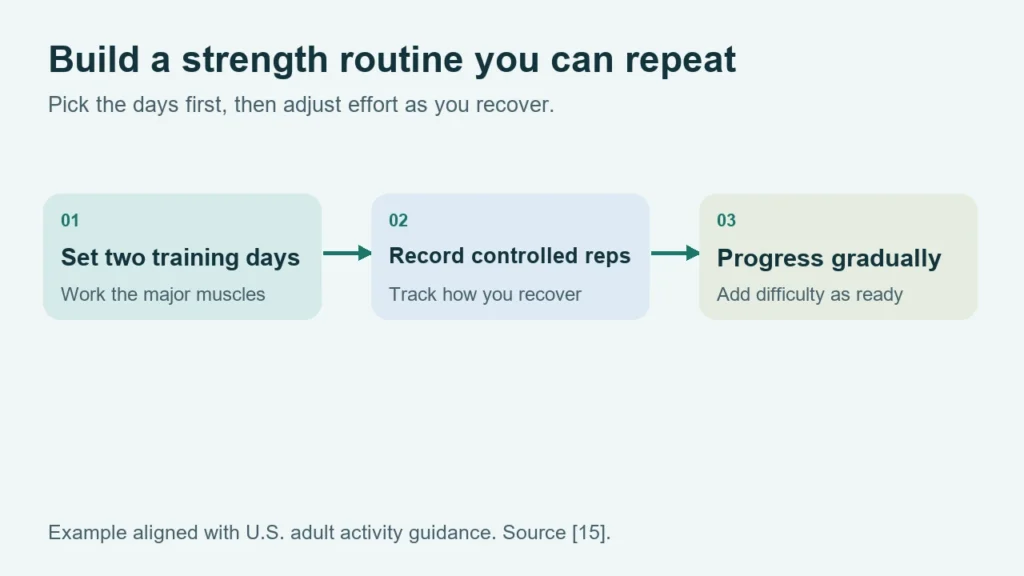
U.S. guidance recommends at least two muscle-strengthening days per week and 150 minutes of moderate aerobic activity or its vigorous equivalent. Easy daily walking can fit around strength training. More experienced adults may choose three to five strength sessions and a weekly sprint or sport session if their conditioning and recovery support it. Treat that schedule as one way to organize exercise. [15]
Common questions about PEPLIX HEALTH
Independent, board-certified physicians can evaluate persistent symptoms, review medical history and blood work, and help you decide whether you need further testing. Monarch Brands LLC provides management services for Peplix Health. For a cash-pay consultation, bring a list of symptoms, previous testosterone results, medications, and any fertility goals.
Can resistance training treat clinically low testosterone?
Exercise can support health while your clinician evaluates the cause of symptoms. Guidelines generally call for symptoms and consistently low testosterone on repeat morning testing before diagnosing hypogonadism. Follow the clinician’s instructions on test timing. [16]
Who fills a prescription if compounding is appropriate?
A licensed physician can individualize treatment and dosing after evaluation. If an individual medical need warrants compounding and applicable requirements are met, a state-licensed pharmacy operating under Section 503A can prepare a patient-specific prescription. Compounded drugs lack FDA approval. [17]
For consultation information, see our low testosterone guide or start an online assessment.
Sources
- Shaner et al. – squat versus leg press hormone study
- Review – acute and resting testosterone responses to exercise
- Review – resistance exercise and hormonal responses
- McCaulley et al. – hormonal responses to resistance exercise protocols
- Stanković et al. – resistance training and testosterone review
- Kobayashi et al. – strength training and HbA1c trial
- Wewege et al. – resistance training and visceral fat
- Meta-analysis – resistance training and blood pressure
- American Heart Association – resistance exercise scientific statement
- Bakker et al. – resistance exercise and metabolic syndrome
- Review – resistance exercise and bone health
- Meta-analysis – exercise training and BDNF
- Meta-analysis – resistance training and anxiety
- Meta-analysis – resistance training and depressive symptoms
- CDC – adult physical activity guidelines
- Endocrine Society – diagnosis and treatment of hypogonadism
- FDA – Section 503A compounding requirements
This article is for general education and is not medical advice. Talk with a licensed clinician before starting, stopping or changing any treatment. Compounded medications are not FDA-approved. See our safety information.
Keep reading

Testosterone
What Is Enclomiphene and How Does It Compare With TRT?
Compare enclomiphene, TRT, and Clomid for low testosterone. Learn what trials found about sperm counts, side effects, and FDA approval.
Testosterone
Does Enclomiphene Build Muscle?
Does enclomiphene build muscle? Review the evidence on testosterone, lean mass, fertility, and what to discuss before treatment.

Testosterone
MCT Oil vs. Seed Oils in Injectable Testosterone
Compare MCT, sesame, and cottonseed oil in injectable testosterone. Learn what carriers do and what to ask about irritation or allergies.