
Testosterone
What Is Enclomiphene and How Does It Compare With TRT?
Compare enclomiphene, TRT, and Clomid for low testosterone. Learn what trials found about sperm counts, side effects, and FDA approval.
Men’s hormone health
Low testosterone (hypogonadism) means your body makes less testosterone than it needs. The American Urological Association defines it as a total testosterone level below 300 ng/dL together with symptoms such as fatigue, low sex drive, weight gain or reduced muscle. Morning blood tests confirm whether your levels are actually low.
Common symptoms of low testosterone include ongoing fatigue, low sex drive, weaker erections, weight gain around the waist, loss of muscle and strength, low mood or irritability, and poor concentration. Many of these overlap with sleep problems, thyroid disease and stress, which is why a blood test is needed before any treatment is started.
Testosterone declines gradually with age, by roughly 1% a year from around age 30 to 40 in many men. Extra body fat, poor sleep, type 2 diabetes, some medications and heavy drinking can push it lower. Weight gain and low testosterone tend to reinforce each other, so improving one often helps the other.
Diagnosis needs symptoms plus blood tests, ideally drawn in the morning when testosterone peaks, and guidelines recommend two separate low results. A full panel usually checks total and free testosterone, LH, FSH and estradiol. Those results also show whether the problem starts in the testes or in the brain’s hormone signals.
| Lab test | What it shows |
|---|---|
| Total testosterone | Overall level; below 300 ng/dL is generally considered low |
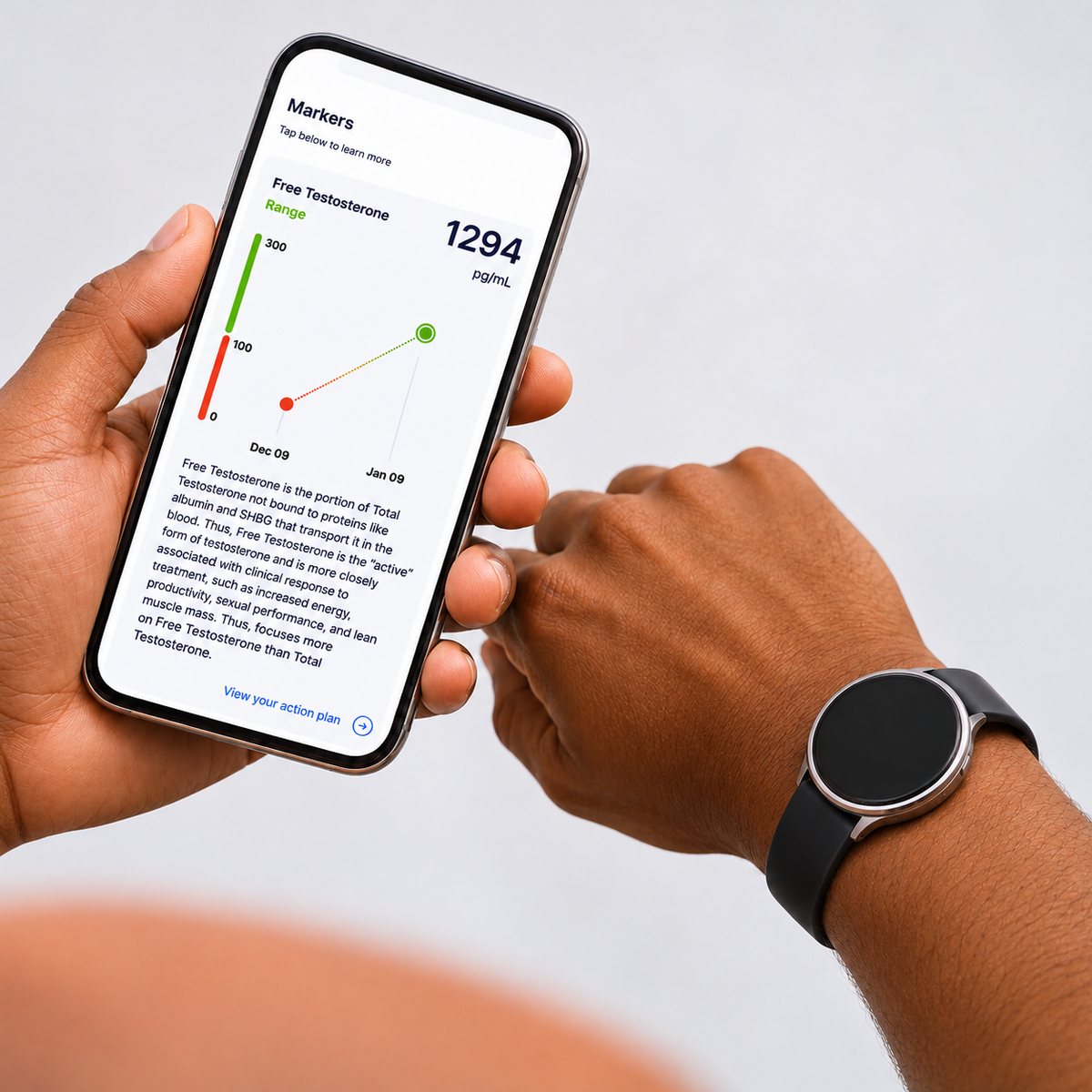
| Free testosterone | The portion not bound to proteins and available to tissues |
| LH and FSH | Brain signals to the testes; low or normal values point to secondary hypogonadism |
| Estradiol | Estrogen level, which affects symptoms and treatment choice |
Testosterone replacement therapy (TRT) adds testosterone from outside the body. It raises levels strongly but signals the brain to stop its own production, which often shrinks the testes and lowers sperm counts. Enclomiphene is a daily pill that boosts your body’s own testosterone and generally preserves fertility, with a more moderate rise in levels.
| Enclomiphene | TRT | |
|---|---|---|
| How it raises testosterone | Boosts your own production | Replaces it from outside |
| Fertility and sperm production | Generally preserved | Often reduced |
| Form | Daily pill | Injection, gel or pellet |
| Typical rise in levels | Moderate | Higher |
| Offered by PEPLIX | Yes, from $109.99/mo | No |
Yes. In men with obesity, weight loss is linked to higher testosterone, and bigger losses tend to bring bigger increases. Better sleep, strength training and less alcohol also help. When levels stay low despite these steps, a clinician may combine lifestyle changes with enclomiphene or with GLP-1 weight-loss medication, depending on your labs and goals.
No. PEPLIX enclomiphene is compounded by a licensed U.S. pharmacy for you, and compounded medications are not FDA-approved or reviewed by the FDA for safety, effectiveness or quality. Enclomiphene is one of the two forms (isomers) that make up clomiphene, an older FDA-approved fertility medication that is sometimes prescribed off-label for men.
Yes. A clinician needs lab results to confirm low testosterone, find the likely cause and set a safe dose. You can upload bloodwork from the last six months or order an at-home test. Follow-up labs during treatment check that your testosterone and estradiol stay in a healthy range as your dose is adjusted.
Enclomiphene is designed to protect fertility. It raises FSH and LH, which support sperm production as well as testosterone, so it is often considered for men who want children now or later. Testosterone replacement, by contrast, often lowers sperm counts. Discuss your family plans with your clinician so they can choose the right option.
PEPLIX enclomiphene starts at $109.99 per month on a six-month plan, with higher monthly prices for shorter plans. There is no membership fee and insurance is not required. Your price can vary slightly by dose and state, and the lab tests needed to start and monitor treatment may be an extra cost.
Testosterone
Compare enclomiphene, TRT, and Clomid for low testosterone. Learn what trials found about sperm counts, side effects, and FDA approval.

Testosterone
Does enclomiphene build muscle? Review the evidence on testosterone, lean mass, fertility, and what to discuss before treatment.

Testosterone
Compare MCT, sesame, and cottonseed oil in injectable testosterone. Learn what carriers do and what to ask about irritation or allergies.
This page is general education, not medical advice. A licensed clinician decides whether any treatment is right for you. See our safety information.
Compounded medications are not approved or evaluated for safety, efficacy, or quality by the FDA.